Valerian and the City of a Thousand Planets
"A kaleidoscope of cosmic wonder trapped in a casting crisis."
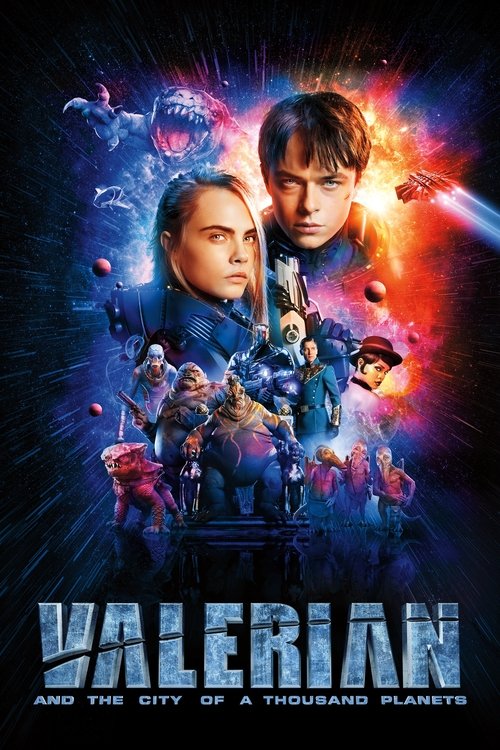
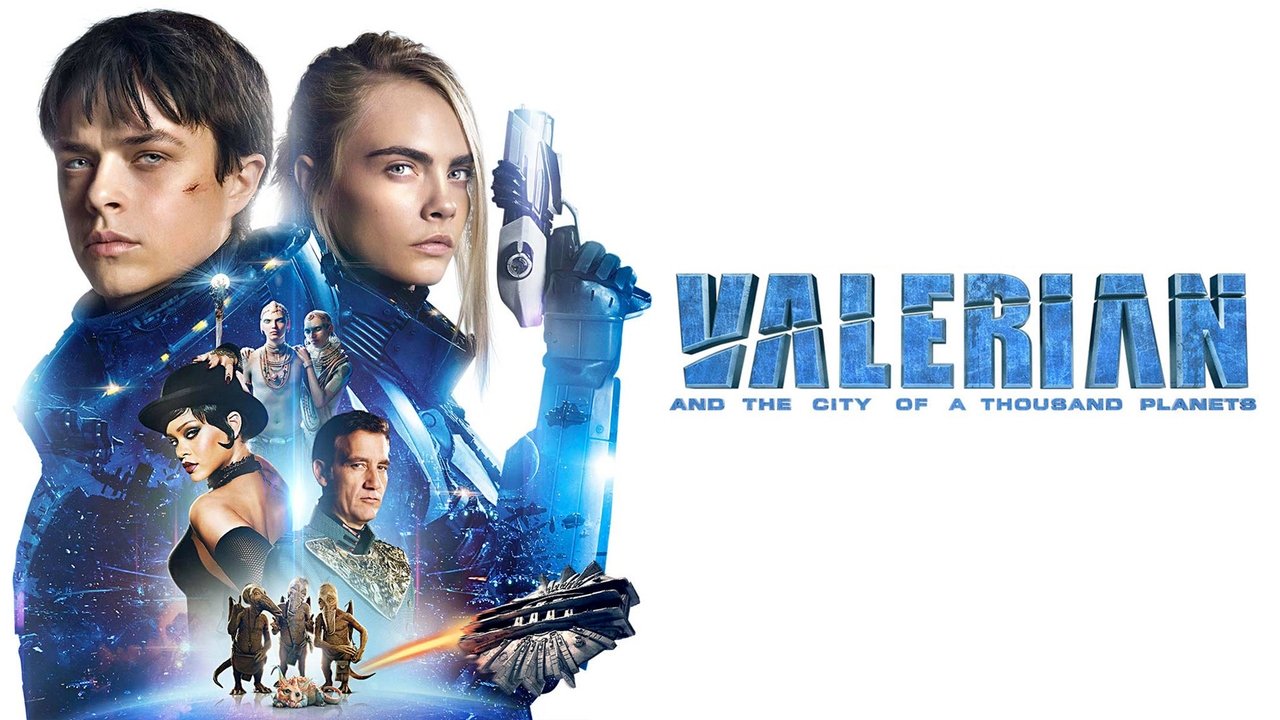
Imagine a world where every species in the universe finally decided to stop shooting each other and just started building a giant, floating Lego set in space. That’s the opening of Luc Besson’s Valerian and the City of a Thousand Planets, and honestly, those first five minutes are some of the most hopeful, beautiful moments in modern science fiction. Set to David Bowie’s "Space Oddity," we watch centuries of human and alien handshakes evolve into Alpha, a sprawling metropolis of a million different cultures. It’s pure, uncut optimism, and I genuinely wish the rest of the movie could have lived up to that high.
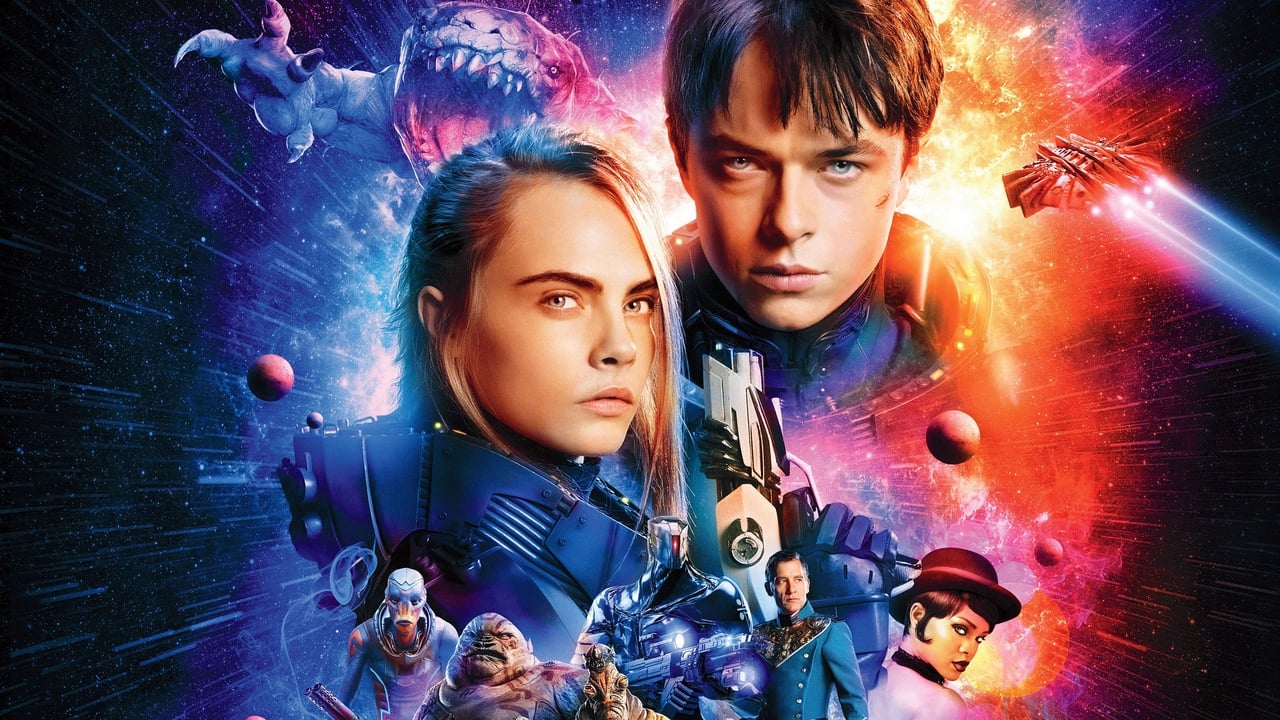
I watched this most recently on a Tuesday night while wearing mismatched socks, and the neon-soaked visuals were so intense that for a second, I felt like my socks actually belonged together. That’s the power of Luc Besson when he’s firing on all cylinders—he makes the impossible look like a Saturday morning cartoon with a hundred-million-dollar budget.
The Most Creative Action You’ve Never Seen
While the Marvel Cinematic Universe was busy perfecting the "grey sky/rubble" aesthetic, Besson was over here spending $177 million to make every frame look like a Trapper Keeper from the year 3000. The action choreography in this film isn't just about people punching each other; it’s about geography.
Take the "Big Market" sequence early in the film. Our heroes, Valerian and Laureline, are navigating a desert that hides a massive, multi-dimensional bazaar. To see the market, you have to wear special glasses; to interact with it, you need high-tech gloves. This leads to a chase scene where Valerian is fighting in one dimension while his physical body is stumbling through the desert sand in another. It’s brilliant, clear, and incredibly inventive. It makes the average CGI punch-fest look like a school play.
The film doesn't stop there. We get a sequence where Valerian crashes through about a dozen different ecosystems—from underwater kingdoms to gaseous voids—in a single, unbroken sprint. The rhythm of the editing by Thierry Arbogast ensures you never lose your place, even when the screen is vibrating with three hundred different shades of purple.
The Lead Chemistry Conundrum
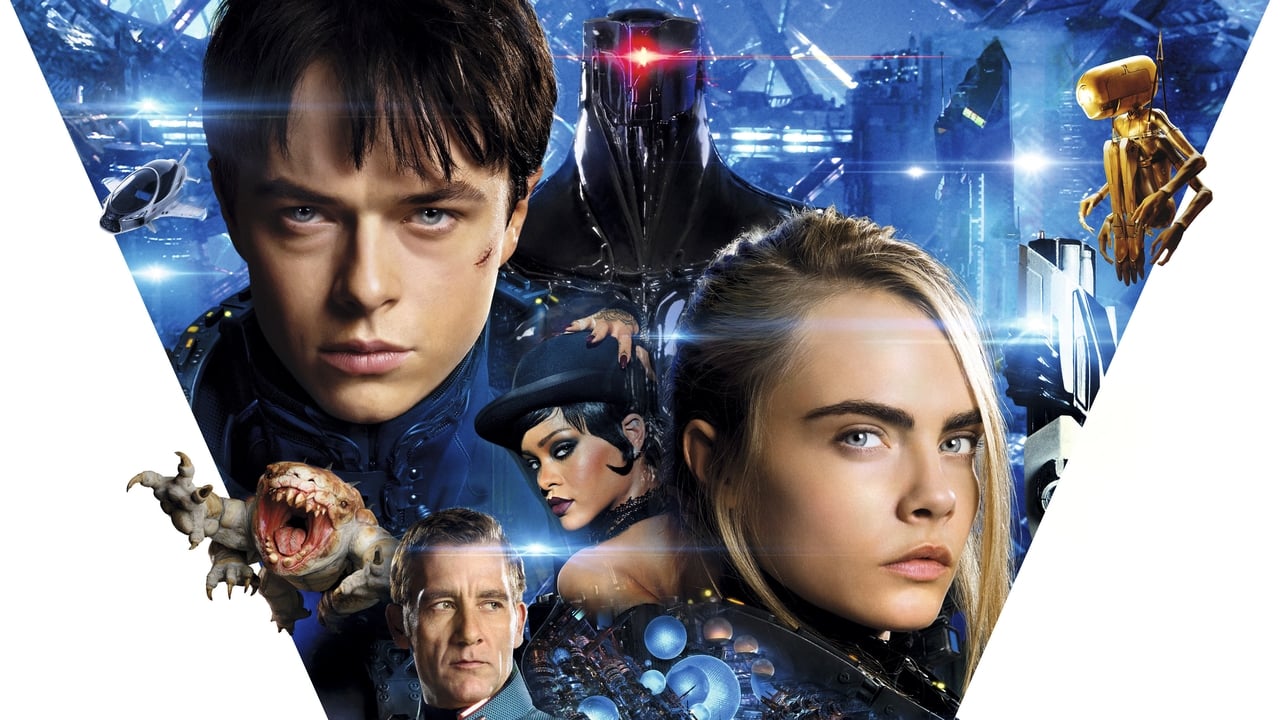
Now, we have to talk about the elephant in the cockpit. Dane DeHaan and Cara Delevingne are both talented people, but as a romantic duo? It’s like watching two attractive planks of wood try to start a fire by rubbing together. DeHaan plays Valerian with a weird, forced "surfer bro" rasp that feels like he’s trying to do a Han Solo impression but accidentally channeled Keanu Reeves in a cold medicine commercial.
The plot tells us they are deeply in love and have a legendary history, but their banter feels more like two siblings arguing over who gets the front seat of the car. In a contemporary era where we’ve been spoiled by the instant chemistry of pairs like Oscar Isaac and John Boyega, the vacuum at the center of Valerian is hard to ignore.
The supporting cast, however, seems to be having the time of their lives. Rihanna shows up as a shapeshifting entertainer named Bubble, and her performance—a literal costume-changing cabaret—is a total showstopper. Apparently, her sequence took weeks to film because they used dozens of different dancers to capture the fluid motion of her transformations. Then there's Ethan Hawke as "Jolly the Pimp," a role he reportedly filmed in a single manic day, and Clive Owen, who looks like he’s perpetually trying to remember if he left the stove on back in London.
A Cult Classic in the Making
Despite the box office thud it made in 2017, Valerian has slowly morphed into a cult favorite for "visual-first" cinephiles. It’s an "independent" film in the weirdest sense—Besson raised the massive budget through international pre-sales and his own studio, meaning there was no committee to tell him "maybe don't include the three duck-billed aliens who sell information for gold."
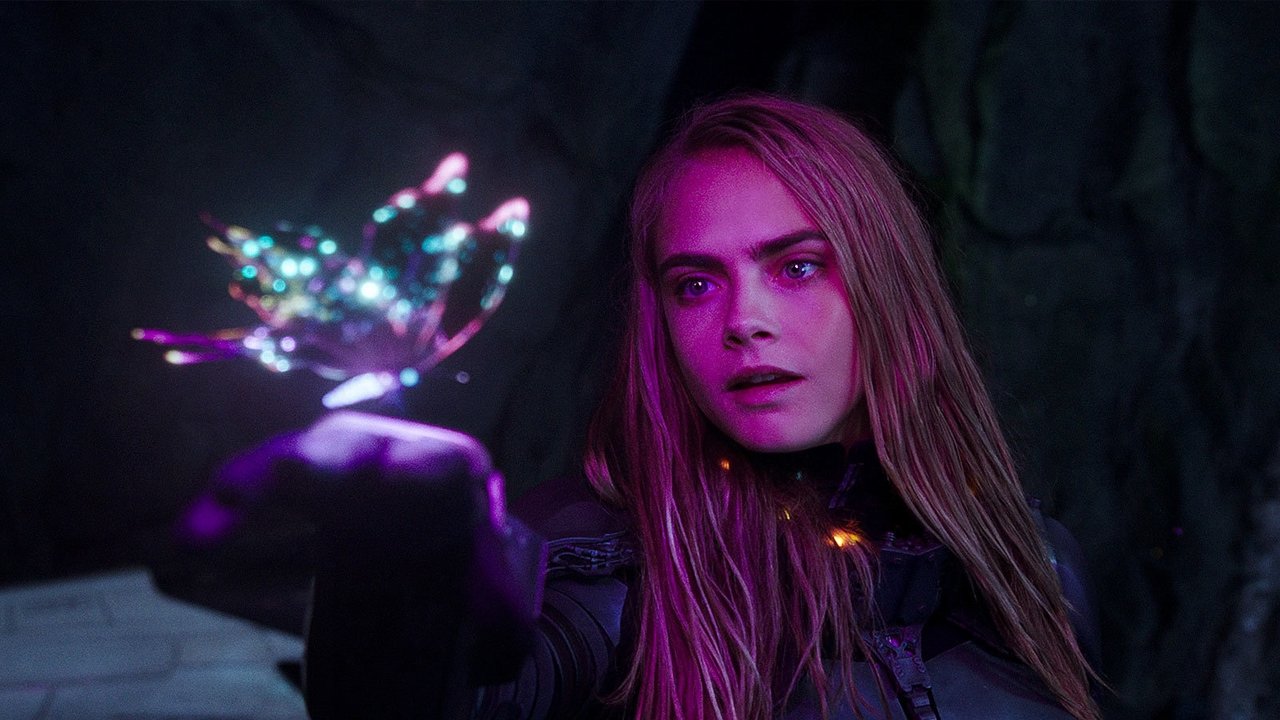
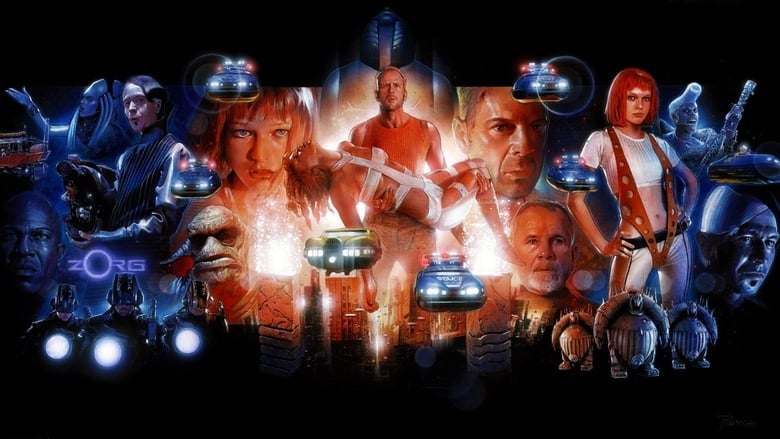
The film is based on the French comic series Valérian and Laureline, which famously influenced Star Wars. You can see the DNA everywhere, from the ship designs to the creature effects. Luc Besson waited decades to make this because the technology simply didn't exist yet; the film features over 2,700 VFX shots, compared to the measly 188 in his 1997 classic The Fifth Element.
It’s an artifact of a specific moment in the late 2010s: the "mega-passion project." It sits alongside films like Jupiter Ascending—movies that are perhaps too weird to live, but too beautiful to die. I’d much rather watch a spectacular, ambitious mess like this than a safe, boring franchise entry that looks like it was color-graded in a bowl of oatmeal.
Ultimately, Valerian and the City of a Thousand Planets is a movie you watch with your eyes wide and your brain slightly on standby. If you can move past the lack of romantic sparks between the leads, you’re treated to some of the most imaginative world-building of the last decade. It’s a messy, gorgeous, neon-drenched love letter to the power of the imagination. Go for the aliens, stay for the Rihanna dance, and maybe just ignore the dialogue whenever the two leads start talking about their "feelings."

Keep Exploring...
-

Anna
2019
-
Gemini Man
2019
-
The Fifth Element
1997
-
Terminator Genisys
2015
-
Star Trek Beyond
2016
-
Teenage Mutant Ninja Turtles: Out of the Shadows
2016
-

Justice League
2017
-
Power Rangers
2017
-
Pacific Rim: Uprising
2018
-
Solo: A Star Wars Story
2018
-

Alita: Battle Angel
2019
-

Dark Phoenix
2019
-
Men in Black: International
2019
-
Star Wars: The Rise of Skywalker
2019
-

Terminator: Dark Fate
2019
-
Underwater
2020
-

Black Widow
2021
-
Eternals
2021
-
Godzilla vs. Kong
2021
-
The Matrix Resurrections
2021