Bad Times at the El Royale
"Pick a side. Nevada or California? Life or death?"
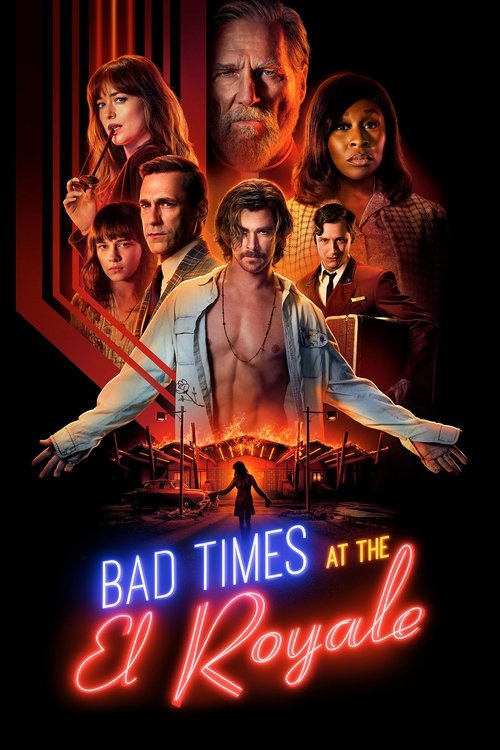
There is a literal line drawn through the lobby of the El Royale. On one side, you’re in California—warm, sunny, and slightly more expensive. On the other, you’re in Nevada—colder, darker, but the booze is cheaper. It’s a gimmick for the tourists, a kitschy architectural gag in a fading 1969 motel, but it serves as the perfect visual metaphor for a film that constantly asks you to choose which version of a person you’re going to believe.
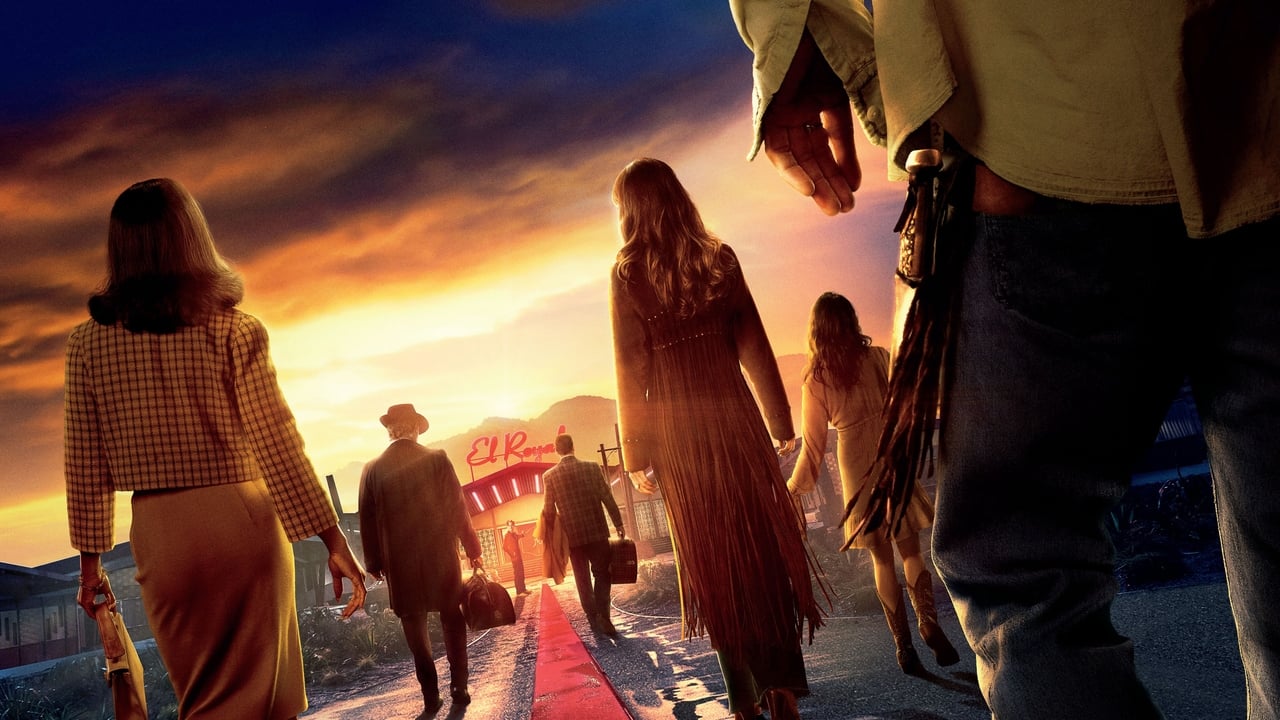
I watched this on a rainy Tuesday with a bowl of overly salted popcorn that made my mouth feel like a parched desert, which oddly complemented the motel's dusty, desperate atmosphere. It was one of those "how did I miss this in theaters?" moments that usually leads to a deep dive into box office statistics and the realization that original, mid-budget thrillers are essentially the endangered pandas of the Hollywood ecosystem.
The Last Stand of the Original Thriller
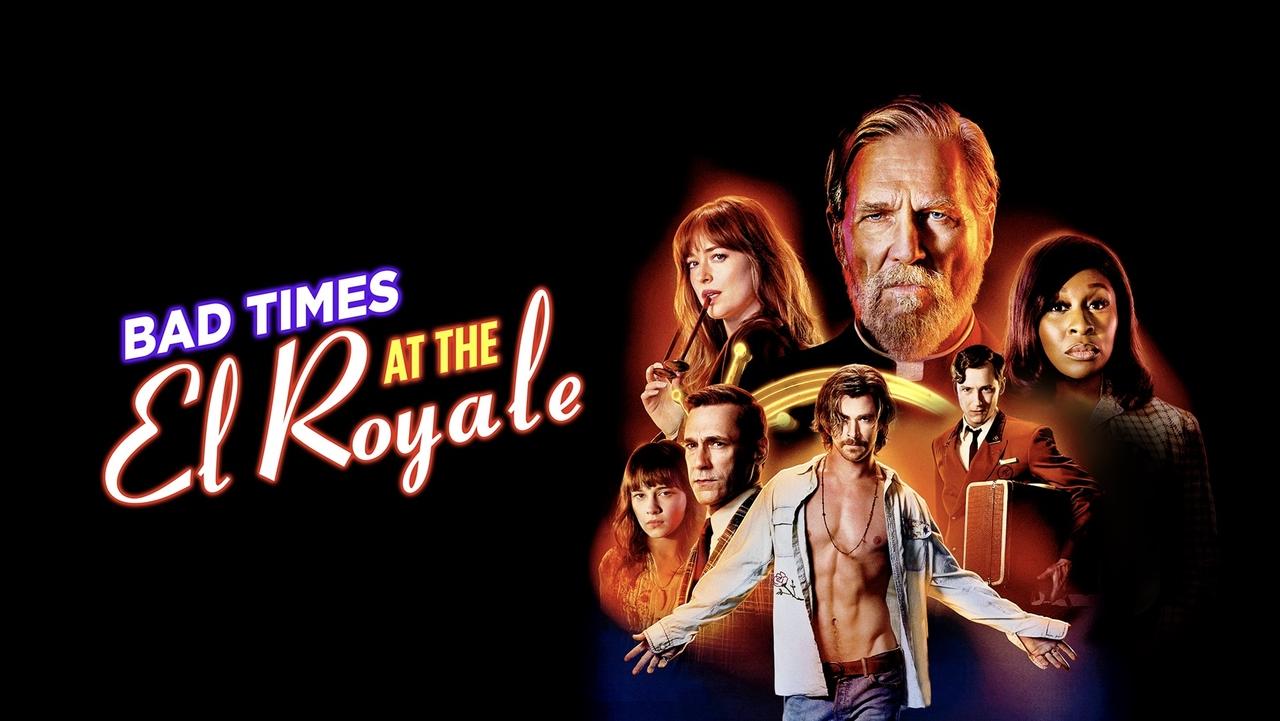
When Drew Goddard released Bad Times at the El Royale in 2018, the industry was already neck-deep in the "franchise or bust" mentality. Marvel was peaking, and legacy sequels were the only thing getting greenlit for over $30 million. Goddard, fresh off the success of The Cabin in the Woods and his Oscar-nominated script for The Martian, used his clout to build a massive, practical motel and fill it with a cast that had no business being in the same room.
The result is a film that feels like a defiant throwback. It’s a "bottle movie" that refuses to stay in the bottle. We start with Jeff Bridges as a priest with a failing memory and Cynthia Erivo as a backup singer looking for a break. Then comes Jon Hamm, playing a vacuum salesman who is clearly anything but, followed by Dakota Johnson as a surly woman dragging a captive sister (Cailee Spaeny) behind her.
In today’s streaming-saturated landscape, this would have been an eight-part limited series on Netflix where four of the episodes are just filler. Goddard, however, keeps it theatrical. He uses the 141-minute runtime to let the scenes breathe, often focusing on a single character's perspective before rewinding the clock to show us what was happening in the room next door. It’s a structural gamble that actually pays off, making the motel feel like a living, breathing character with secrets tucked behind its two-way mirrors.
A Masterclass in the "Slow Burn"
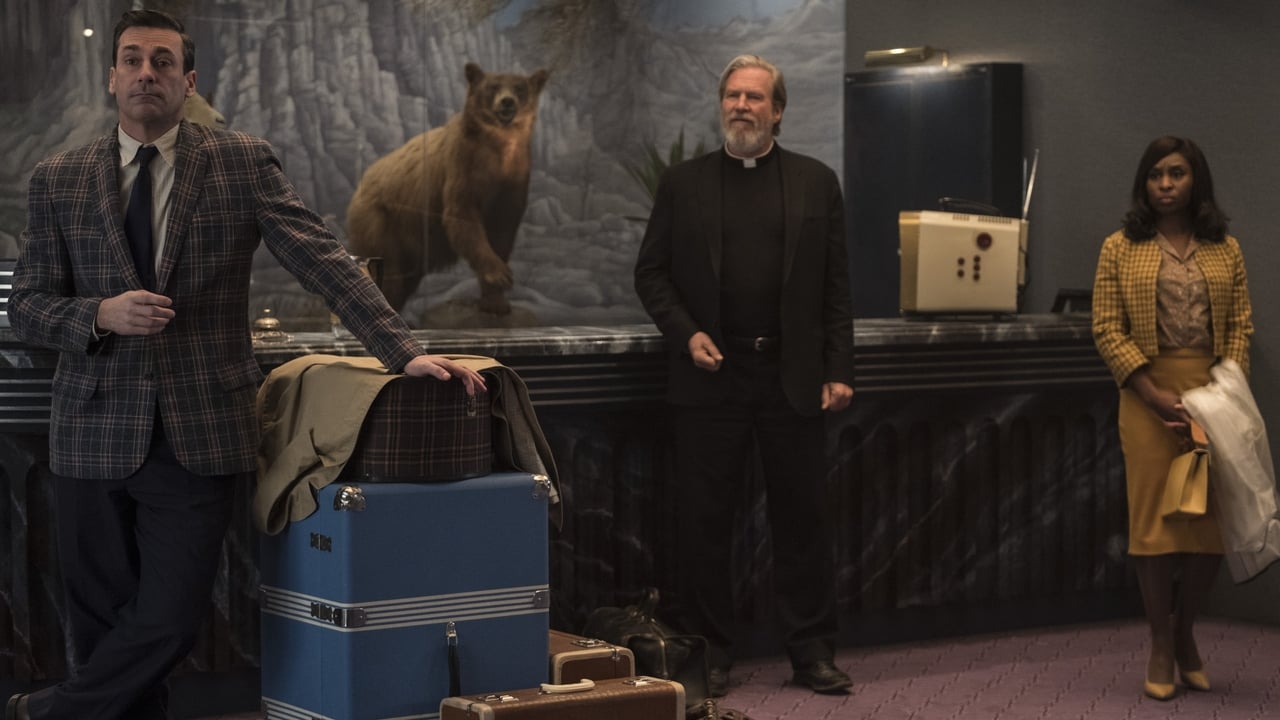
The drama here is earned through silence and song. Cynthia Erivo is the absolute soul of this movie. There’s a sequence where she sings "This Old Heart of Mine" while Jon Hamm’s character discovers the motel’s dark architectural secrets. Apparently, Erivo sang her songs live on set—sometimes for 20 or 30 takes—rather than lip-syncing to a studio track. You can feel that raw, physical exhaustion in her performance. She isn't just a "damsel" or a "witness"; she is the moral compass in a building full of broken needles.
Then there’s Lewis Pullman as Miles, the lone motel clerk. While the big names chew the scenery, Pullman quietly walks away with the entire film. His character arc is the one that caught me off guard; he starts as a stuttering comic relief and ends as the most tragic figure in the ensemble. It’s the kind of performance that reminds me why I love dramas: the best ones find the "small" person in the room and reveal they have the heaviest heart.
Of course, we have to talk about the shirtless cult leader in the room. Chris Hemsworth shows up in the third act as Billy Lee, a Charles Manson-esque figure who smells like patchouli and impending doom. To play the role, Hemsworth reportedly dropped about 30 pounds of his "Thor" muscle, which only makes him look more like a predatory spider. His arrival shifts the film from a slow-burn noir into a high-stakes hostage drama, and while some critics felt it derailed the mystery, I found his "predatory hippie" energy to be the perfect jolt of electricity the finale needed.
Why It’s a Modern Cult Classic
Despite the pedigree and the polish, the movie bombed. It made less than its $32 million budget back at the box office. But in the years since, it has become a staple of "You Have to See This" recommendation threads on social media. It occupies that specific space in contemporary cinema where a film is too weird for the multiplex but too stylish to be ignored.
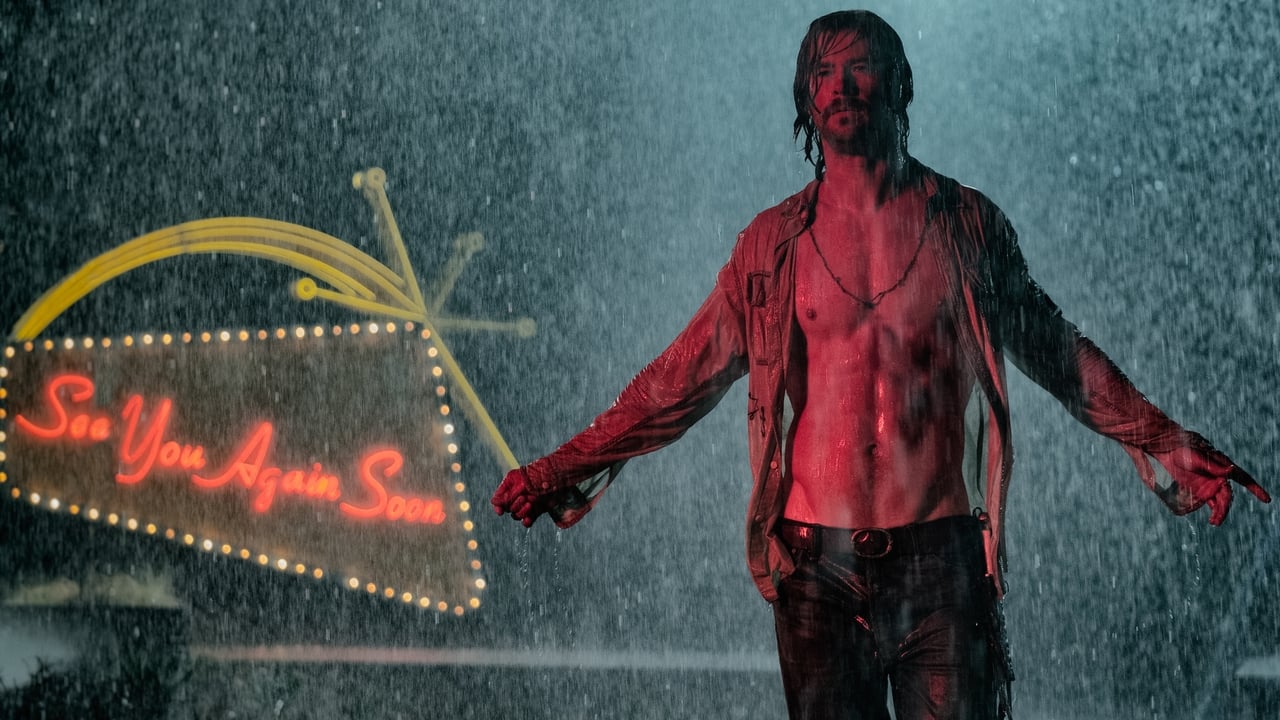
The film's technical craft is staggering. Seamus McGarvey’s cinematography uses the 2.39:1 anamorphic frame to trap characters in corners, emphasizing their isolation even when they’re in the same shot. The production design is so detailed that you can almost smell the stale cigarettes and cheap carpet cleaner. It’s a movie made by people who clearly love the process of filmmaking.
However, I’ll give you a fair warning: the movie is twenty minutes too long and loves the sound of its own voice more than a politician on a soapbox. There are moments where Goddard gets a little too cute with the non-linear structure, and you might find yourself checking your watch during some of the longer philosophical monologues. But even when it drags, it’s gorgeous to look at.
Ultimately, Bad Times at the El Royale is a reminder of what we lose when everything becomes a franchise. It’s a standalone story about redemption, memory, and the choices we make when we think no one is watching through the glass. It’s a film that asks for your patience and rewards it with a jukebox full of soul and a climax that feels genuinely dangerous. If you’re tired of capes and want a movie that treats its audience like adults who can handle a little subtext with their shootouts, it's time to check in. Just make sure you stay on the California side—the weather is better.

Keep Exploring...
-
Sherlock: The Abominable Bride
2016
-
Widows
2018
-
The Outfit
2022
-

Dark Places
2015
-

Reptile
2023
-
The Gift
2015
-
Hail, Caesar!
2016
-
Patriots Day
2016
-

Snowden
2016
-

Wind River
2017
-
The Highwaymen
2019
-

Uncut Gems
2019
-

Promising Young Woman
2020
-
The Little Things
2021
-
Wrath of Man
2021
-

Ambulance
2022
-
Hell or High Water
2016
-
A Walk Among the Tombstones
2014
-
Solace
2015
-
Jack Reacher: Never Go Back
2016