Beautiful Boy
"Love is not a cure."

I remember watching Beautiful Boy for the first time while trying to balance a very precarious bowl of lukewarm oatmeal on my lap. By the forty-minute mark, the oatmeal was cold, my leg was asleep, and I had completely forgotten I was supposed to be eating. There is a specific kind of gravity to this film—a heavy, sinking feeling that pulls you into the floorboards along with its characters. It doesn’t just ask you to watch a story about addiction; it asks you to sit in the waiting room of a rehab center for two hours and feel the clock tick.

Released in that pre-pandemic window of 2018, the film arrived at a moment when Timothée Chalamet was rapidly becoming the patron saint of "sad, beautiful boys" following Call Me by Your Name (2017). But while that film was a sun-drenched dream, this is a rainy, gray-skied reality. Based on the twin memoirs of David and Nic Sheff, Beautiful Boy tackles the methamphetamine crisis not through the lens of a gritty crime thriller, but as a domestic horror story. It’s about the terrifying realization that you can love someone with every fiber of your being and still be absolutely powerless to save them.
The Anatomy of a Relapse
Most addiction dramas follow a predictable "rise and fall" arc. You see the first hit, the spiraling chaos, the rock bottom, and the eventual (often unearned) redemption. Director Felix van Groeningen—who previously wrecked audiences with The Broken Circle Breakdown (2012)—opts for something far more cerebral and frustratingly honest: the loop.
The film is structured like a series of waves. Nic (Timothée Chalamet) gets clean, the sun comes out, and his father, David (Steve Carell), lets out a breath he’s been holding for months. Then, the tide goes back out. The repetition is the point. It captures the psychological exhaustion of the "recovery" era, where every phone call at 3:00 AM is a potential death sentence. For contemporary audiences used to fast-paced streaming narratives, this pacing might feel repetitive, but that’s the lived reality of the Sheff family. It’s a masterclass in making the audience feel as tired as the parents.
Steve Carell continues his post-The Office (2005) streak of proving he’s one of our most capable dramatic actors. There is a specific "dad-ness" he brings to the role—a frantic, journalistic need to "research" his way out of the problem. He reads books on meth, he interviews doctors, he even tries the drug himself in a moment of desperate, misguided empathy. He wants to solve his son like a puzzle, and watching that intellectual shield crumble into pure, primal grief is devastating.

Physicality and the Ghost of Nic Sheff
Then there’s Timothée Chalamet. It’s easy to dismiss the "Chalamet-mania" of the late 2010s as a social media byproduct, but his work here is genuinely startling. He lost 20 pounds for the role, and he carries his body like it’s a burden he’s tired of hauling around. There’s a scene in a diner—a confrontation between father and son—where Nic is trying to manipulate David for money. The way Chalamet twitches, the way his eyes dart between predatory and pleading, is chilling. He isn’t playing a "junkie" archetype; he’s playing a boy who has been hollowed out and replaced by a chemical.
The film’s secret weapon, however, is Maura Tierney (of ER and The Affair fame) as David’s second wife, Karen. While Amy Ryan does great work as Nic’s biological mother, Tierney captures the specific agony of the stepmother—the person who loves the child but also has to be the voice of reason when the house is burning down. There is a car chase scene toward the end—not a high-speed action sequence, but a desperate, slow-motion pursuit through residential streets—where Tierney’s face conveys more than ten pages of dialogue could.
The "Everything" Philosophy
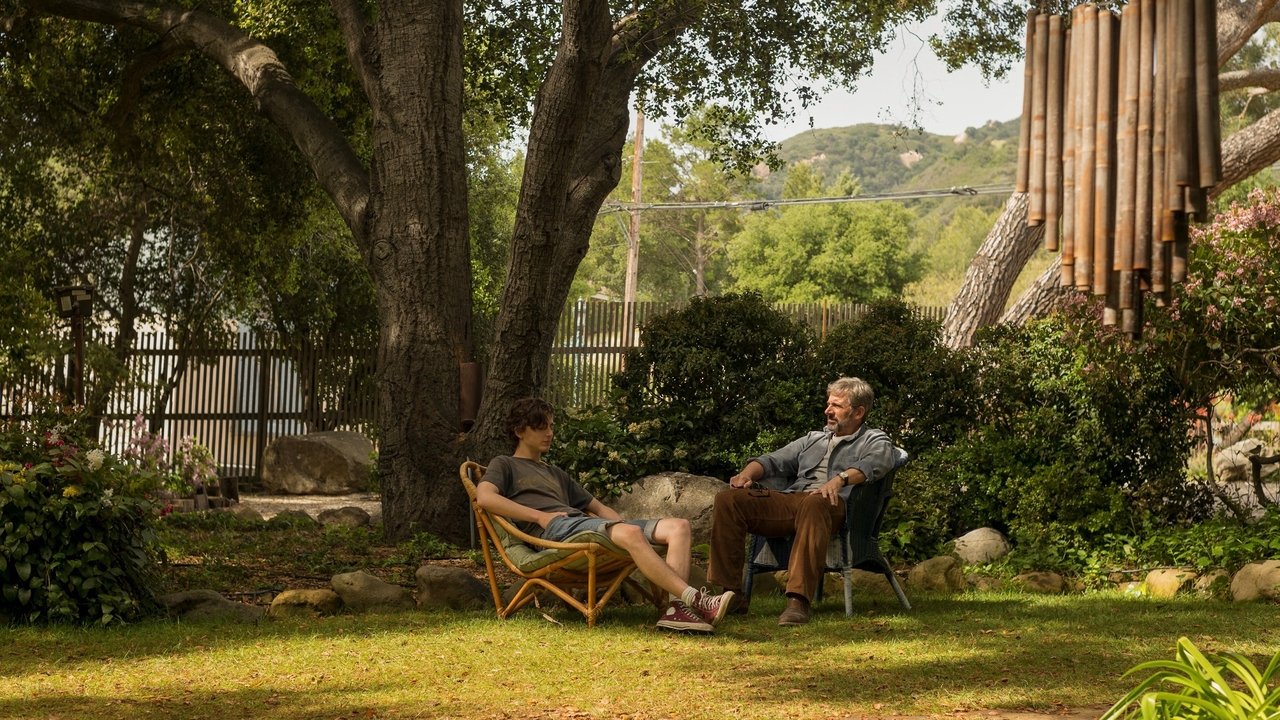
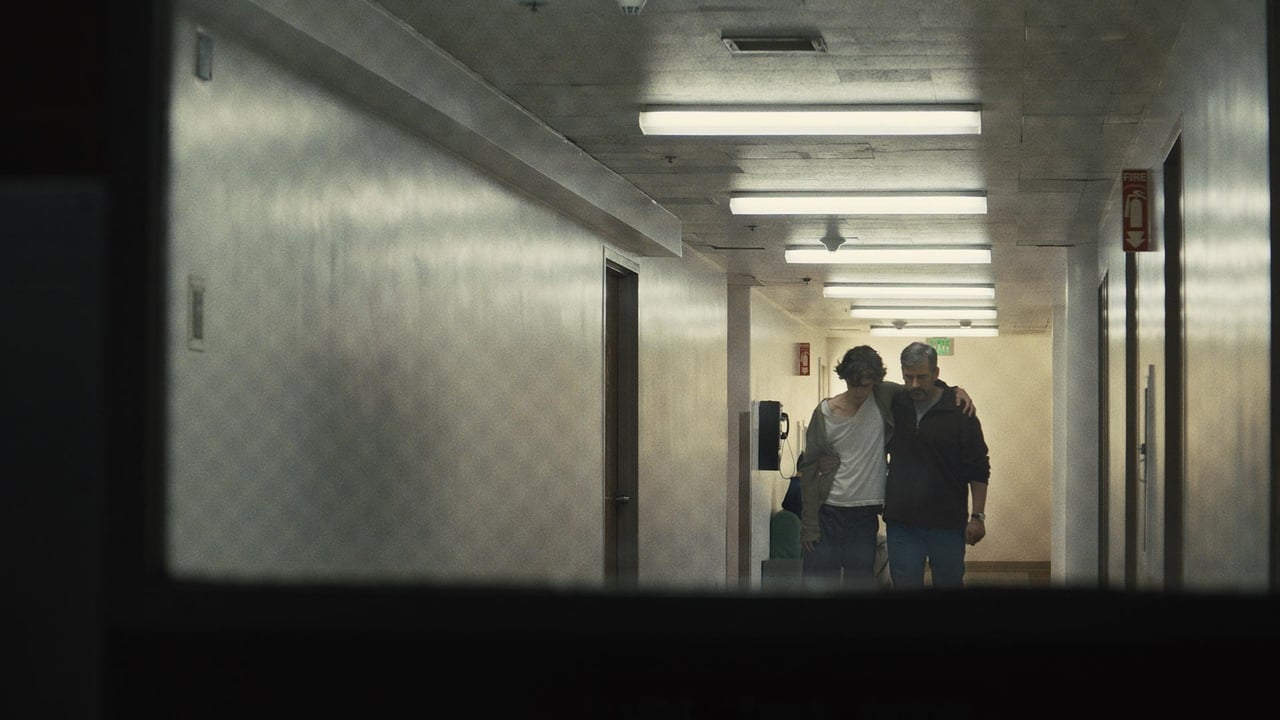
Underneath the medical jargon and the grim hospital lighting, Beautiful Boy is a philosophical inquiry into the limits of unconditional love. The title comes from the John Lennon song David used to sing to Nic, and the recurring phrase "Everything" is their shorthand for how much they love each other. The film asks: What happens when "everything" isn't enough?
It’s a bleak question, and the film doesn't offer a tidy Hollywood answer. It’s arguably one of the reasons it struggled at the box office, earning only about a third of its $25 million budget. It wasn't the "Oscar bait" people expected; it was too jagged, too repetitive, and too unwilling to provide a cathartic ending. But in the years since, it has found a second life on streaming platforms and within recovery communities. It’s become a "cult" film not for its quirks, but for its utility—it’s a film people show to their families to say, "This is what it felt like."
Interestingly, the production was obsessed with authenticity. Many of the scenes were filmed in the actual locations where the Sheffs lived. Steve Carell even requested that he and Chalamet not see each other on days when Nic was supposed to be at his lowest, ensuring that David’s shock at his son’s physical deterioration was genuine. That commitment to the "real" over the "theatrical" is what gives the movie its staying power.
Beautiful Boy is not an easy Saturday night watch. It is a grueling, non-linear descent that reflects the chaotic nature of the current drug crisis. It occasionally leans too hard on its indie-rock soundtrack to do the emotional heavy lifting, but the central performances are so grounded that they pull the film back from the brink of melodrama. It’s a quiet, cerebral tragedy that rewards those willing to sit with its discomfort long after the credits roll.

Keep Exploring...
-

The Danish Girl
2015
-

The Longest Ride
2015
-

Manchester by the Sea
2016
-
Instant Family
2018
-

Roma
2018
-
The Trial of the Chicago 7
2020
-

CODA
2021
-
The Fabelmans
2022
-

Past Lives
2023
-

The Holdovers
2023
-

Lion
2016
-
Loving Vincent
2017
-

Marriage Story
2019
-

Portrait of a Lady on Fire
2019
-

All the Bright Places
2020
-

Another Round
2020
-

Gabriel's Inferno
2020
-

Sound of Metal
2020
-

The Call of the Wild
2020
-

King Richard
2021