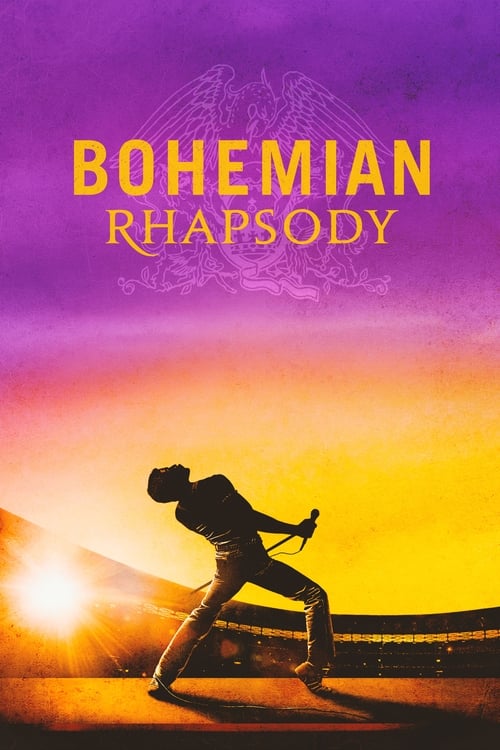
Bohemian Rhapsody
"The music is legend. The man is immortal."
The lights dim, the 20th Century Fox fanfare kicks in—but this time, it’s played on an electric guitar with that unmistakable, overdriven Brian May snarl—and suddenly, everyone in the theater is sixteen years old again. I remember sitting there with a bag of Haribo Goldbears that had gone slightly soft from being tucked in my warm jacket pocket, and the moment those first chords of "Somebody to Love" hit, the sugar rush didn't even matter. I was sold.
Bohemian Rhapsody is a fascinating beast of contemporary cinema. Released in 2018, just before the world tilted on its axis and the streaming wars turned the theatrical experience into an endangered species, it managed to do something almost impossible: it turned a standard musical biopic into a billion-dollar global event. It wasn't a superhero movie, and it wasn't a sequel. It was just a story about a guy with four extra incisors and a voice that could shatter granite.
The Man in the Yellow Jacket
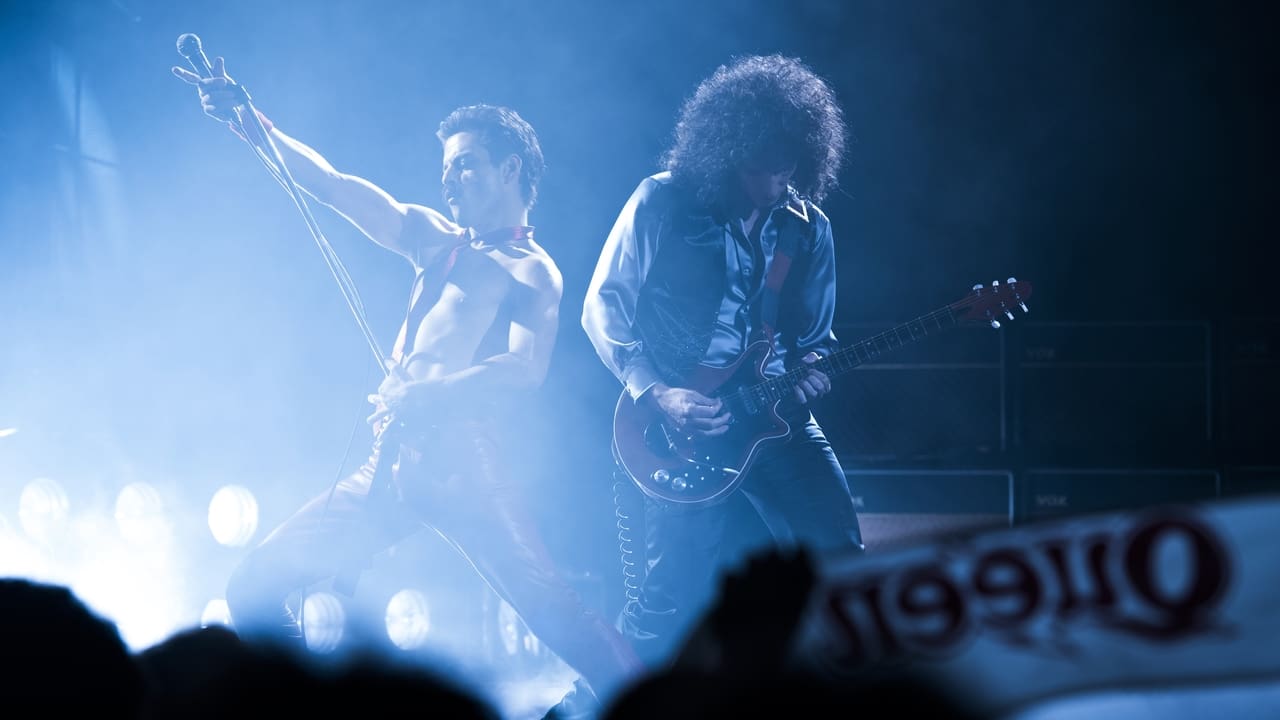
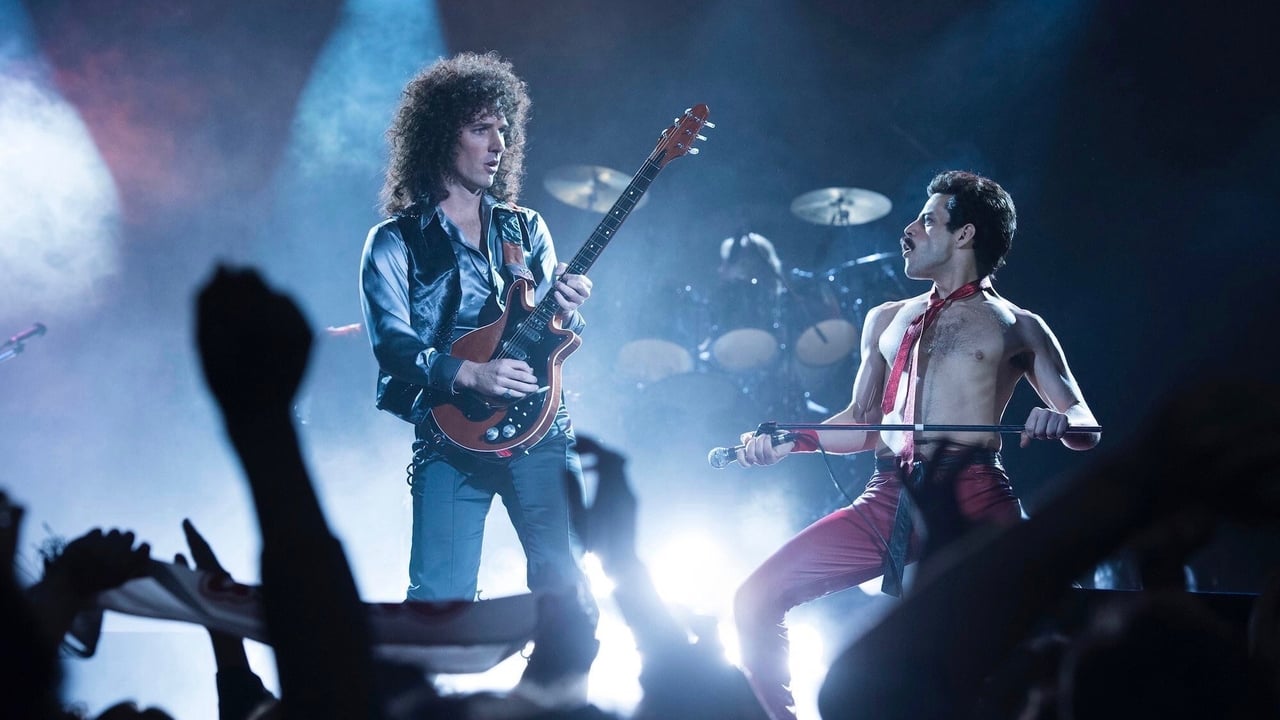
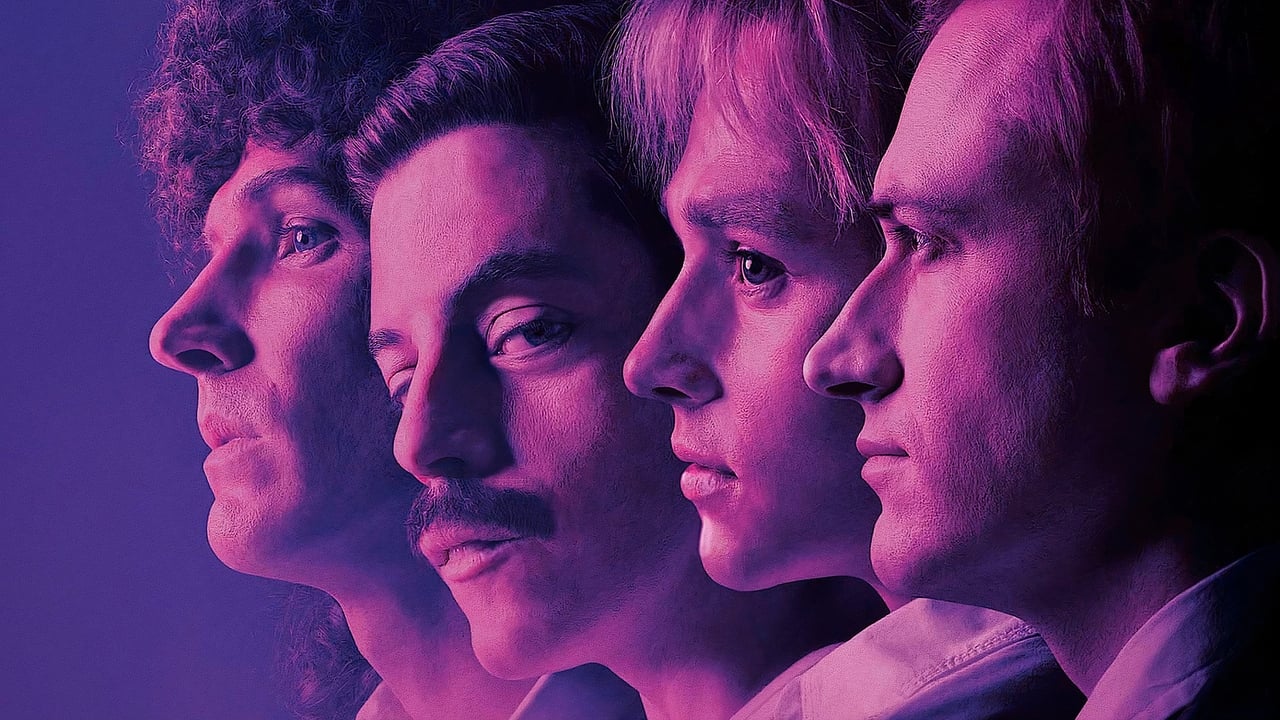
Let’s be honest: this movie lives and dies on the mustache of Rami Malek. Coming off the paranoid, hoodied energy of Mr. Robot, Malek’s casting felt like a gamble. Could the quiet, twitchy guy capture the stadium-sized bravado of Freddie Mercury? Within ten minutes, the answer is a resounding yes. It’s a performance built from the teeth out—literally. Malek famously wore prosthetic teeth for months before filming to get the lip movements right, and that physical commitment carries the film through its more formulaic patches.
But the real secret weapon is Gwilym Lee as Brian May. There were moments where I genuinely questioned if the production had used some secret de-aging technology or a time machine. The chemistry between the "band"—including Ben Hardy as Roger Taylor and Joseph Mazzello (the kid from Jurassic Park!) as John Deacon—is the glue that keeps the drama from floating off into pure hagiography. When they’re in the studio "inventing" the stomp-stomp-clap of "We Will Rock You," the film captures that specific, lightning-in-a-bottle joy of collaborative creation.
A Masterclass in Editing Irony
While the film was a massive audience favorite, its path to the Oscars was... complicated. This is a "Prestige Film" that survived a mid-production earthquake. Original director Bryan Singer (who directed The Usual Suspects) was fired with only a few weeks of shooting left, and Dexter Fletcher (who later directed the Elton John biopic Rocketman) stepped in to finish the job.
Despite this chaotic hand-off, the film became an awards juggernaut, snagging four Academy Awards. The most debated win was for Film Editor John Ottman. If you look up the "dinner scene" on YouTube, you'll see a sequence with about 60 cuts in two minutes—a frantic style that critics tore apart but the Academy rewarded. It’s a reminder that in the modern era, "Best Editing" often goes to the most editing, rather than the most subtle.
The film also avoids the grittier, R-rated reality of Mercury’s life to maintain its PG-13 "crowd-pleaser" status. It’s essentially a Wikipedia page with a world-class lighting budget. By sanitizing the "excess" the plot overview promises, the filmmakers—including screenwriter Anthony McCarten, who specialized in prestige biopics like The Theory of Everything—made a choice: they wanted a celebration, not a post-mortem.
The Live Aid Resurrection
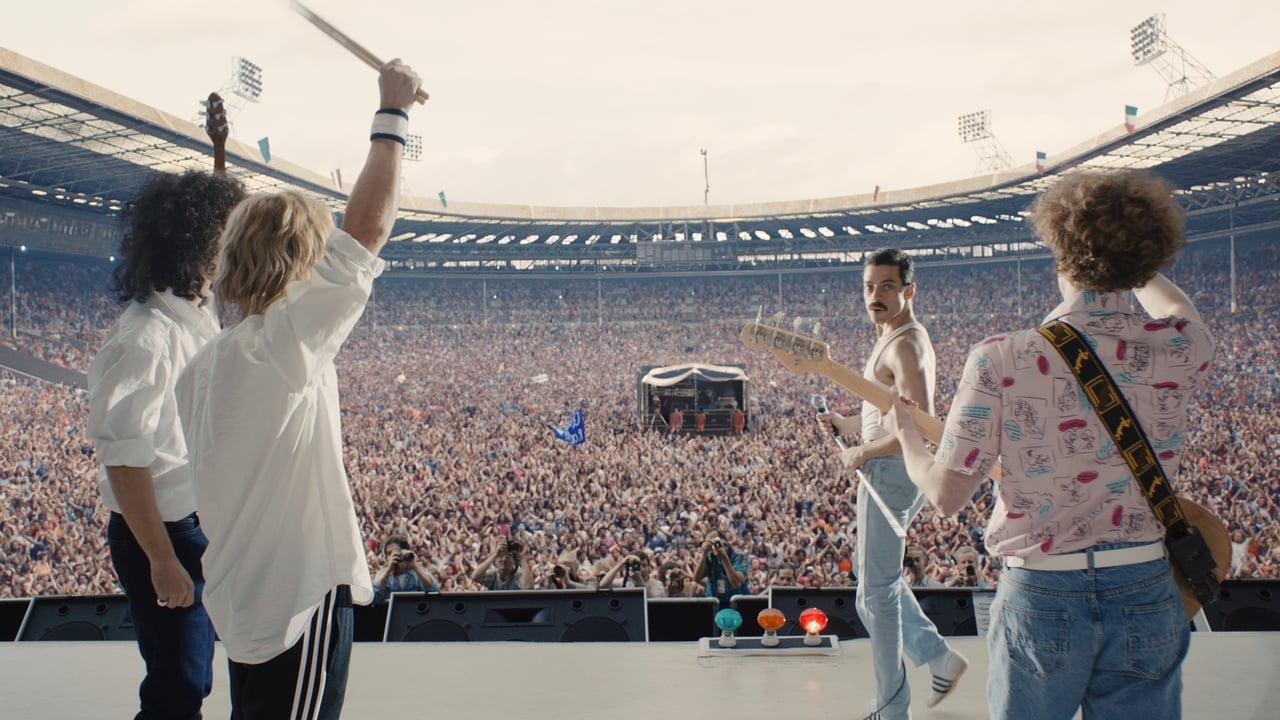
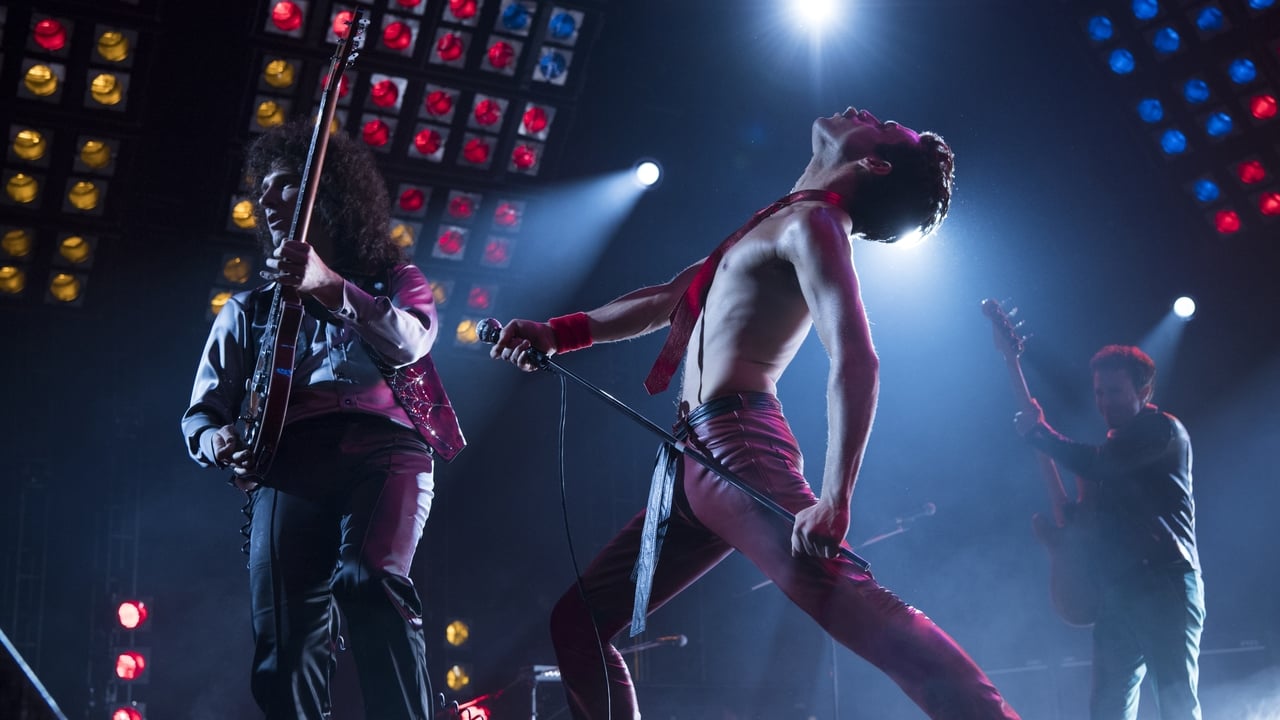
The final twenty minutes of this film are, quite simply, why we still go to the movies. The production team rebuilt the 1985 Live Aid stage at Wembley Stadium to the exact inch. Cinematographer Newton Thomas Sigel used roaming cameras to capture the scale of 72,000 people, most of whom were digital clones, but you’d never know it.
I’ve watched the actual 1985 footage a dozen times, and the film’s recreation is eerie. From the Pepsi cups on the piano to the way Malek prances across the stage, it’s a technical achievement that earns its "Prestige" badge. It’s a reminder of why Queen remains a staple of our cultural diet; their music was designed for the back row of the cheapest seats, and the film honors that scale perfectly.
Interestingly, the role of Freddie Mercury almost went to Sacha Baron Cohen (Borat), who reportedly wanted a much darker, grittier R-rated look at the singer's life. While that version might have been "truer" to the history books, I’m not sure it would have resonated with the global audience that made this the highest-grossing biographical drama of all time.
At the end of the day, Bohemian Rhapsody isn't trying to reinvent the cinematic wheel; it's trying to make you sing along to it. It’s a shiny, loud, and deeply affectionate tribute that prioritizes the "myth" of Queen over the messy reality. While it occasionally leans too hard on biopic clichés—the dialogue often sounds like it was written by a narrator for a VH1 documentary—the sheer power of the music and Rami Malek’s transformative turn make it impossible to ignore. It’s the kind of movie that makes you want to go home, put on some vinyl, and annoy your neighbors with a very loud, very off-key rendition of "Radio Ga Ga."
Keep Exploring...
-
Soul
2020
-

Straight Outta Compton
2015
-
Sing Street
2016
-
High Strung
2016
-
A Star Is Born
2018
-
The Ballad of Buster Scruggs
2018
-
The Dirt
2019
-
Clouds
2020
-
I Still Believe
2020
-
Sound of Metal
2020
-
CODA
2021
-
tick, tick... BOOM!
2021
-
Elvis
2022
-
TÁR
2022
-
Inside Out
2015
-

Logan
2017
-
The Greatest Showman
2017
-
1917
2019
-
Ford v Ferrari
2019
-
Joker
2019