Cold War
"Two hearts, four borders, and eighty-eight minutes of agony."
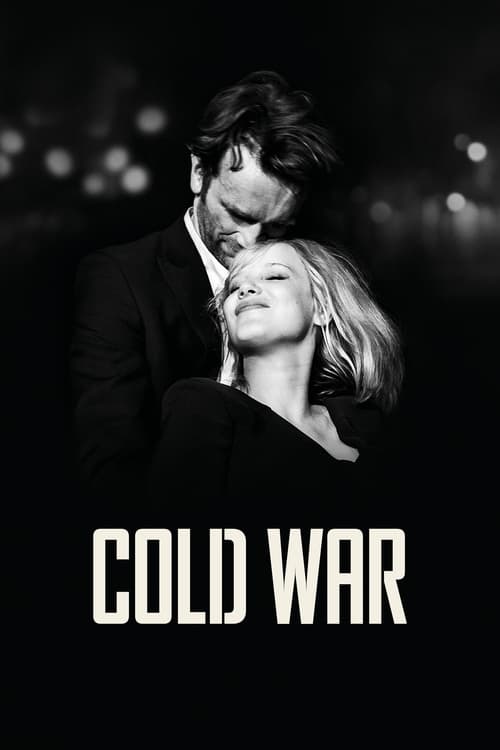
The first time I heard the song "Dwa Serduszka" (Two Hearts) in Paweł Pawlikowski’s Cold War, it was sung by a young girl with a bowl cut in a dilapidated Polish village, her voice raw and unpolished. By the time I heard it again an hour later, it had morphed into a sultry, smoke-filled jazz anthem in a Parisian nightclub. I watched this on a rainy Tuesday while eating a lukewarm bowl of pierogi that I’d definitely over-boiled, and honestly, the soggy dough felt appropriately melancholic. This is a film that breathes through its music, using a single folk melody to chart the disintegration of a country and the combustion of a relationship.
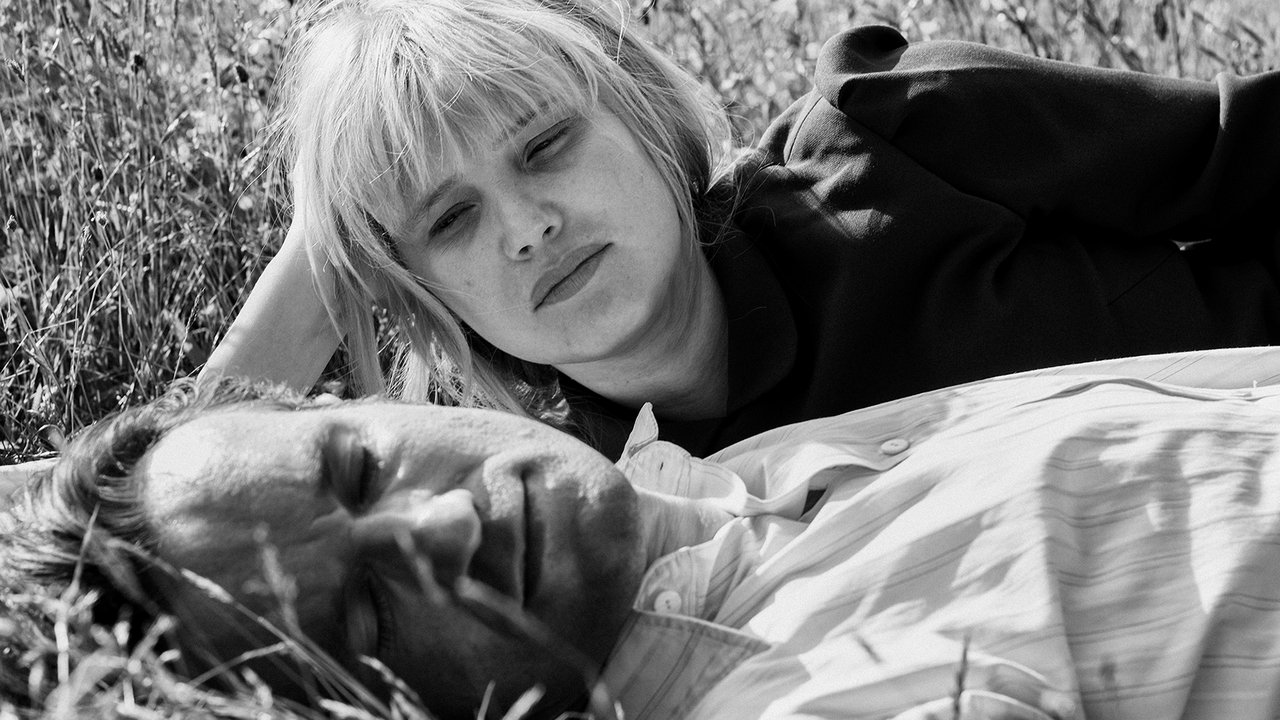
In an era where streaming services are cluttered with three-hour "epics" that spend forty minutes on world-building and another hour on exposition, Cold War is a miracle of economy. It clocks in at 88 minutes. In that time, it covers fifteen years, multiple countries, and enough emotional devastation to fuel a dozen Russian novels. It’s a contemporary masterpiece that feels like it was unearthed from a time capsule, yet its pacing is purely modern—lean, mean, and utterly surgical.
The Magic of the 88-Minute Epic
Director Paweł Pawlikowski (who previously gave us the equally stunning Ida) doesn't care about the boring bits. He cuts from a snowy Polish field to a high-society French party with the kind of confidence that makes you realize just how much "filler" we usually tolerate in movies. He treats the audience like they’re smart enough to fill in the gaps. We don't need to see the paperwork of a defection; we just need to see the look on Tomasz Kot’s face as he waits at a border crossing, realizing the woman he loves isn't coming.
Tomasz Kot, playing Wiktor, is like a Polish Gregory Peck—all tall, brooding angles and quiet desperation. He’s a musician tasked with scouting folk talent for a state-sponsored ensemble meant to celebrate "the people" (while secretly being groomed for Soviet propaganda). That’s where he finds Zula, played by the incandescent Joanna Kulig. Zula isn’t a simple peasant girl; she’s on probation for attacking her father with a knife. She’s a lightning bolt in a wool sweater, and she spends the rest of the movie lighting Wiktor on fire.
A Love Story Written in Smoke and Jazz
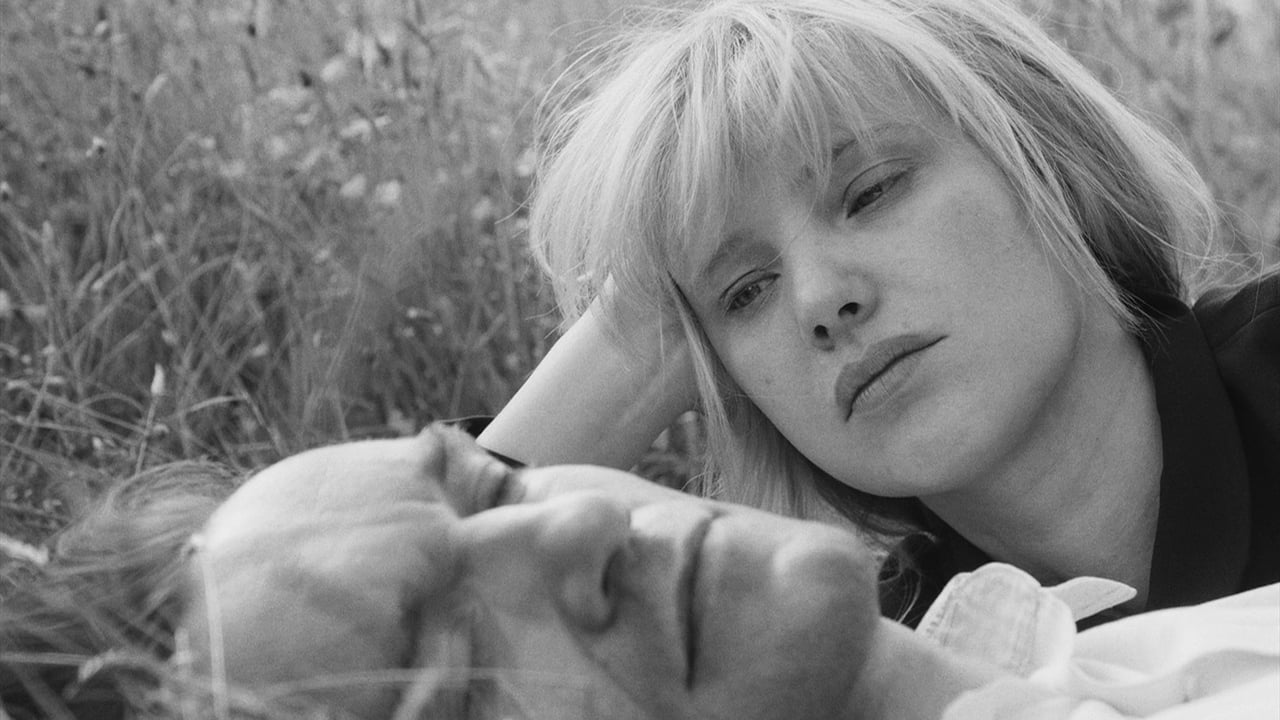
The chemistry between Joanna Kulig and Tomasz Kot is the kind of thing you can’t manufacture with a high budget or a chemistry read in a Burbank office. It feels lived-in and dangerous. They are "fatally mismatched," as the synopsis says, but that’s an understatement. They are two people who can’t live together and can’t survive apart. When they’re in Poland, the state is the cage. When they’re in Paris, their own insecurities and the cultural divide become the bars.
I loved how the film handled the "Indie Gem" constraints. With a budget of less than $5 million—which is basically the craft services budget for a Marvel movie—Pawlikowski and his cinematographer Łukasz Żal created some of the most beautiful images I’ve ever seen on a screen. Choosing a 4:3 aspect ratio (that square-ish look) wasn't a "hipster flex"; it creates a sense of height and verticality that makes the characters look trapped. Whether they are in a massive cathedral or a cramped apartment, the frame is pushing in on them. Every shot is a photograph you’d want to hang on your wall, provided you’re okay with your living room feeling like a beautiful, tragic funeral.
The Sound of a Breaking Heart
Because this is a film about a folk ensemble that evolves into a jazz troupe, the soundscape is everything. The transition of the music mirrors the political shift of the time. We see the ensemble start as a pure, albeit rough, expression of Polish culture, only to be slowly strangled by the demands of the Communist party. Suddenly, they’re singing about land reform and Stalin. It’s heartbreaking, but it’s the backdrop for the even more volatile shifts between Wiktor and Zula.

The film was actually inspired by Paweł Pawlikowski’s own parents—he even gave the protagonists their names. Knowing that this isn't just a fictional drama but a distorted, poetic reflection of a real-life struggle for connection adds a layer of weight to the ending that I’m still thinking about days later. It’s a "passion project" in the truest sense. It took years to get the financing, and it didn't rely on big-name Hollywood stars to find its audience. It relied on the sheer, undeniable power of its craft.
One of my favorite "stuff you didn't notice" details involves the dancing. Joanna Kulig did all her own singing and dancing, and there’s a scene in a rock-and-roll club in the latter half of the movie where she just goes for it. It’s messy, drunken, and defiant. It’s a middle finger to the stifling atmosphere of the era, and it’s one of the few moments where the "Cold War" feels hot.
Cold War is a reminder that cinema doesn't need to be long to be large. It’s a gorgeous, haunting, and occasionally mean-spirited look at what happens when two people become each other’s only home in a world that’s constantly shifting the borders. If you can handle a bit of subtitled heartbreak and some of the best black-and-white cinematography since the 1960s, you need to see this. It’s a brief, brilliant burn of a movie that proves that sometimes, the most independent thing an artist can do is tell a simple story perfectly. Just maybe don't eat over-boiled pierogi while you watch it.

Keep Exploring...
-
Ida
2013
-
Sing Street
2016
-
A Star Is Born
2018
-
The Ballad of Buster Scruggs
2018
-

Clouds
2020
-

CODA
2021
-
Slow West
2015
-

The Lobster
2015
-
Julieta
2016
-
Swiss Army Man
2016
-
A Ghost Story
2017
-
Malcolm & Marie
2021
-

We Are Your Friends
2015
-
High Strung
2016
-

I Still Believe
2020
-
Cabaret
1972
-

High School Musical
2006
-
Once
2007
-
Love
2015
-

Call Me by Your Name
2017