Fifty Shades Freed
"The billion-dollar victory lap for the beige-room enthusiasts."
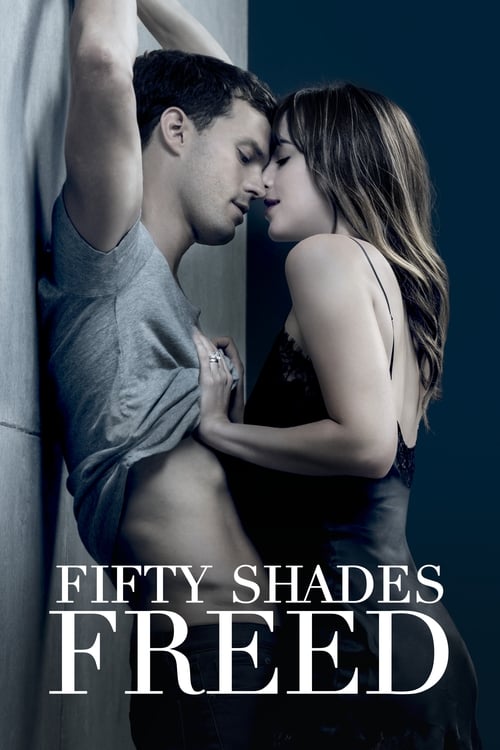
I watched Fifty Shades Freed on a Tuesday afternoon while my radiator was making a rhythmic clanking sound—like a ghost trying to practice the drums—and I realized the radiator had more natural rhythm than the romantic pacing of this movie. It’s a strange thing, revisiting the "climax" of a trilogy that managed to gross over $1.3 billion globally while simultaneously being the most frequently "hate-watched" franchise of the late 2010s. For those of us who lived through the cultural saturation of E.L. James's novels, this third entry feels less like a movie and more like a victory lap through a high-end furniture catalog.
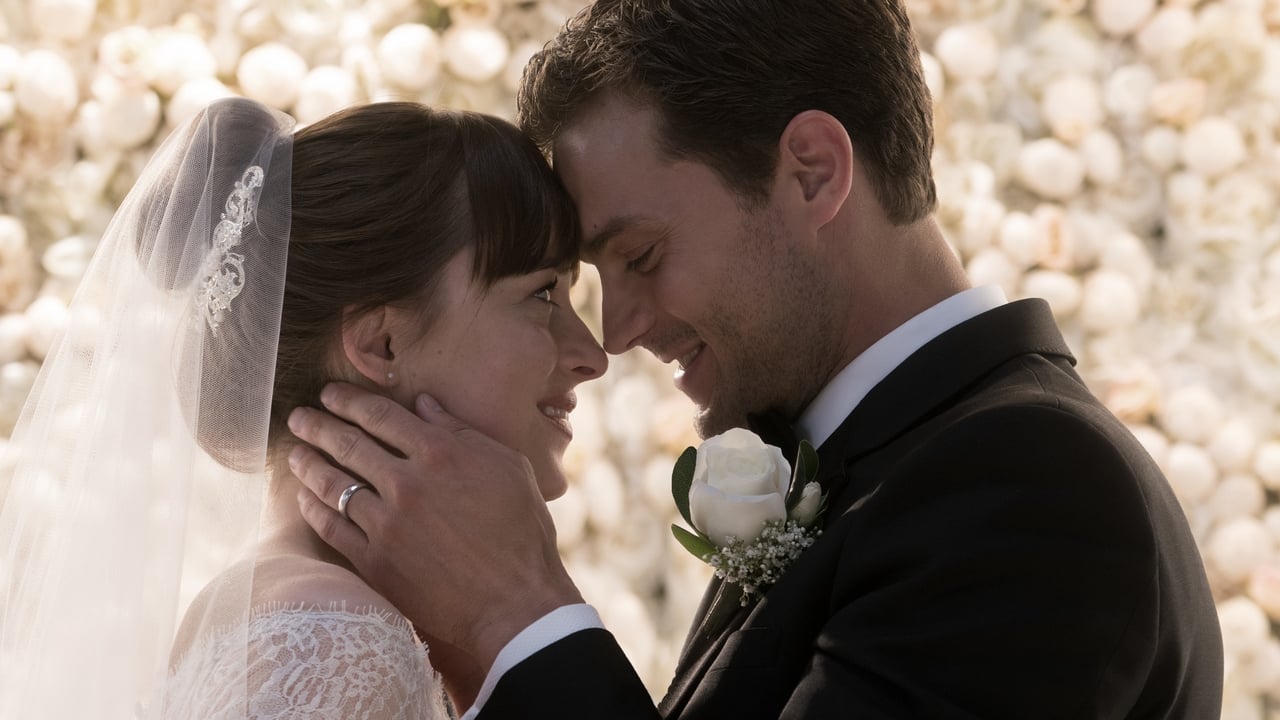
By the time 2018 rolled around, the shock value of the first film had evaporated, replaced by a weirdly cozy, domestic normalcy. We find Dakota Johnson’s Anastasia Steele and Jamie Dornan’s Christian Grey married and jet-setting across Europe. It’s the "happily ever after" portion of the program, provided your happy ending includes a personal security detail and a fleet of Audis.
The Survival of the Sincerest
What strikes me now, looking back from our current era of "Content" (capital C), is how much Dakota Johnson single-handedly saves this entire enterprise. She has this incredible, understated ability to look at a line of dialogue that belongs in a middle-school diary and deliver it with a wink that says, "I know, but let's just do this." She’s the only person in the frame who feels like a human being. On the flip side, Jamie Dornan, an actor I genuinely adore in The Fall or Belfast, still feels like he’s playing a man who has been told what human emotions are but hasn't actually tried them on for size yet.
The chemistry is... there? It’s better than the first film, certainly. By this point, the two leads had spent months filming the second and third installments back-to-back, and there’s a weary familiarity to their interactions that actually passes for a seasoned marriage. Fifty Shades Freed is essentially a travel brochure for people who find the color beige genuinely thrilling.
A Thriller Subplot from a Different Planet
Because watching a couple argue over whether or not to have children isn't quite "blockbuster" enough, the script (penned by Niall Leonard, husband of the source material's author) doubles down on the stalking subplot involving Eric Johnson as Jack Hyde. This is where the movie veers into unintentional comedy. The thriller subplot feels like it was written by someone who had only seen one episode of 'CSI' and half a 'Lifetime' movie.
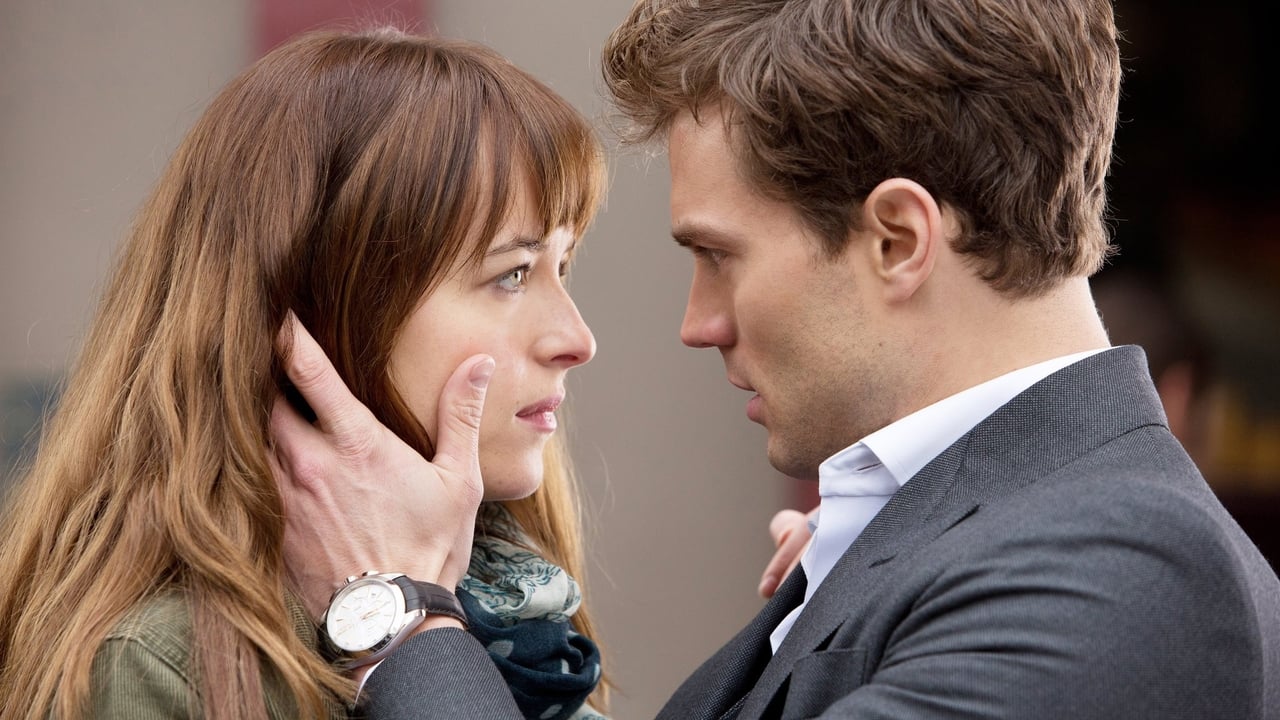
Jack Hyde is a villain whose motivations are as murky as his ability to bypass world-class security. Every time he popped up on screen, I found myself wondering how he afforded his surveillance equipment on an editor’s salary. It’s these moments—the kidnapping, the car chases, the dramatic standoffs—that highlight how uncomfortable the franchise is with just being a romance. It feels the need to apologize for its own domesticity by throwing in a "danger" element that carries zero actual weight.
The $55 Million Aesthetic
You have to give it to director James Foley (who took over the reins after Sam Taylor-Johnson wisely exited after the first film): the movie looks expensive. From the French Riviera to the sleek interiors of the Grey mansion, John Schwartzman’s cinematography treats every surface like it’s being sold at a silent auction. It’s peak "wealth-porn," a staple of the late 2010s before the cultural conversation shifted toward more critical views of the billionaire class.
Even the soundtrack, featuring Rita Ora (who also appears as Mia Grey) and Liam Payne, is engineered for maximum radio play. It’s a very specific kind of corporate synergy that defined the pre-streaming-dominance theatrical landscape. This was a movie built on a brand, for a brand, to sell a brand.
Stuff You Didn't Notice
One of the most fascinating bits of trivia is that the production filmed both Fifty Shades Darker and Fifty Shades Freed simultaneously over 103 days. That’s a lot of time to spend in the "Red Room" without a vacation. Despite the critical drubbing, the financial efficiency was staggering; the film's $55 million budget yielded a $371 million return.
Interestingly, the film’s "Red Room" scenes were choreographed with a level of clinical precision that almost removes the heat entirely. To maintain a specific "look," Dakota Johnson famously used a butt double for certain shots, while the actors used "pasties" and "modesty patches" that were frequently edited out with CGI in post-production. It’s the least "sexy" way to film sex imaginable—more like a high-stakes engineering project than a romantic encounter. Also, keep an ear out for the score; having Danny Elfman—the man behind Batman and The Nightmare Before Christmas—composing for a suburban erotic drama is one of the era's most surreal creative pairings.
Ultimately, Fifty Shades Freed is the cinematic equivalent of a luxury scented candle: it smells nice, costs too much, and eventually just burns out into a puddle of wax. It’s not a "good" movie by any traditional metric of drama or pacing, but as a time capsule of 2018’s obsession with high-gloss domestic fantasy, it’s strangely watchable. If you’re looking for a film where the biggest conflict is whether a billionaire should buy his wife a publishing company, this is your Citizen Kane. For the rest of us, it’s a harmless, gilded relic of a franchise that finally learned how to say goodbye.


Keep Exploring...
-
Fifty Shades Darker
2017
-
Fifty Shades of Grey
2015
-
Ticket to Paradise
2022
-

Where the Crawdads Sing
2022
-
Bridget Jones's Baby
2016
-
Downton Abbey
2019
-

Materialists
2025
-
Cinderella
2015
-
Passengers
2016
-
It Ends with Us
2024
-
Equals
2015
-

Paper Towns
2015
-
The Age of Adaline
2015
-
The Longest Ride
2015
-
Allied
2016
-
Café Society
2016
-
Collateral Beauty
2016
-
Fallen
2016
-
High Strung
2016
-

Mother's Day
2016