Ghostland
"Fiction is a shield, but trauma is the sword."
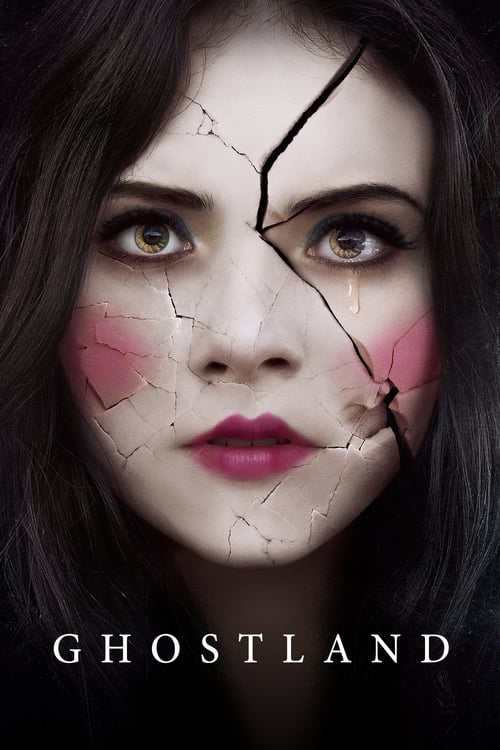
If you’ve seen Pascal Laugier’s 2008 breakthrough Martyrs, you know the man doesn't just make movies; he stages psychological assaults. Walking into his 2018 effort, Ghostland (often titled Incident in a Ghostland), I felt like I was voluntarily checking myself into a specialized ward for cinematic punishment. Laugier belongs to that uncompromising school of French horror that views the audience’s comfort as a personal insult, and while Ghostland is technically a Canadian-French co-production, its DNA is pure, unadulterated New French Extremity.
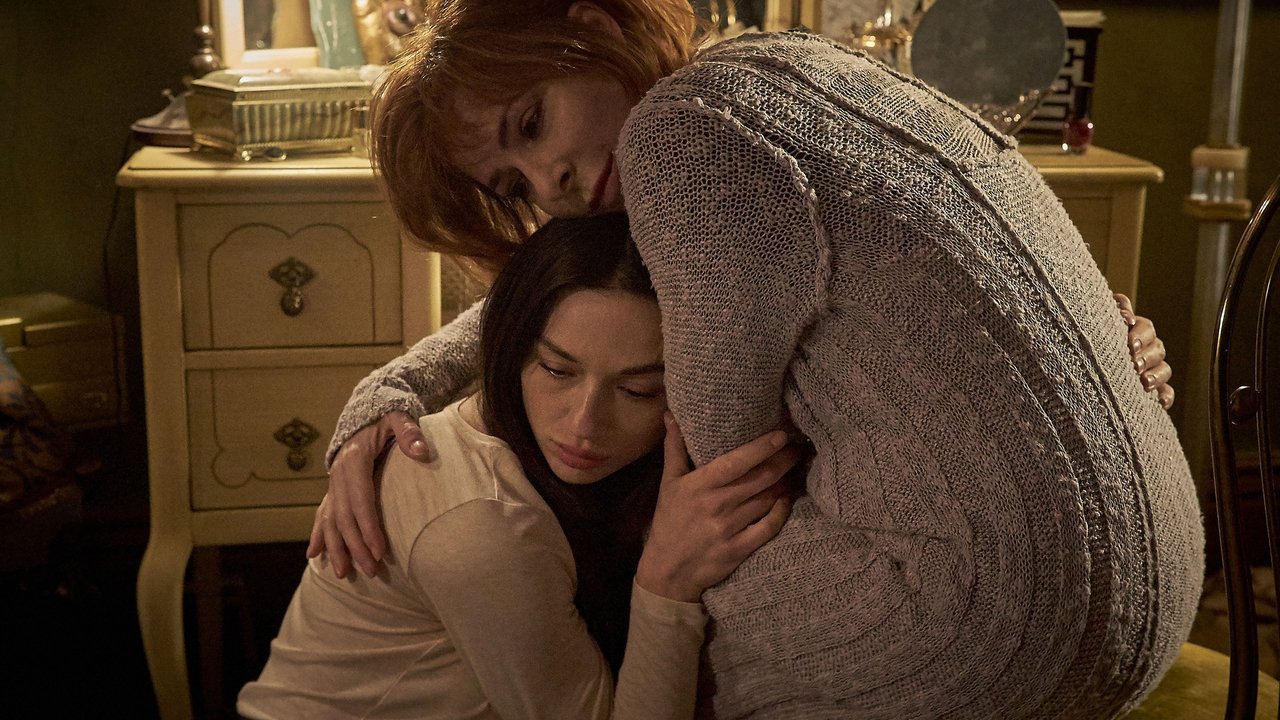
I watched this on a Tuesday night while eating those weirdly addictive salt-and-vinegar chickpeas, and I think the acid burn on my tongue was the only thing keeping me grounded while the film tried to liquefy my brain. It’s a mean, suffocating, and deeply polarizing piece of work that fits perfectly into our current era of "trauma horror," though it trades the polished grief of an A24 production for something much filthier and more confrontational.
A Dollhouse of Broken Things
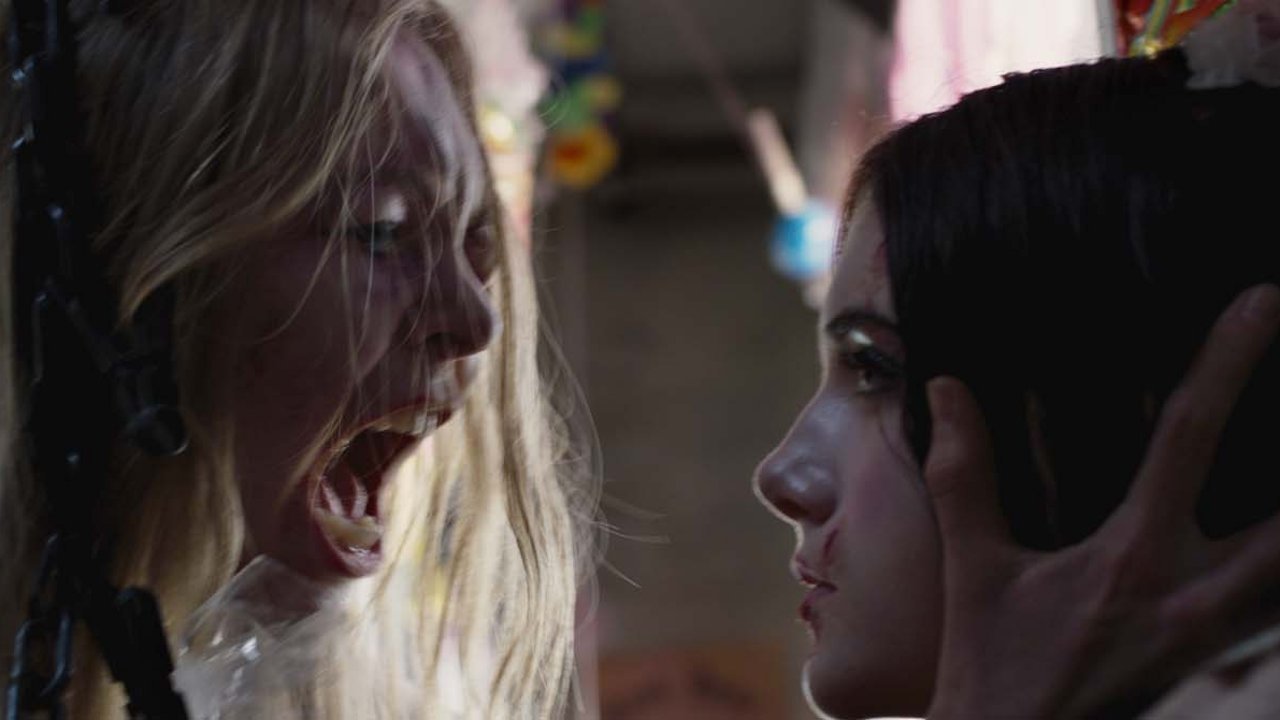
The setup feels like a classic urban legend. A mother, Pauline (Mylène Farmer), and her two daughters—the aspiring horror writer Beth (Emilia Jones) and the rebellious Vera (Taylor Hickson)—move into a house inherited from a deceased aunt. The place is a hoarder's nightmare of antique dolls and Victorian clutter. Before they can even unpack, they are set upon by two intruders: a towering, wheezing "Fat Man" (Rob Archer) and a "Candy Witch" who drives a customized ice cream truck.
It starts as a home invasion flick, but Laugier is bored by tropes. We suddenly jump sixteen years into the future. Beth (Crystal Reed) is now a famous horror novelist, living a sleek, successful life, while Vera (Anastasia Phillips) remains trapped in the old house, broken by the trauma of that night. When Beth returns to help her sister, the film yanks the rug out. I won't spoil the pivot point, but I will say that Laugier plays a cruel trick on the audience’s desire for a happy ending.
The atmosphere is heavy with the scent of dust and rot. The "Fat Man" isn't just a killer; he’s a presence that feels like a physical weight on the chest. The sound design is particularly nasty—lots of metallic screeches and wet, thudding impacts that make the violence feel uncomfortably close. This isn't the "fun" kind of scary you get from a Conjuring movie. This is the kind of horror that makes you want to take a long, hot shower with steel wool.
The Reality of the Scar

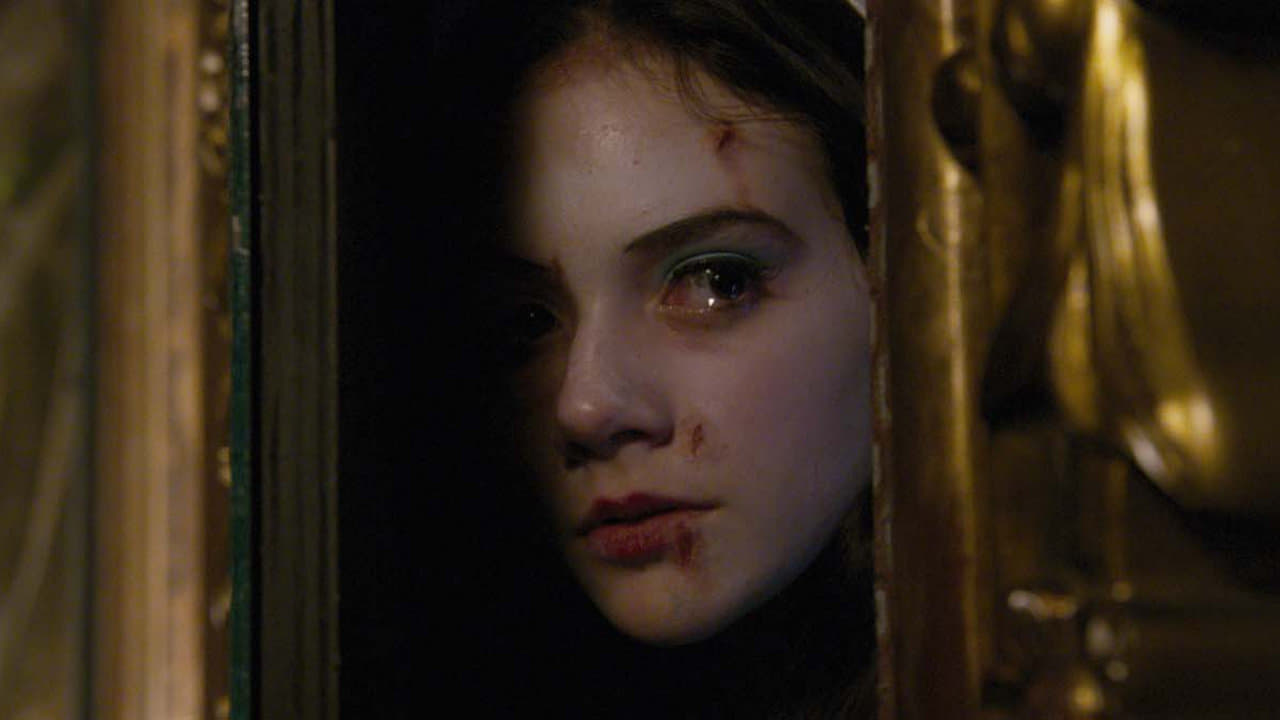
Behind the scenes, Ghostland earned its cult notoriety through a tragic real-world incident. During a scene where Taylor Hickson was told to pound on a glass door, the pane shattered, causing a massive facial injury that required 70 stitches and left her with permanent scarring. It’s a grim piece of trivia that hangs over the film, especially given its themes of female brutalization and the physical marks of trauma. Hickson eventually sued the production, and for many fans, this incident turned the film into a "forbidden" object—a piece of media born from genuine pain.
Speaking of the cast, the inclusion of Mylène Farmer is a massive "Easter egg" for anyone familiar with European pop culture. She’s essentially the French Madonna, an icon of ethereal, moody pop who almost never appears in films. Seeing her play a fierce, protective mother adds a layer of surrealism for those of us who grew up with her music videos.
Then there’s the Lovecraft of it all. Beth is obsessed with H.P. Lovecraft, and the film treats the legendary author almost like a patron saint of escapism. Laugier seems to be asking: Why do we write these stories? Is it to face the darkness, or to build a wall against it? It’s a meta-commentary that elevates the film above a standard slasher, even if the script occasionally trips over its own grimness.
Why It Lingers in the Basement
In an era where streaming services are flooded with sanitized, bloodless thrillers, Ghostland stands out because it refuses to be liked. It’s a film about the mechanisms of survival—specifically how the mind fractures to protect itself from things it can't handle. The production design is a masterclass in claustrophobia; the house feels like a living organism that has swallowed these girls whole.
It’s a cult classic not because it’s "so bad it’s good," but because it’s so intense it’s difficult. It divided critics upon release, with some praising its narrative complexity and others loathing its perceived misogyny. Personally, I find it to be a fascinating, if agonizing, look at how we process nightmares. It’s a movie that demands you engage with its ugliness.
If you’re looking for a film that explores the "final girl" trope through a jagged, psychological lens, this is it. Just don’t expect to feel good when the credits roll. It’s a reminder that sometimes, the things we do to survive are just as terrifying as the things we’re running from.
Ghostland is a jagged pill of a movie that won’t appeal to everyone, but it’s an essential watch for those who track the evolution of the "trauma-core" subgenre. It’s a brutal, imaginative, and deeply sad exploration of the stories we tell ourselves to stay sane. It may not have the historical weight of Martyrs yet, but it’s a film that stays in your head long after you’ve turned off the TV and checked the locks on your front door. It’s a dark, messy, and necessary reminder that horror is at its best when it actually hurts a little.

Keep Exploring...
-
Hereditary
2018
-
Martyrs
2008
-
Get Out
2017
-
Marrowbone
2017
-
The Conjuring: The Devil Made Me Do It
2021
-
Anatomy of a Fall
2023
-
I'm Thinking of Ending Things
2020
-
Escape Room: Tournament of Champions
2021
-
The Pale Blue Eye
2022
-
Sherlock: The Abominable Bride
2016
-
Train to Busan
2016
-
What Happened to Monday
2017
-

The House That Jack Built
2018
-
Midsommar
2019
-
Don't Breathe 2
2021
-
Fear Street: 1978
2021
-
Last Night in Soho
2021
-
The Menu
2022
-
Run
2020
-

Black Box
2021