Love, Simon
"Finally, a rom-com that knows your browser history."
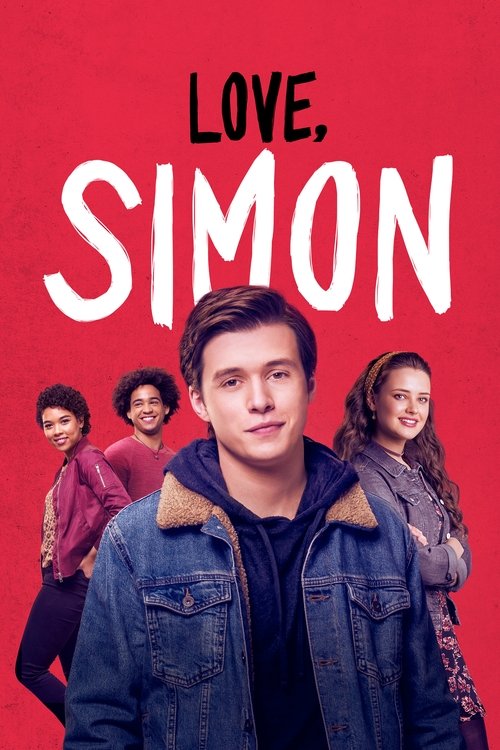
There’s a specific kind of internal vertigo that comes from living a double life in a suburban cul-de-sac. It’s not the high-stakes espionage of a Bond flick; it’s the quiet, exhausting surveillance of your own vocabulary, your posture, and your Spotify "Recently Played" list. I watched Love, Simon while recovering from a wisdom tooth extraction, and let me tell you, the lingering haze of the painkillers only amplified the film’s dreamlike, hyper-realized version of high school. It’s a place where every teenager has a perfectly curated bedroom and parents who look like Jennifer Garner and Josh Duhamel, yet the emotional core is surprisingly, refreshingly sturdy.
The Architecture of the "Default"
What struck me most about Greg Berlanti’s direction (bringing his sharp Dawson’s Creek sensibilities into the modern age) is how the film grapples with the concept of the "default." There is a brilliant, satirical montage early on where Simon imagines a world where straight kids have to "come out" to their parents. It’s funny, sure, but it poses a genuine philosophical question: Why is the burden of declaration always on the "other"?
Nick Robinson delivers a performance that is all about the eyes. As Simon Spier, he’s not a tragic figure; he’s just a kid who wants to hold onto his secret until he’s ready. Robinson plays the role with a restrained, interior quality that makes his eventual unraveling feel earned rather than performative. When he begins an anonymous email correspondence with "Blue," another closeted student at his school, the movie shifts from a standard teen drama into a digital-age mystery. It captures that 2018 zeitgeist where our most intimate connections were often mediated through glowing screens and Gmail drafts.
A Cast of High-Stakes Friendships
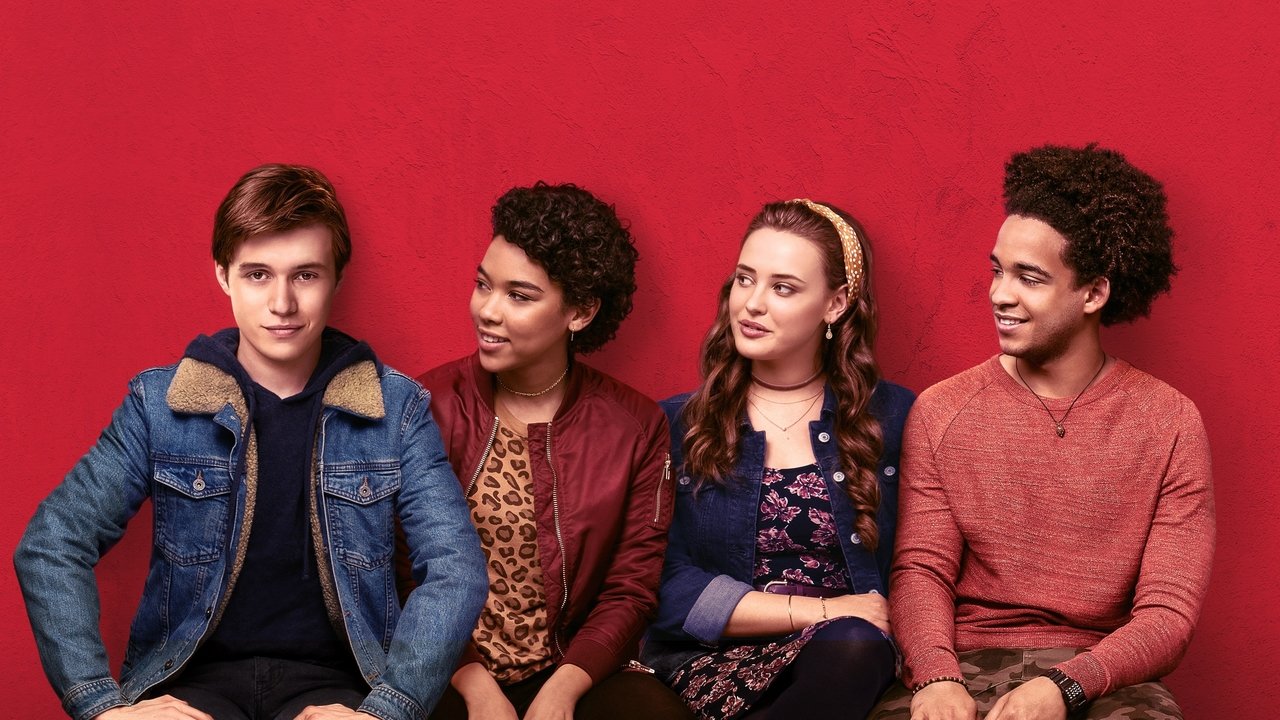
The surrounding ensemble—Alexandra Shipp, Jorge Lendeborg Jr., and Katherine Langford—provides the necessary friction. They aren't just background noise; they represent the collateral damage of Simon's secrecy. However, the fly in the ointment is Logan Miller as Martin Addison. Martin Addison is a bargain-bin Duckie with a harassment problem. His blackmailing of Simon is meant to be the catalyst for the plot, but in a contemporary light, his character feels like a relic of a "nice guy" trope that hasn't aged particularly well. He’s the one element that feels slightly out of sync with the film's otherwise empathetic frequency.
The film's "Prestige" moment, however, belongs to Jennifer Garner. Her "You get to exhale now" monologue is essentially a masterclass in how to deliver a "Best Supporting Actress" clip. It’s the kind of empathetic, utopian parenting that arguably exists more in cinema than in reality, but for an audience that grew up without seeing that kind of affirmation on a big screen, it carries the weight of a monumental shift in representation.
Stuff You Might Have Missed
While Love, Simon feels like a cozy, accessible watch, the production was actually quite a landmark. It was the first film released by a major studio (Fox 2000) to focus on a gay teen romance, a move that felt like a seismic shift in an industry usually terrified of anything that isn't a "four-quadrant" blockbuster.
Family Ties: Nick Robinson's brother actually came out to him while he was filming the movie, which added a layer of personal stakes to his performance that you can see in the more vulnerable scenes. A Familiar Voice: The soundtrack was executive produced by Jack Antonoff (of Bleachers and Fun. fame), who used 80s-inspired synthesizers to intentionally evoke the spirit of John Hughes films like Pretty in Pink (1986). The Cameo: The author of the original book, Becky Albertalli, makes a quick cameo as a student in the background during one of the school scenes. Strategic Release: The film’s "For Your Consideration" campaign wasn't just about the acting; it won a GLAAD Media Award for Outstanding Film, cementing its status as a culturally significant milestone in the 2010s "Representation Matters" movement.
The Mystery of Blue
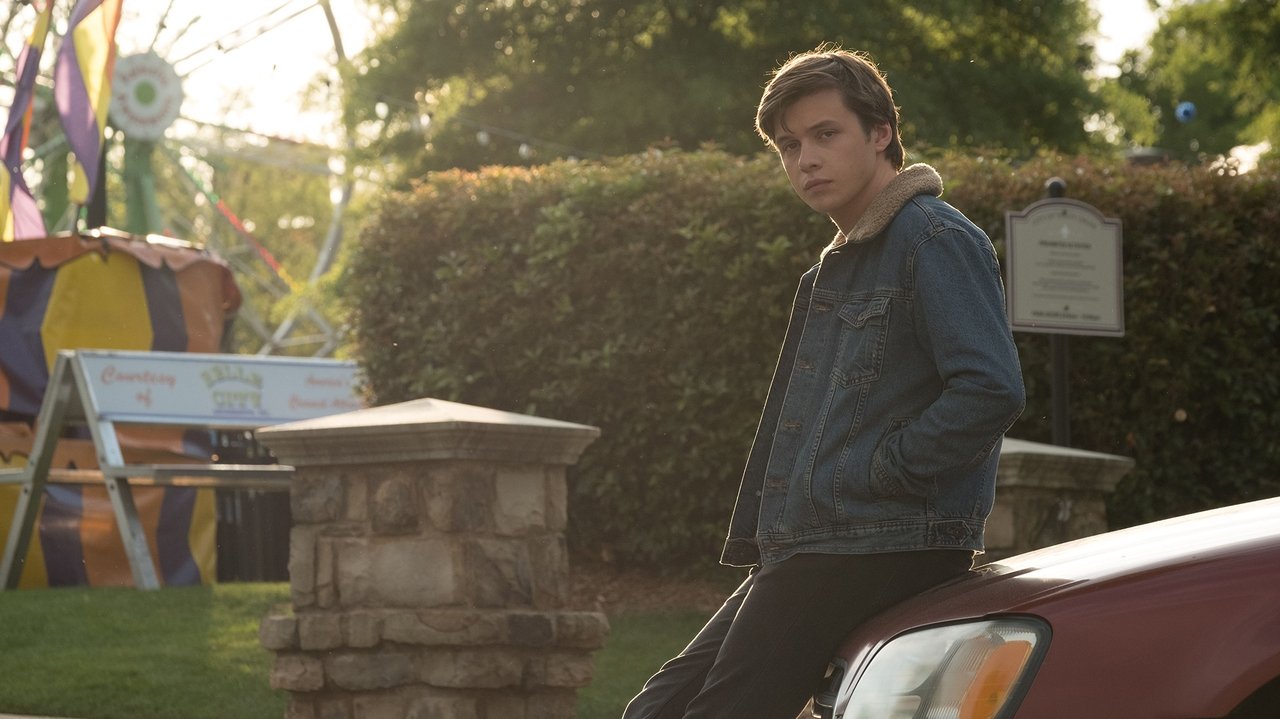
The "Who is Blue?" mystery is handled with a playful, almost Hitchcockian use of perspective. Berlanti lets us see various classmates through Simon’s hopeful eyes, momentarily casting them in the role of his digital soulmate. It’s a clever way to keep the audience engaged in a story that could have otherwise felt like a standard "will they/won't they." By the time we get to the ferris wheel finale, the film has fully leaned into its identity as a unapologetic, sugary rom-com. It’s not trying to be a gritty indie like Moonlight (2016); it wants to be the movie where the guy gets the guy while the crowd cheers. In the streaming era, where queer stories are often relegated to niche platforms, seeing this level of "Big Studio" polish applied to a gay coming-of-age story remains a vital, joyful experience.
Ultimately, Love, Simon succeeds because it demands the right to be "normal." It takes the tropes we’ve seen a thousand times—the school play, the messy parties, the awkward car rides—and recalibrates them for a protagonist who has historically been the "best friend" rather than the lead. It’s a film that understands the terror of being known, but also the profound relief of finally being seen. Even if the world it depicts is a little too shiny and the resolution a little too perfect, it’s a fantasy that a lot of people needed to see.


Keep Exploring...
-

La La Land
2016
-

Five Feet Apart
2019
-

Little Women
2019
-

Midnight Sun
2018
-

Anomalisa
2015
-

A Silent Voice: The Movie
2016
-

Perfect Strangers
2016
-
The Big Sick
2017
-

All the Bright Places
2020
-

The Longest Ride
2015
-
Instant Family
2018
-

The Art of Racing in the Rain
2019
-

I Still Believe
2020
-

CODA
2021
-

Where the Crawdads Sing
2022
-

Past Lives
2023
-

The Holdovers
2023
-

Paterson
2016
-
The Ballad of Buster Scruggs
2018
-

The Half of It
2020