Ralph Breaks the Internet
"Friendship gets a software update it didn't ask for."
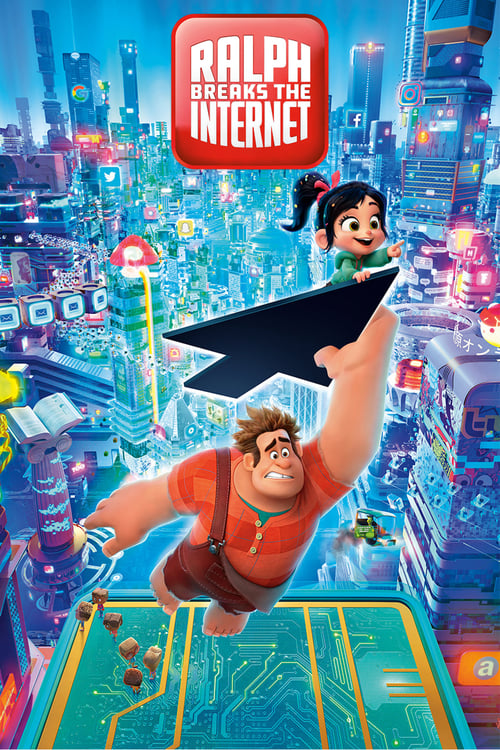
The jump from a dusty 1980s arcade cabinet to the neon-soaked sprawl of the modern internet is the kind of sequel escalation that usually spells disaster. It’s the cinematic equivalent of moving from a cozy studio apartment to a 50-story penthouse and realizing you have no idea how to pay the utility bill. When I first sat down to watch Ralph Breaks the Internet, I was mostly distracted by a guy three rows down who was aggressively unwrapping what smelled like an entire rotisserie chicken, but even that couldn't pull my focus away from the sheer, overwhelming scale of what Rich Moore (who directed the brilliant Zootopia) and Phil Johnston built here.
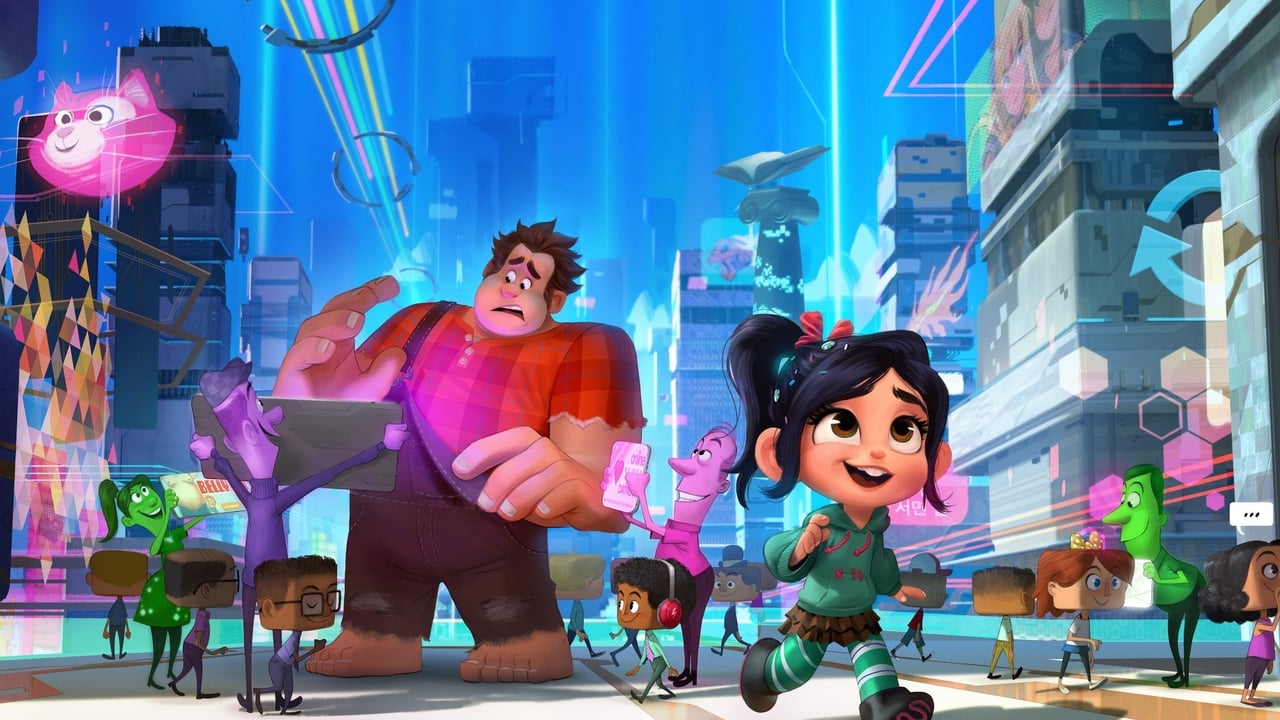
This isn't just a movie; it’s a time capsule of 2018 digital culture, for better and occasionally for much, much worse.
The Great Leap Out of the Arcade
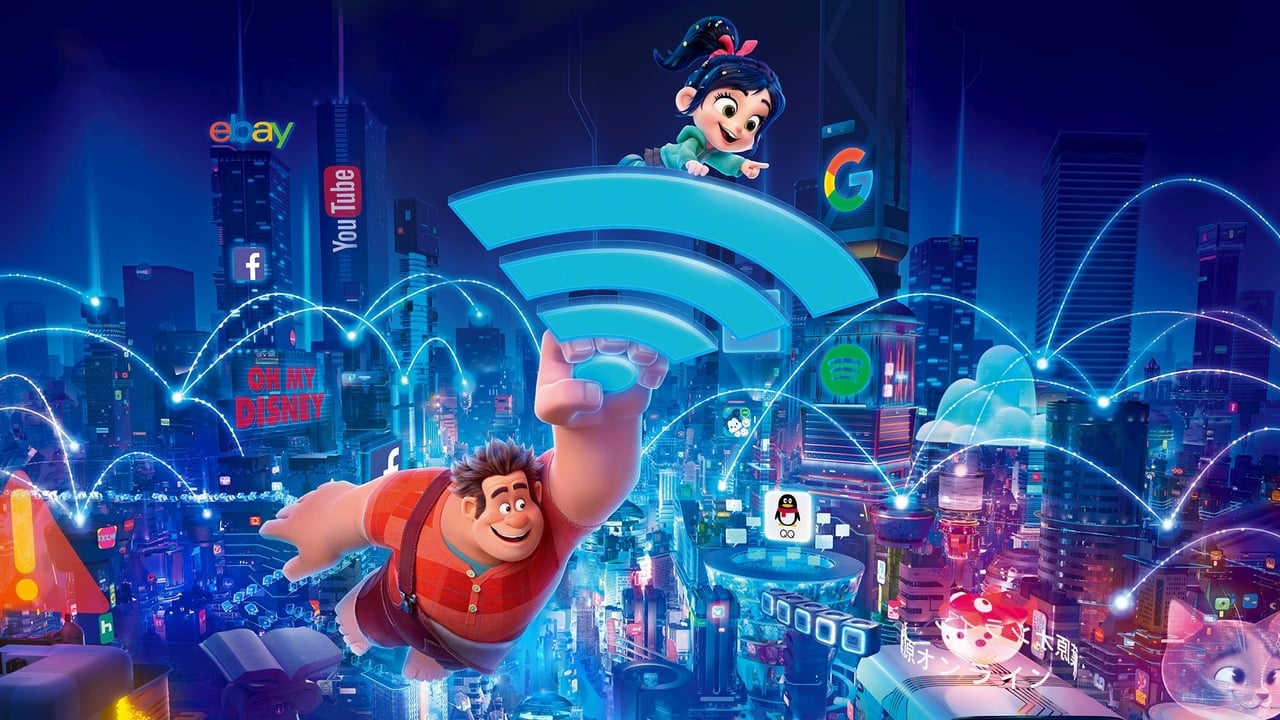
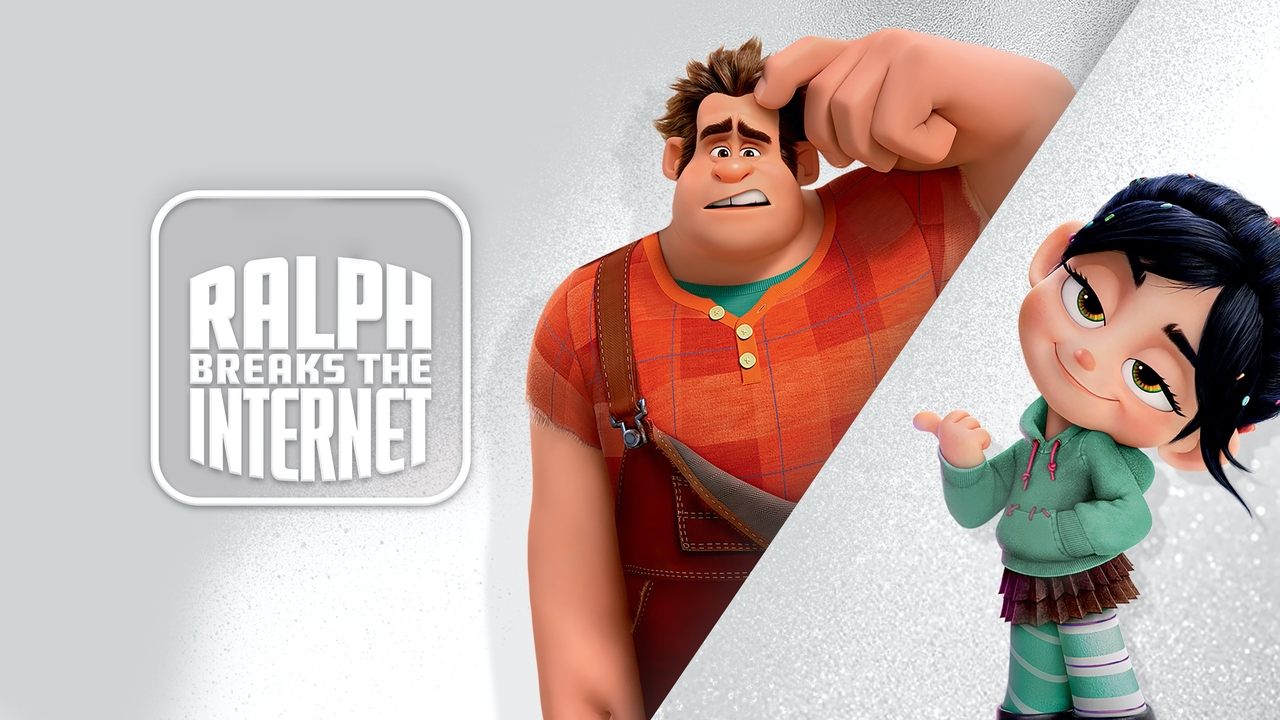
The story picks up six years after the original, with John C. Reilly returning as the lovable, thumbless wrecking ball Ralph, and Sarah Silverman providing the high-octane glitch-energy of Vanellope von Schweetz. Their life is a loop of root beer and Tapper’s, which is heaven for Ralph but a slow-motion nightmare for Vanellope. When a physical steering wheel breaks on her Sugar Rush cabinet, the two dive into a newly installed Wi-Fi router to find a replacement on eBay.
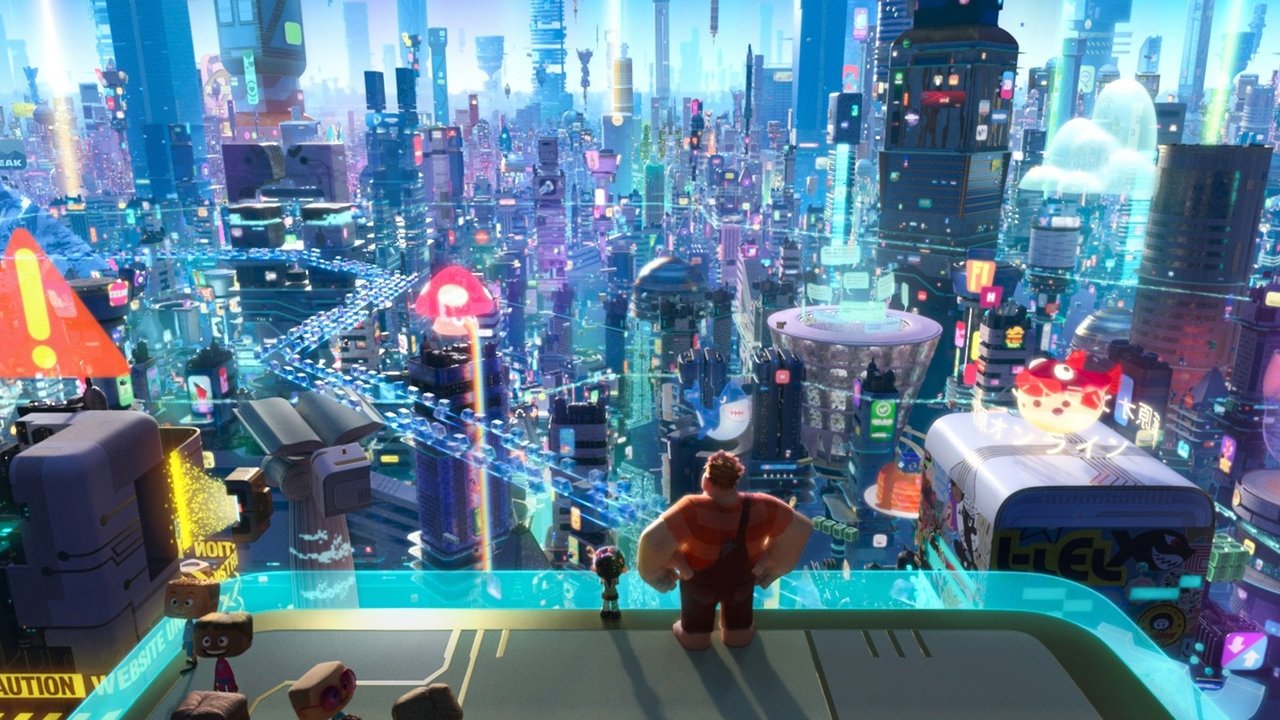
What follows is a piece of world-building that feels like it was designed by a team of people who haven't slept since the invention of the hashtag. The internet is visualized as a vertical metropolis where avatars of real users scurry around while "Netizens" (the workers) keep the gears turning. It’s clever—sometimes too clever. I found the depiction of the "Search Bar" (voiced with frantic perfection by Bill Hader, of Saturday Night Live and Barry fame) to be a highlight, capturing that specific anxiety of an autocomplete function that thinks it knows what you want before you do.
A Self-Aware Kingdom of Content
If the first film was a love letter to the 8-bit era, this sequel is a sprawl of corporate synergy that occasionally feels like it’s checking your browser cookies. Nowhere is this more apparent than the "Oh My Disney" sequence. It’s the ultimate flex. Disney effectively stops the movie to show off their toy box, featuring everything from Star Wars Stormtroopers to Marvel cameos.
However, the sequence featuring the Disney Princesses is undeniably the film's peak. Bringing back almost all the original living voice actresses—including Irene Bedard (Pocahontas), Paige O'Hara (Belle), and Ming-Na Wen (Mulan)—is the kind of fan service that actually serves a purpose. It deconstructs the "damsel in distress" trope with a wink and a nod that feels earned, even if Disney basically turned their own history into a luxury shopping mall for the sake of a few gags. It’s here we meet Gal Gadot (our Wonder Woman) as Shank, a badass driver in a gritty, Grand Theft Auto-style game called Slaughter Race. She provides the catalyst for Vanellope’s "I Want" song, which is a hilarious, gritty power ballad composed by the legendary Alan Menken.
When Friendship Hits a Glitch
Beyond the "spot the logo" gameplay of the background gags, the movie takes a surprisingly dark turn into the mechanics of toxic friendship. As Vanellope finds a new home in the dangerous streets of Slaughter Race, Ralph’s insecurity morphs into something monstrous—literally. The climax involves a literal swarm of Ralph clones forming a giant "Ralph-Zilla," which is a bold, if slightly horrifying, visual metaphor for needy, suffocating affection.
It’s a heavy pivot for a family adventure. I honestly didn’t expect a Disney sequel to call out the 'nice guy' energy of its protagonist so ruthlessly, but it’s the most "contemporary" thing about the film. It engages with the idea that growth often means growing apart, a theme that resonates more with the adults in the room than the kids distracted by the bright colors.
On the technical side, the budget was a staggering $175 million, and you can see every cent. The way the lighting shifts from the flat, warm glow of the arcade to the cold, blue-light flicker of the internet is subtle but effective. The score by Henry Jackman (who also did Captain America: The Winter Soldier) does a great job of blending chiptune nostalgia with a more driving, modern electronic pulse.
Stuff You Didn't Notice
One of the more impressive feats of production was the sheer volume of unique characters. The crowds in the internet scenes aren't just copy-pasted; the animation team developed a system to generate thousands of distinct avatars to make the world feel populated.
Interestingly, the film also had to navigate the minefield of real-world branding. While eBay and Google are front and center, some brands were more hesitant. Apparently, the production team had to be careful with how they depicted certain social media algorithms. Taraji P. Henson (from Empire and Hidden Figures) plays Yesss, the head of "BuzzzTube," a character who embodies the fickle, fleeting nature of internet fame. The scene where Ralph reads the comments section is perhaps the most "horror" moment in any 2018 film—a stark reminder of the era’s burgeoning awareness of online toxicity.
With a worldwide box office pull of over $529 million, the film was an undeniable smash, proving that the "IP mashup" genre (which The LEGO Movie pioneered) was the new gold standard for the late 2010s. It’s a film that perfectly captures the frantic, cluttered, and slightly exhausting experience of being online.
Ralph Breaks the Internet is a rare sequel that manages to expand its world without losing its heart, even if it occasionally trips over its own shoelaces trying to show you how many brands it owns. It’s a visually stunning adventure that swaps "Game Over" screens for "Connection Timed Out" errors, delivering a surprisingly mature message about letting go. It’s fun, it’s fast, and it’s a vivid reminder of what the digital landscape looked like right before it got even weirder.
Keep Exploring...
-
Wreck-It Ralph
2012
-
Zootopia
2016
-
Smurfs: The Lost Village
2017
-
The Angry Birds Movie
2016
-

Minions: The Rise of Gru
2022
-
Minions
2015
-
Finding Dory
2016
-
Kung Fu Panda 3
2016
-
Moana
2016
-
The Secret Life of Pets
2016
-
Despicable Me 3
2017
-
Frozen II
2019
-
The Secret Life of Pets 2
2019
-
Toy Story 4
2019
-
The Croods: A New Age
2020
-
The Bad Guys
2022
-
Migration
2023
-
The Super Mario Bros. Movie
2023
-
PAW Patrol: The Movie
2021
-
Inside Out
2015