Red Sparrow
"In a world of secrets, your body is the ultimate weapon."
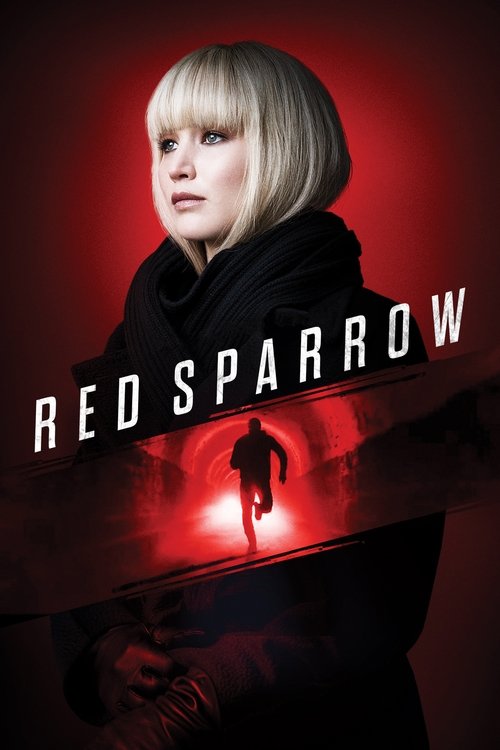
In 2018, the multiplex was a sea of spandex and quips, a landscape where the stakes often felt as weightless as the CGI. Amidst that neon-soaked franchise dominance, Francis Lawrence—the man who guided Jennifer Lawrence through the dystopia of The Hunger Games—decided to drop a bucket of cold, grey slush onto our collective heads. I watched this film on a particularly damp Tuesday while wearing a pair of itchy wool socks I’d bought during a layover in Prague, and honestly, the scratchy discomfort of the wool perfectly complemented the film’s punishing, clinical atmosphere. It’s not a "fun" movie in the traditional sense, but in an era of sanitized blockbusters, its sheer commitment to being miserable is almost refreshing.

The Anti-Bond Aesthetic
Red Sparrow is often marketed as a high-octane spy thriller, but that’s a bit of a bait-and-switch. This isn't John Wick with a Russian accent; it’s a slow, grinding psychological drama that treats the "spy life" with the same romanticism one might afford a colonoscopy. Jennifer Lawrence stars as Dominika Egorova, a prima ballerina whose career ends with a sickening crack during a performance. With no income and a sick mother to care for, she is coerced by her serpentine uncle, played with a chilling, predatory stillness by Matthias Schoenaerts (The Danish Girl), into joining "Sparrow School."
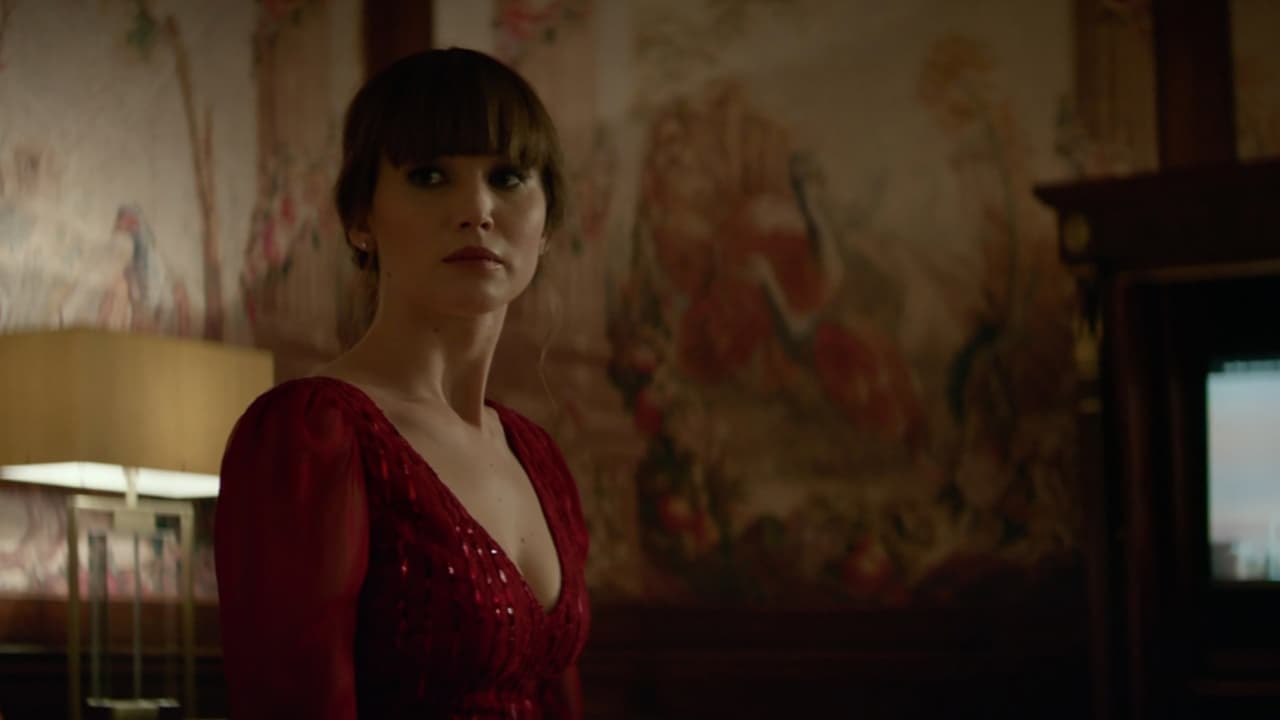
This isn't your typical movie training montage. There are no upbeat pop songs here. Instead, we get Charlotte Rampling as the Matron, a woman who seemingly hasn't blinked since the Nixon administration, teaching young recruits that their bodies belong to the State. The film leans heavily into the "Contemporary Cinema" fascination with deconstructing power dynamics. While it was filmed just as the #MeToo movement began to reshape Hollywood discourse, Red Sparrow feels like a direct, albeit brutal, engagement with those themes of bodily autonomy and systemic exploitation. Jennifer Lawrence’s Russian accent is actually the least distracting thing about this movie, because her physical performance—the way she carries her trauma in her shoulders—is so demanding that you eventually stop listening for vowel shifts.
A Cast Caught in the Cold

The film’s strength lies in its ensemble, most of whom seem to have been told to act like they’re perpetually standing in a drafty hallway. Joel Edgerton (The Gift) plays Nate Nash, a CIA operative who becomes Dominika’s target and eventual confidant. Edgerton is a solid actor, but here he feels like he’s wandered in from a much more conventional movie. He’s the "nice guy" in a world where "nice" is a death sentence. The chemistry between him and Lawrence isn't the fiery passion of a Bond flick; it’s the desperate, sweaty clinging of two people drowning in the same pool.
Then you have the legends. Jeremy Irons and Ciarán Hinds show up to lend some gravitas, looking like they’ve spent the last forty years drinking nothing but vodka and secrets. Irons, in particular, uses his voice like a cello, providing a warmth that the rest of the film's visuals—handled with a sterile, architectural precision by cinematographer Jo Willems—desperately lack. It turns out the author of the original book, Jason Matthews, was a thirty-year veteran of the CIA, and you can feel that "insider" grime in the details. Apparently, Matthews even included recipes at the end of each chapter in his book, a quirky touch that the movie (rightfully) ignores in favor of more scenes of people looking intensely at computer monitors in Budapest.
The Slow-Burn Cult of Discomfort

When Red Sparrow hit theaters, the reception was... polarized. People expecting a "Black Widow" clone were greeted with a 140-minute exploration of sexual politics and torture. It’s easy to see why it didn't become an instant classic, but it has since developed a fascinating cult following among those who crave "adult" cinema that doesn't hold your hand. It’s a film that demands you sit with the discomfort. It’s long, it’s occasionally repetitive, and the plot has more twists than a bag of pretzels, but it feels singular.
What I appreciate about it now, years removed from the initial hype, is how it stands as a relic of a brief window where studios were still willing to throw $69 million at a hard-R, mid-budget spy drama. In our current streaming-first world, this would likely have been chopped into a six-part miniseries on Hulu, losing its cinematic scale in the process. Watching it on the big screen (or a very large TV with the lights off) allows the score by James Newton Howard to really get under your skin. It’s a lush, orchestral throwback that feels at odds with the modern, synth-heavy scores we usually get, and that friction is where the movie lives.
Red Sparrow is a difficult film to love but an easy one to respect. It’s a cold, calculated piece of work that benefits from Jennifer Lawrence’s total lack of vanity. If you’re looking for a spy film that makes you feel like you need a hot shower and a long nap afterwards, this is your gold standard. It’s a fascinating, flawed, and fiercely committed drama that proves, if nothing else, that Charlotte Rampling can out-stare anyone on the planet. Even if it doesn't leave you cheering, it will certainly leave you thinking about it long after the credits roll.

Keep Exploring...
-

Inferno
2016
-
Death on the Nile
2022
-
The Pale Blue Eye
2022
-

The Hunger Games: Mockingjay - Part 2
2015
-
Solace
2015
-
The Gift
2015
-
The Boy
2016
-

What Happened to Monday
2017
-
Bad Times at the El Royale
2018
-
I'm Thinking of Ending Things
2020
-

Escape Room: Tournament of Champions
2021
-

Old
2021
-

The Woman in the Window
2021
-

Don't Worry Darling
2022
-
A Haunting in Venice
2023
-

Knock at the Cabin
2023
-

Leave the World Behind
2023
-

The Hunger Games: Mockingjay - Part 1
2014
-

A Simple Favor
2018
-

Ghostland
2018