Roma
"The profound weight of the everyday."

There is a specific, rhythmic sound to a mop hitting stone tiles that most movies are too busy to let you hear. Usually, cinema is obsessed with the "extraordinary"—the explosions, the high-stakes betrayals, the terminal illnesses. But when Alfonso Cuarón (the man behind the frantic energy of Children of Men and the cosmic terror of Gravity) decided to go home to Mexico City, he didn’t bring a tripod. He brought a wide-angle lens and a staggering amount of patience.

I watched Roma for the first time on a Sunday afternoon while my neighbor was obsessively leaf-blowing his driveway, and strangely, the suburban monotony outside my window only made the film’s immersive reality feel more haunting. This isn't just a movie; it’s a memory reconstructed with the surgical precision of a ghost trying to touch the living.
The Netflix Revolution and the "Big Screen" Fallacy
To talk about Roma is to talk about how we watch movies now. Released in 2018, it was the spearhead of the Netflix prestige era—the moment the "streaming service" became a "film studio" capable of humbling the old guard. There was a massive discourse at the time: is it still "cinema" if you can pause it to go make a sandwich? Watching this on a smartphone is like trying to view the Sistine Chapel through a keyhole, yet that’s exactly how millions first encountered it.
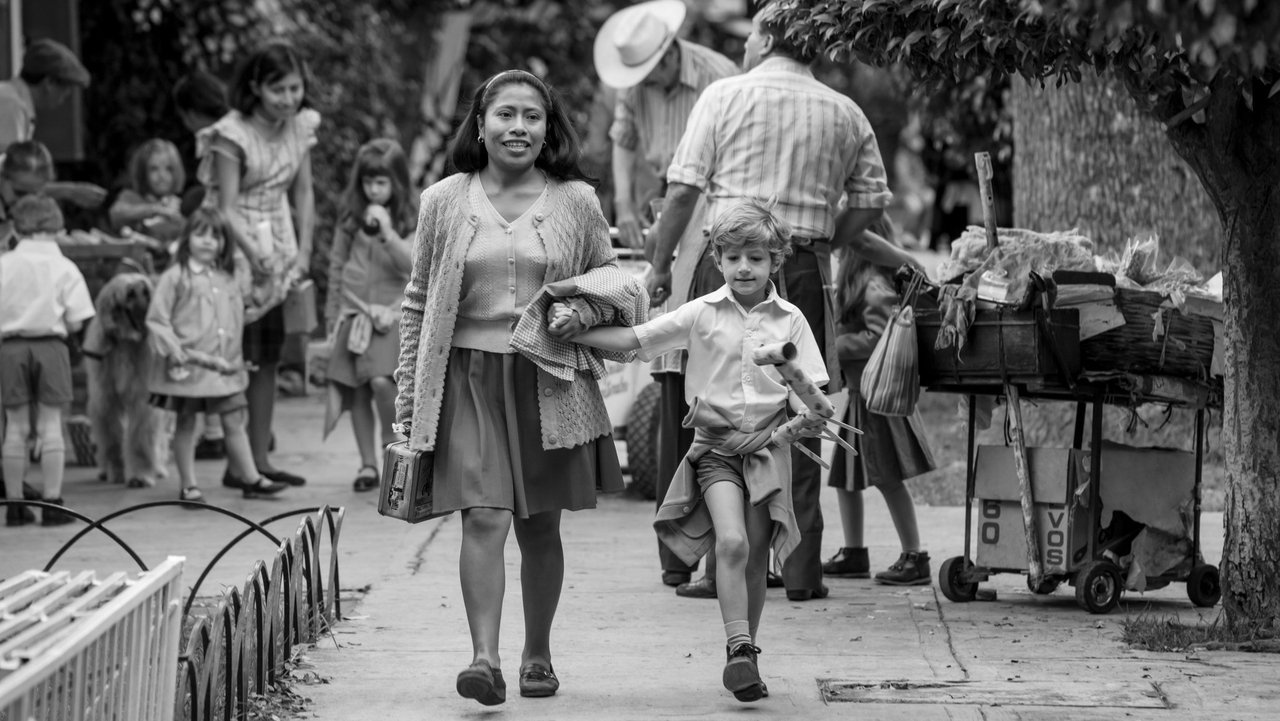
The irony is that Alfonso Cuarón shot this on 65mm digital black-and-white, creating images so sharp they almost hurt to look at. He serves as his own cinematographer here, and his camera doesn’t zoom or cut away during the moments you most want it to. It pans. It lingers. It observes the domestic life of Cleo, a Mixtec live-in maid, with a "God’s eye view" that manages to be both detached and deeply empathetic. It’s a film that demands the largest screen possible, yet it exists because of a platform designed for the smallest ones.
Aparicio and the Power of Stillness

The heart of the film isn't a seasoned pro, but Yalitza Aparicio. Before this, she was a preschool teacher; after this, she was an Oscar nominee. Her performance as Cleo is a masterclass in what I call "the cinema of the face." Because the script (which the actors weren't allowed to read in advance) keeps Cleo’s inner world somewhat guarded, we have to find her in the way she hangs laundry or how she sits on the edge of a bed.
Opposite her, Marina de Tavira plays Sofía, the mother of the household, who is slowly watching her marriage dissolve. The chemistry here isn't one of friendship, but of a complex, shared female burden. There’s a scene where a Ford Galaxie—a car far too big for the family’s narrow driveway—is repeatedly scraped against the walls. The most terrifying scene in 2018 wasn't in a horror movie; it was a luxury car slowly being shredded by the architecture of a collapsing middle-class dream. It’s a perfect metaphor for the family’s status: they are trying to fit a life that no longer works into a space that’s too small for their secrets.
A Symphony of the Mundane
The trivia surrounding Roma reads like the diary of a beautiful madman. Alfonso Cuarón didn't just build sets; he tracked down 70% of his own family’s original furniture to populate the house. He didn't give the actors a script, instead telling each person different, often contradictory things about what was happening in a scene to create genuine confusion and overlapping dialogue.
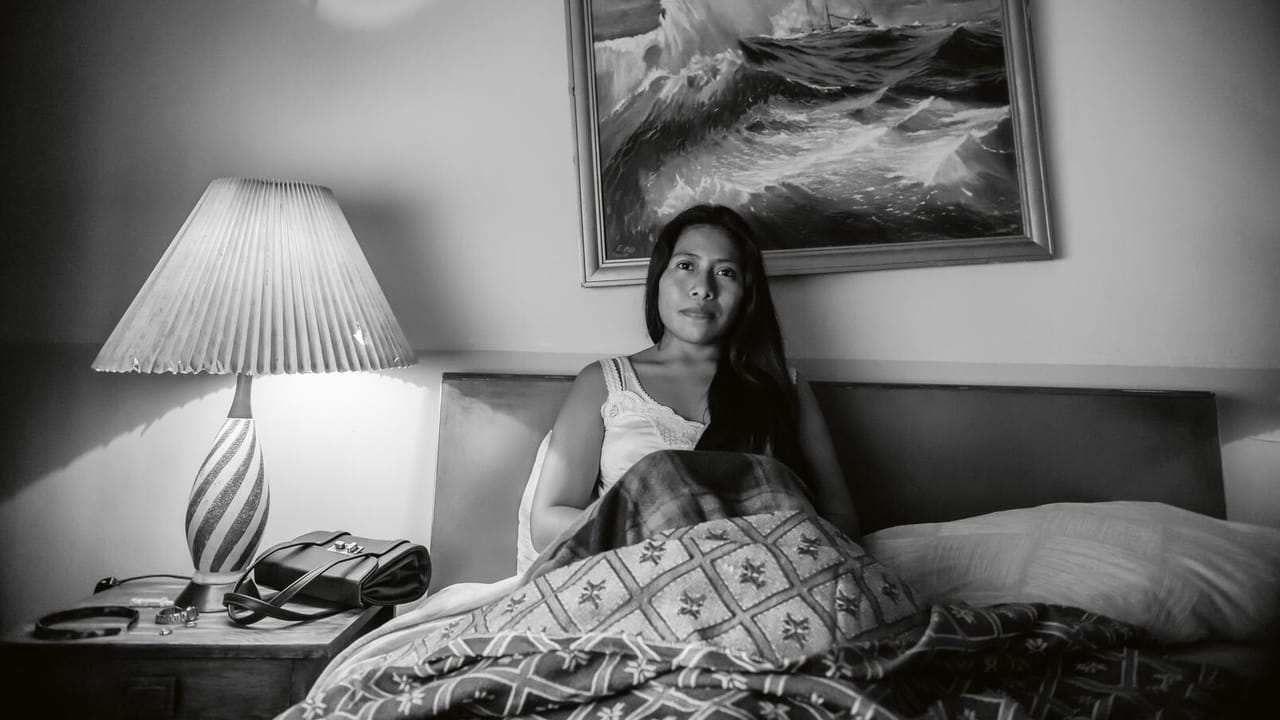
Then there’s the sound. If you have a good soundbar, Roma is a workout for it. There is no musical score. None. Every bit of "music" comes from the world itself—a passing band, a radio, a street vendor’s whistle. It creates a sense of "sonic truth" that makes the climactic beach scene feel almost unbearably real. When the waves crash, they don't sound like movie waves; they sound like the indifferent, crushing weight of nature.
Apparently, the "Corpus Christi" massacre scene was filmed on the exact streets where the real event happened in 1971, using hundreds of extras who were only told at the last minute that a riot was about to break out. That rawness vibrates through the screen. It captures a moment in Mexican history that scarred a society, framed through the perspective of a woman whom history usually ignores.
Roma is a challenging sit if you’re looking for a traditional narrative arc with "beats" and "payoffs." It moves like life—slowly, then all at once, then slowly again. It’s a film about the people who hold the world together while the men in their lives disappear or play at being soldiers. It’s a stunning achievement that proves contemporary cinema doesn't need capes or multiverses to be epic; it just needs to look at a single human being with enough clarity and time.
I left the film feeling like I’d lived a year in that house, smelling the floor wax and the dog poop (which, honestly, the dog poop is the most honest metaphor for domestic labor ever filmed). It’s a masterpiece that earns every second of its runtime, reminding us that our smallest moments are often our most tectonic.

Keep Exploring...
-

Manchester by the Sea
2016
-
Beautiful Boy
2018
-

Instant Family
2018
-
The Trial of the Chicago 7
2020
-

CODA
2021
-
The Fabelmans
2022
-

Past Lives
2023
-
The Holdovers
2023
-

Loving Vincent
2017
-
Marriage Story
2019
-
Portrait of a Lady on Fire
2019
-

All the Bright Places
2020
-

Another Round
2020
-

Sound of Metal
2020
-

King Richard
2021
-
tick, tick... BOOM!
2021
-

The Woman King
2022
-

Gran Turismo
2023
-

Weathering with You
2019
-
A Little Princess
1995