A Dog's Journey
"Love is a habit that dogs refuse to break."

There is a very specific type of emotional masochism involved in sitting down for a movie where you know, with mathematical certainty, that the protagonist is going to die. Not once, but four or five times before the credits roll. I walked into A Dog’s Journey (2019) fully aware that I was stepping into cinema's most effective emotional extortion racket, yet I brought a fresh box of tissues anyway. It’s a sequel that doubles down on the "metaphysical canine" conceit of its predecessor, A Dog's Purpose, asking us to believe that a single soul can inhabit a succession of very good boys (and one very good girl) to guide a family through the thresher of human existence.

I watched this on a Tuesday night while my own terrier, Barnaby, was busy aggressively licking a spot on the sofa that I’m 90% sure used to be a dropped piece of popcorn. Seeing Josh Gad’s voice emanate from a Beagle while my own dog stared blankly at a wall made the film’s central philosophical question hit home: Is there a "Self" that survives the body, or is a dog just a collection of wagging tails and questionable odors?
The Transmigration of the Goodest Boy
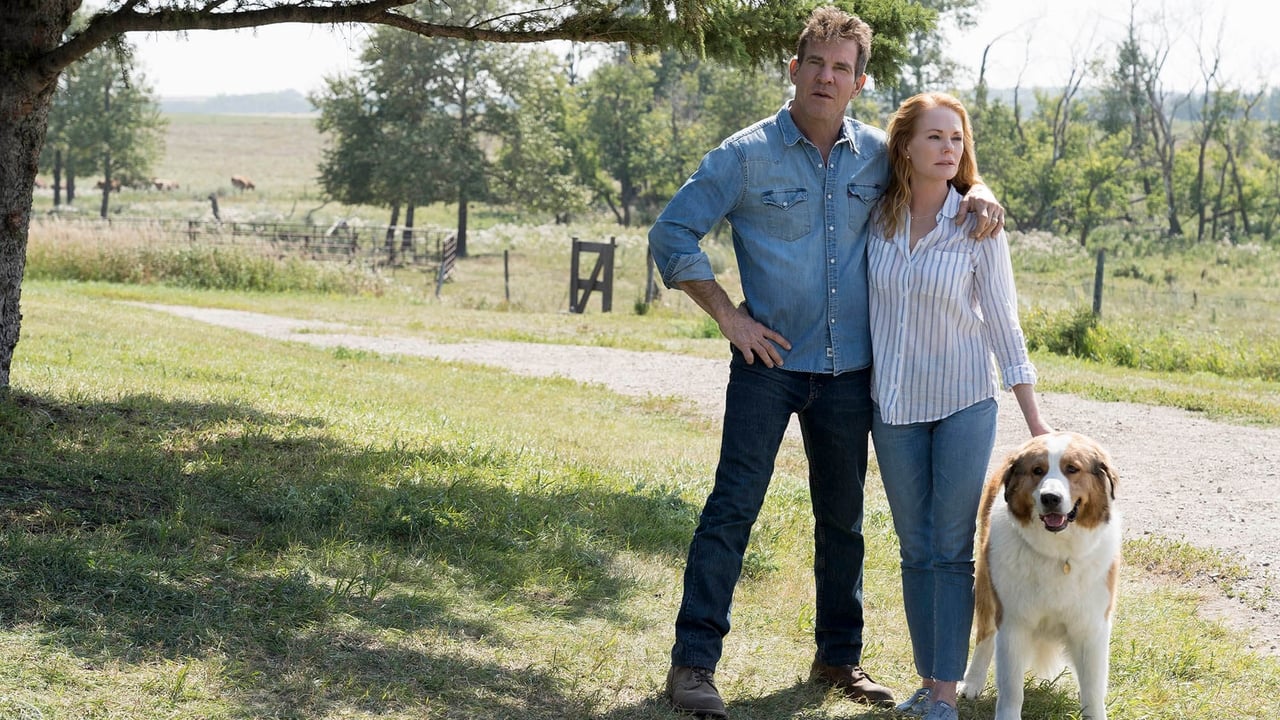
While the first film was a bit of a sprawling anthology, A Dog’s Journey narrows its focus, which actually gives the "reincarnation" mechanic some much-needed narrative weight. We start back at the farm with Dennis Quaid—who has reached a level of "craggy-faced American patriarch" that feels like he was carved out of an old oak tree—and Marg Helgenberger. They’re looking after their granddaughter, CJ, but the family dynamic is a wreck. Betty Gilpin plays CJ’s mother, Gloria, with a jagged, alcoholic desperation that feels almost too grounded for a movie where a dog narrates his own rebirth. Honestly, Betty Gilpin plays a mom so dysfunctional she makes Joan Crawford look like Mary Poppins, and her performance provides a sharp, necessary contrast to the film's otherwise sugary coating.
The "cerebral" hook here isn't about hard sci-fi; it’s about the karmic debt of companionship. Bailey (the dog) is tasked by Dennis Quaid's Ethan to protect CJ throughout her life. As Bailey dies and returns as Molly, then Big Dog, then Max, the film explores the idea of a "constant" in a world of flux. For a contemporary audience living through an era of rapid technological upheaval and social fragmentation, there’s something deeply comforting—if intellectually manipulative—about the idea that the universe provides us with a silent witness who never stops loving us, even when we’re at our most unlovable.
Human Complications and Canine Logic

As CJ grows up, played with a lovely, wounded vulnerability by Kathryn Prescott (remembered fondly by many of us from the Skins era), the movie shifts into a drama about trauma and redemption. We see her navigate New York City, bad boyfriends, and the crushing weight of her mother’s neglect. Beside her, in various furry iterations, is the soul of Bailey. Henry Lau pops up as Trent, the childhood friend-turned-love-interest, and their chemistry is genuinely sweet. It’s the kind of "nice" cinema that feels increasingly rare in a marketplace dominated by cynical blockbusters or grimdark prestige dramas.
Director Gail Mancuso, a veteran of top-tier sitcoms like Modern Family, knows how to pace the sentiment. She doesn't let the camera linger too long on the tragedy before pivoting back to Josh Gad’s observational humor. Gad has a thankless job—narrating the internal monologue of an animal is a high-wire act between "charming" and "infuriating"—but he manages to keep Bailey’s perspective focused on the simple, sensory truths. To a dog, a soul isn't a theological construct; it's a scent, a memory of a hand on a head, and a commitment to stay.
The Physics of the Soul (With Wagging)
One of the more interesting "behind-the-scenes" elements is the involvement of W. Bruce Cameron, the author of the source novels. He’s essentially built a "Dog Cinematic Universe," and you can feel that authorial hand ensuring the internal logic stays consistent. The film treats reincarnation with a matter-of-factness that borders on the profound. It suggests that while the vessel changes, the purpose remains fixed. In an era where we often discuss "identity" as something fluid or performative, the film argues for an essential, unshakable core.
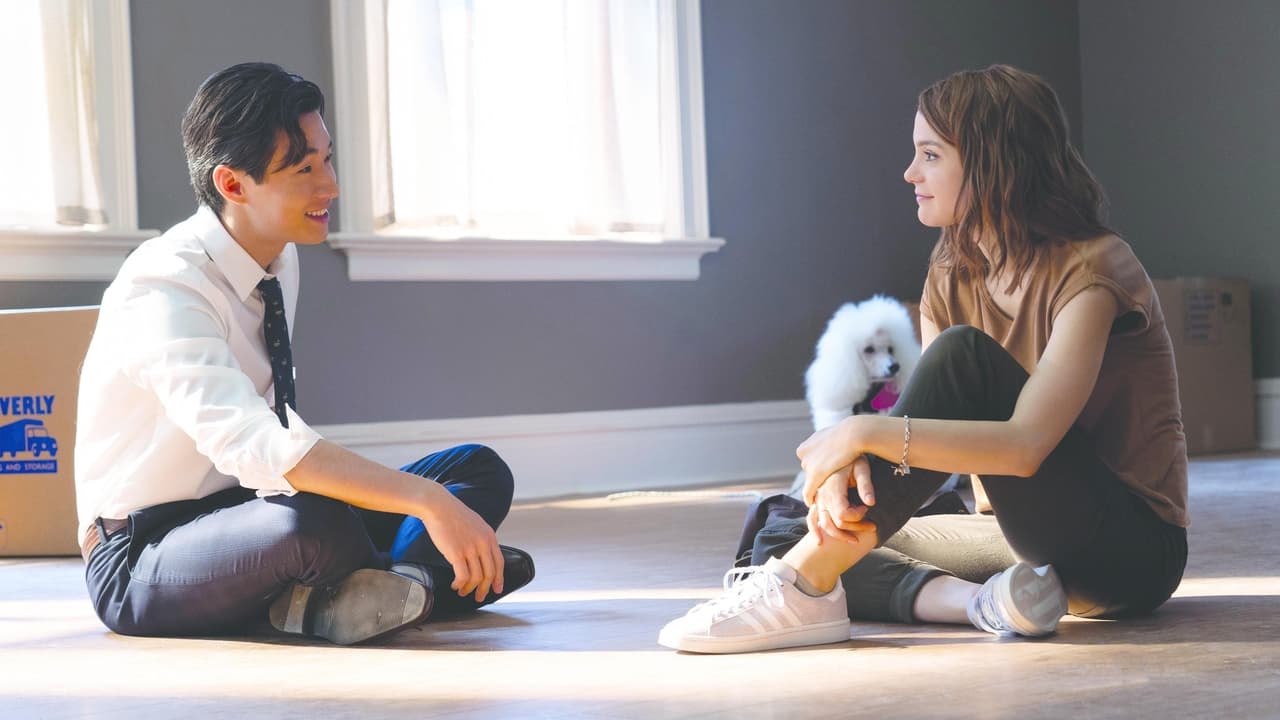
The production itself is clean, bright, and unpretentious. Rogier Stoffers' cinematography captures the Midwest gold of the Montgomery farm and the cold, oppressive grays of CJ’s New York apartment with equal competence. It’s a mid-budget film that knows exactly what it is. It isn’t trying to reinvent the wheel; it’s just trying to make sure the wheel keeps rolling over your heartstrings until they’re sufficiently frayed.
Ultimately, A Dog's Journey functions as a gentle meditation on the persistence of love across time. It’s unashamedly sentimental and follows a formula that was perfected somewhere around the time Lassie first barked at a well, but it works because of the sincerity of its cast and the universal ache of missing a pet. It asks us to consider the possibility that nothing is ever truly lost—it just comes back with a different coat of fur and the same longing for a treat. It’s not a film that will change the course of cinematic history, but it might make you hug your dog a little tighter, even if they currently smell like the underside of a lawnmower.

Keep Exploring...
-
A Dog's Purpose
2017
-

A Dog's Way Home
2019
-
The Boy and the Beast
2015
-
Max
2015
-
The Call of the Wild
2020
-

Descendants 3
2019
-
Arthur the King
2024
-

Mia and the White Lion
2018
-

A Street Cat Named Bob
2016
-

How to Train Your Dragon: Homecoming
2019
-
Transformers One
2024
-
The Wild Robot
2024
-

Captain Fantastic
2016
-
Wonder
2017
-
The Lion King
2019
-
Miracles from Heaven
2016
-
The Peanut Butter Falcon
2019
-
How to Train Your Dragon: The Hidden World
2019
-
Togo
2019
-

Wolfwalkers
2020