Ad Astra
"The universe is empty, but his head is full."
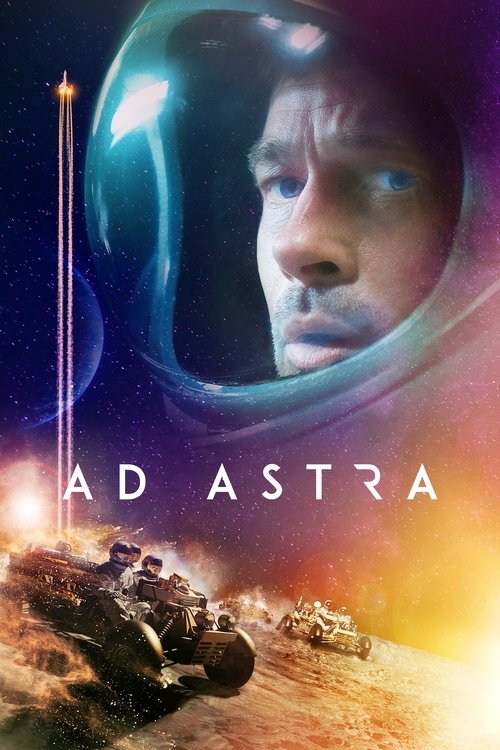
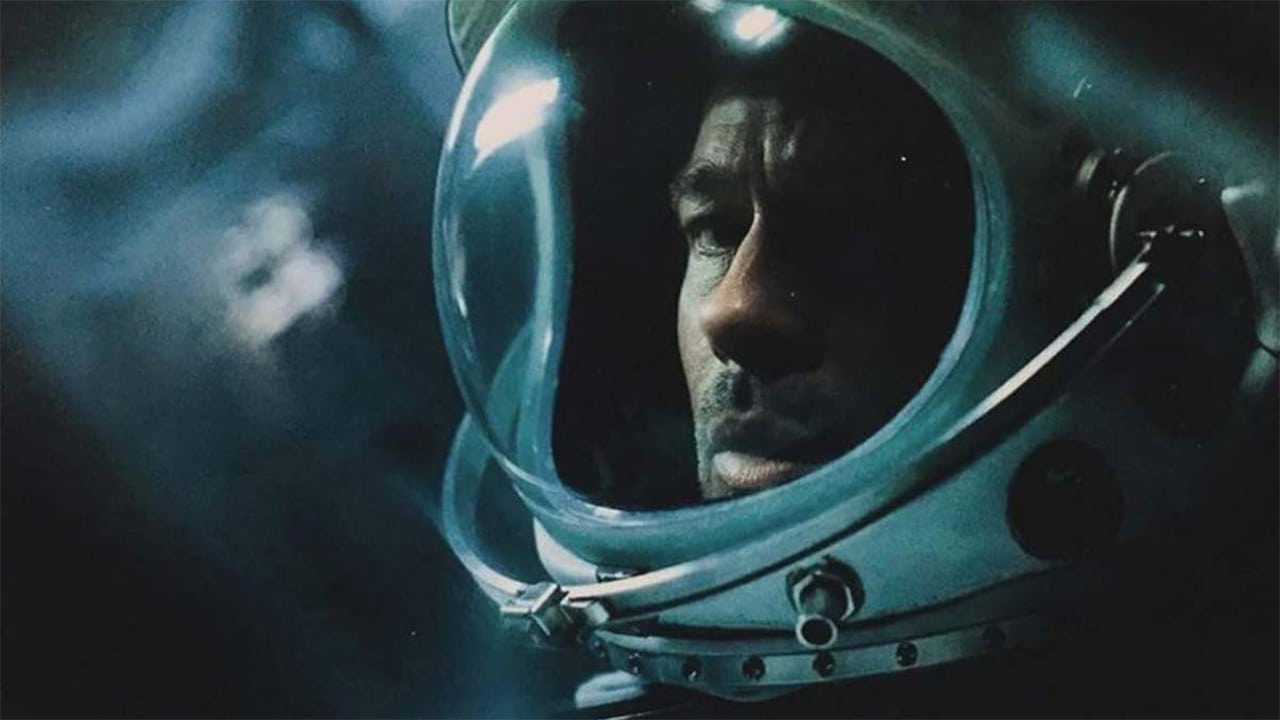
Somewhere between the low-gravity moon-buggy shootout and the carnivorous space baboons, it becomes clear that Brad Pitt’s heart rate is the only thing staying below 80 in Ad Astra. While a casual viewer might have walked into the multiplex in 2019 expecting Star Wars with more wrinkles, director James Gray—the man who gave us the hauntingly humid The Lost City of Z—handed us something far stranger: a $100 million therapy session held in the silent, freezing vacuum of Neptune’s orbit.
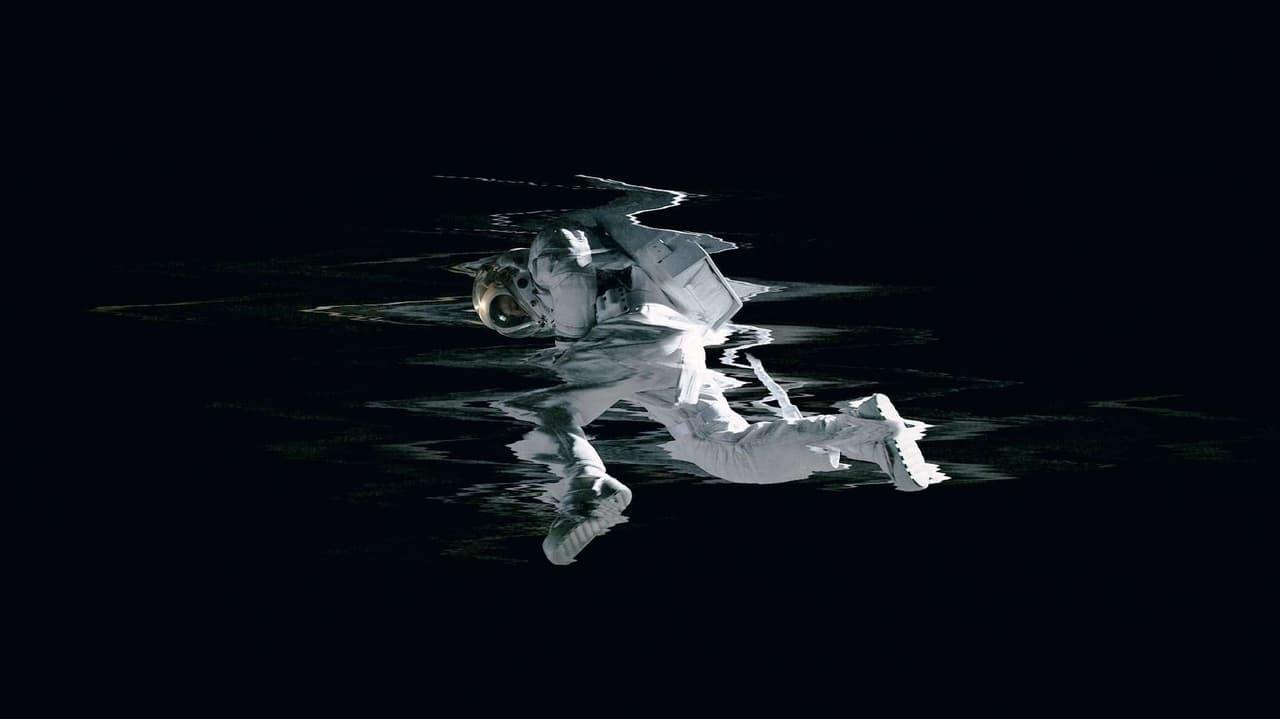
I watched this for the second time on my laptop while eating a bowl of lukewarm cornflakes at 2:00 AM, and honestly, the isolation of my darkened kitchen made the vastness of the outer solar system feel even more crushing. It’s a film that demands you be a little bit lonely to truly "get" it. In an era where every big-budget sci-fi flick feels like it’s auditioning for a theme park ride, Ad Astra stands as a defiant, quiet oddity that has slowly morphed from a "polarizing flop" into a genuine cult favorite for the "Sad Space Dad" subgenre.
The Loneliest Man in the Galaxy
The plot is ostensibly a rescue mission. Brad Pitt plays Roy McBride, an astronaut whose pulse never rises, even when falling from a literal "space antenna" miles above the Earth. He is tasked with finding his father, Clifford McBride (Tommy Lee Jones), a legendary pioneer who went missing decades ago near Neptune while searching for alien life. Clifford might be alive, and he might be accidentally firing off "anti-matter surges" that are threatening to turn Earth into a giant charcoal briquette.
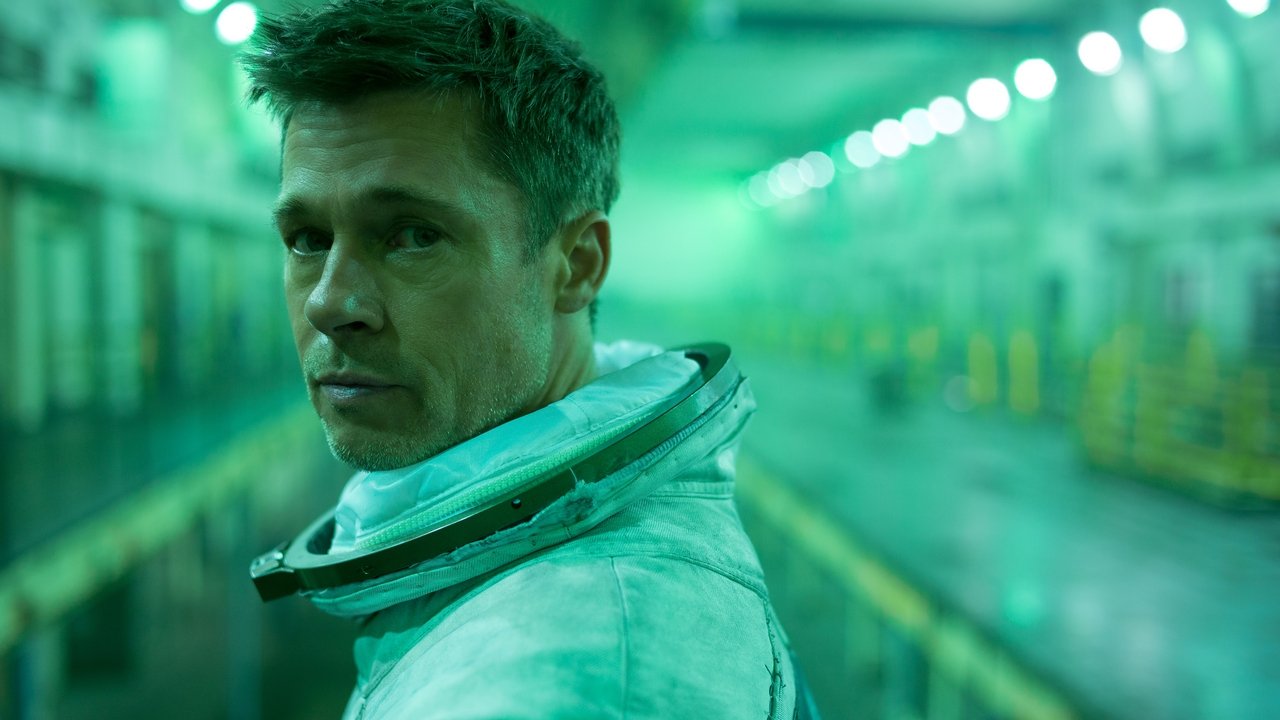
But the "save the world" stakes are almost a feint. The real drama is internal. Brad Pitt delivers a performance of incredible restraint—it’s essentially a high-budget version of 'I’m not mad, I’m just disappointed' directed at the entire galaxy. We spend most of the movie in Roy’s head via a hushed voice-over that sounds like he’s whispering secrets to us in a confessional. Critics at the time called it "boring," but they missed the point. In our current moment of over-stimulated franchise cinema, watching a man grapple with the realization that his hero-father was actually a narcissistic jerk is far more gripping than another CGI sky-beam.
Infrared Pirates and Zero-G Baboons
Despite its reputation as a "thinker," Ad Astra doesn't skimp on the weirdness. One of the most fascinating bits of trivia involves that Moon chase. To capture the harsh, flat lighting of the lunar surface, cinematographer Hoyte van Hoytema (who shot Interstellar and Oppenheimer) actually used a rig involving an infrared camera and a 35mm film camera running simultaneously. The result is a sequence that looks unlike anything else in cinema—it’s basically 'Mad Max' on a dusty golf course, and I loved every second of it.
Then there’s the baboon. Yes, the space baboon. Apparently, that sequence was a late addition requested by studio executives who were worried the film didn't have enough "action beats." It’s an absolutely jarring, terrifying scene that feels like it wandered in from a horror movie. While it feels out of place to some, I think it perfectly illustrates the film’s thesis: the universe is a chaotic, hostile place, and humans are just bringing our own mess and violence with us wherever we go.
A Relic of a Dying Empire
There’s a reason Ad Astra feels like a "lost" film. It was produced by 20th Century Fox just as the studio was being swallowed by Disney. It was a project caught in the gears of a massive corporate merger, which usually means the marketing department has no idea what to do with it. Released in late 2019, it was a "pre-pandemic" film that feels eerily "post-pandemic" in its obsession with isolation, digital communication, and the psychological toll of being confined to small rooms.
The cult following for this film has grown because it speaks to our current cultural anxiety about what comes next. In a world of "billionaire space races," Ad Astra is a sobering cold shower. It tells us that there are no little green men coming to save us or give us the answers. Tommy Lee Jones plays Clifford not as a visionary, but as a man who went crazy looking for something that wasn't there, ignoring the family that actually was. It’s a harsh, beautiful lesson wrapped in some of the most stunning visuals of the decade.
Stuff You Didn't Notice
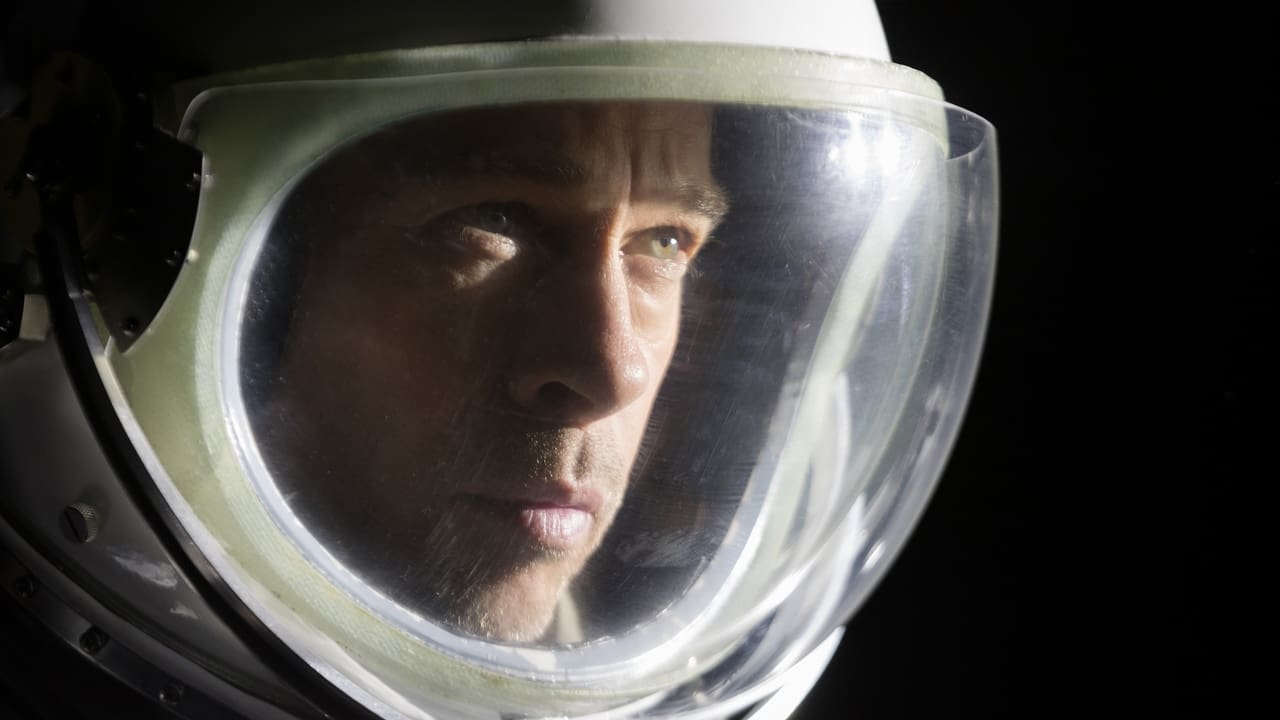
The Latin Connection: The title Ad Astra is part of the phrase Per Aspera Ad Astra, meaning "Through hardships to the stars." It’s a motto for several space agencies and, fittingly, Roy’s entire life. The Voice-Over Struggle: James Gray and Brad Pitt reportedly clashed over the amount of narration. Gray wanted less; the studio wanted more to help the audience follow the "plot." The version we have is a compromise that, strangely, works in favor of the film's intimacy. Real NASA Input: The psychological evaluations Roy has to perform—speaking into a computer to prove his "stability"—were based on actual protocols NASA considers for long-term deep-space travel. Minimalist Music: The score was a collaboration between Max Richter and Lorne Balfe. Richter’s pieces are ambient and mournful, perfectly capturing the "emptiness" Roy feels. No Green Screen: For many of the shots inside the spacecraft, they used large LED screens to project the stars and planetary surfaces, a precursor to the "Volume" technology used in The Mandalorian*.
Ad Astra isn't for everyone. If you want Top Gun in a vacuum, you’re going to be frustrated. But if you’ve ever looked at your parents and realized they’re just flawed, scared people—or if you’ve ever felt like the only person in a crowded room—this film will hit you like a freight train. It’s a gorgeous, somber, and deeply human epic that proves the most vast territory left to explore isn't the stars, but the distance between a father and a son.
Give it a shot on a quiet night with the lights off. Just maybe skip the cornflakes.

Keep Exploring...
-

The Lost City of Z
2017
-
Passengers
2016
-

Don't Look Up
2021
-

Victor Frankenstein
2015
-
Colossal
2017
-
Allied
2016
-
Black Mirror: Bandersnatch
2018
-

Ghost in the Shell
2017
-
Blade Runner 2049
2017
-

Okja
2017
-
Equals
2015
-
10 Cloverfield Lane
2016
-
Midnight Special
2016
-

The Circle
2017
-
The Discovery
2017
-
The Space Between Us
2017
-
Extinction
2018
-
Glass
2019
-
The Vast of Night
2019
-
The Midnight Sky
2020