Alita: Battle Angel
"A soul forged in scrap metal."
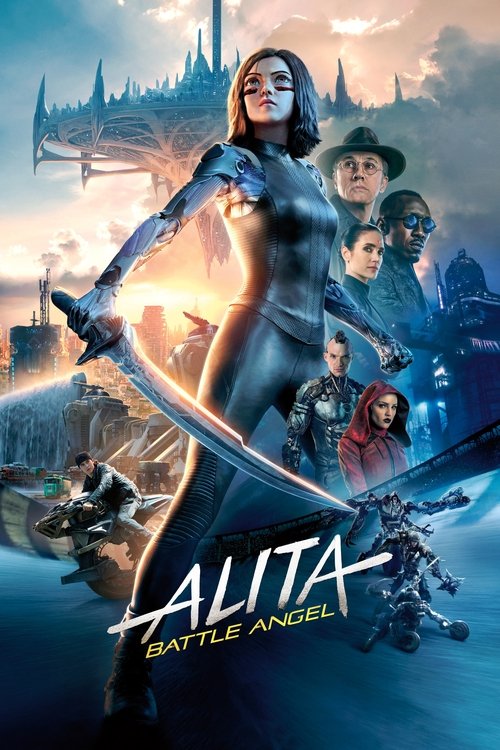
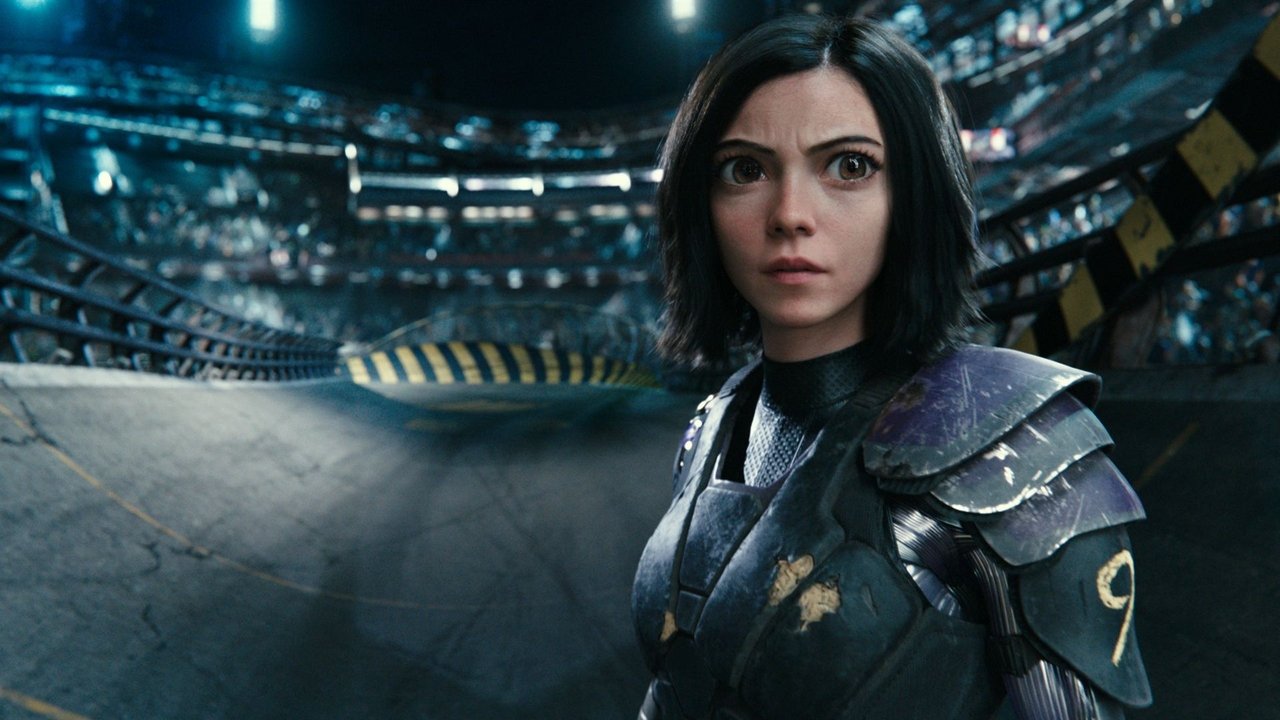
Walking into a theater to see a movie with a protagonist whose eyes occupy roughly 40% of her face is a choice. Back in 2019, the trailers for Alita: Battle Angel triggered a collective "uncanny valley" reflex across the internet, with many wondering if James Cameron had finally lost his grip on human aesthetics. But here’s the thing about the "Alita Army"—that fervent, digital-age cult following that still buys billboards begging for a sequel—they knew something the casual scrollers didn't. Once you get five minutes into Iron City, those oversized manga eyes stop being a distraction and start being the most expressive thing in a movie crowded with $170 million worth of hardware.
I actually watched this again recently on my laptop while eating a bowl of lukewarm oatmeal, and the contrast between my beige, mundane breakfast and the neon-tinted, hyper-kinetic chaos of the Motorball track was borderline spiritual. It reminded me why this film occupies such a strange, beloved space in our current era of franchise fatigue. It’s a "legacy" project that isn't actually a sequel; it’s a massive, earnest swing at world-building that feels more tactile than a dozen green-screened superhero outings.
Iron City and the Art of the Scrap
Robert Rodriguez, a director known for making $10 look like $1,000, was handed the keys to James Cameron’s kingdom here. The result is a fascinating hybrid. You get Cameron’s obsessive detail and "chosen one" mythology blended with Rodriguez’s scrappy, street-level energy. Iron City feels lived-in. It’s dirty, crowded, and diverse in a way that feels organic rather than checklist-driven.
The heart of the film is Rosa Salazar, who delivers a performance-capture masterclass as Alita. It’s easy to dismiss CGI characters, but Salazar infuses Alita with this infectious, teenage wonder that slowly hardens into warrior steel. When Christoph Waltz (playing Dr. Dyson Ido with a warmth we rarely see from him) finds her in the scrap heap, the movie effectively becomes a high-stakes "coming of age" story where the puberty involves growing cybernetic blades out of your forearms.
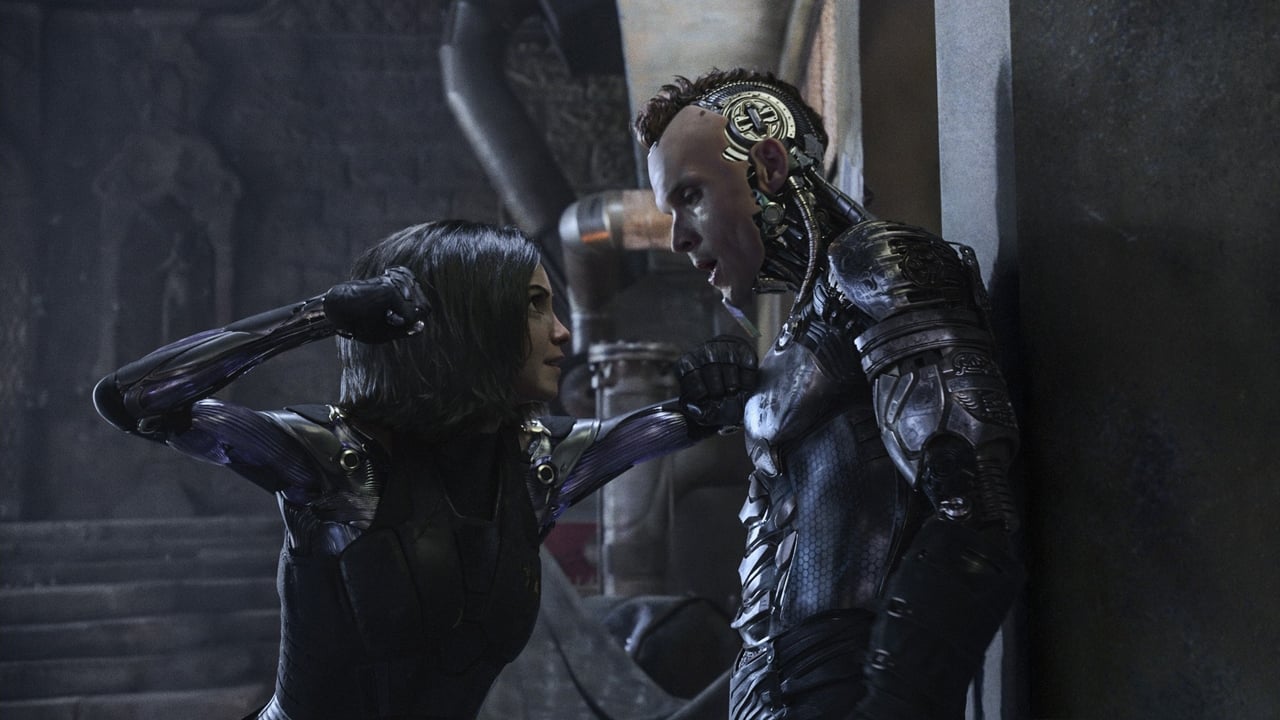
The supporting cast is an absolute embarrassment of riches. You have Jennifer Connelly looking ethereal and conflicted, and Mahershala Ali doing a "cool villain" routine that involves wearing sunglasses indoors like he’s trying to hide a hangover from the entire world. Then there’s Ed Skrein as Zapan, a cyborg who is so obsessed with his own vanity that he has a literal human face grafted onto a metal skull. It’s ridiculous, it’s over-the-top, and it works because the movie never winks at the camera.
Kinetic Poetry and Motorball
Action in the late 2010s often fell into the trap of "the gray sludge"—colorless CGI battles where you can’t tell who is hitting whom. Alita rejects this. The action choreography, particularly the Motorball sequences, is some of the cleanest, most readable spectacle put to film in the last decade. There is a weight to the metal. When Alita takes a hit from Jackie Earle Haley’s massive Grewishka, you feel the torque and the crunch of gears.
The fight in the underground bar is a standout. It’s a classic Western trope—the stranger walks into a den of outlaws—but reimagined with "Panzer Kunst" (the film’s fictional cyborg martial art). Rodriguez keeps the camera wide enough to let us see the shapes, the momentum, and the brutal creativity of the choreography. The film is essentially a $170 million Saturday morning cartoon that actually respects your intelligence. It’s visceral, but it’s also beautiful.
The Legend of the Alita Army

It’s rare for a film to fail to ignite the general box office but spark a localized wildfire of devotion. Alita didn't "bomb," but its $405 million haul against that massive budget put it in the "maybe" pile for Disney (who inherited the property from Fox). This uncertainty birthed the "Alita Army."
Why did this film inspire people to fly planes with banners over the Oscars? I think it’s because, in an era of cynical IP reboots, Alita feels incredibly sincere. It’s a film about a girl discovering she has the power to topple a corrupt sky-city, and it leans into that melodrama with zero irony. Apparently, James Cameron wrote over 1,000 pages of notes for this universe, and you can feel that density.
Turns out, the production was so detailed that the team at Weta Digital had to create a new way to simulate individual fibers in Alita’s clothing and the way her "human" skin reacted to light. They even spent months perfecting the way her eyes reflected the world around her, which is probably why they eventually stop looking "weird" and start looking human. It’s that level of technical obsession—combined with a script that cares about Alita’s first bite of chocolate—that creates a cult classic.
Alita: Battle Angel is a reminder that big-budget cinema can still have a soul, even if that soul is encased in a berserker-body shell. It’s a vibrant, fast-paced, and visually stunning piece of sci-fi that deserves better than to be left on a cliffhanger. If you haven't seen it, get past the initial "eye-shock" and enjoy the ride. It’s the best movie James Cameron never directed.

Keep Exploring...
-
Godzilla vs. Kong
2021
-

Star Trek Beyond
2016
-
Power Rangers
2017
-

Solo: A Star Wars Story
2018
-

Gemini Man
2019
-

Star Wars: The Rise of Skywalker
2019
-
Terminator: Dark Fate
2019
-
Underwater
2020
-

Black Widow
2021
-
Eternals
2021
-
The Matrix Resurrections
2021
-

The Tomorrow War
2021
-

Avatar: The Way of Water
2022
-

Blue Beetle
2023
-
The Creator
2023
-

Transformers: Rise of the Beasts
2023
-

Kingdom of the Planet of the Apes
2024
-

Mad Max: Fury Road
2015
-

Valerian and the City of a Thousand Planets
2017
-

Greenland
2020