An Officer and a Spy
"Justice is buried under a mountain of paperwork."
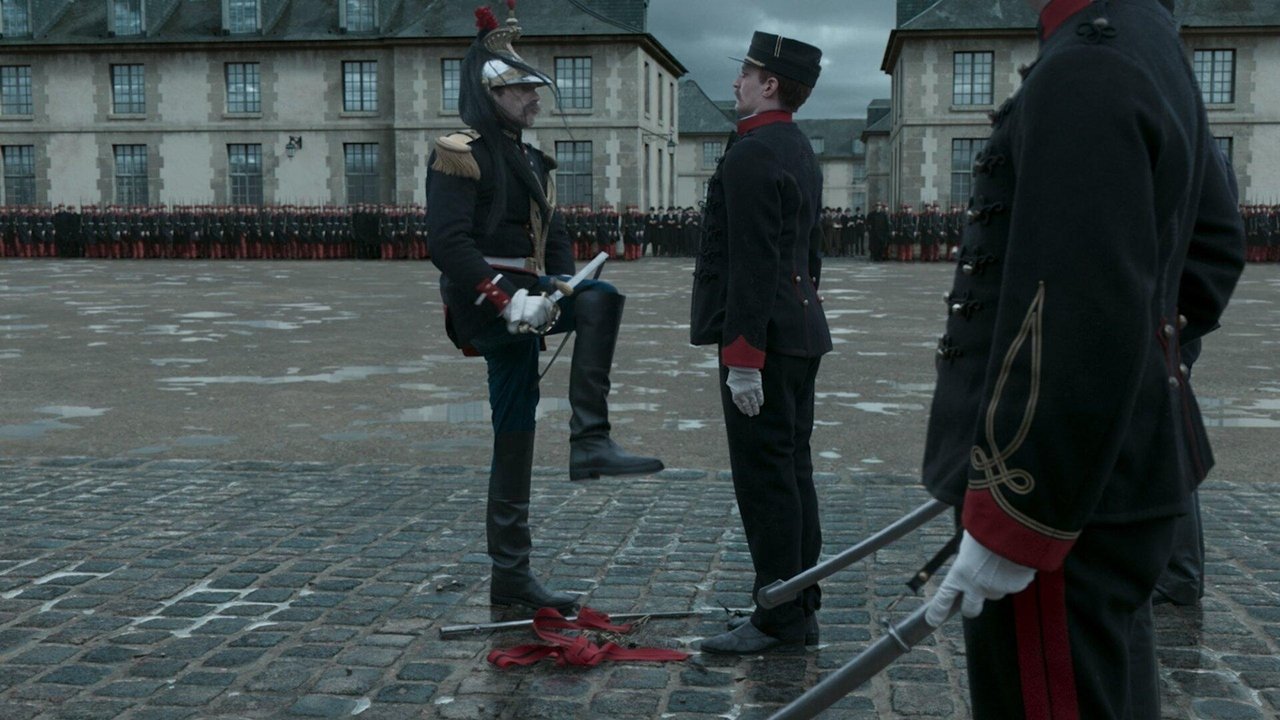
The film opens with a sound that sets the teeth on edge: the sharp, metallic snap of a sword being broken over a knee. It’s 1894, and Captain Alfred Dreyfus is being publicly stripped of his rank, his dignity, and his freedom in the courtyard of the École Militaire. It’s a cold, clinical sequence that feels less like a movie opening and more like a funeral for a living man. As the buttons are ripped from his uniform, you realize this isn't going to be a swashbuckling tale of innocence proven; it’s going to be a slow, suffocating descent into the bowels of a corrupt bureaucracy.

I remember watching this on my laptop while my neighbor was loudly practicing the scales on a cello, and weirdly, that mournful, repetitive scratching was the perfect accompaniment to the film’s grim aesthetic. An Officer and a Spy (or J’accuse, as it’s known in France) is a film that demands your full attention while simultaneously making you want to wash your hands. It’s a historical thriller that functions like a detective story, but instead of chasing killers through dark alleys, our protagonist is chasing forged documents through dusty file rooms.
The Hero Nobody Asked For
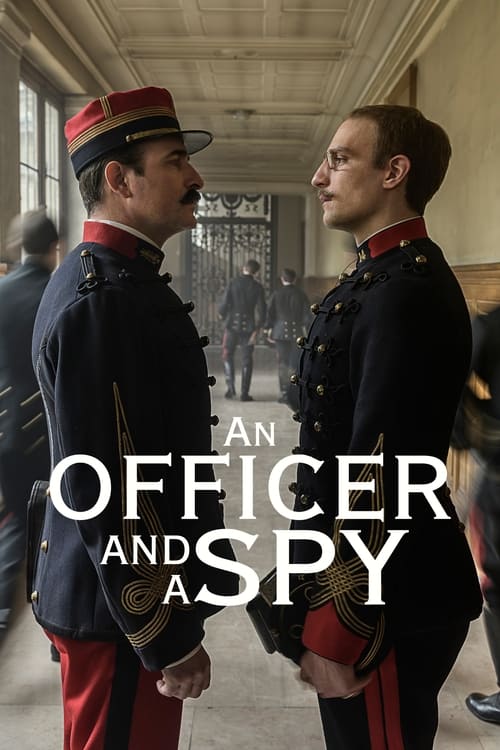
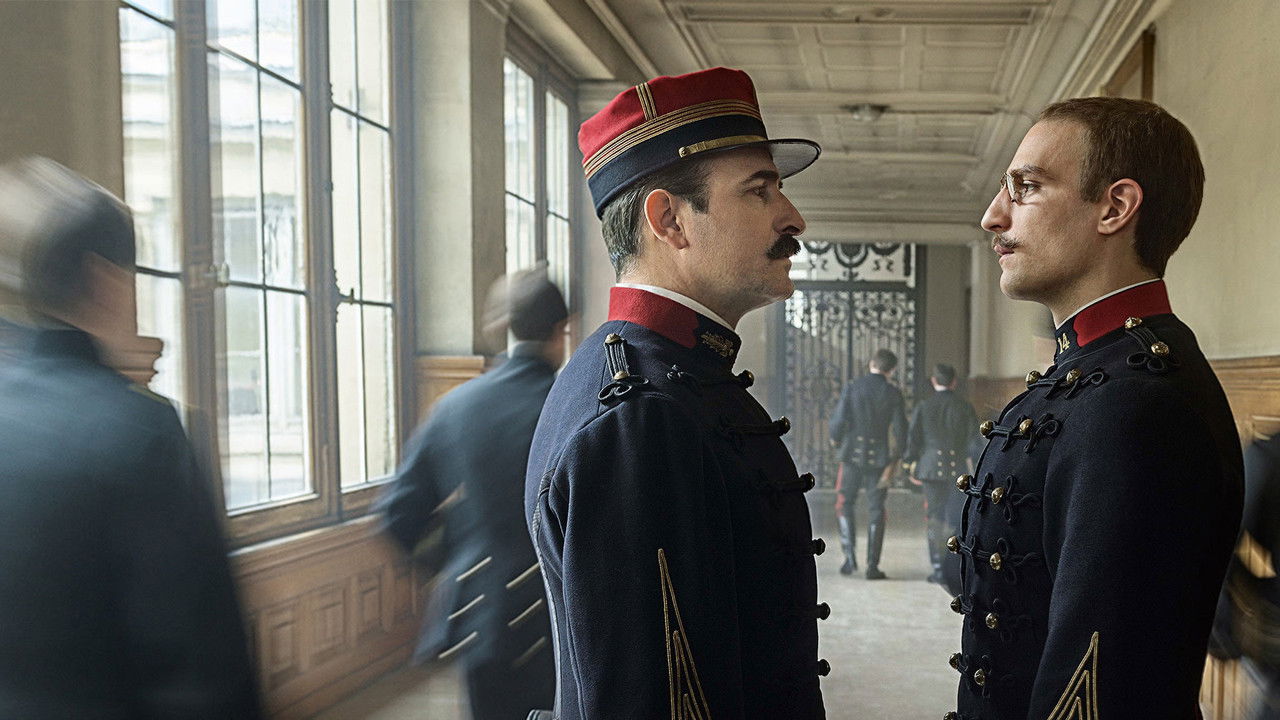
While the title might suggest a focus on Dreyfus, the film belongs almost entirely to Marie-Georges Picquart, played with a stiff-backed, mustache-twirling intensity by Jean Dujardin. You might remember Dujardin from his Oscar-winning turn in The Artist, where he was all smiles and silent-film charm. Here, he is unrecognizable. He’s a man of the system—a soldier who openly admits to his own anti-Semitism—who suddenly finds himself promoted to head the counter-intelligence unit that convicted Dreyfus.
The brilliance of the script, co-written by Robert Harris (who also penned the source novel and the excellent The Ghost Writer), is that Picquart isn't a crusader for social justice. He doesn't start investigating because he loves Dreyfus; he starts because he realizes the "evidence" used to convict him was amateurish garbage. Dujardin plays him as a man offended by sloppy work. He treats a forged telegram with the same level of moral outrage most people reserve for a murder. It’s a fascinating, prickly performance that reminds us that the truth is often uncovered by the most inconvenient people.
A Bureaucratic Nightmare in High Definition
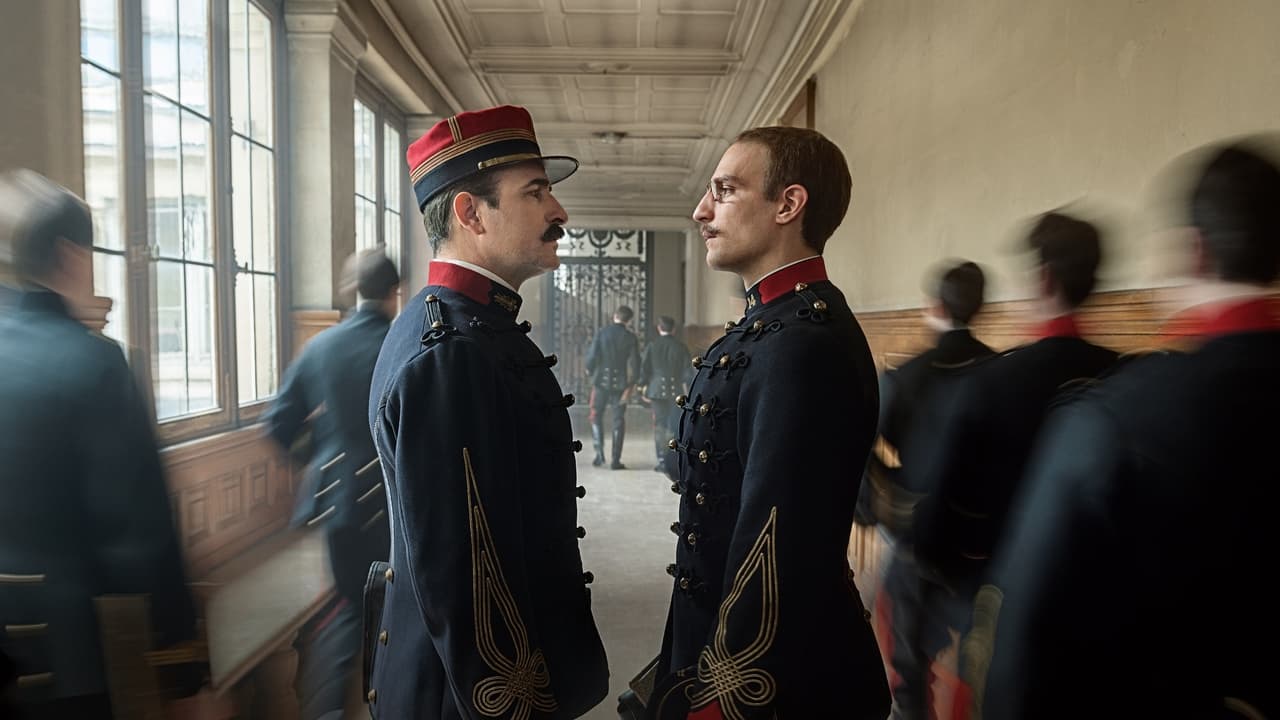
Visually, the film is a masterwork of "grim-chic." The cinematographer Paweł Edelman, a frequent collaborator of the director, captures 19th-century Paris not as a City of Light, but as a city of shadows, soot, and damp wallpaper. The offices of the French Secret Service look like places where hope goes to die under a layer of coal dust. There’s a scene involving the opening of a "le petit bleu" (a pneumatic mail tube) that carries more tension than most modern superhero climaxes.
This brings us to the contemporary context of the film, which is impossible to ignore. Released in 2019, An Officer and a Spy became a lightning rod for controversy due to its director's personal history. In the age of social media activism and the #MeToo movement, the film’s release in France was met with protests, even as it swept the Césars. For audiences today, watching a film about a man wrongfully accused and persecuted by a system—directed by a man who has spent decades in a legal and moral quagmire—creates a layer of meta-textual friction that is frankly exhausting.
Because of this, the film has essentially vanished in the English-speaking world. It never received a proper US theatrical release and remains a "hidden" title on boutique streaming services or imported Blu-rays. It’s a ghost in the machine of contemporary cinema—a technically flawless production that many feel uncomfortable acknowledging.
The Weight of the Truth

The supporting cast is a "who’s who" of French talent. Louis Garrel (from The Dreamers) is buried under heavy prosthetics as the titular Dreyfus, appearing mostly in flashbacks or as a ghostly, broken figure on Devil’s Island. Grégory Gadebois is particularly loathsome as Major Henry, the man willing to lie for the "honor" of the army.
The score by Alexandre Desplat (the man behind the music for The Shape of Water) avoids the soaring strings of a typical period drama. Instead, it’s a churning, mechanical sound that mimics the grinding gears of a government trying to crush an individual. It keeps you on edge, reminding you that in this world, a misplaced ink blot is a death sentence.
If you’re looking for a feel-good historical epic, this isn't it. But if you want a surgical look at how conspiracy theories take root in high places, and how a single man’s stubbornness can occasionally upend an empire, it’s essential viewing. It’s a film about the danger of "alternative facts" before that phrase was even coined, showing that the 1890s and the 2020s aren't nearly as far apart as we’d like to think.
This is a dense, demanding, and darkly beautiful piece of filmmaking that rewards the patient viewer. It manages to make the act of handwriting a letter feel like a high-stakes heist. While the baggage surrounding its production will always color the way we discuss it, the film stands as a chillingly relevant look at how easily the truth can be buried—and how hard it is to dig it back up. It’s a procedural that proves the pen is mightier than the sword, especially when the sword is already broken.
Keep Exploring...
-
November
2022
-

Detroit
2017
-
22 July
2018
-

Hotel Mumbai
2019
-

The Professor and the Madman
2019
-
Official Secrets
2019
-

Escape from Pretoria
2020
-
The Courier
2020
-

Tetris
2023
-
The Tenant
1976
-
Patriots Day
2016
-
Snowden
2016
-

Black Box
2021
-
Operation Finale
2018
-
13 Hours: The Secret Soldiers of Benghazi
2016
-
The Siege of Jadotville
2016
-
The Three Musketeers: D'Artagnan
2023
-
Eye in the Sky
2015
-

Land of Mine
2015
-
Suburra
2015