Descendants 3
"Break the barrier, face the legacy."
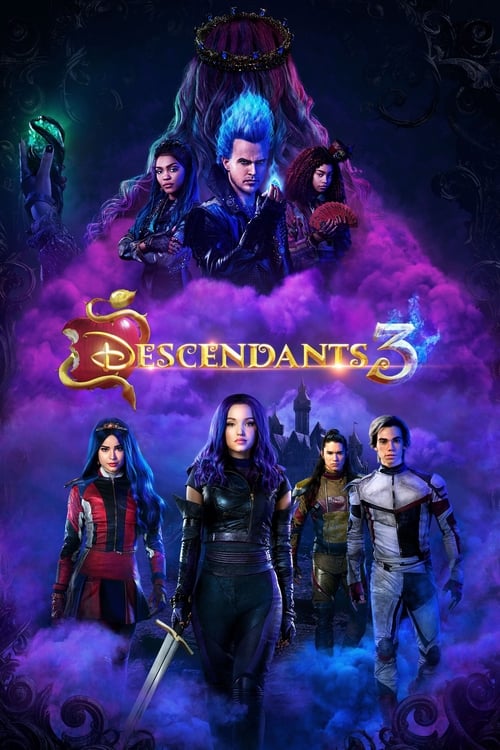
There is a specific kind of sensory overload that defines a Kenny Ortega production—a neon-drenched, leather-clad maximalism that feels like a Broadway fever dream captured on a high-definition digital sensor. By the time Descendants 3 arrived in 2019, the franchise had moved past being a mere "TV movie" and into the realm of a cultural phenomenon for the Gen Z set. I watched this one on a rainy Tuesday afternoon while my cat, Barnaby, unsuccessfully tried to swallow a stray piece of blue tinsel from a forgotten birthday party, and the chaotic energy on screen perfectly matched the vibe in my living room.
The Border Wall of Auradon
In the pantheon of contemporary Disney, the Descendants trilogy occupies a strange, hyper-fixated space. It’s a franchise built entirely on the concept of "Legacy IP," but instead of just rebooting Sleeping Beauty or Aladdin, it treats the offspring of villains as a disenfranchised social class. There’s a surprisingly cerebral undercurrent here regarding social engineering. The "Good" royals of Auradon have effectively created a carceral state—the Isle of the Lost—where the children of villains are punished for the sins of their parents.
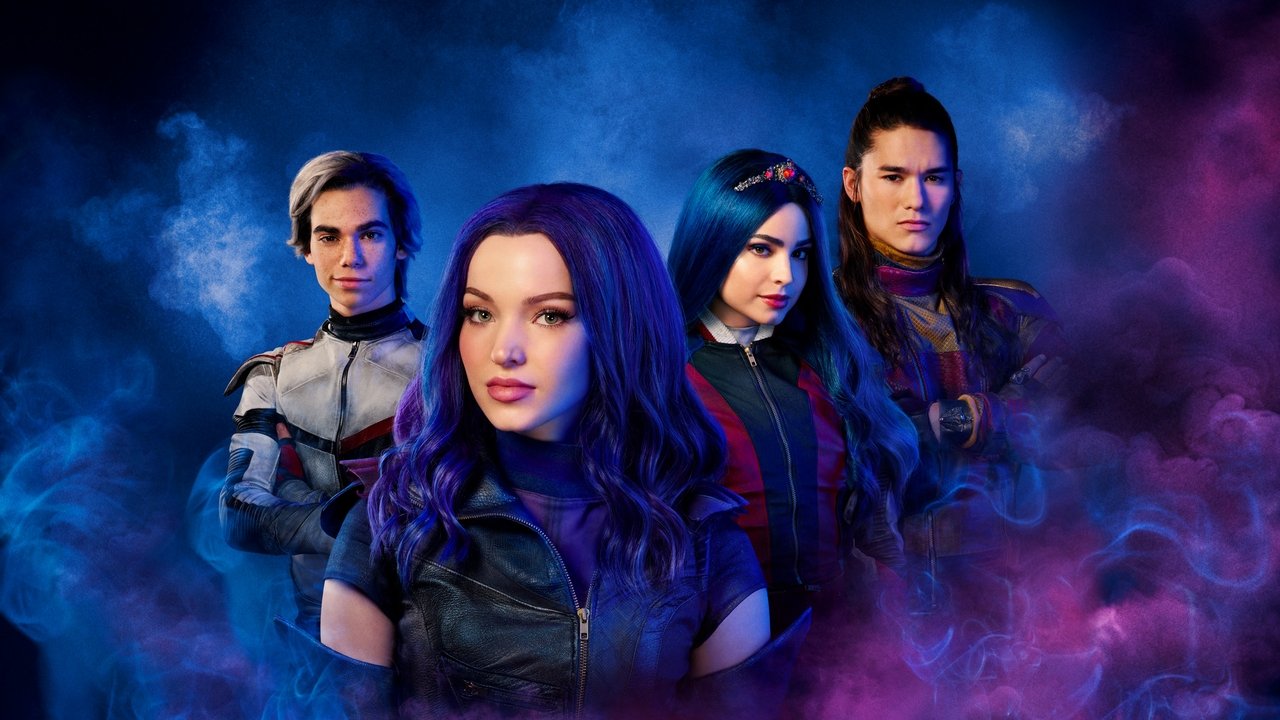
In Descendants 3, our protagonists—Dove Cameron (Mal), Sofia Carson (Evie), Cameron Boyce (Carlos), and Booboo Stewart (Jay)—face the ultimate moral quandary: Do they close the barrier forever to protect their utopia, or do they admit that the system of segregation they’ve helped maintain is fundamentally broken? For a movie aimed at tweens, the parallels to contemporary conversations about borders, inclusion, and the "nature vs. nurture" debate are hard to ignore. Mal’s struggle isn't just about fighting a dragon; it’s about the existential weight of becoming the very authority figure she once rebelled against.
Ortega’s Neon-Noir Choreography
If you’re coming to this for the plot, you might find it a bit thin—it’s essentially a glorified "fetch quest" involving Hades’ ember. But you don't watch a Kenny Ortega film for tight Aristotelian structure; you watch it for the spectacle. Ortega, who gave us the rhythmic gymnastics of High School Musical and the spooky camp of Hocus Pocus, brings a visceral, athletic energy to the musical numbers.
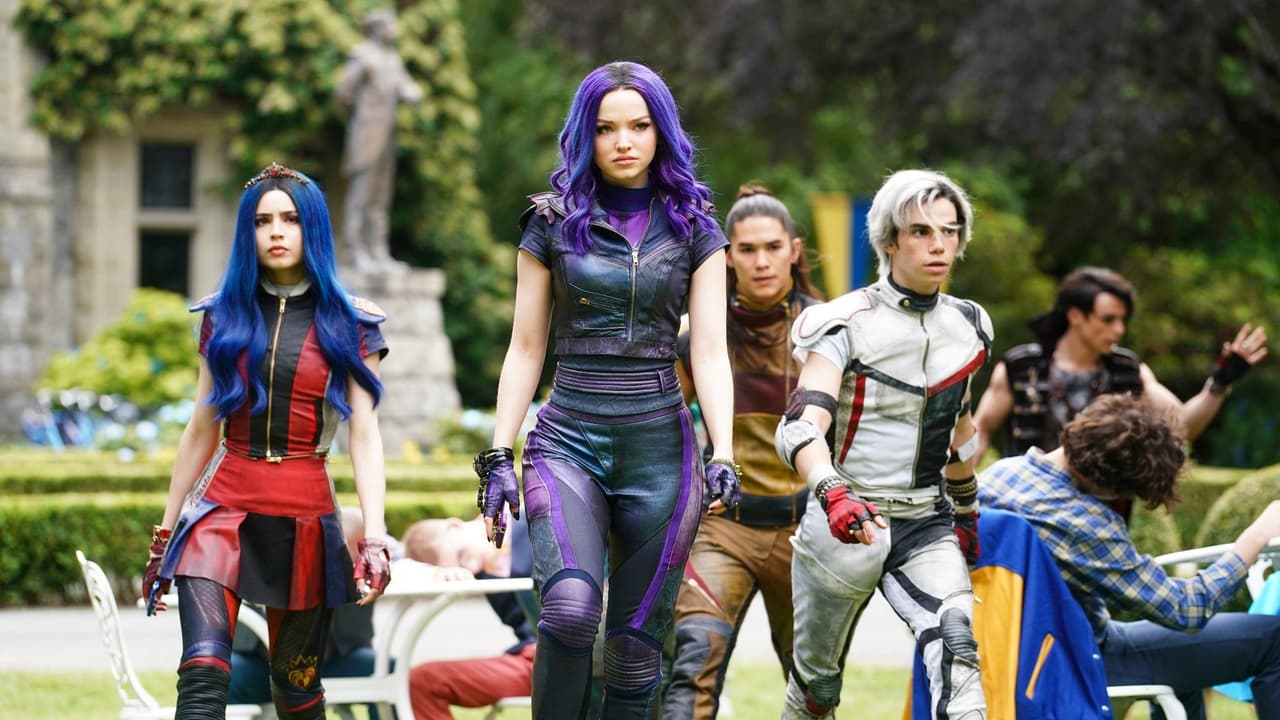
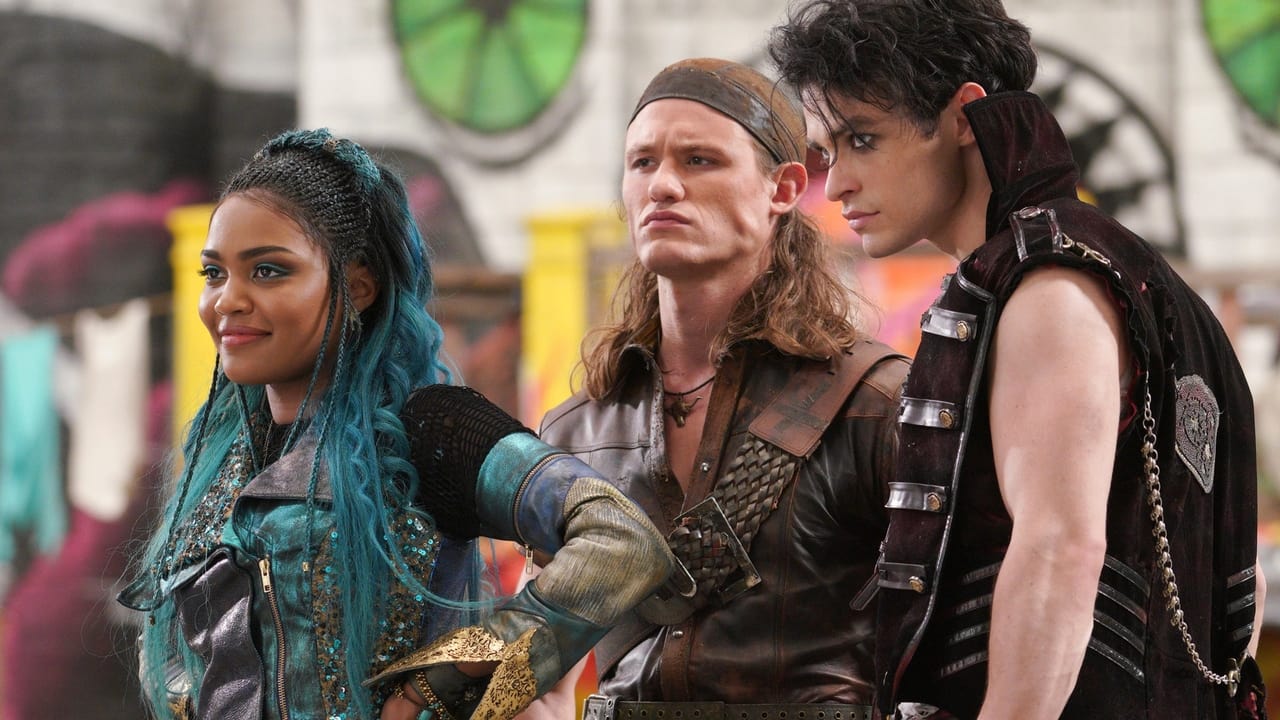
The opening number, "Good to be Bad," is a masterclass in utilizing limited space. Adam Santelli’s cinematography moves with the dancers, catching the grit of the Isle against the bright pop of the "VK" (Villain Kid) aesthetic. The choreography is essentially the only thing keeping the plot from collapsing into a puddle of glitter and Plot Armor, and honestly, it’s enough. There is a "swashbuckling" DNA here that feels like a direct descendant of the old Errol Flynn adventures, just updated with more hairspray and synth-pop. Thomas Doherty, playing Harry Hook, leans so hard into the "unhinged pirate" trope that he nearly steals the film through sheer, manic commitment.
The Weight of the Final Act
It is impossible to discuss this film without acknowledging the tragic passing of Cameron Boyce shortly before its release. In the context of "Contemporary Cinema," where we often talk about the "immortality" provided by digital franchises and social media presence, seeing Boyce on screen provides a poignant, heavy layer to the film’s themes of growing up and moving on. His performance as Carlos was always the heart of the group—the most vulnerable and empathetic—and his absence in the subsequent franchise iterations is deafening.
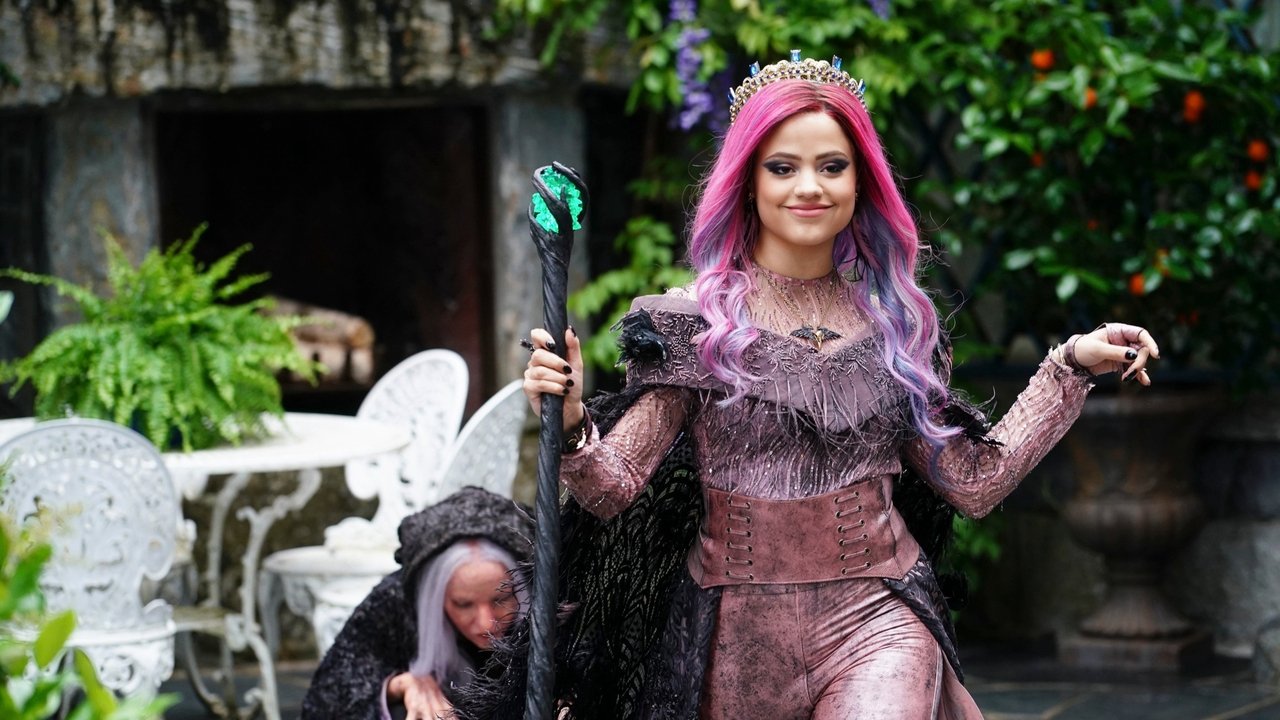
The film also makes a bold choice with its antagonist. Instead of a traditional villain, the threat comes from "Queen of Mean" Audrey, played by Sarah Jeffery. It’s a clever subversion of the "Disney Princess" archetype—showing how the pressure of being "perfectly good" can be just as corrupting as being "born evil." The blue-pink aesthetic of her descent into madness is a highlight of the production design, signaling a shift in how Disney treats its moral binaries. We are no longer in the era of clear-cut black-and-white morality; we are in the era of the "complicated" protagonist, even in family adventures.
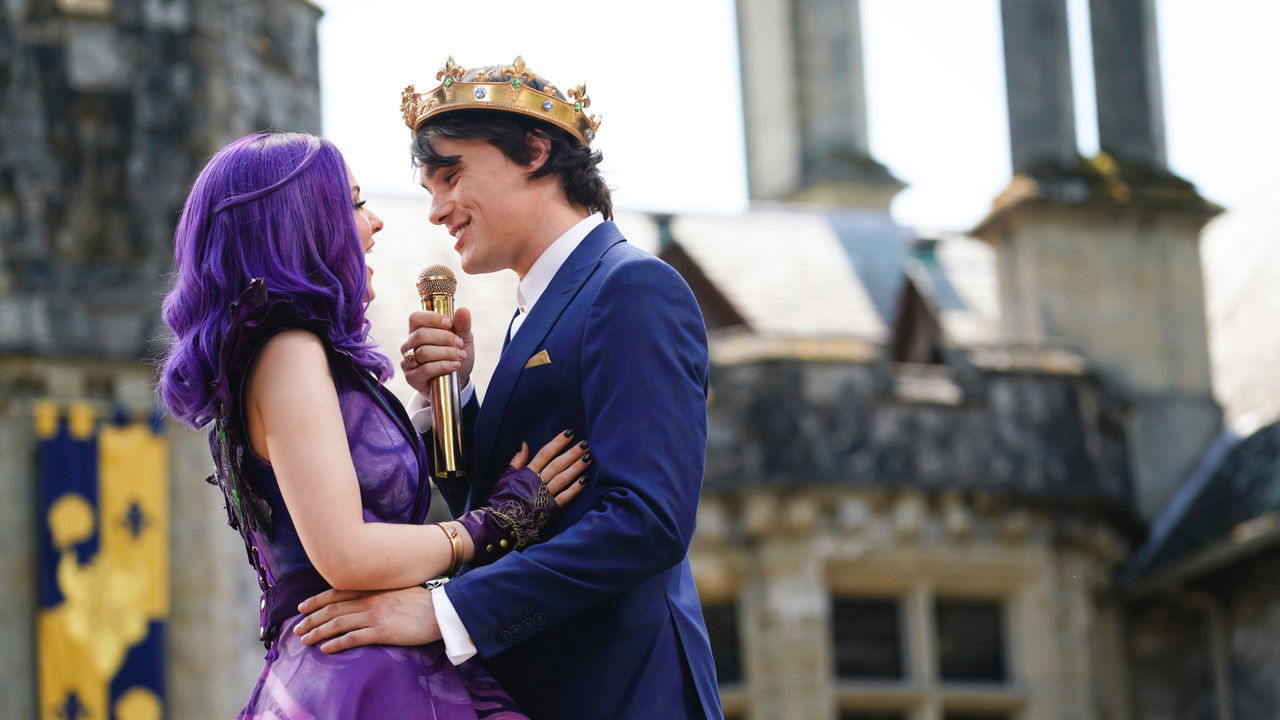
Ultimately, Descendants 3 is a fascinating artifact of the late 2010s. It represents the peak of Disney’s "franchise saturation" before everything was swallowed by the Disney+ streaming maw, yet it carries the DNA of the high-budget streaming events to come. While it occasionally suffers from "too many characters, too little time" syndrome—Mitchell Hope’s King Ben feels particularly sidelined—it manages to stick the landing with a genuine emotional resonance. It’s a colorful, loud, and surprisingly thoughtful exploration of what it means to choose your own family, even when your biological one is literally locked in a dungeon on a magical island.
The film serves as a vibrant capstone to a trilogy that proved there was still life in the old fairy tale tropes, provided you were willing to give them a leather jacket and a choreographer. It’s an adventure that feels earned, not because the stakes are world-ending, but because the characters’ growth feels real. Even if you aren't the target audience, there is something undeniably infectious about the energy on display—it’s a reminder that sometimes, the best way to handle a legacy is to dance right through it.
Keep Exploring...
-
Descendants 2
2017
-
Descendants
2015
-
How to Train Your Dragon: Homecoming
2019
-
The Boy and the Beast
2015
-
Trolls World Tour
2020
-
Wolfwalkers
2020
-
Raya and the Last Dragon
2021
-

A Dog's Journey
2019
-
A Cinderella Story: If the Shoe Fits
2016
-
The Lion Guard: Return of the Roar
2016
-
Red Shoes and the Seven Dwarfs
2019
-
Scooby-Doo! Return to Zombie Island
2019
-
Over the Moon
2020
-
Clifford the Big Red Dog
2021
-
The Addams Family 2
2021
-
The Sea Beast
2022
-
Trolls Band Together
2023
-

The Little Prince
2015
-
My Hero Academia: Two Heroes
2018
-
Justice League Dark: Apokolips War
2020