Gemini Man
"Twice the Smith, double the spectacle, half the script."
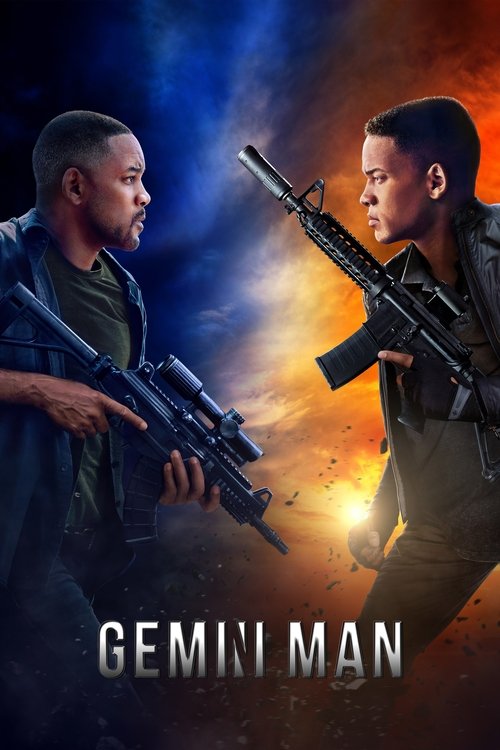
I remember sitting in the third row of a mostly empty theater in 2019, clutching a bag of pretzel M&Ms where nearly half of them were inexplicably crushed into dust. As the opening credits for Gemini Man rolled, I wasn’t thinking about the plot or the pedigree of the director. I was staring at the screen with a slight sense of vertigo. Because I was watching it in 120 frames-per-second High Frame Rate (HFR), the image didn't look like a movie. It looked like someone had ripped the front off a giant aquarium and invited me to jump in. My shoes kept squeaking against a sticky patch of floor every time I shifted in my seat, and that tiny, mundane sound felt weirdly synchronized with the hyper-real, ultra-crisp motion unfolding on screen.

It was the most technically advanced "okay" movie I’d ever seen.
The Hyper-Real Soap Opera
Ang Lee is a filmmaker I will follow into any burning building. From the wuxia elegance of Crouching Tiger, Hidden Dragon to the digital soul-searching of Life of Pi, he’s always been more of a scientist-poet than a standard Hollywood gun-for-hire. With Gemini Man, he decided to wage war on the "cinematic look" we’ve spent a century perfecting. By shooting at such a high frame rate, he eliminated motion blur. The result? It looks like the world’s most expensive Telemundo episode.
Everything is too clear. You see the sweat beads, the micro-tremors in Will Smith’s hands, and the exact texture of the gravel under a motorcycle tire. For many, this "Soap Opera Effect" was a dealbreaker. But for me, it transformed a fairly standard assassin-on-the-run story into a fascinating, almost alien experience. There is a specific kind of cult devotion growing around this film—not because the story is a masterpiece, but because it is a singular artifact of a director trying to force the future to happen ten years too early.
The Fresh Prince vs. The Digital Ghost

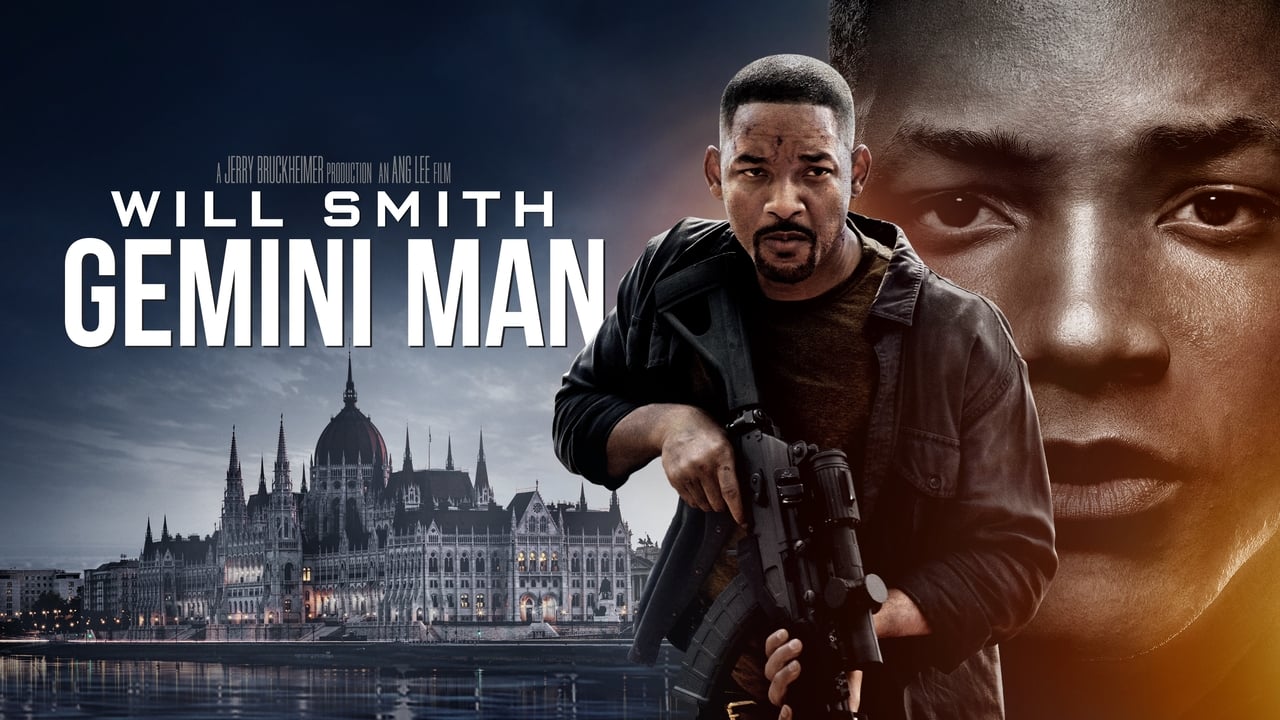
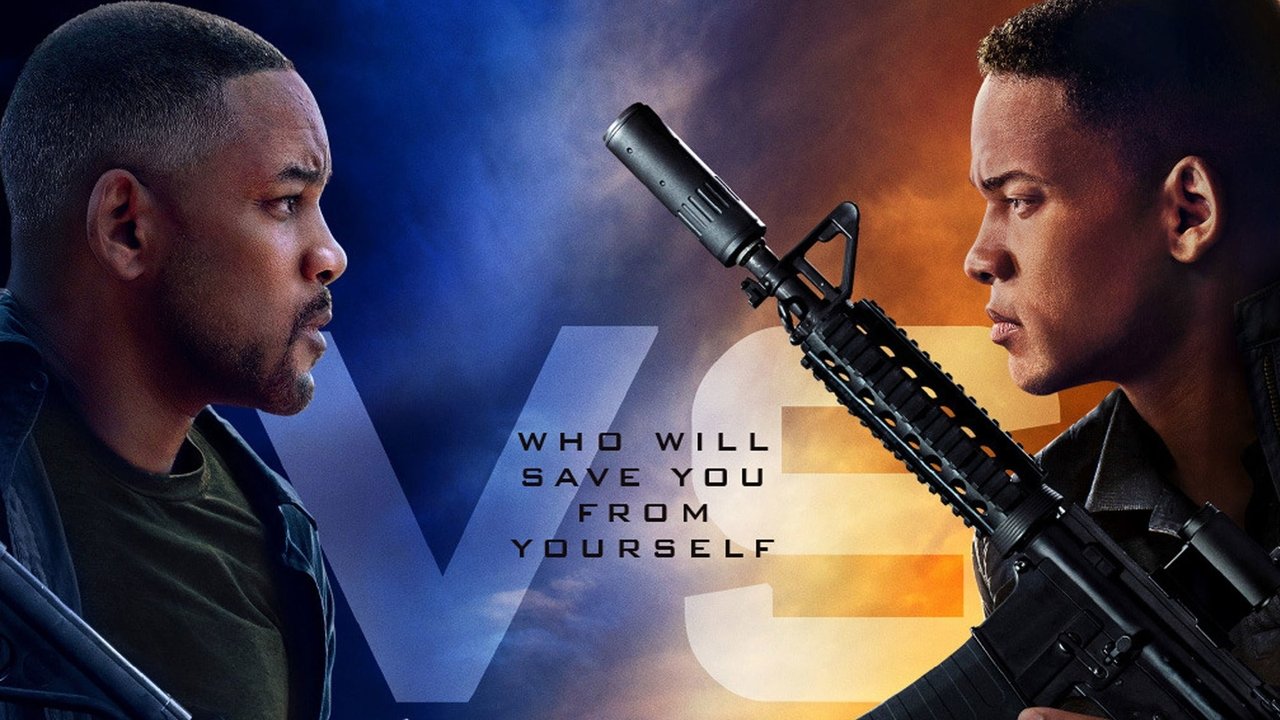
The plot is something we’ve seen a dozen times: Henry Brogan (Will Smith), an elite sniper who's getting "too old for this," is hunted by a younger, faster version of himself. What makes it work isn’t the writing—which, despite having Game of Thrones’ David Benioff on the masthead, is surprisingly clunky—but the central performance. Or rather, the performances.
Will Smith plays 51-year-old Henry with a weary, soulful resignation. But the real star is "Junior," the 23-year-old clone. Unlike the de-aging we saw in The Irishman or the Marvel films, Junior isn't just Will Smith with a digital facelift. He is a 100% digitally constructed human being. Seeing a 1990s-era Will Smith cry is a total trip into the Uncanny Valley, but after twenty minutes, I stopped looking for the glitches and started seeing a character.
The action choreography, handled with precision by the second unit and Ang Lee’s obsessive eye, is where the tech pays off. There is a motorcycle chase in Cartagena that is, quite frankly, one of the most coherent pieces of action cinema in the last decade. Because there’s no motion blur to hide the stunts, every punch, slide, and impact has a terrifying clarity. When Junior uses a motorcycle as a literal weapon—swinging it like a baseball bat—the physics feel so grounded that it’s almost offensive.
A Twenty-Year Time Capsule

One of the most charming things about Gemini Man is how much it feels like a "Dad Movie" from 1997 that accidentally fell into a supercomputer. This script sat in development hell for over two decades. At various points, Tony Scott (director of Top Gun) was going to direct it with Harrison Ford, then Mel Gibson, then Sylvester Stallone.
You can feel that age in the dialogue. Clive Owen, playing the villainous Clay Verris, is doing his best with lines that feel like they were written for a Saturday morning cartoon, while Mary Elizabeth Winstead (Scott Pilgrim vs. The World) and Benedict Wong (Doctor Strange) do a lot of heavy lifting to make the exposition feel like actual human conversation. Winstead, in particular, manages to stay charismatic even when she’s mostly there to look at computer screens and act surprised by clones.
The film's failure at the box office ($173 million against a massive $140 million budget) mostly came down to the fact that people didn't want their movies to look like "reality." But looking back at it now, in an era of AI-generated images and deepfakes, Gemini Man feels like a last stand for a certain kind of high-budget experimentalism. It’s a movie that asks: "What if we used the most expensive technology on earth to tell a story about a guy who just wants to go fishing?"
Gemini Man is a flawed, fascinating experiment that is far more interesting than the 55% Rotten Tomatoes score would lead you to believe. I don't think it’s a "good" movie in the traditional sense, but it is a spectacular "experience" if you have a high-end TV or a penchant for seeing how the cinematic sausage is made. It’s the ultimate tech-demo—a film that exists to prove a point, even if the point is one that audiences weren't quite ready to hear. Give it a shot on a rainy Sunday; at the very least, you’ll be amazed at how much you missed Will Smith’s 1990s ears.
Keep Exploring...
-

Terminator: Dark Fate
2019
-
Terminator Genisys
2015
-
Greenland
2020
-
Jurassic World
2015
-
Maze Runner: The Scorch Trials
2015
-

Jurassic World: Fallen Kingdom
2018
-
Maze Runner: The Death Cure
2018
-
Batman vs. Robin
2015
-
Valerian and the City of a Thousand Planets
2017
-

Kin
2018
-
Hulk
2003
-

In the Heart of the Sea
2015
-
Point Break
2015
-
Teenage Mutant Ninja Turtles: Out of the Shadows
2016
-

Geostorm
2017
-

Justice League
2017
-
Power Rangers
2017
-
Transformers: The Last Knight
2017
-
Pacific Rim: Uprising
2018
-
Skyscraper
2018