I Lost My Body
"Fate is within your grasp."
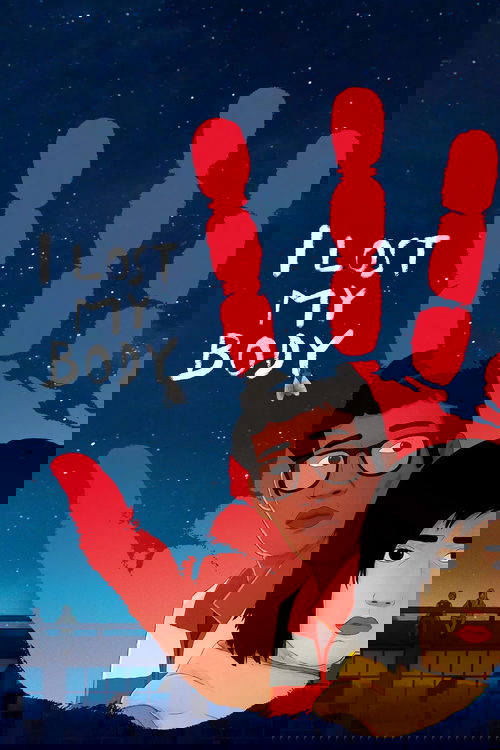
There’s a fly buzzing in the room—a tiny, persistent annoyance that sets the stage for a life defined by split-second tragedies. Most movies about destiny feel like they were written by greeting card companies, all soft lighting and "meant to be" coincidences. But I Lost My Body (2019) approaches the concept of fate from a much weirder, much grittier angle: specifically, from the perspective of a severed hand scuttling across a Parisian subway floor like a five-legged spider.

I watched this movie while wearing one mismatched sock because I couldn’t find the other in the laundry pile, and the irony of "missing parts" really sat with me throughout the runtime. It’s a film that demands you pay attention to the tactile world—the scratch of a needle on a record, the cold wind on a rooftop, and the wet slap of a hand hitting pavement. It’s one of the most singular experiences I’ve had with contemporary animation, yet it feels like it’s already slipping into that "oh yeah, I think I saw that on the Netflix home screen once" obscurity. That’s a crime I’m hoping to help rectify.
A Tale of Two Journeys
The film operates on two tracks. In one, a hand escapes a dissection lab and embarks on a perilous, almost Homeward Bound-style adventure through Paris to reunite with its owner. It fights pigeons, navigates transit, and hides in umbrellas. In the other, we follow Naoufel (Hakim Faris), a lonely young man working a dead-end pizza delivery job. Naoufel is a guy who has been "stuck" since a childhood accident took his parents and his sense of direction.
The two stories eventually collide, but the middle is where the magic happens. The "hand" sequences are surprisingly tense. There is no dialogue here, obviously, but the animation (a blend of 3D and 2D line work) conveys an incredible amount of personality and desperation through movement alone. On the flip side, the human drama is centered on a chance encounter Naoufel has with Gabrielle (Victoire du Bois) over a broken apartment intercom. He’s late with her pizza; it’s raining; they talk for twenty minutes through a speaker. It’s one of the most romantic scenes of the last decade, and they don't even see each other’s faces.
The "Amélie" Connection and Adult Animation
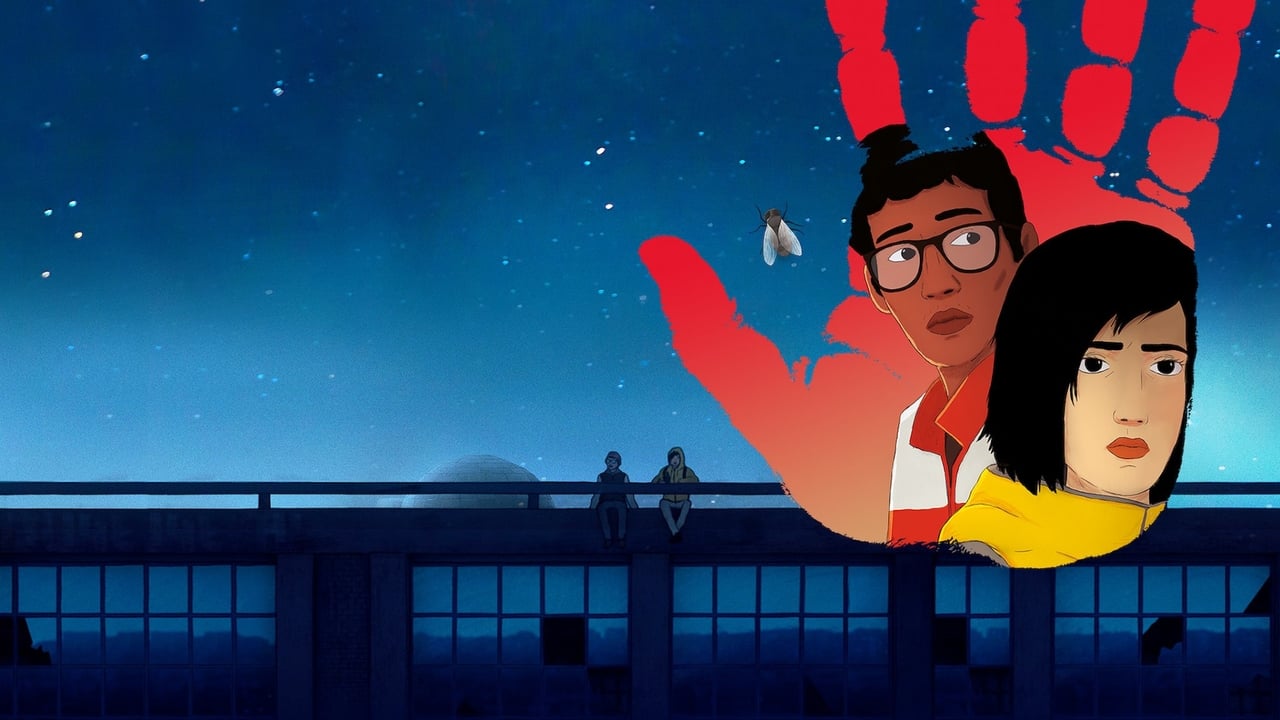
If the writing feels sharper and more whimsical than your average animated fare, there’s a reason for that. Screenwriter Guillaume Laurant also wrote Amélie, and you can feel that same DNA here—the obsession with small details and the melancholy of Parisian life. However, while Amélie is a warm hug, I Lost My Body is more like a bracing slap in the face that eventually turns into a handshake.
If you think animation is just for kids, you’re basically admitting you have the emotional palette of a Saltine cracker. This film deals with loss and the "hacking" of fate in a way that live-action rarely touches. It’s part of a growing movement of international adult animation—alongside things like Flee or The Wolf House—that uses the medium to explore internal psychological states. Jérémy Clapin, the director, understands that animation allows us to see the world through the hand’s "eyes" (or nerves), making a common trash can look like a looming mountain.
The film won the Nespresso Grand Prize at Cannes—the first animated film to ever do so—and was nominated for an Oscar, but it feels like it’s been buried by the sheer volume of the streaming era. It arrived just as Netflix was pivoting from "curated prestige" to "content firehose," and it’s easy for a quiet, French-language film about a severed hand to get lost between the latest true-crime doc and a superhero sequel.
The Sound of Memory
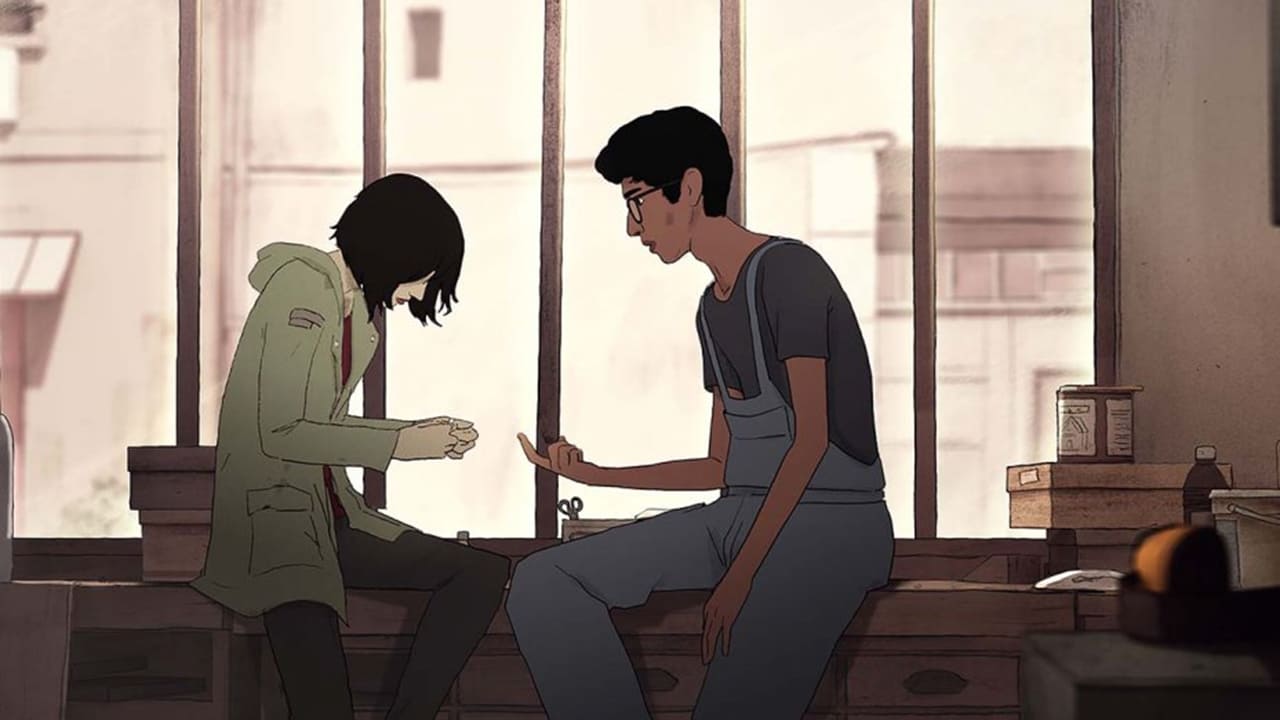
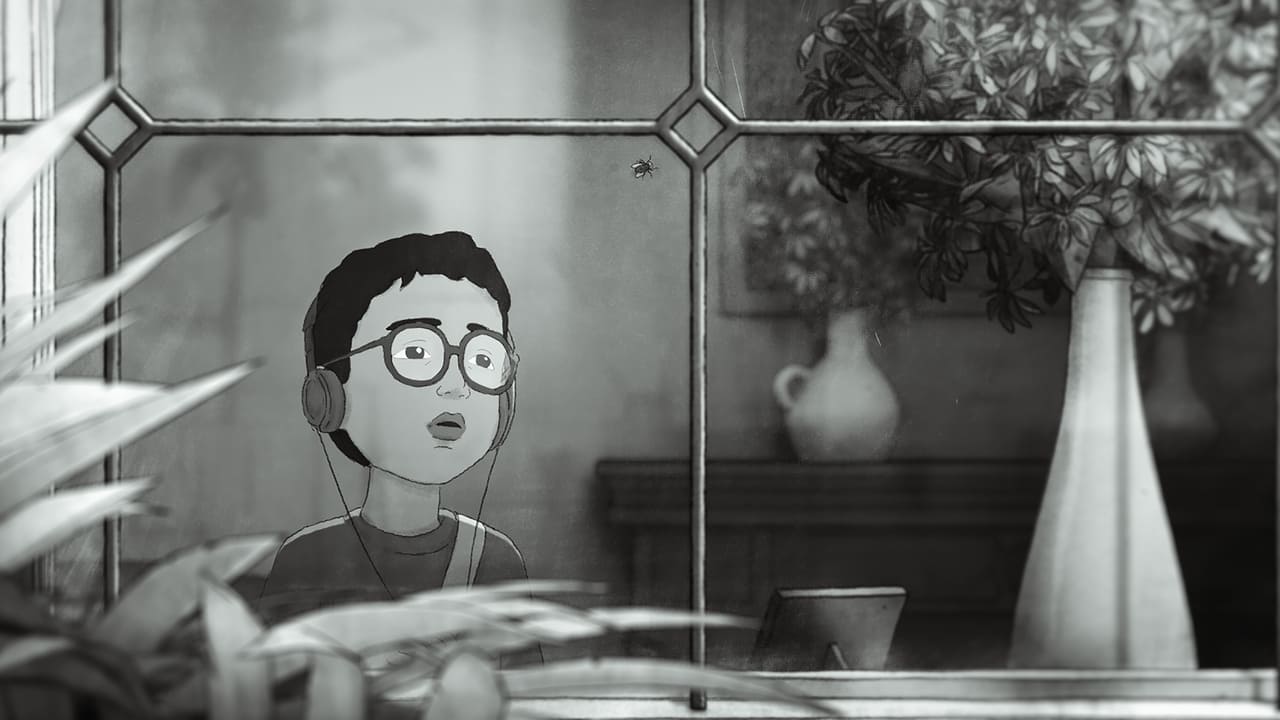
I have to talk about the score by Dan Levy. It’s a synth-heavy, brooding masterpiece that perfectly captures the "retro-modern" feel of the film. It reminded me of how much a soundtrack can carry the emotional weight when the protagonist literally doesn't have a mouth. The way the music swells when Naoufel listens to his old cassette tapes—recordings of his childhood—is gut-wrenching. The scene involving a magnetic tape recorder and a childhood memory is more heartbreaking than the entire filmography of most live-action drama directors.
The voice work is also incredibly grounded. Hakim Faris brings a stuttering, nervous energy to Naoufel that makes his eventual obsession with Gabrielle feel more like a desperate reach for connection than something creepy. And Victoire du Bois (who was terrifying in the Netflix horror series Marianne) provides a perfect foil as Gabrielle—skeptical, intelligent, and tired of the world’s nonsense. Even the supporting turn by Patrick d'Assumçao as Naoufel’s uncle Gigi adds a layer of mundane, tragic realism to the boy's life.
I Lost My Body is a rare bird. It’s a fantasy film that feels hyper-realistic, a horror premise that turns into a poetic meditation on grief, and a romance that avoids every single cliché in the book. It asks whether we can change our path or if we are just "hands" being moved by a script we didn't write.
Whether you watch it for the "how did they animate that?" technical wizardry or the deeply human story of a boy trying to find his place in the world, it’s going to stick with you. It’s a film about the pieces we leave behind and the ones we fight to keep. Just don't blame me if you start looking at your own hands with a newfound sense of suspicious respect.
Keep Exploring...
-
Batman vs. Robin
2015
-
The Boy and the Beast
2015
-
The Red Turtle
2016
-
A Whisker Away
2020
-
Suzume
2022
-
The House
2022
-
Justice League vs. Teen Titans
2016
-
Weathering with You
2019
-
Soul
2020
-
Guillermo del Toro's Pinocchio
2022
-
The Boy and the Heron
2023
-
My Life as a Zucchini
2016
-
Miraculous World: New York, United HeroeZ
2020
-
Anomalisa
2015
-
Boruto: Naruto the Movie
2015
-
Before I Wake
2016
-
Justice League Dark
2017
-
Mary and The Witch's Flower
2017
-
The Breadwinner
2017
-
Bao
2018