My Hero Academia: Heroes Rising
"Legacy isn't inherited; it's forged in the fire of shared sacrifice."
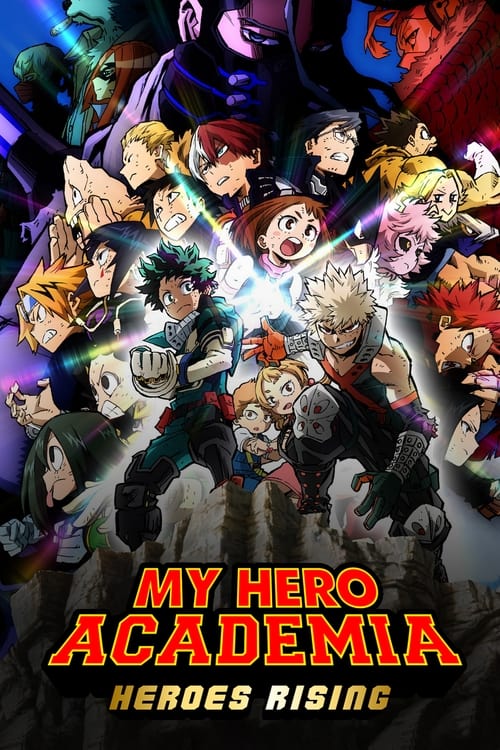
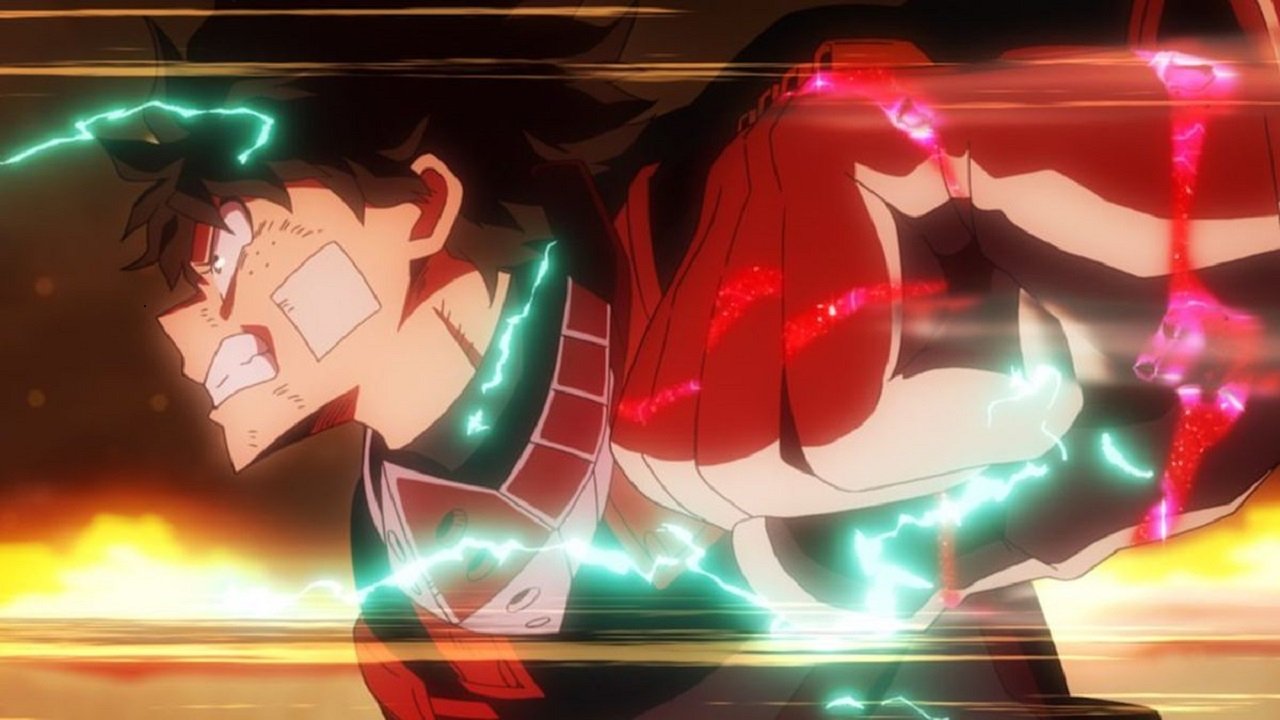
When Kohei Horikoshi, the mastermind behind the My Hero Academia manga, admitted that the climax of Heroes Rising utilized a concept he’d originally earmarked for the series' actual finale, it felt like a dangerous gamble. How do you justify "ending-level" stakes in a mid-franchise theatrical spin-off? Usually, these movies are the cinematic equivalent of a side-quest—fun, flashy, but ultimately irrelevant to the larger journey. Yet, sitting through the final thirty minutes of this film, I realized this wasn't just a flashy distraction. It’s a profound, albeit loud, meditation on what happens when a generation is forced to grow up before the ink on their provisional licenses is even dry.
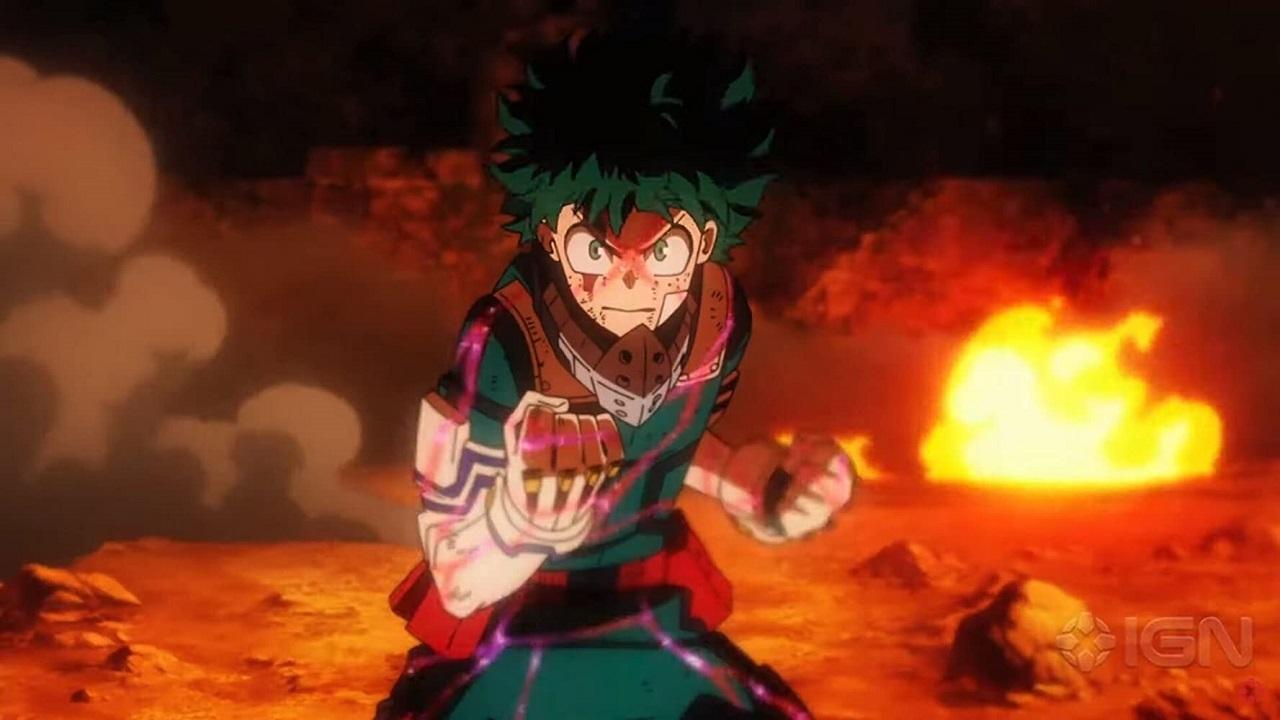
The Impossible Vacation
The setup feels almost suspiciously cozy. Class 1-A is sent to Nabu Island, a sleepy, picturesque rock in the ocean that hasn't seen a villain since, well, probably ever. It’s a "hero work-study" that looks more like an episode of Terrace House with superpowers. Seeing Daiki Yamashita’s Izuku Midoriya helping kids find their lost siblings or Nobuhiko Okamoto’s Katsuki Bakugo using his literal explosions to, uh, aggressively clear brush, is the kind of character-driven levity I live for.
But the peace is a feint. Enter Nine, voiced with a chilling, detached arrogance by Yoshio Inoue. Nine is a villain who feels like a dark reflection of the "streaming era" villainy we see today—obsessed with a curated world order where only the strong survive, powered by a Quirk that allows him to steal others' abilities. He’s a walking hardware update who has run out of cloud storage. When he and his crew, including the razor-sharp Slice (Mio Imada), descend on the island, the film shifts from a sunny slice-of-life to a desperate siege.
Animation as Pure Adrenaline
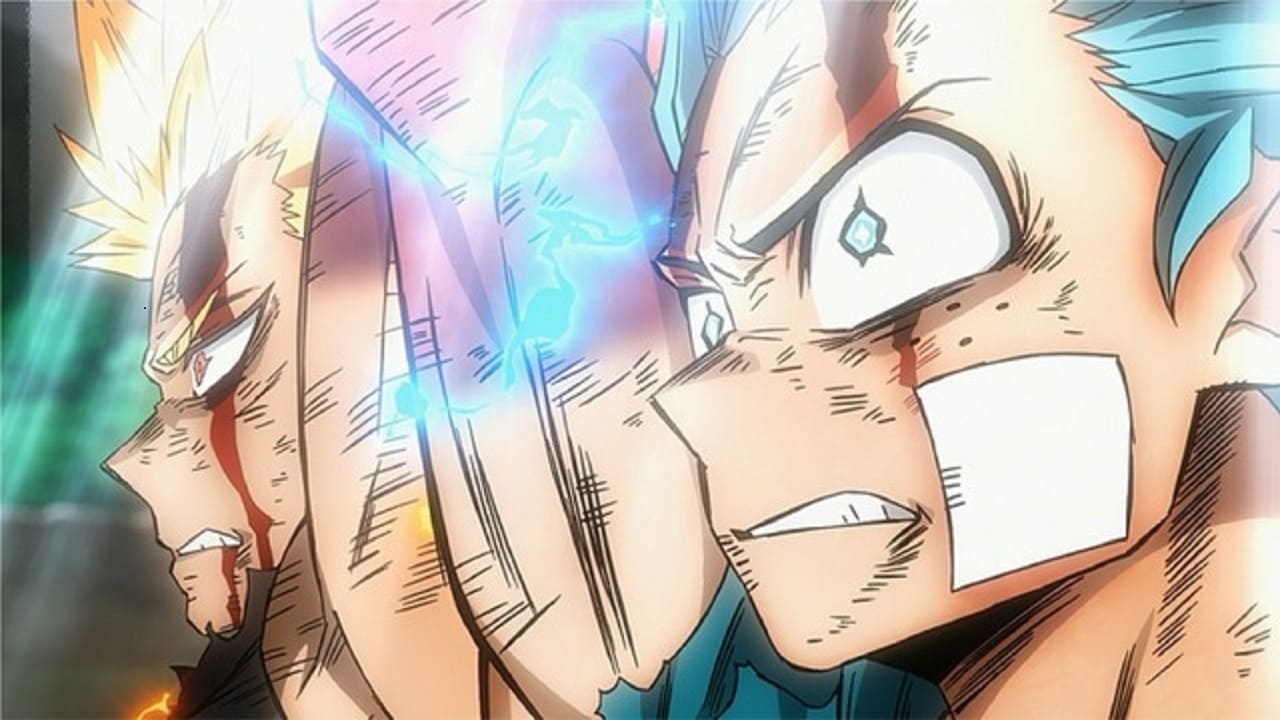
The action choreography here is where the production house BONES really flexes. In an era where we are often drowned in muddy, incomprehensible CGI soup, director Kenji Nagasaki opts for a style that feels like a high-speed car crash choreographed by a ballet dancer. There’s a specific sequence involving a mountainside battle where the "camera" doesn't just follow the action—it feels like it’s being tossed around by the shockwaves. I watched this while trying to assemble a flat-pack coffee table, and the sheer volume of the climax made me drop a screw into a heating vent where it will likely remain until the sun burns out.
What’s impressive isn't just the scale, but the clarity. You can feel the weight of every punch and the desperation in every dodge. Bakugo’s social skills make a cornered badger look like a seasoned diplomat, but in the heat of combat, his tactical brilliance is rendered with a frenetic, jagged energy that contrasts perfectly with Midoriya’s more fluid, calculated movements. The sound design by the crew handles the "oomph" of these clashes with a bass-heavy resonance that makes the theater (or your living room) feel like it’s physically shrinking around you.
The Weight of the Torch
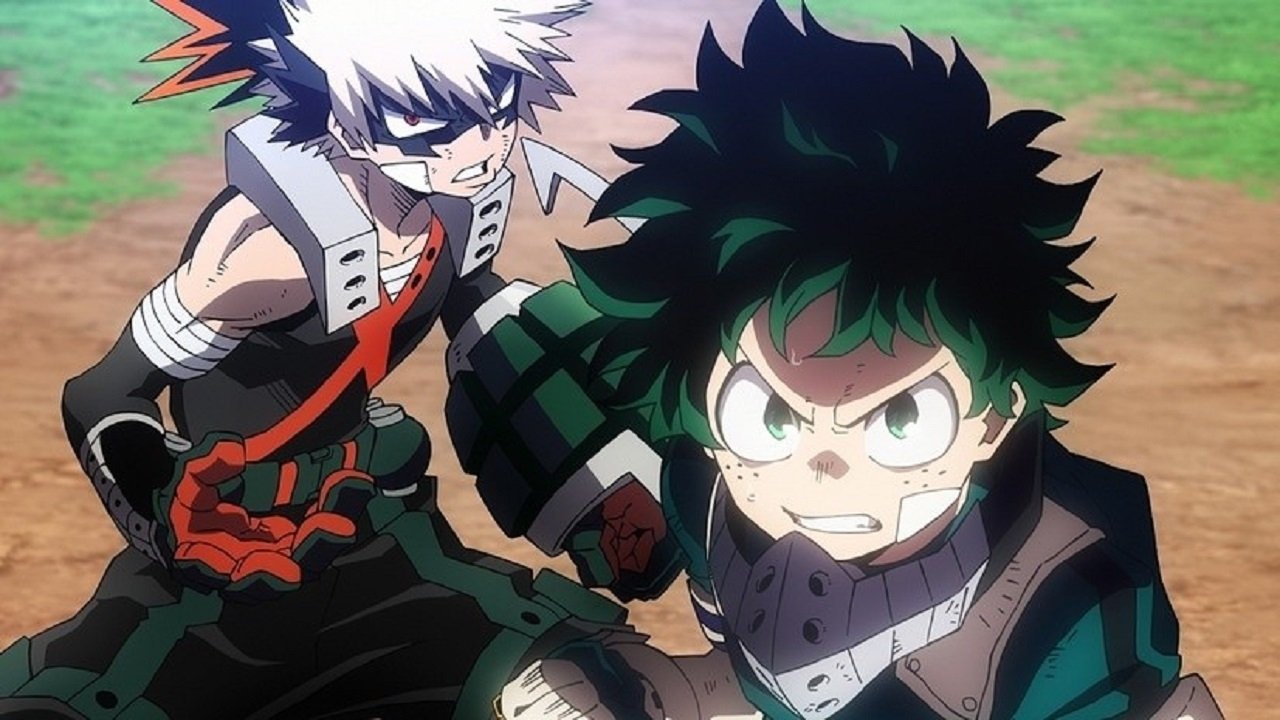
Beyond the explosions, Heroes Rising grapples with a surprisingly heavy philosophical question: Is power a possession or a responsibility? The film’s centerpiece is a radical act of sharing that, for many fans, bordered on sacrilege when the film first premiered. It challenges the "chosen one" trope by suggesting that the "One For All" power isn't just a baton in a relay race, but a flame that can be shared to keep the darkness at bay, even if it means losing it forever.
This is the cerebral core of the movie. It’s not just about hitting the bad guy harder; it’s about the existential terror of being the last line of defense when the gods (like All Might) have already left the building. The kids on Nabu Island aren't waiting for a rescue that isn't coming. They are forced to define heroism for themselves, in real-time, under the threat of total annihilation. It’s a poignant reflection of our current cultural moment—a younger generation looking at a crumbling world and realizing the "adults" are gone, leaving them to fix the unfixable.
My Hero Academia: Heroes Rising manages to be that rare franchise film that actually feels essential. While it’s technically a standalone adventure, it captures the heart of its source material better than almost any other shonen adaptation I’ve seen in years. It’s a beautiful, screaming, neon-soaked reminder that being a hero isn't about the quirk you're born with, but what you’re willing to give away to save someone else. Even if you've never seen a single episode of the show, the sheer emotional gravity of the final fight is enough to make you a believer.
Keep Exploring...
-
My Hero Academia: Two Heroes
2018
-
The Boy and the Beast
2015
-
The Seven Deadly Sins: Prisoners of the Sky
2018
-
Justice League Dark: Apokolips War
2020
-
Boruto: Naruto the Movie
2015
-
One Piece Film Red
2022
-
Raya and the Last Dragon
2021
-
Jujutsu Kaisen 0
2021
-
Suzume
2022
-
Batman vs. Robin
2015
-
Justice League vs. Teen Titans
2016
-
Justice League Dark
2017
-
The Sea Beast
2022
-
Nimona
2023
-
How to Train Your Dragon: Homecoming
2019
-
Miraculous World: New York, United HeroeZ
2020
-
Mortal Kombat Legends: Scorpion's Revenge
2020
-
Wolfwalkers
2020
-
Miraculous: Ladybug & Cat Noir, The Movie
2023
-
Demon Slayer -Kimetsu no Yaiba- The Movie: Mugen Train
2020