Ava
"A family reunion with a body count."

If you looked at the call sheet for Ava without knowing anything else about the film, you’d assume you were looking at a late-season Oscar contender. You have Jessica Chastain (fresh off the momentum of Interstellar and Zero Dark Thirty), John Malkovich (Being John Malkovich), Geena Davis (Thelma & Louise), and Colin Farrell (The Banshees of Inisherin) all sharing the same digital space. It’s a roster that suggests high-stakes drama and prestige monologues. Instead, what we got in the weird, hazy summer of 2020 was a "hitwoman with a heart of gold" flick that feels like it was assembled from the leftover parts of a dozen other, better movies.

I watched this recently while my neighbor was power-washing his driveway for three hours straight, and honestly, the rhythmic thrum of the water against the pavement provided a better sense of pacing than the first act of this film. Yet, there is something undeniably fascinating about Ava. It arrived at the height of the pandemic’s "streaming dump" era, where star-studded projects were tossed into the VOD void like breadcrumbs for a homebound audience. It’s a film that shouldn’t exist in this form, featuring a cast that should be doing Shakespeare, yet here they are, engaging in tactical reloads and family squabbles.
The A-List B-Movie
The setup is pure genre boilerplate. Jessica Chastain plays the titular Ava, an elite assassin who—wait for it—has a "conscience problem." She likes to talk to her targets before she pops them, asking them what they did wrong. This, predictably, annoys her handlers. John Malkovich plays Duke, her mentor and father figure, who looks like he’s having the time of his life wearing high-end knitwear and delivering exposition with that trademark Malkovichian lilt.
The conflict kicks in when a job in Riyadh goes sideways, and the higher-ups—led by a goatee-rocking Colin Farrell—decide Ava is a liability. While this sounds like the blueprint for a John Wick clone, Ava makes the bizarre choice to spend about 40% of its runtime as a gritty family drama. Ava returns home to Boston to reconcile with her estranged mother (Geena Davis) and her sister (Jess Weixler), who is now dating Ava’s ex-fiancé, played by Common (John Wick: Chapter 2). It’s essentially a high-budget soap opera with a silencer attached, and while the tonal whiplash is enough to give you a permanent crick in the neck, there’s a strange sincerity to it that you don’t usually see in "disposable" action cinema.
Punching Through the Tropes
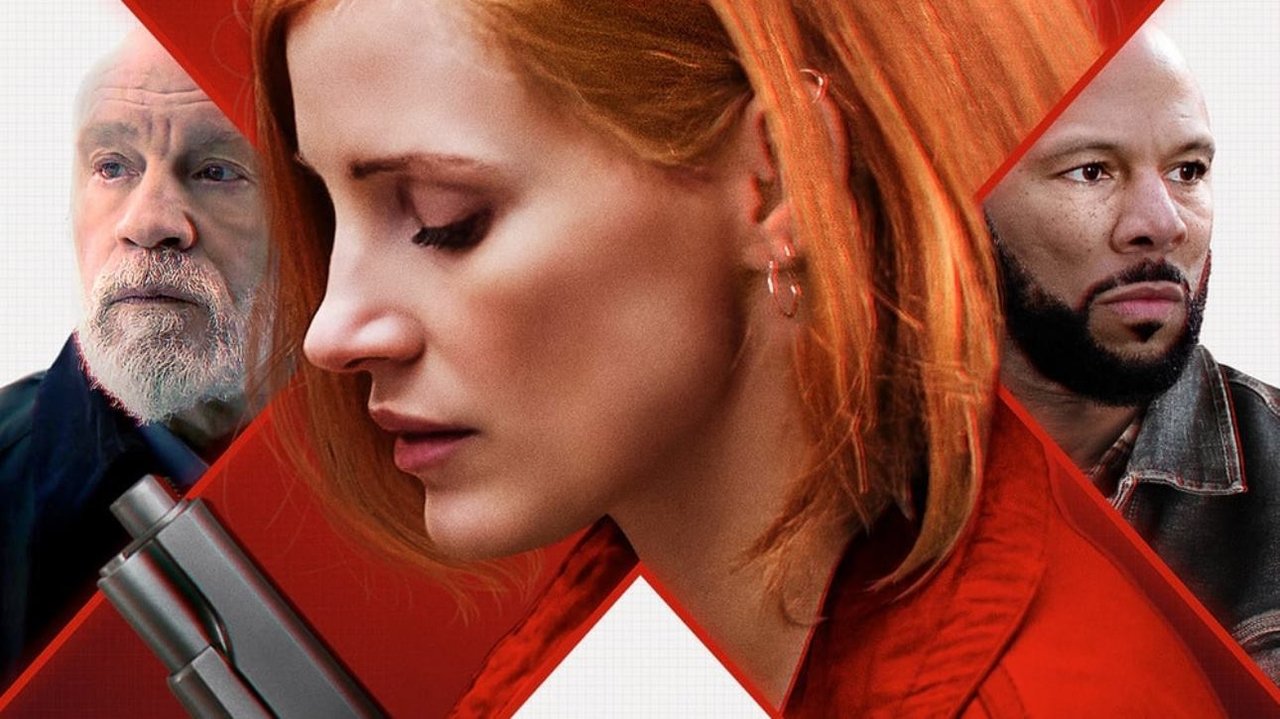
When the movie remembers it’s an action thriller, it actually puts in the work. Tate Taylor, a director better known for The Help and Girl on the Train, isn't exactly a natural fit for tactical gunplay, but the choreography is surprisingly "crunchy." Jessica Chastain clearly put in the hours at the gym; she moves with a grounded, heavy physicality that makes the fights feel earned rather than floaty.
The standout sequence involves a brutal, close-quarters brawl between Chastain and Farrell in a hotel room. In an era where "shaky cam" is often used to hide the fact that actors can’t fight, this scene is refreshingly clear. You feel every thud against the drywall. It’s messy, desperate, and lacks the superhero polish of the MCU, which is exactly why it works. However, the film struggles with the "why." Why is Ava an assassin? Why does she care about her sister’s gambling debt? The movie throws so many subplots at the wall—addiction, daddy issues, corporate espionage—that it ends up feeling like a 10-episode Netflix miniseries that was aggressively pruned into 96 minutes.
The Cult of the "What If?"
Ava has developed a bit of a cult following among the "Netflix-and-Chill" crowd, largely because of its "lost film" energy. It was originally titled Eve and was set to be directed by its screenwriter, Matthew Newton. However, after Newton stepped down following a public outcry regarding past domestic violence allegations, Tate Taylor stepped in to keep the production afloat. You can see the scars of this troubled production everywhere—from the slightly disjointed editing to the way certain characters seem to vanish for long stretches.

Here are a few nuggets for the trivia buffs:
The film was a massive hit on streaming platforms during the 2020 lockdowns, despite being mauled by critics. It’s the quintessential "I’m bored, this has famous people in it" choice. Jessica Chastain produced the film through her company, Freckle Films, specifically to create more action-heavy roles for women. The fight between Chastain and Farrell resulted in several real-life bruises, as they insisted on doing as much of the stunt work as possible. The score by Bear McCreary (Godzilla: King of the Monsters) tries its absolute hardest to make the family drama feel as epic as the gunfights. * Many of the Boston exterior shots were actually filmed in and around Westborough, Massachusetts, during a particularly grueling schedule.
Ultimately, Ava is a fascinating failure. It represents a specific moment in contemporary cinema where the line between "Prestige Drama" and "Direct-to-Video Action" became hopelessly blurred. It’s a movie that asks Geena Davis to play a gambling-addicted mother in one scene and then expects us to be invested in a secret society of shadow-government killers in the next. It doesn't quite work, but in an era of sanitized, franchise-dependent blockbusters, there’s something almost charming about a movie this messy and star-studded. If you’ve got 90 minutes to kill and a high tolerance for "troubled assassin" tropes, you could do a lot worse than watching Jessica Chastain try to punch her way out of a mid-life crisis.
Keep Exploring...
-
Run All Night
2015
-
Hitman: Agent 47
2015
-
Point Break
2015
-
Jack Reacher: Never Go Back
2016
-
The Girl on the Train
2016
-

Triple 9
2016
-
Death Wish
2018
-

Ma
2019
-
Triple Frontier
2019
-
Hitman's Wife's Bodyguard
2021
-
Guns Akimbo
2020
-
Blackhat
2015
-
Solace
2015
-
Survivor
2015
-

The Transporter Refueled
2015
-

Wild Card
2015
-

Mechanic: Resurrection
2016
-
Security
2017
-
Sleepless
2017
-
Mile 22
2018