Demon Slayer -Kimetsu no Yaiba- The Movie: Mugen Train
"Set your heart ablaze before the dream ends."
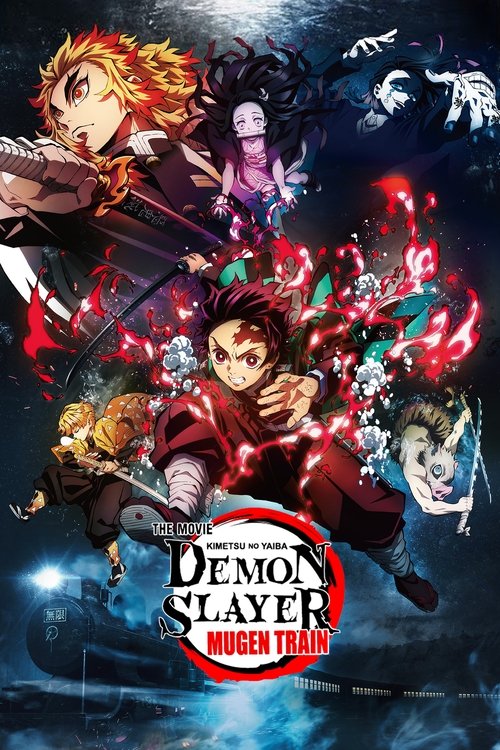
When the global box office essentially flatlined in 2020, most of us were resigned to watching whatever back-catalog gems we could find on Netflix while nursing sourdough starters. Then, a train pulled out of a station in Japan and proceeded to steamroll every financial record in cinematic history. Demon Slayer -Kimetsu no Yaiba- The Movie: Mugen Train didn't just succeed; it became a cultural anomaly—the first non-Hollywood film to top the annual global box office. I watched this for the first time while hunched over a bowl of lukewarm miso soup, and I actually dropped my spoon into the broth when Rengoku started shouting "Umai!" at his lunch. It was a mess, but honestly, this movie is worth a stained shirt.

The Canon Gamble
In the current era of franchise saturation, we’re used to "side-story" movies. You know the ones—the non-canonical adventures where the status quo is miraculously restored before the credits roll so the TV show can continue. Director Haruo Sotozaki and the team at ufotable threw that playbook into the furnace. Mugen Train is a direct, mandatory bridge between seasons of the television series. It’s a bold move that reflects our current "binge-watch" culture; the filmmakers assumed (correctly) that the audience was already locked in.
The plot picks up with our core trio—the relentlessly kind Tanjiro Kamado (Natsuki Hanae), the hyper-active Inosuke Hashibira (Yoshitsugu Matsuoka), and the perpetually terrified Zenitsu Agatsuma (Hiro Shimono)—boarding a steam train to assist the Flame Hashira, Kyojuro Rengoku (Satoshi Hino). They aren't just hunting a demon; they're walking into a trap set by Enmu, a creature that feeds on dreams.
Sweet Dreams are Made of Grief
Where Mugen Train elevates itself from a standard shonen scrap is in its psychological cruelty. Enmu’s ability to trap the heroes in their "ideal" dreams allows the film to pivot into a deeply cerebral space. For Tanjiro, this means being reunited with his murdered family. Watching him realize that his happiness is a fabrication—and the utterly brutal way he chooses to "wake up"—is some of the most emotionally sophisticated writing in modern animation. It’s a meditation on grief and the seductive danger of living in the past. While most action films are content with physical stakes, Mugen Train asks if you have the strength to kill your own happiness to do what’s right.

The animation by ufotable is, frankly, showing off. They’ve perfected a hybrid style where 2D characters move through 3D environments with a fluidity that makes most big-budget CGI look stiff. The way Tanjiro’s "Water Breathing" forms swirl like a Hokusai painting against the metallic, cold interior of the train is a visual feast. It’s a testament to the current technological peak of the medium; they aren't just drawing fights; they’re choreographing light and physics.
A Half-Billion Dollar Impact
The sheer scale of this film's success is hard to overstate. It eventually raked in over $500 million, surpassing Studio Ghibli’s Spirited Away as the highest-grossing film in Japanese history. It achieved this during a pandemic, with limited seating and global anxiety. It became a "must-see" event that transcended the usual anime niche, partly because its themes of resilience and "setting your heart ablaze" resonated so deeply with a world that felt like it was stalled on its own tracks.
The production trivia is just as wild. The "Umai!" (Delicious!) scene that I mentioned earlier? It wasn't just a gag; it became a massive social media meme, and the specific bento boxes Rengoku eats were sold in Japanese convenience stores to record numbers. More impressively, the film’s score, composed by Yuki Kajiura (of Puella Magi Madoka Magica fame) and Go Shiina, uses a full orchestra to create a sense of operatic tragedy that makes the final act feel gargantuan.

The Flame That Doesn't Go Out
The final forty minutes of this film shift from a supernatural thriller into a pure, high-stakes action epic. When the Upper Moon demon Akaza appears, the choreography reaches a level of intensity that genuinely left me breathless. Satoshi Hino’s performance as Rengoku is the soul of the movie; he plays the character with a rigid, smiling optimism that masks a profound sense of duty. The clash isn't just about power levels; it’s a philosophical debate between the "perfection" of immortal demons and the "beauty" of human frailty.
In an era where we often complain about "franchise fatigue," Mugen Train proves that if you treat your audience with intellectual respect and push the visual boundaries of your craft, they will show up in droves. It’s a film that demands to be felt as much as seen. Whether you’re an anime veteran or someone who still thinks cartoons are just for Saturday mornings, the emotional payoff here is universal. Just maybe keep your soup at a safe distance.
Mugen Train is a rare specimen: a commercial juggernaut that actually deserves its weight in gold. By blending top-tier action choreography with a heartbreaking exploration of loss and legacy, it transcends its "middle-chapter" status to become a definitive piece of contemporary cinema. It’s loud, it’s beautiful, and it will absolutely wreck your emotional well-being by the time the train reaches its final stop. Don't skip the credits—you’ll need the time to compose yourself.


Keep Exploring...
-
Jujutsu Kaisen 0
2021
-

My Hero Academia: Two Heroes
2018
-
The Boy and the Beast
2015
-

My Hero Academia: Heroes Rising
2019
-
Justice League Dark: Apokolips War
2020
-
Miraculous World: New York, United HeroeZ
2020
-
Mortal Kombat Legends: Scorpion's Revenge
2020
-
Raya and the Last Dragon
2021
-

Dragon Ball Super: Broly
2018
-
Evangelion: 3.0+1.0 Thrice Upon a Time
2021
-

Spider-Man: Across the Spider-Verse
2023
-

How to Train Your Dragon
2025
-

The Seven Deadly Sins: Prisoners of the Sky
2018
-
Boruto: Naruto the Movie
2015
-
Miraculous: Ladybug & Cat Noir, The Movie
2023
-
Weathering with You
2019
-
A Whisker Away
2020
-
Wolfwalkers
2020
-
Dragon Ball Super: Super Hero
2022
-
Guillermo del Toro's Pinocchio
2022