Gabriel's Inferno
"Seduction is a graduate-level requirement."
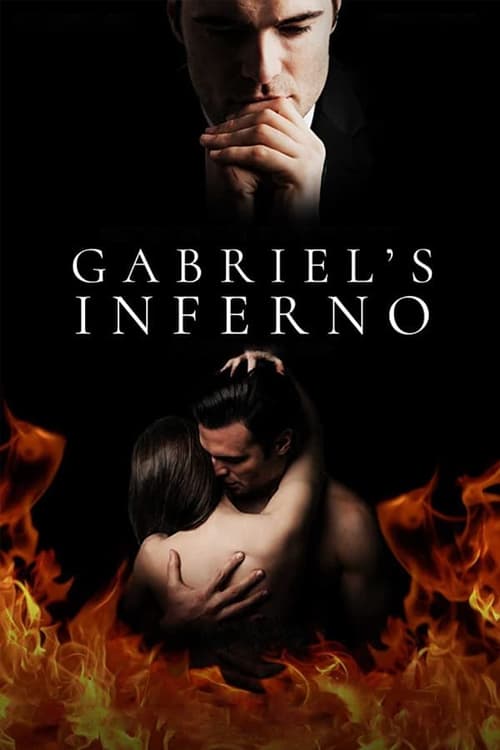
If you ever wondered what would happen if a prestigious Dante seminar crashed into a luxury lingerie catalog, you’ve found your answer in Gabriel’s Inferno. In our current era of hyper-niche streaming services, we’ve moved past the "one size fits all" blockbuster. Now, we have platforms like PassionFlix, a service dedicated entirely to adapting romance novels with a level of fidelity that borders on the religious. I watched this one while my neighbor’s leaf blower was screaming outside, and the contrast between the industrial suburban noise and the hushed, high-stakes whispering of the film’s leads was actually quite poetic.

The Gospel of the Slow Burn
Released in 2020, Gabriel’s Inferno is a Fascinating artifact of the "Direct-to-Fandom" pipeline. Directed by Tosca Musk—yes, of that Musk family—the film knows exactly who its audience is. It doesn't care about the casual viewer looking for a quick 90-minute thriller. Instead, it offers a sprawling 122-minute exploration of the first few chapters of Sylvain Reynard's novel. In the streaming era, where content is often "bingeable" and disposable, Tosca Musk (who also directed The Matchmaker's Playbook) makes a bold choice by slowing everything down to a snail's pace, allowing the sexual tension to simmer until it nearly evaporates.
The story follows Julianne Mitchell, played with a wide-eyed, fragile determination by Melanie Zanetti. She’s a graduate student who finds herself in the crosshairs of the brilliant, brooding, and borderline-abusive Professor Gabriel Emerson. As played by Giulio Berruti, Emerson is a man who seems to be in a constant state of agonizing over his own cheekbones. He’s a specialist in Dante Alighieri, and the film leans heavily into the Divine Comedy parallels. Gabriel is a man trapped in his own personal hell of past sins, and Julianne is his Beatrice, the pure soul who might lead him to some form of academic and spiritual purgatory.
Academia as High-Stakes Combat
What’s striking about the drama here is how it treats the university setting. In this world, a graduate seminar isn't just a place to argue about subtext; it’s essentially a gladiator arena for people who wear too much starch. Gabriel is the kind of professor who would fail you for using the wrong font, yet he’s treated with the reverence of a rock star. This is a classic "Dark Academia" trope, but filtered through the lens of modern romance.
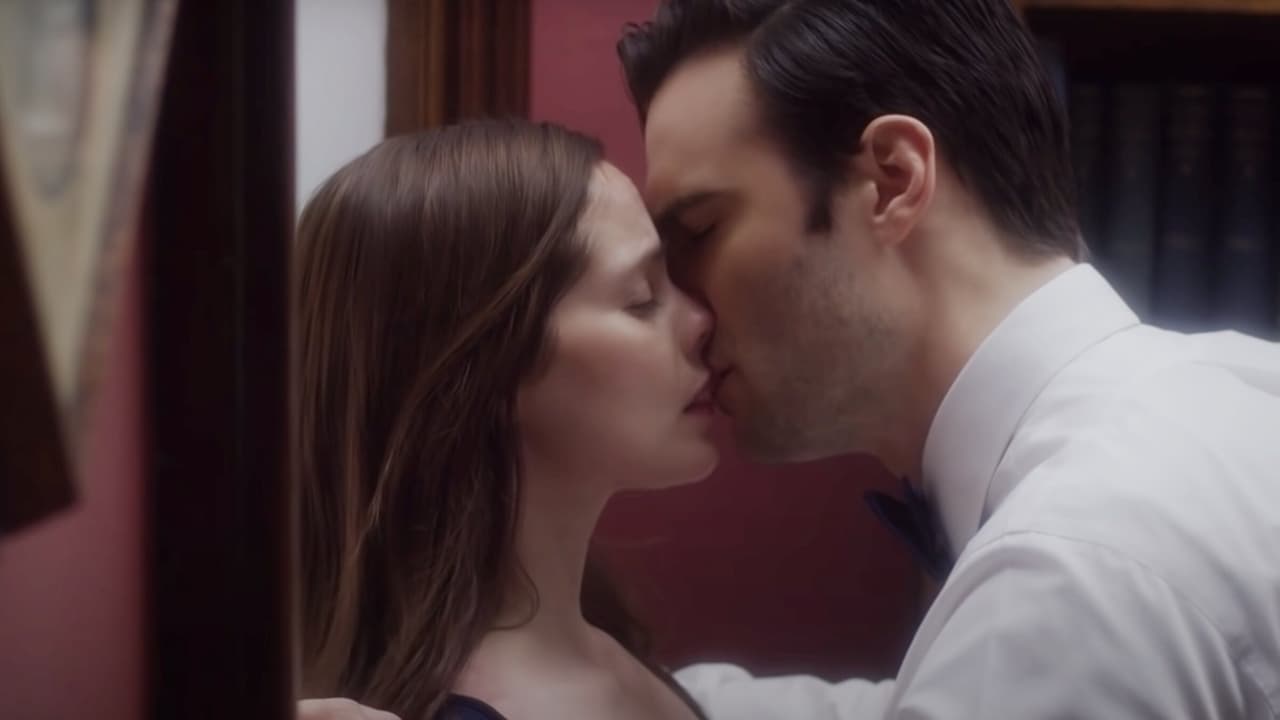
The chemistry between Melanie Zanetti and Giulio Berruti is the engine that keeps this long runtime from feeling like an actual sentence in the Inferno. Zanetti manages to give Julianne a backbone that isn't always present in the source material, while Berruti handles the "tortured soul" requirements with a physicality that explains why he was the fan-favorite for the role. Interestingly, Berruti is actually a trained dentist in real life, which adds a strange layer of irony to every scene where he’s gritting his teeth in emotional agony.
The Passion of the Niche
The production itself is a testament to the power of a dedicated subculture. Tosca Musk didn't just film a script; she collaborated with a fanbase that had been obsessing over these characters since they were originally featured in Twilight fanfiction (much like Fifty Shades of Grey). This film exists because a specific group of people demanded it be made exactly like this—unrushed, aesthetic-heavy, and intensely loyal to the book’s prose.
The trivia behind the scenes is almost as dramatic as the film. Because PassionFlix operates on a different model than the big studios, they have to be creative. They filmed in Toronto to stand in for Pennsylvania, but moved the production to Florence, Italy, to capture the authentic Dantean atmosphere. It turns out that the fans were so involved that they actually helped scout locations and weigh in on casting decisions via social media. It’s a very "2020s" way of making a movie—the democratization of the greenlight process.

Despite its "sinful" marketing, the film is surprisingly preoccupied with the philosophy of forgiveness. It asks if a man who has lived a life of excess and cruelty can actually be redeemed by a "pure" love. It’s an old-fashioned idea wrapped in a very modern, high-definition package. It’s essentially "Fifty Shades of Grey" if Christian Grey had a PhD and a better library. While the pacing can be glacial, there is a certain meditative quality to the way the camera lingers on old books, Italian architecture, and the micro-expressions of the leads.
Ultimately, Gabriel’s Inferno is a film that rewards patience and a certain willingness to surrender to its melodramatic gravity. It’s a specialized piece of contemporary cinema that serves its core audience with total devotion while offering outsiders a window into a very specific kind of romantic obsession. If you can handle the academic posturing and the agonizingly slow burn, you might find that this particular hell is actually quite comfortable. It’s not a masterpiece of world cinema, but as a piece of fan-driven storytelling, it’s a fascinating success.
Keep Exploring...
-
Gabriel's Inferno: Part II
2020
-
Gabriel's Inferno: Part III
2020
-

The Longest Ride
2015
-

All the Bright Places
2020
-

Purple Hearts
2022
-
Weathering with You
2019
-

Forever My Girl
2018
-

Love, Simon
2018
-

Midnight Sun
2018
-

Five Feet Apart
2019
-
The Art of Racing in the Rain
2019
-

Clouds
2020
-

I Still Believe
2020
-

Life in a Year
2020
-

CODA
2021
-

Where the Crawdads Sing
2022
-
Past Lives
2023
-
The Age of Adaline
2015
-

To All the Boys: Always and Forever
2021
-

I Want to Eat Your Pancreas
2018