If Anything Happens I Love You
"Twelve minutes to break your heart."
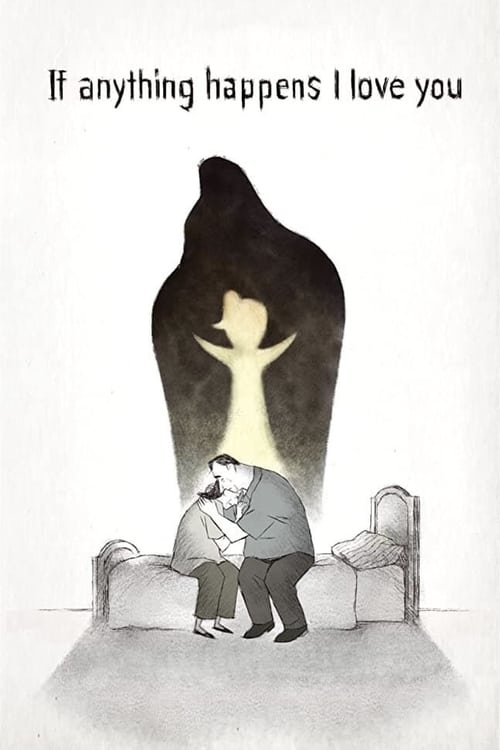
The title isn't just a title; it’s a phantom limb. For anyone living in America over the last decade, those six words carry a specific, nauseating weight. They are the words typed into glowing screens in darkened classrooms, the final transmission sent when the world stops making sense. When I first saw the thumbnail for If Anything Happens I Love You on Netflix, I actually hesitated. I was sitting on my couch, nursing a lukewarm mug of peppermint tea that I’d over-steeped until it tasted like medicine, and I wasn't sure I wanted to invite that kind of heaviness into my living room. But that’s the thing about contemporary short-form cinema: it’s designed to slip past your defenses before you have time to build a wall.

Directors Will McCormack and Michael Govier didn't set out to make a political manifesto, even though the subject matter is inherently charged. Instead, they crafted something far more difficult to dismiss: a silent, sketch-like exploration of the "after." It’s a film that exists in the hollowed-out spaces of a suburban home, proving that sometimes the most profound things we have to say require no dialogue at all.
The Architecture of an Empty Room
The first thing that struck me about the animation style is how fragile it looks. In an era where we are bombarded by hyper-realistic CGI and the dizzying "Volume" technology of big-budget franchises, McCormack and Govier went in the opposite direction. The lines are thin, almost precarious, like something scrawled in a private journal. Much of the frame is stark white—an emotional void that the characters are struggling to fill.
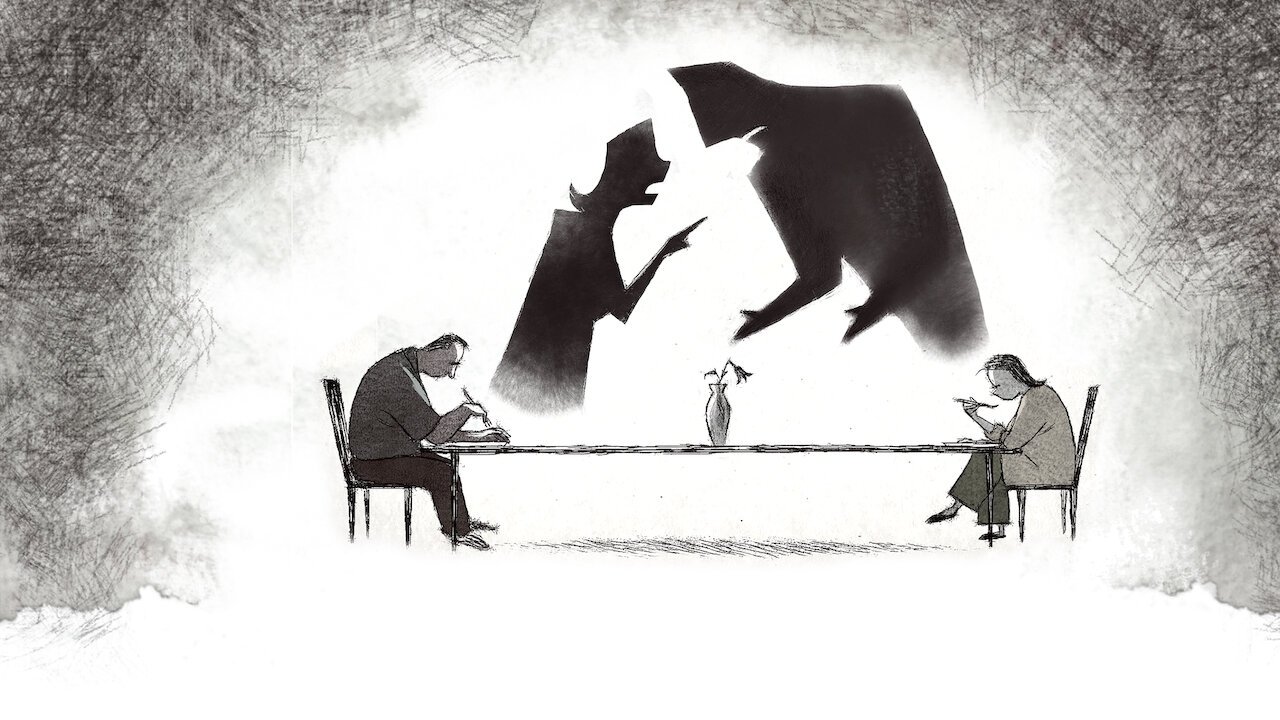
We follow two parents who are drifting through their daily routines like ghosts. They don’t speak. They barely look at each other. But their shadows? Their shadows are screaming. This is the film’s stroke of genius. While the physical bodies of the parents are slumped and defeated, their shadow selves reach out, argue, and embrace. It’s a brilliant visual metaphor for the internal duality of grief—the way we present a stoic, numb mask to the world while our inner selves are violently wrestling with the "why" of it all. It’s basically a twelve-minute emotional mugging.
The shadows act as a bridge to the past. They pull a sweater out of a drawer; they trigger a memory of a smudge on a wall. It reminded me of how, after my grandmother passed, I spent twenty minutes staring at a half-used bottle of her favorite perfume, unable to move. This film captures that specific, domestic paralysis with a surgical precision that’s honestly a bit terrifying.
A Tragedy for the Streaming Age
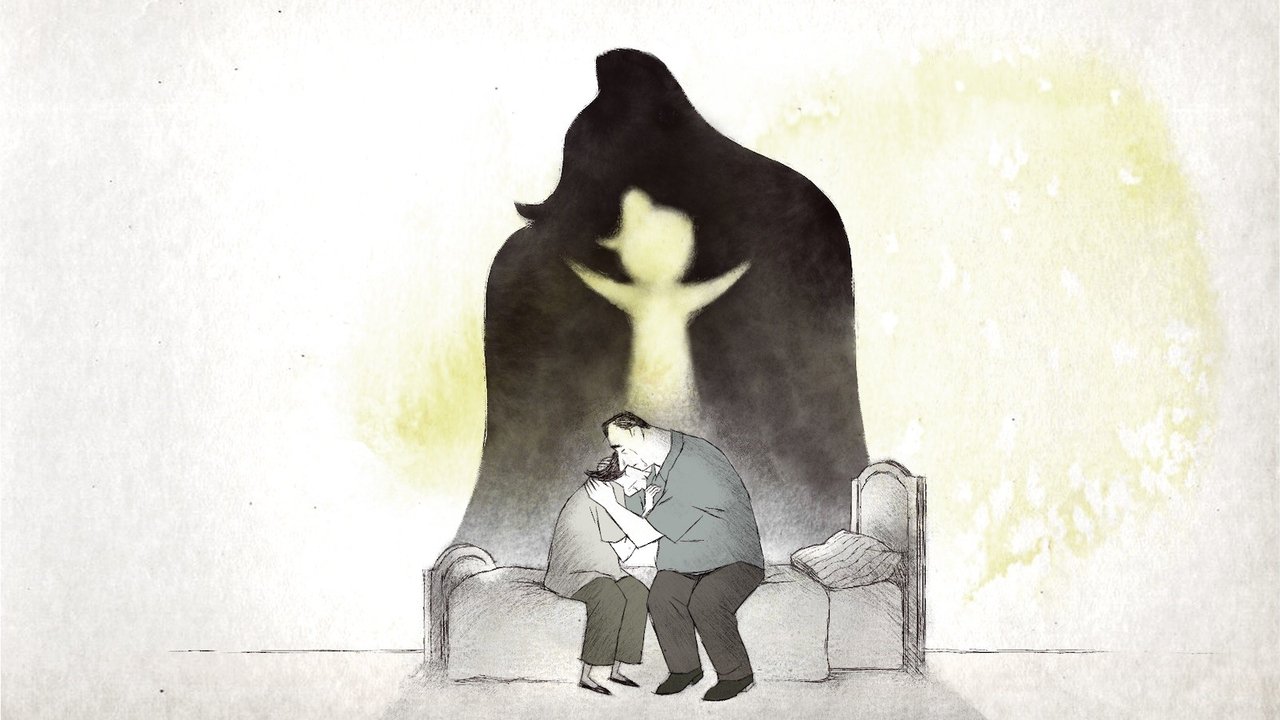
The way we consume film has shifted so radically in the last five years that a twelve-minute short can now have the cultural footprint of a summer blockbuster. This film became a genuine viral sensation on TikTok—the "try not to cry" challenge—which is a bizarre, very 2020s way for a somber drama to find its audience. But it speaks to the democratization of the medium. You don’t need a sprawling theatrical release or a legacy sequel hook to grab the world’s attention anymore; you just need an idea that hurts in a way people recognize.
What’s fascinating is how the film handles the "event" itself. We see the daughter’s life in snapshots: a soccer game, a first kiss, a family trip. When the setting shifts to the school, the colors don't become garish or cinematic. The palette remains muted, the sounds of the tragedy kept distant and muffled. By refusing to show the violence, the filmmakers make the absence of the child feel even more absolute. It forces the viewer to fill in the blanks with their own anxieties about the current state of the world.
The score by Lindsay Marcus does a lot of the heavy lifting here. It’s melodic but frayed at the edges. When "1950" by King Princess starts to play—a song about unrequited longing—the film shifts from a mourning piece to a celebration of what was lost. It’s a needle-drop that feels perfectly tuned to the sensibilities of the Gen Z audience that helped make this film an Oscar winner.
The Philosophy of the Final Message
At its core, the film asks a deeply philosophical question: How do we continue to inhabit a world that has been fundamentally broken? It doesn't offer a platitude or a "light at the end of the tunnel" resolution. Instead, it suggests that the only way forward is through the shadows themselves. The parents have to acknowledge their inner turmoil before they can even share a cup of coffee.

The film manages to avoid the "misery porn" trap that many contemporary dramas fall into. It doesn't feel like it's exploiting a national trauma for points; it feels like a collective exhale. In an era where our social media feeds are a constant stream of polarizing arguments about policy and "thoughts and prayers," this movie strips away the noise. It focuses on the silence that remains when the news cameras leave and the hashtags stop trending.
I walked away from those twelve minutes feeling a strange mix of exhaustion and clarity. It’s a testament to the power of the short-form medium that it can achieve more character development in the time it takes to boil an egg than some three-hour epics manage with a hundred-million-dollar budget. If Anything Happens I Love You is a quiet, devastating masterpiece of the streaming era—a film that understands that the most powerful things in life are the ones we never got to say out loud.
I think we often mistake "short" for "slight." This film is the ultimate counter-argument to that. It’s a heavy sit, but it’s an essential one, serving as a time capsule for a specific kind of modern American heartbreak. Just make sure you have some tissues nearby—and maybe don't over-steep your tea. It’s hard to appreciate fine animation when your mouth is puckered from bitter peppermint.
Keep Exploring...
-
The Boy and the Beast
2015
-

I Want to Eat Your Pancreas
2018
-
A Whisker Away
2020
-
Evangelion: 3.0+1.0 Thrice Upon a Time
2021
-
Suzume
2022
-

Guillermo del Toro's Pinocchio
2022
-
The Wild Robot
2024
-
Anomalisa
2015
-
Batman vs. Robin
2015
-
A Silent Voice: The Movie
2016
-
Loving Vincent
2017
-
Weathering with You
2019
-

Piper
2016
-
Bao
2018
-

How to Train Your Dragon: Homecoming
2019
-

Clouds
2020
-
Justice League Dark: Apokolips War
2020
-

Mortal Kombat Legends: Scorpion's Revenge
2020
-

The Banker
2020
-
Palmer
2021