Justice League Dark: Apokolips War
"The end of everything isn't pretty."
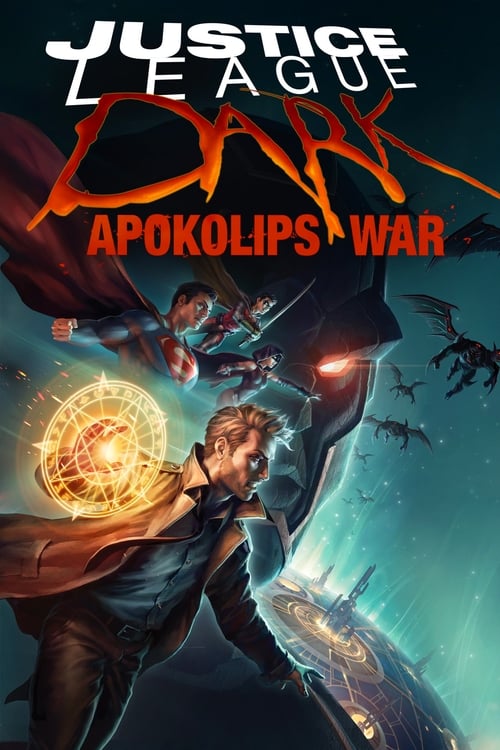
There’s a specific kind of silence that follows watching a beloved childhood icon get torn limb from limb by a "Paradoom." It’s the sound of a franchise burning its bridges and salting the earth behind it. When Justice League Dark: Apokolips War landed in 2020, it didn’t just close the door on the DC Animated Movie Universe (DCAMU)—it blew the hinges off and set the house on fire. It was a bold, arguably traumatizing, finale to a 15-movie saga that began with The Flashpoint Paradox, and it arrived right when we were all trapped indoors, making its nihilistic "end-of-the-world" energy feel uncomfortably relevant.
A Massacre in the Morning Sun
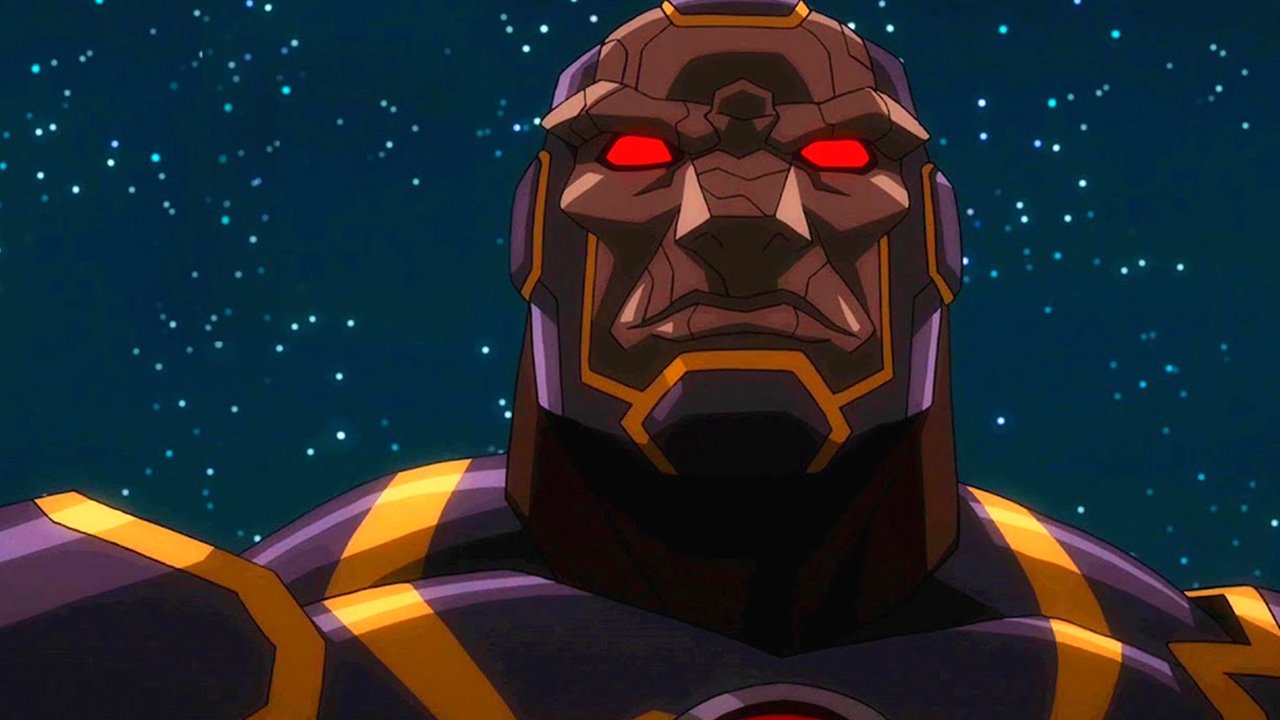
Most superhero epics follow a predictable rhythm: the threat arrives, the heroes stumble, they regroup, and they win. This film looks at that formula and laughs a jagged, bloody laugh. We open with a pre-emptive strike on Apokolips that goes south so fast it’ll give you whiplash. Within ten minutes, the Justice League isn't just defeated; they are decimated. Two years later, Earth is a hollowed-out shell under Darkseid’s boot, and the survivors are a motley crew of the broken and the desperate.
I watched this for the first time on a Tuesday afternoon while eating a bowl of lukewarm cereal, and I genuinely forgot to swallow for three minutes because the sheer body count was so staggering. Seeing a depowered Jerry O'Connell (as Clark Kent/Superman) with a kryptonite-infused tattoo over his heart, looking like he’d aged fifty years, sets a grim tone that never lets up. This isn't the shiny, hopeful DC of the 1940s; this is the culmination of the "gritty" era pushed to its absolute logical extreme.
Magic, Misery, and Matt Ryan
The "Dark" in the title is carrying a lot of weight here. Because the heavy hitters are mostly out of commission, the narrative spotlight shifts to John Constantine. Matt Ryan is, quite simply, the definitive voice of Constantine. He’s played the character in live-action, animated shorts, and long-form features, bringing a weary, gin-soaked charm that prevents the movie from sinking into total gloom. His chemistry with Taissa Farmiga’s Raven—who is literally struggling to keep a demonic Trigon from bursting out of her forehead—provides the emotional spine of the film.
The action choreography is frantic and high-stakes. Directors Matt Peters and Christina Sotta don’t shy away from the physical reality of a war against a tyrant. When Rosario Dawson’s Wonder Woman or Jason O'Mara’s Batman appear, they aren't the paragons we remember; they are scarred, literal shadows of themselves. The "Paradooms"—Darkseid’s unholy hybrids of Parademons and Doomsday—are a terrifying bit of creature design. They don’t just fight; they shred. It’s essentially Super-Misery Porn, but it works because the stakes feel final. In an era of franchise "multiverses" where no one ever really stays dead, Apokolips War makes death feel like a cold, hard fact.
The Ethics of the Reset Button
This film serves as a fascinating snapshot of our current "Franchise Fatigue" era. By 2020, we had seen a dozen variations of the "end of the world," but Apokolips War took the intellectual leap to ask: "If we lose this badly, is the world even worth saving?" There’s a deeply philosophical, almost cynical, undercurrent to the climax. The film suggests that some wounds are too deep for a victory speech to fix.
The use of the Suicide Squad, led by a surprisingly hilarious Harley Quinn, adds a touch of levity, but even that is tinged with the desperation of a terminal diagnosis. The production team at Warner Bros. Animation clearly knew this was the end of this specific continuity, so they threw every "What If?" scenario at the wall. Cyborg as a living battery? Sure. Damian Wayne (Stuart Allan) leading the League of Assassins to save his dad? Why not. It’s a chaotic, overstuffed, 90-minute sprint that shouldn't work as well as it does.
Interestingly, this was one of the first major direct-to-video releases to really benefit from the "Snyder Cut" discourse happening on social media at the time. Fans were hungry for "adult" takes on these characters, and Apokolips War delivered that in spades, even if it occasionally feels like it’s trying a bit too hard to be edgy. It’s a "Legacy Sequel" for an entire universe of films, and while it lacks the polish of a $200 million theatrical release, the creative freedom of animation allows it to go places live-action wouldn't dare.
Ultimately, Justice League Dark: Apokolips War is a polarizing, punchy, and deeply grim experience. It’s not a movie I’d put on to cheer myself up—unless I’m in the mood to see the literal end of the world—but as a piece of craft, it’s a remarkable feat of narrative economy. It manages to wrap up a dozen plot threads from various movies while maintaining a breakneck pace. It’s a brutal reminder that even gods can fail, and sometimes, the only way to move forward is to let everything go. If you can stomach the carnage, it’s a fascinating, cynical bookend to a decade of superhero storytelling.

Keep Exploring...
-
Justice League Dark
2017
-
Justice League vs. Teen Titans
2016
-
The Boy and the Beast
2015
-

My Hero Academia: Two Heroes
2018
-
The Seven Deadly Sins: Prisoners of the Sky
2018
-

My Hero Academia: Heroes Rising
2019
-
Batman vs. Robin
2015
-

Raya and the Last Dragon
2021
-
The Sea Beast
2022
-
Nimona
2023
-

How to Train Your Dragon: Homecoming
2019
-
Mortal Kombat Legends: Scorpion's Revenge
2020
-

Boruto: Naruto the Movie
2015
-
Miraculous World: New York, United HeroeZ
2020
-
Wolfwalkers
2020
-
Jujutsu Kaisen 0
2021
-

Suzume
2022
-
Miraculous: Ladybug & Cat Noir, The Movie
2023
-

Justice League: Throne of Atlantis
2015
-
Justice League: The Flashpoint Paradox
2013