Peninsula
"The train has left. Now, we drive."
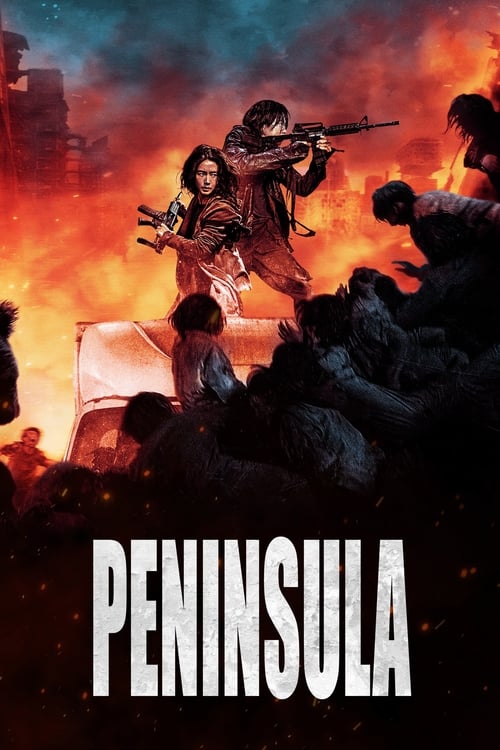
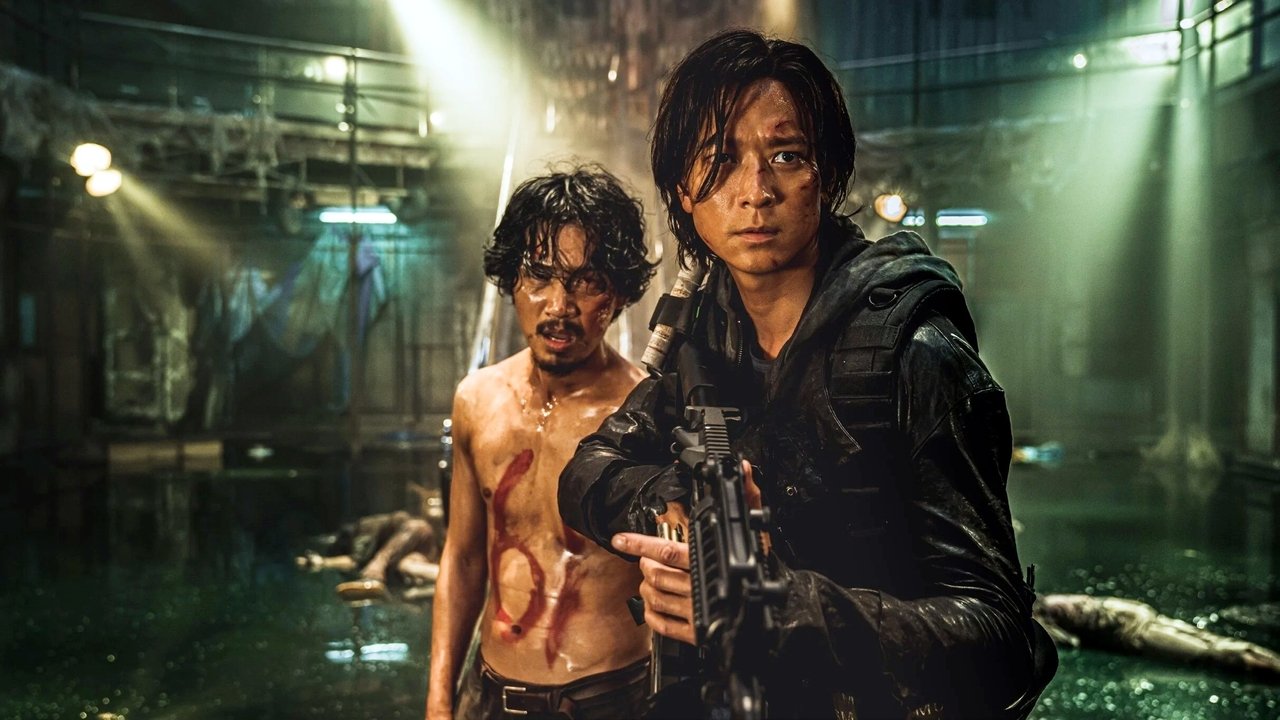
If you walked into Peninsula expecting the tight, heart-wrenching claustrophobia of Train to Busan, I can already hear your soul leaving your body about twenty minutes in. While its predecessor was a masterclass in localized tension—essentially Speed but with more biting—this 2020 sequel is a different beast entirely. It’s a neon-soaked, gear-shifting heist movie that effectively tells the audience: "We’re done with the crying on trains; let’s see how many zombies we can flatten with a modified SUV."
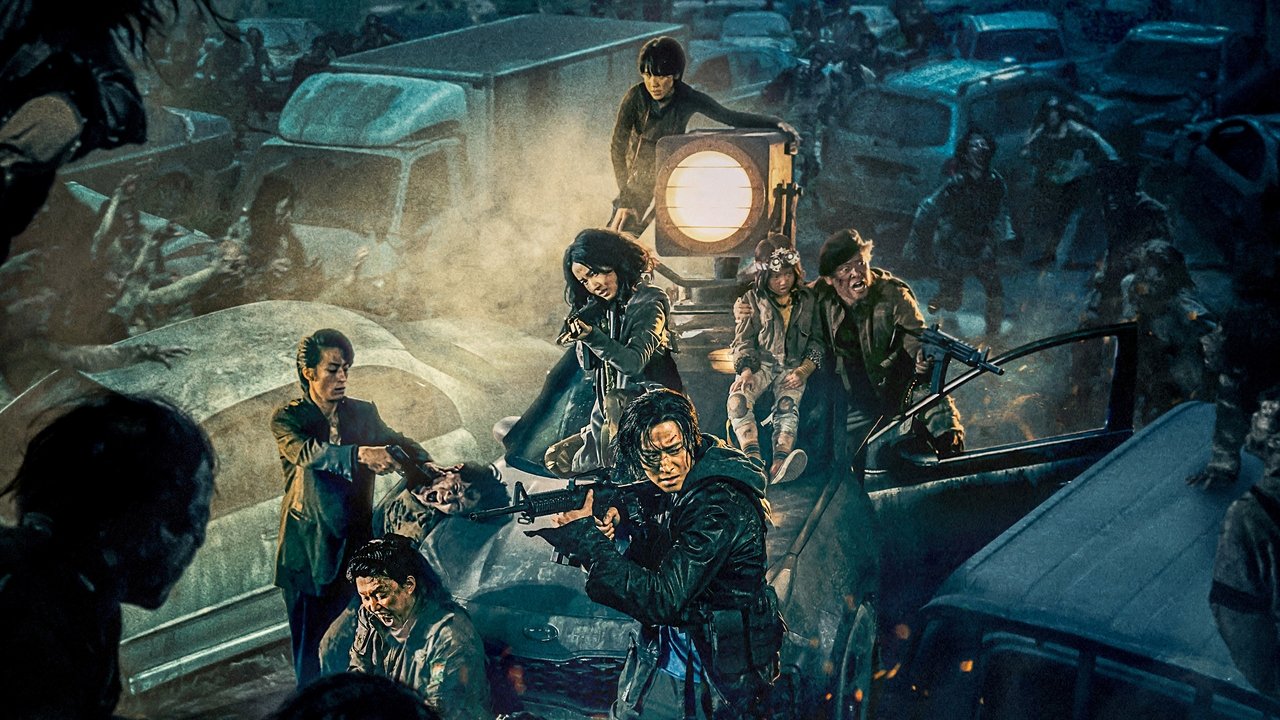
I watched this on my laptop while my neighbor was leaf-blowing their driveway for three straight hours, and honestly, the constant, mindless drone of that engine made the relentless car chases feel like a 4D IMAX experience. It’s that kind of movie—loud, unapologetic, and built on the smell of burning rubber.
From Survival Horror to Wasteland Western
The story picks up four years after the initial outbreak. Korea is a ghost state, a quarantined "Peninsula" (hence the title) that the rest of the world has simply walked away from. Our protagonist, Jung-seok (Gang Dong-won), is a former soldier living as a pariah in Hong Kong, haunted by the family he couldn't save. When a group of gangsters offers him a share of $20 million sitting in a truck in the middle of the dead zone, he heads back in.
It’s a classic "one last job" setup, but once the boots hit the ground in Incheon, the film pivots hard into Mad Max territory. Director Yeon Sang-ho swaps out the grounded realism of the first film for a digitized, hyper-stylized wasteland. I’ll be honest: it’s basically a high-budget Hot Wheels commercial with more rotting flesh. If you can accept that the physics of the car chases are purely optional, there’s a lot of fun to be had here.
The Real Stars Don't Have Lines
While Gang Dong-won does a fine job as the brooding lead, the movie really finds its pulse when it focuses on the survivors who never left. Lee Jung-hyun is fantastic as Min-jung, a mother who has turned survival into a tactical art form. However, the absolute scene-stealer is Lee Re, who plays the young Joon-yi. Watching a teenager drift a truck through hordes of the undead with the nonchalance of someone parallel parking at a grocery store is the kind of "cool" that the movie lives for.
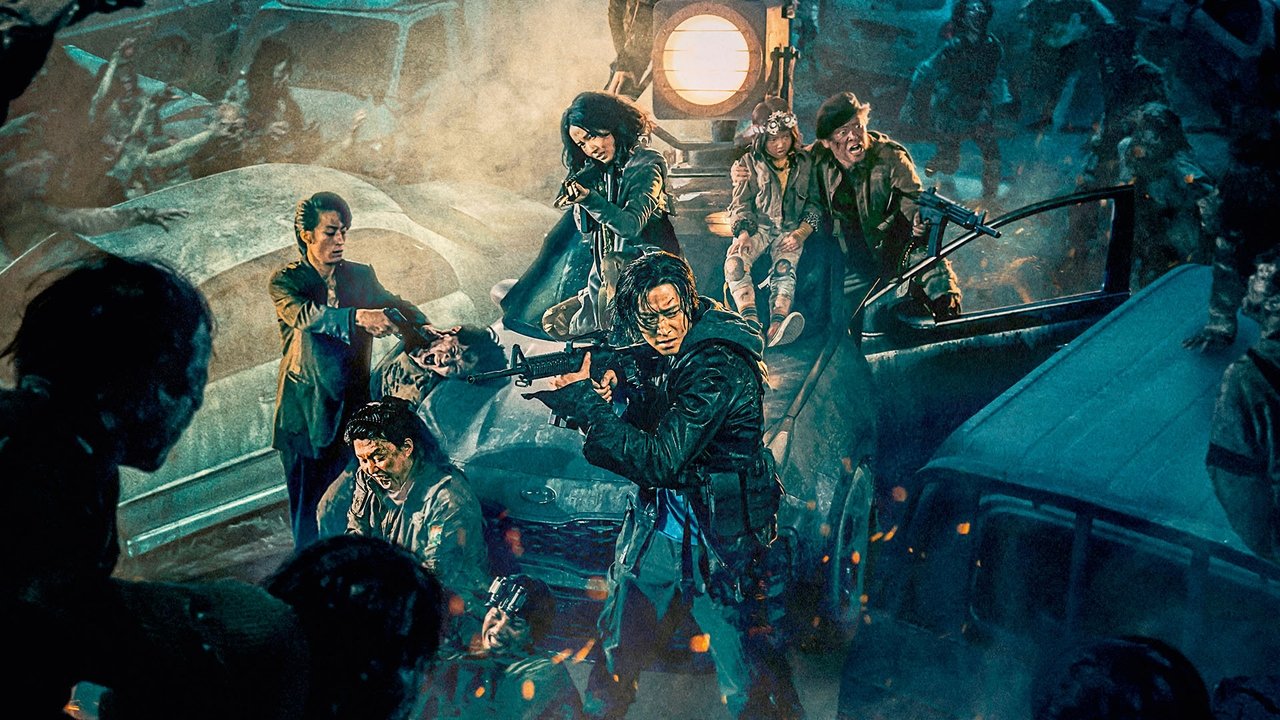
Then there’s Unit 631. In a post-apocalyptic world, the zombies are rarely the most dangerous thing, and this rogue militia proves the point. They’ve turned an abandoned mall into a gladiatorial arena where they force survivors to play "hide and seek" with zombies for sport. It’s grim, colorful, and feels like it was ripped straight out of a 1980s grindhouse flick. Kim Min-jae and Koo Kyo-hwan play the villains with a scenery-chewing energy that suggests they knew exactly what kind of movie they were in.
The Bits You Might’ve Missed
The production of Peninsula is almost as frantic as its car chases, especially considering it had to navigate a global pandemic during its release cycle.
The "Madu" Game: The terrifying game of "human vs. zombie" tag played by Unit 631 was inspired by the director’s thoughts on how humanity would inevitably commodify cruelty if left in total isolation. A Massive Digital Undertaking: Unlike the first film, which used a lot of practical effects and a real train, Peninsula is nearly 80% CGI. The ruined cityscapes were almost entirely built in a computer to allow for those wild, physics-defying car stunts. Pandemic Pioneer: It was one of the first major films to hit theaters in South Korea after the initial COVID-19 lockdowns, acting as a "canary in the coal mine" for the global box office. The Lee Re Prep: Lee Re was only 14 during filming. Since she obviously couldn't drive a real truck, she spent months practicing on a simulator to make her hand movements and steering look authentic during the heavy-drifting sequences. * Unit 631’s Reality: The production design for the militia’s base used thousands of pieces of actual trash and recycled materials to create that authentic "end of the world" clutter.
Why It Divides the Room
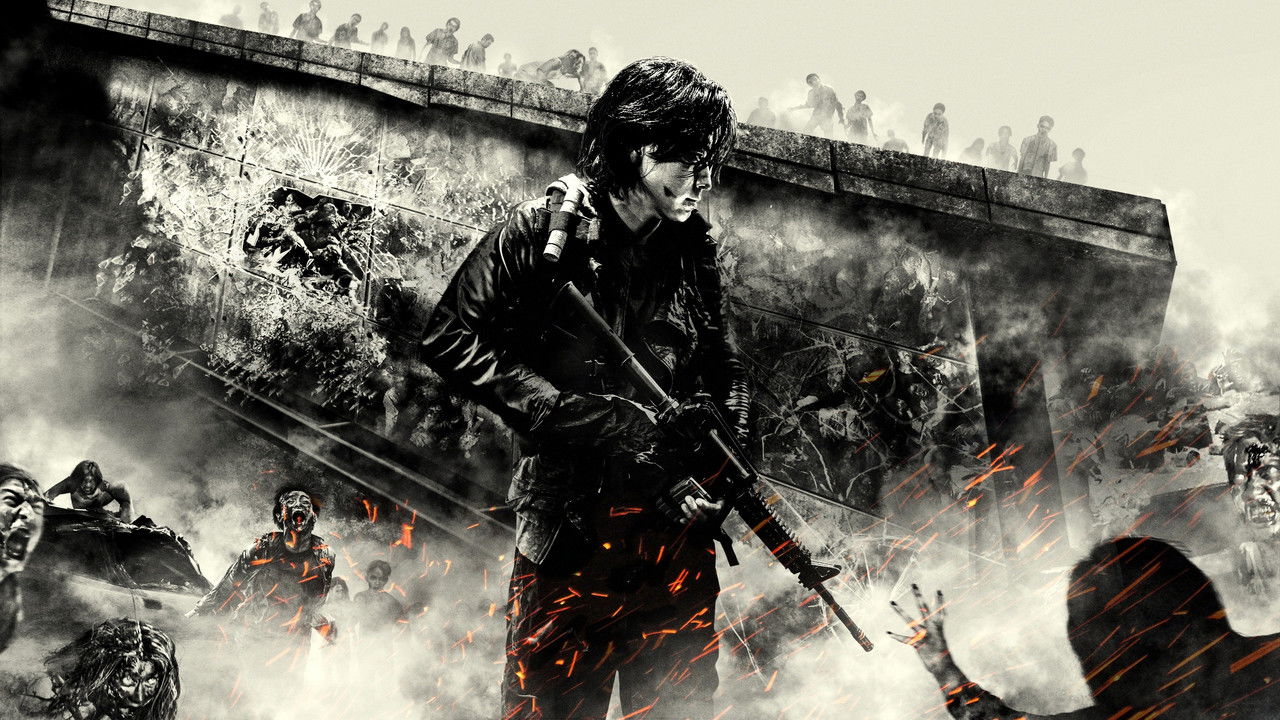
The reason Peninsula didn't receive the universal acclaim of Train to Busan is simple: it abandoned the "why." The first film worked because we were trapped with characters we loved. This film works because it’s a spectacle. It’s a "Contemporary Cinema" artifact—a sequel that expands the "IP" (intellectual property) by switching genres entirely, a move we see often in an era of franchise saturation.
Is it a masterpiece? No. But as a cult-adjacent action-horror hybrid, it’s a blast. It captures that specific 2020 energy—a world that feels like it's falling apart, where the only way out is to drive fast and hope for the best. For those of us who appreciate a movie that treats a zombie apocalypse like an X-Games event, Peninsula is a ride worth taking.
Ultimately, Peninsula is a victim of its own lineage. If this were a standalone film called Zombies in the Wasteland, we’d probably be hailing it as a creative, over-the-top B-movie gem. As a sequel to one of the best horror films of the decade, it feels a bit like a loud cousin at a quiet funeral. But if you dim the lights, ignore the physics, and lean into the neon-drenched chaos, you’ll find a high-octane heist that’s much better than the "franchise fatigue" crowd would have you believe.

Keep Exploring...
-
Train to Busan
2016
-
Beast
2022
-

Triple 9
2016
-

Underworld: Blood Wars
2016
-
American Assassin
2017
-
Hunter Killer
2018
-

Anna
2019
-
The Wolf's Call
2019
-
Greenland
2020
-
The Hunt
2020
-
Unhinged
2020
-
The Forever Purge
2021
-

Plane
2023
-

In the Heart of the Sea
2015
-

Point Break
2015
-
Terminator Genisys
2015
-
Robin Hood
2018
-
Skyscraper
2018
-
Gemini Man
2019
-
Terminator: Dark Fate
2019