Radioactive
"Science is a heart-breaker and a world-shaker."
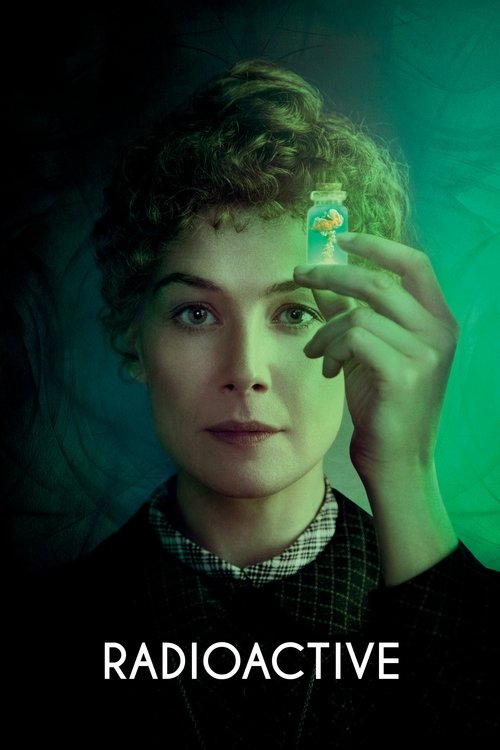
Marie Curie has spent the last century being flattened into a two-dimensional saint of the laboratory, a ghostly figure in high-collared black lace who looks like she’s never cracked a joke or had a bad day in her life. We’ve turned her into the patron saint of "Women in STEM" posters, which is exactly why Marjane Satrapi’s Radioactive feels like such a necessary, if slightly chaotic, corrective. It’s a film that isn't afraid to let its protagonist be profoundly difficult, which, in the hands of Rosamund Pike, is the highest compliment I can pay it.

I caught this one on a lethargic Sunday afternoon while nursing a cup of Earl Grey that had gone cold—the kind of viewing experience that usually leads to a nap, yet the neon-green hum of this movie kept me surprisingly alert.
The Prickly Genius of Pike
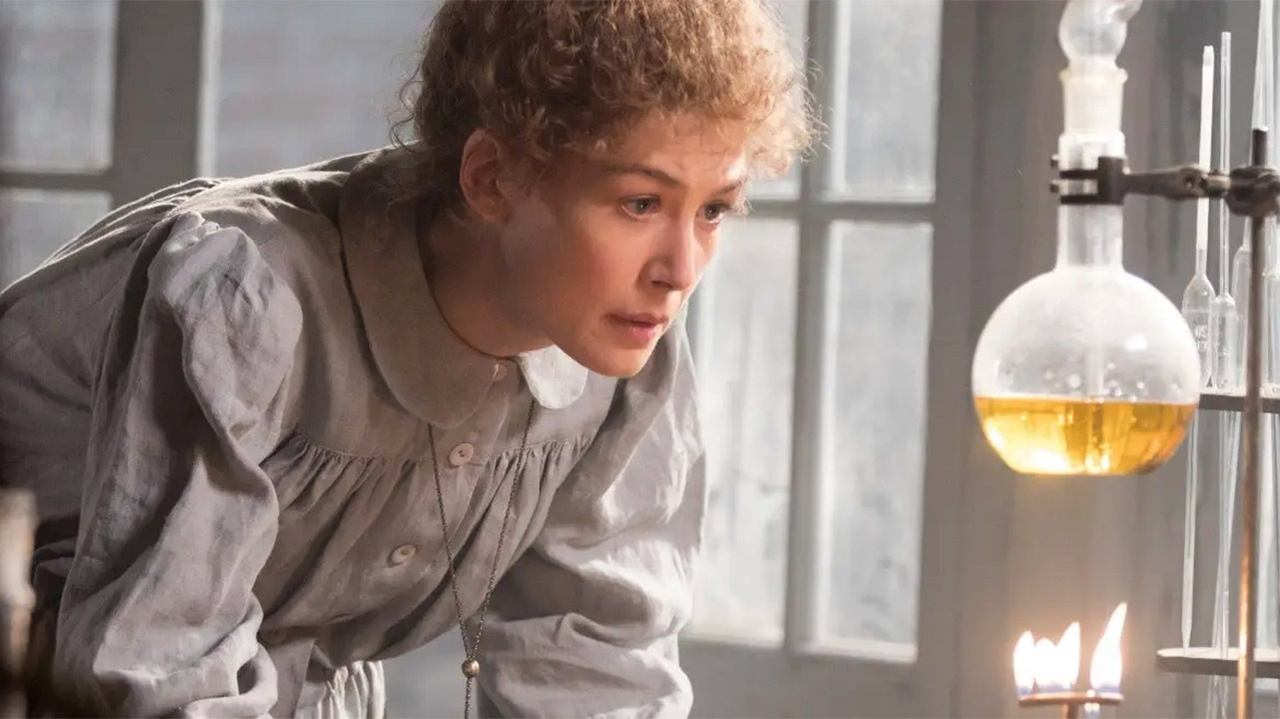
The film lives and breathes through Rosamund Pike. Fresh off her "cool girl" sociopathy in Gone Girl and just before her predatory turn in I Care a Lot, Pike finds the perfect middle ground here as Marie. She plays Curie with a jaw so set it looks like it could crack walnuts. She is arrogant, dismissive, and utterly obsessed. It’s a refreshing take in an era where biopics often feel like they’ve been sanded down by a PR team. Pike doesn’t ask you to like Marie; she demands that you respect her, which feels far more historically honest.
Her chemistry with Sam Riley, who plays Pierre Curie, is the film's unexpected heart. Pierre isn’t just the "supportive husband" trope; Riley brings a weary, grounded warmth that balances Marie’s electric intensity. Their courtship isn't built on sweeping violins but on shared intellectual hunger. When they finally discover radium, the way they look at the glowing vial in their dark shed isn't just a scientific breakthrough—it’s an erotic one. It’s the kind of romance where the third wheel is a literal chemical element.
A Graphic Novel Soul in a Period Body

If you’re expecting a standard BBC-style period piece where everyone speaks in hushed tones about "the progress of man," you’re in for a shock. Marjane Satrapi, who gave us the brilliant Persepolis, refuses to let the camera sit still. The film is based on a graphic novel by Lauren Redniss, and you can feel those roots in every frame. The cinematography by Anthony Dod Mantle (the guy who made Slumdog Millionaire look like a fever dream) uses color like a weapon. The lab isn't just a room; it’s a space haunted by a sickly, beautiful luminescence.
The movie’s most controversial choice—and the one that probably led to its $3.5 million box office disappearing act—is its non-linear structure. Satrapi periodically yanks us out of the 19th century and hurls us into the future to see the consequences of the Curies' work. We jump to a boy receiving radiotherapy in 1950s Ohio, the Enola Gay over Hiroshima, and the ghost-town remains of Chernobyl.
I’ve heard critics argue these "flash-forwards" feel like a history teacher hitting you with a ruler to make sure you're paying attention. Personally, I found them fascinating. It’s a bold attempt to grapple with the "Oppenheimer" problem before Christopher Nolan even got there: How do you depict the life of a scientist whose greatest gift to humanity was also its most terrifying curse? It’s messy, sure, but I’d rather watch a film take a spectacular swing and miss than one that plays it safe in a corset.
The Streaming Era's Forgotten Experiment
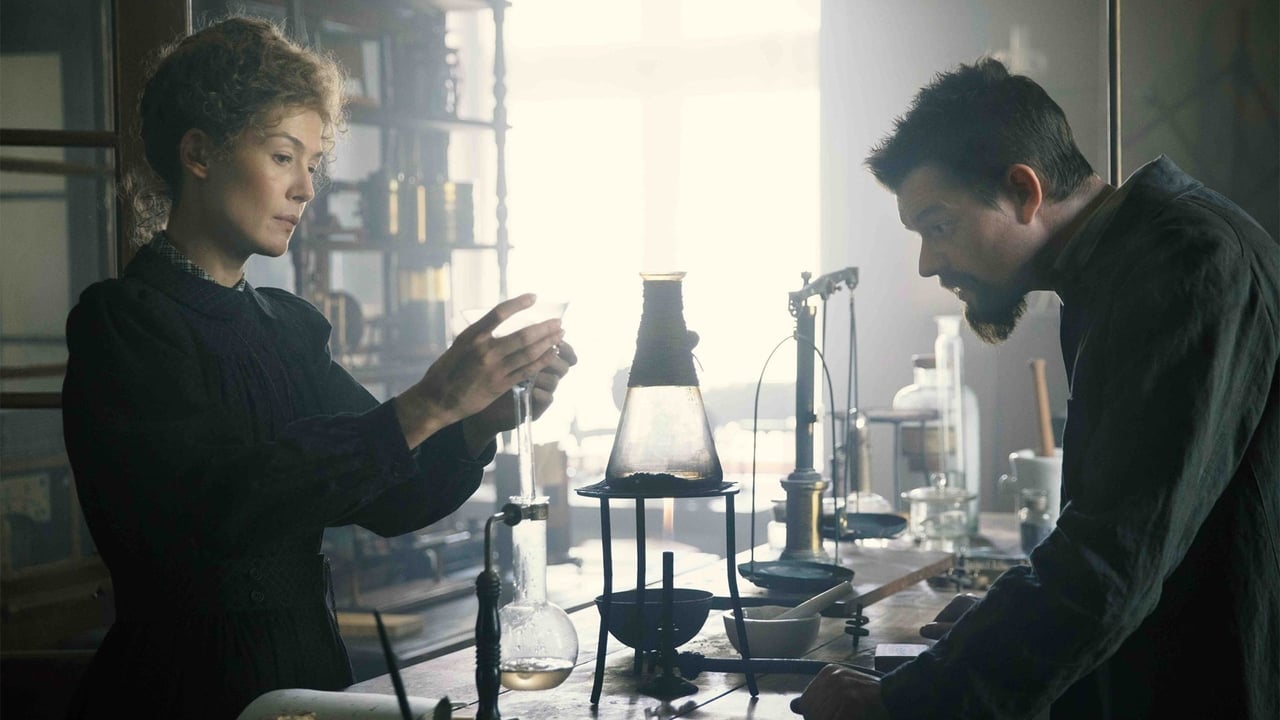
Released right as the world was shutting down in 2020, Radioactive suffered the fate of many mid-budget dramas in the streaming age: it was dumped onto Amazon Prime with the fanfare of a new brand of paper towels. It’s a shame, because in our current cultural conversation about representation, this film does something substantive. It doesn't treat Marie’s gender as a hurdle to be jumped with a triumphant soundtrack; it treats the sexism of the French Academy (led by a delightfully stuffy Simon Russell Beale) as a dull, constant background noise that she simply doesn't have the time to entertain.
The script by Jack Thorne—the man who seems to write every third project in the UK, from Enola Holmes to The Aeronauts—occasionally leans too hard into "Great Man" (or Great Woman) dialogue. There are moments where characters speak in quotes rather than sentences. But even when the dialogue feels a bit heavy, the film’s visual flair carries it through.
It’s also worth noting the supporting cast. Aneurin Barnard (who you might recognize from Dunkirk) pops up later in the film as Paul Langevin, Marie's lover after Pierre's death. This scandal, which almost cost her a second Nobel Prize, is handled with a grit that reminds us that Marie Curie was a human being with a pulse, not just a statue.
Ultimately, Radioactive is a film about the instability of everything—atoms, love, and legacy. It’s a bit of a Frankenstein’s monster of a movie, stitched together from period romance, scientific procedural, and cautionary tale. It doesn't always hold its shape, and the ending feels like it’s trying to summarize an entire century in ten minutes. However, for those of us who are tired of the "Oscar-bait" formula, there’s something genuinely thrilling about watching a biopic that’s as volatile as its subject matter. If you’ve got two hours and a curiosity for the woman who quite literally gave her life to the light, this is a discovery worth making.

Keep Exploring...
-

The Guernsey Literary & Potato Peel Pie Society
2018
-

Benedetta
2021
-

The Aeronauts
2019
-

Brooklyn
2015
-

Suite Française
2015
-
Downton Abbey
2019
-
Rebecca
2020
-

One Wild Moment
2015
-

Up for Love
2016
-
An Officer and a Spy
2019
-
Summer of 85
2020
-

The Three Musketeers: D'Artagnan
2023
-
Anomalisa
2015
-

Colonia
2015
-
Equals
2015
-

Far from the Madding Crowd
2015
-

Suffragette
2015
-
The 33
2015
-

The Stanford Prison Experiment
2015
-

Z for Zachariah
2015