Antlers
"The woods have teeth, and they're hungry."
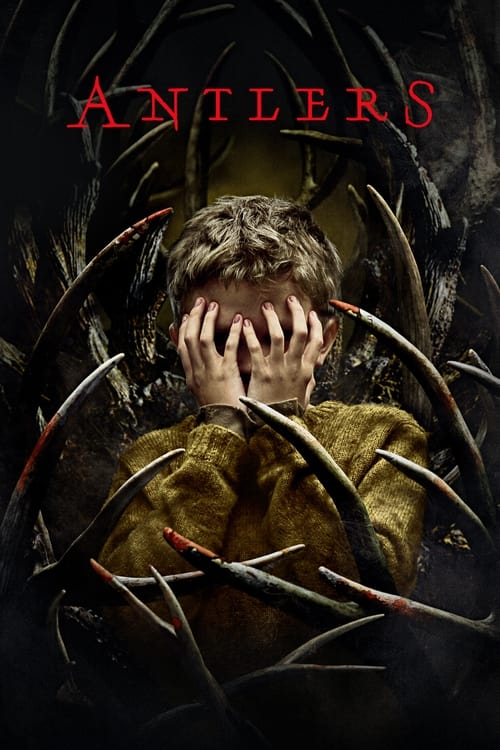
I remember seeing the first trailer for Antlers back in late 2019 and thinking, "Finally, a big-budget Wendigo movie." Then, of course, the world hit a collective pause button. By the time Scott Cooper’s folk-horror piece actually landed in theaters in late 2021, it felt like a relic from a different era. I finally sat down to watch it on a drizzly Tuesday night while struggling to eat a slightly stale cinnamon bagel, and honestly, the film’s pervasive dampness and grey Oregon skies made me feel like I needed to wrap myself in a heated blanket just to survive the runtime.

Directed by Scott Cooper and produced by the master of monsters himself, Guillermo del Toro, Antlers arrived during that awkward post-pandemic theatrical window where "elevated horror" was starting to feel a bit like a homework assignment. It’s a film that wants to be about everything: the opioid crisis, generational trauma, environmental collapse, and the displacement of Indigenous people. It’s a lot to carry on a set of literal antlers, and while the film doesn't quite stick the landing on its grander ambitions, it remains a strikingly grim piece of Northwest Gothic.
The Beautiful Bleakness of Cispus Falls
The first thing I noticed about Antlers is that it is relentlessly, almost aggressively, atmospheric. Scott Cooper isn’t known for horror—he’s the guy behind gritty dramas like Out of the Furnace—and he brings a tactile, dirt-under-the-fingernails realism to the fictional town of Cispus Falls. The cinematography by Florian Hoffmeister captures a version of Oregon that feels like it’s slowly decomposing. Everything is wet, rusted, or shrouded in mist.
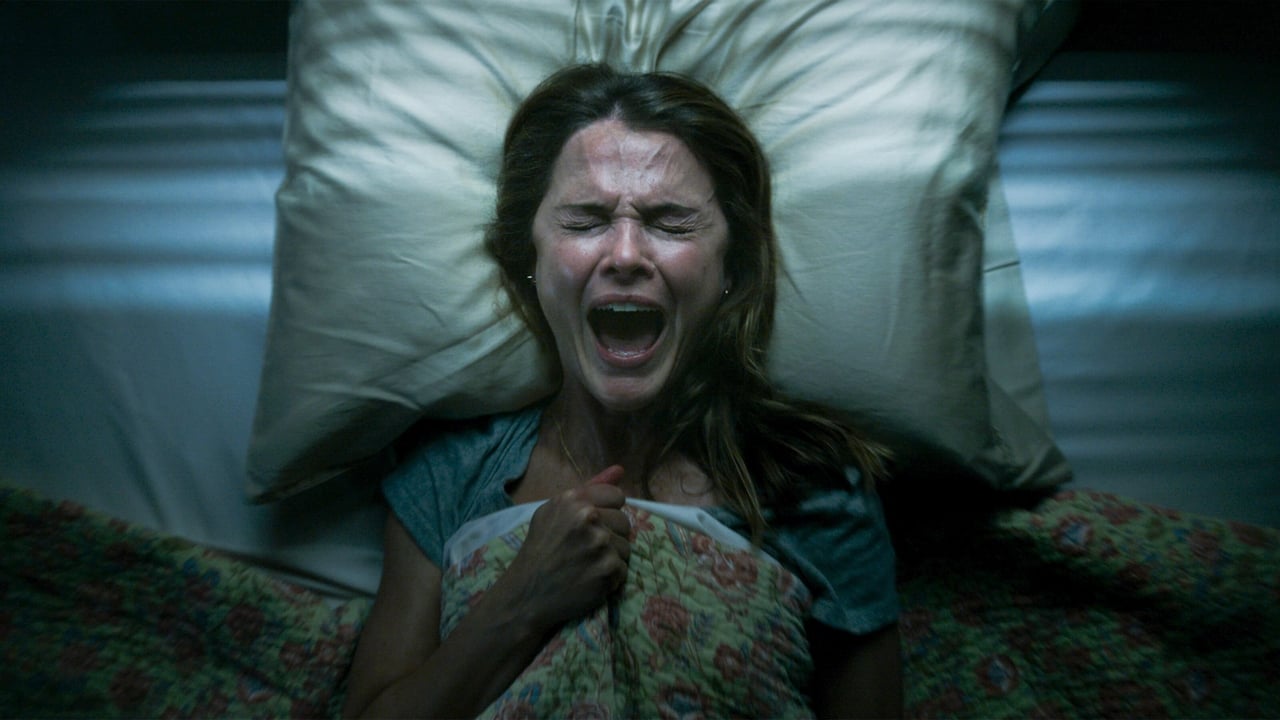
Keri Russell plays Julia Meadows, a schoolteacher who has returned to her childhood home to live with her brother, Paul (Jesse Plemons), who happens to be the local sheriff. Both are carrying heavy baggage regarding their late father, a detail the movie isn't shy about reminding us of. When Julia notices a young student, Lucas (Jeremy T. Thomas), acting strangely and drawing some truly nightmare-inducing sketches, she suspects abuse. But the reality is much weirder: Lucas is keeping his father (Scott Haze) and younger brother locked in an upstairs room because they are mid-transformation into something ancient and ravenous.
Practical Magic and the Anatomy of a Monster
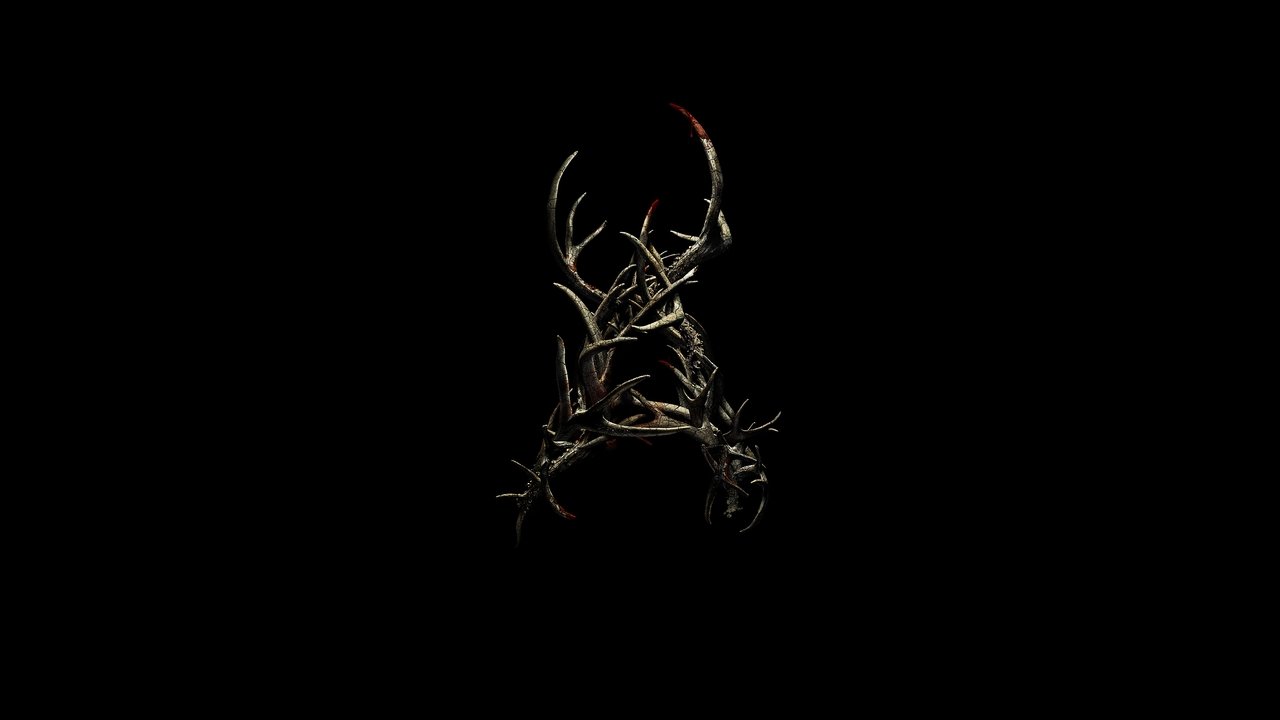
If you’re here for the creature, you won't be disappointed. This is where the Guillermo del Toro influence shines. In an era where too many horror films rely on weightless CGI shadows, Antlers gives us a monster that feels hideously real. The design of the Wendigo is spectacular—a skeletal, antlered horror that looks like a forest fire decided to grow limbs.
There is a transformation sequence midway through the film involving Scott Haze that is body horror so crunchy it makes your own skin feel like it’s a size too small. The way the creature "sheds" its human shell is genuinely upsetting in the best way possible. The sound design plays a huge part here, too; every snap of bone and wet tear of flesh is amplified to a degree that makes you want to cover your ears. It’s a reminder that when practical effects are done right, they carry a physical weight that no digital render can replicate.
The Weight of the Metaphor
Where Antlers stumbles for me is in its insistence on being "Important." It’s a trend in 2020s horror to use monsters as a literal manifestation of grief or addiction, and Antlers leans into this so hard it nearly tips over. The metaphor—that the Wendigo is a spirit of insatiable greed born from our mistreatment of the earth and ourselves—is pounded home repeatedly.
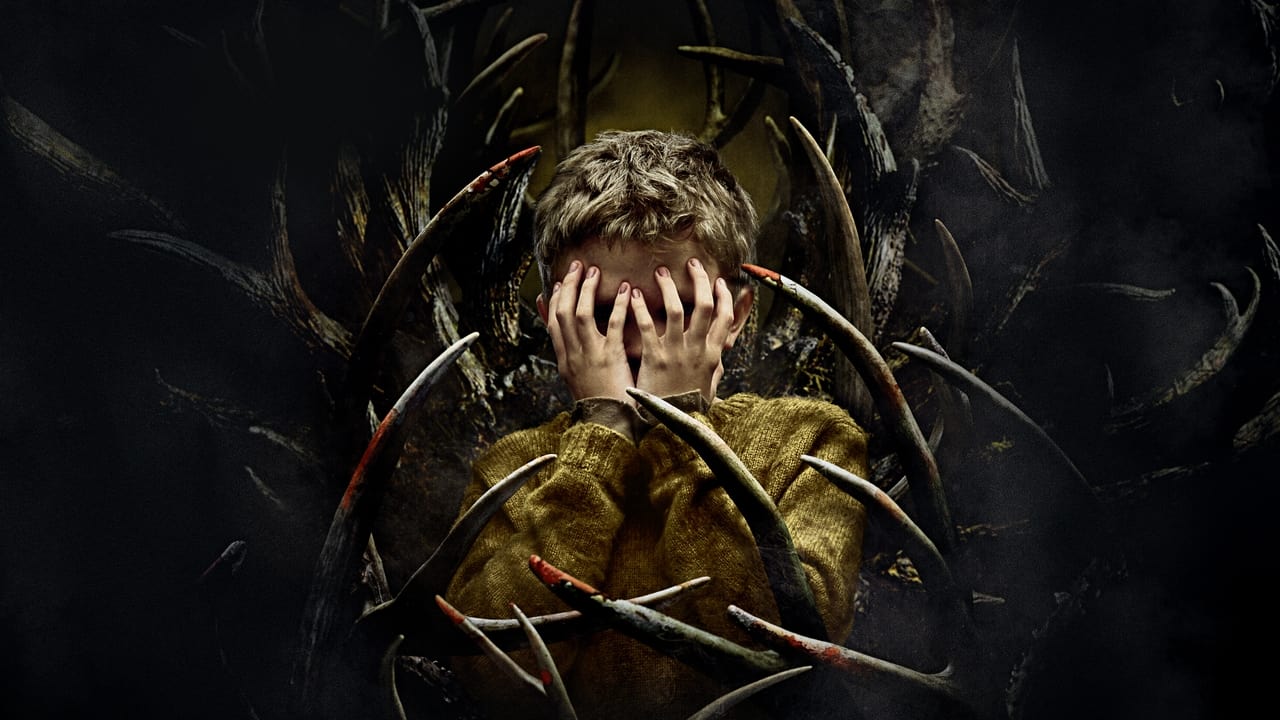
We get a brief, somewhat obligatory appearance by the legendary Graham Greene as Warren Stokes, a former sheriff who provides the necessary Indigenous context for the legend. Graham Greene is always a welcome presence, but his character feels like an "exposition machine" designed to explain the plot to the white protagonists. It’s a bit of a missed opportunity to engage more deeply with the actual folklore rather than just using it as a spooky backdrop for a story about white sibling trauma.
Jeremy T. Thomas, however, is the film's secret weapon. As Lucas, he carries a look of haunted exhaustion that feels far too heavy for a child actor. He’s the one who makes the stakes feel real, even when the script gets bogged down in its own gloom. My hot take? The movie is essentially a grim PSA for why you shouldn’t try to "parent" your cannibalistic deer-god father in the attic.
Ultimately, Antlers is a solid, if slightly dour, entry into the "prestige horror" canon. It didn’t set the box office on fire—it was a Searchlight Pictures release that got caught in the Disney/Fox merger shuffle and a series of pandemic delays—which has led to it becoming a bit of a forgotten curiosity on streaming platforms. It’s a movie that I respect more than I love. It’s gorgeously shot, expertly acted by Keri Russell and Jesse Plemons, and features some of the best creature work of the last decade. It just lacks that final spark of narrative ingenuity to make it a true classic. If you're in the mood for something that feels like a cold, wet rain on a dark forest floor, this is your film. Just maybe skip the bagel while you watch the transformation scenes.

Keep Exploring...
-
The Pale Blue Eye
2022
-
Hostiles
2017
-
The Room
2019
-

The Lodge
2020
-
Mr. Harrigan's Phone
2022
-
It Comes at Night
2017
-
The Discovery
2017
-
Summer of 84
2018
-
Suspiria
2018
-
Crimes of the Future
2022
-
Black Mirror: Bandersnatch
2018
-

Personal Shopper
2016
-
Risen
2016
-
The Void
2016
-
Suburbicon
2017
-
Thelma
2017
-
High Life
2018
-
The Possession of Hannah Grace
2018
-
Under the Silver Lake
2018
-

The Professor and the Madman
2019