Cinderella
"Forget the Prince, she’s got a dress to sell."
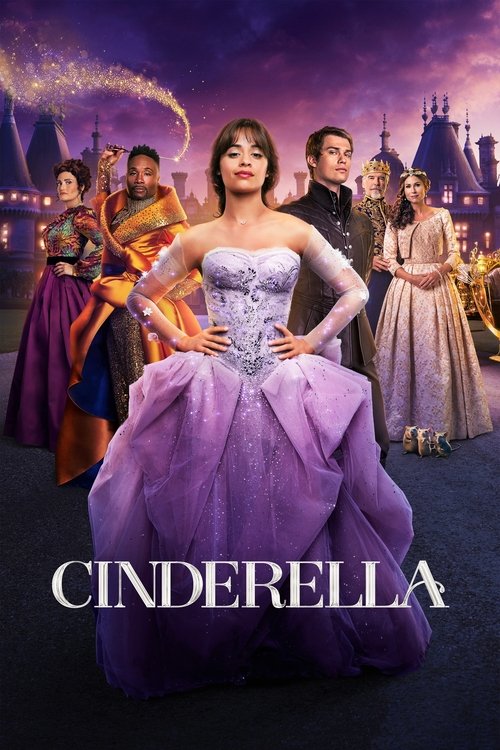
I watched this movie on my laptop while my cat, Barnaby, sat on my chest and stared at me with what I can only describe as profound judgment. Perhaps he knew something I didn't, or perhaps he just recognized that James Corden was playing a mouse and felt a primal, feline urge to intervene. Either way, sitting through the 2021 iteration of Cinderella is an experience that feels less like watching a movie and more like being trapped in a high-speed collision between a Disney Channel original and a LinkedIn "hustle culture" seminar.
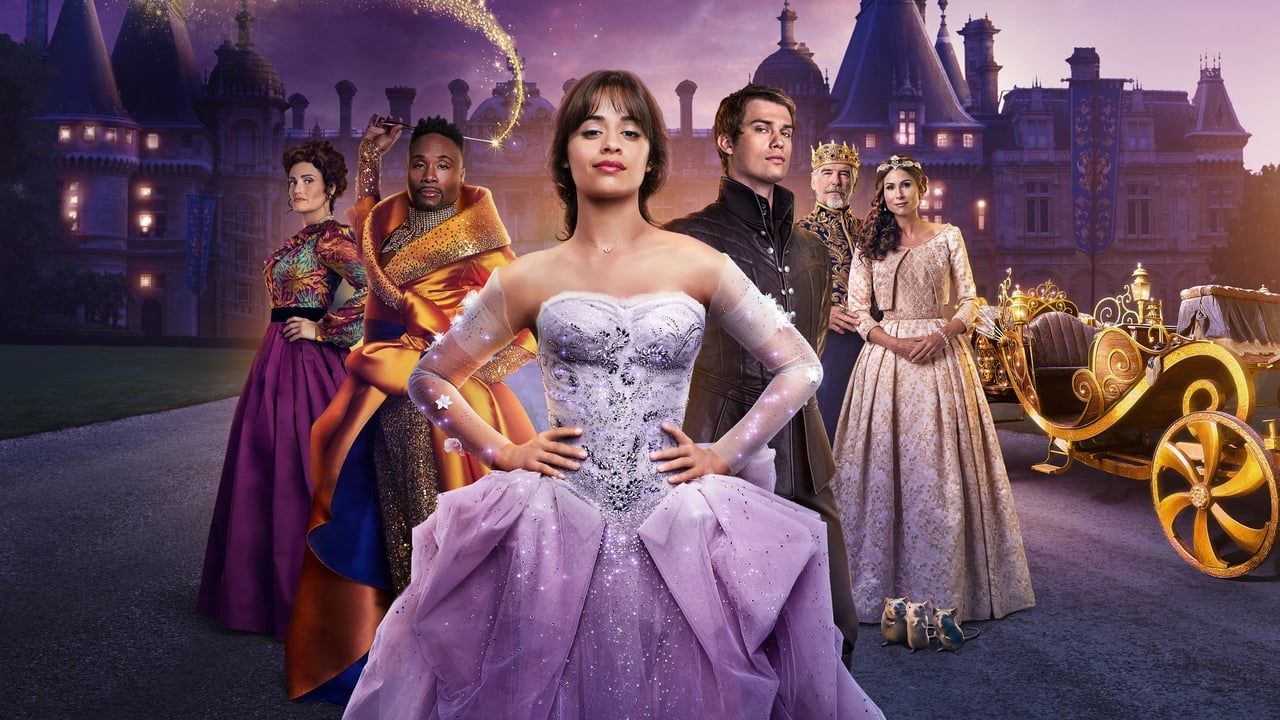
Released directly to Amazon Prime Video after the pandemic scuppered its theatrical plans, this version of the fairy tale—written and directed by Kay Cannon (Pitch Perfect)—is the ultimate artifact of the "Girlboss" era. In this timeline, Ella isn't just an orphan with a dream; she’s an aspiring fashion mogul with a side-hustle. She doesn’t want a kingdom; she wants a boutique. It’s a movie that asks, "What if the glass slipper was actually a sustainable startup?"
The Entrepreneur of the Basement
Camila Cabello makes her acting debut here, and to her credit, she is relentlessly earnest. She plays Ella with the high-energy perkiness of someone who has just discovered caffeine and manifestation boards. In this version, the "evil" stepmother, Idina Menzel, is less a monster and more a woman bitter about her own stifled musical ambitions—which, given this is a jukebox musical, means she gets to belt out a cover of "Material Girl" that is arguably the highlight of the film.
The plot follows the familiar beats, but with a frantic, contemporary coat of paint. The Prince (Nicholas Galitzine, before he became the internet’s favorite "Red, White & Royal Blue" heartthrob) is a bored royal who doesn't want to rule. The King (Pierce Brosnan, sporting a beard that deserves its own billing) and the Queen (Minnie Driver) argue about the patriarchy over breakfast. It’s all very "2021 discourse," where every character seems to have read the same Twitter threads on social justice before showing up to set.
The humor is... specific. It relies heavily on a sort of self-aware awkwardness that was popularized by The Office but feels strange in a world of corsets and castles. James Corden, Romesh Ranganathan, and James Acaster play the three mice-turned-humans, and their banter is essentially a series of high-pitched British comedy sketches that feel like they were filmed in a different zip code from the rest of the cast.
Glitz, Glam, and Jukebox Jams

Let’s talk about the "Fabulous Godmother." Billy Porter arrives in a cloud of orange butterflies and a gold-sequined coat, and for ten glorious minutes, the movie actually finds its footing. Porter is doing "Vogue" by way of the Magic Kingdom, and his energy is so infectious that you almost forget you’re watching a movie that features a group cover of Janet Jackson’s "Rhythm Nation" in the middle of a medieval village.
That’s the thing about this Cinderella: it’s a jukebox musical where the song choices feel like they were selected by a random number generator programmed with "Top 40 Hits from 1985–2015." We jump from Queen’s "Somebody to Love" to Ed Sheeran’s "Perfect" with the tonal grace of a bowling ball falling down a flight of stairs. It’s camp, certainly, but it’s a brand of corporate-sanctioned camp that feels a little too calculated to be truly subversive.
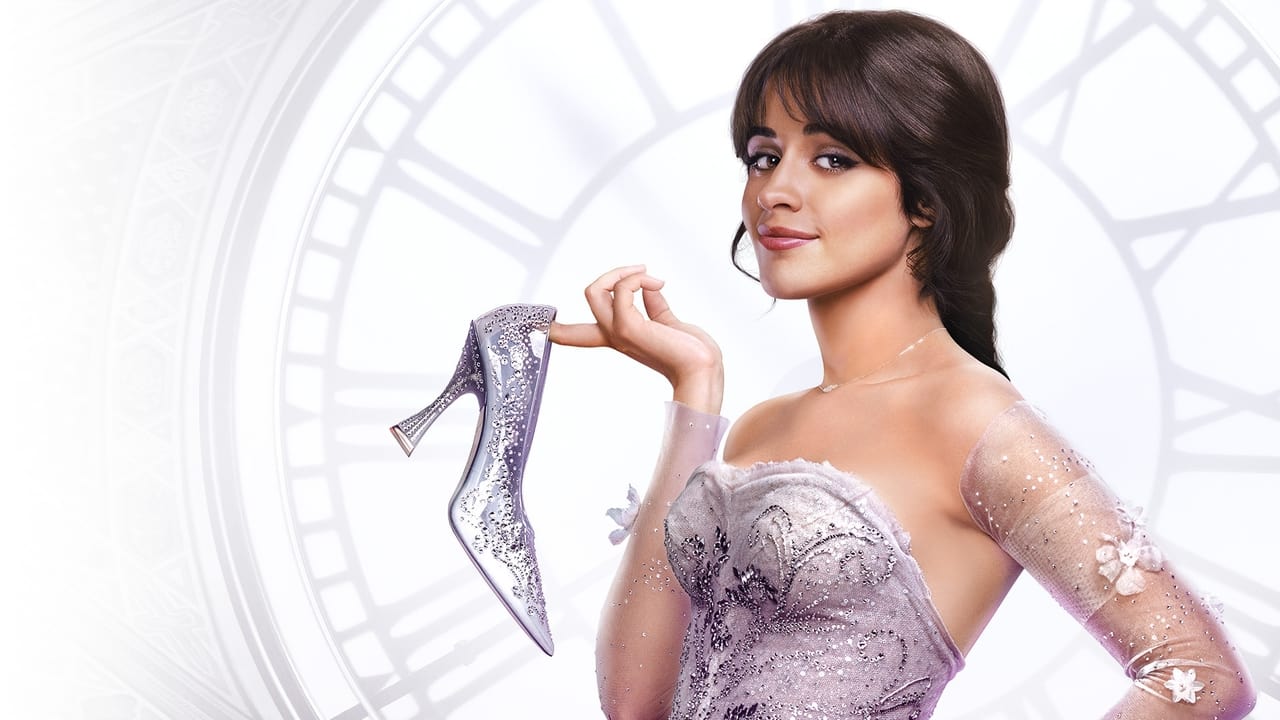
The visual style is bright—neon bright. The cinematography by Henry Braham (Guardians of the Galaxy Vol. 3) tries to give the dance numbers a kinetic energy, but the editing is so rapid that you rarely get to appreciate the choreography. Instead, we get close-ups of Camila Cabello looking determinedly toward a future where she finally gets to open her shop, "Ella’s Dresses," which I assume would eventually be acquired by a private equity firm in a gritty sequel.
A Curious Relic of the Streaming Wars
There is something fascinating about how quickly this film vanished from the cultural conversation. In the era of "streaming dominance," movies like this are dropped like massive boulders into the pond of social media, causing a huge splash of "Is this real?" memes for about forty-eight hours before sinking to the bottom of the algorithm.

Behind the scenes, the production was a bit of a saga. Originally a Sony theatrical release, it was sold to Amazon when the pandemic made the box office a wasteland. This might explain why the CGI mice—which look like they were rendered on a Nintendo GameCube that was overheating—look a bit rough on a 4K television. The film’s "representation" also feels very of-its-moment: well-intentioned and diverse in casting, yet often shallow in execution, treating systemic change as something that can be solved with a catchy chorus and a change of clothes.
Is it a "good" movie? By most traditional metrics of screenwriting and tonal consistency, probably not. But is it an interesting one? Absolutely. It’s a time capsule of 2021's aesthetic and social anxieties. It’s a film that genuinely believes a woman's greatest triumph isn't finding love, but achieving a healthy quarterly profit margin.
Ultimately, Cinderella (2021) is a glitter-bombed curiosity. It’s the kind of film you watch when you’re sick on the couch and want something that requires zero intellectual heavy lifting but provides plenty of "wait, did Pierce Brosnan just try to hit a high note?" moments. It’s loud, it’s proud, and it’s very, very confused about what century it’s supposed to take place in. If you can embrace the sheer, unadulterated cringe of the mice’s "Whatta Man" cover, you might just find yourself having a weirdly good time. Just don't tell my cat I said that.

Keep Exploring...
-
Let It Snow
2019
-
Olaf's Frozen Adventure
2017
-
Justice League vs. Teen Titans
2016
-
A Christmas Prince: The Royal Wedding
2018
-
Overboard
2018
-
Second Act
2018
-

The Holiday Calendar
2018
-

Can You Keep a Secret?
2019
-
Falling Inn Love
2019
-
Lady and the Tramp
2019
-
Scooby-Doo! Return to Zombie Island
2019
-

The Last Summer
2019
-
The Princess Switch: Switched Again
2020
-
Clifford the Big Red Dog
2021
-
The Addams Family 2
2021
-
The Kissing Booth 3
2021
-

Falling for Christmas
2022
-
Hocus Pocus 2
2022
-

Marry Me
2022
-

Shotgun Wedding
2022