Free Guy
"The background character finally enters the chat."
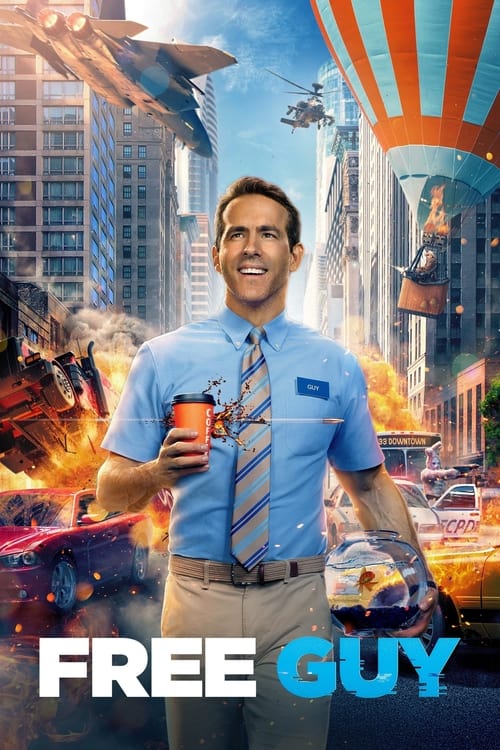
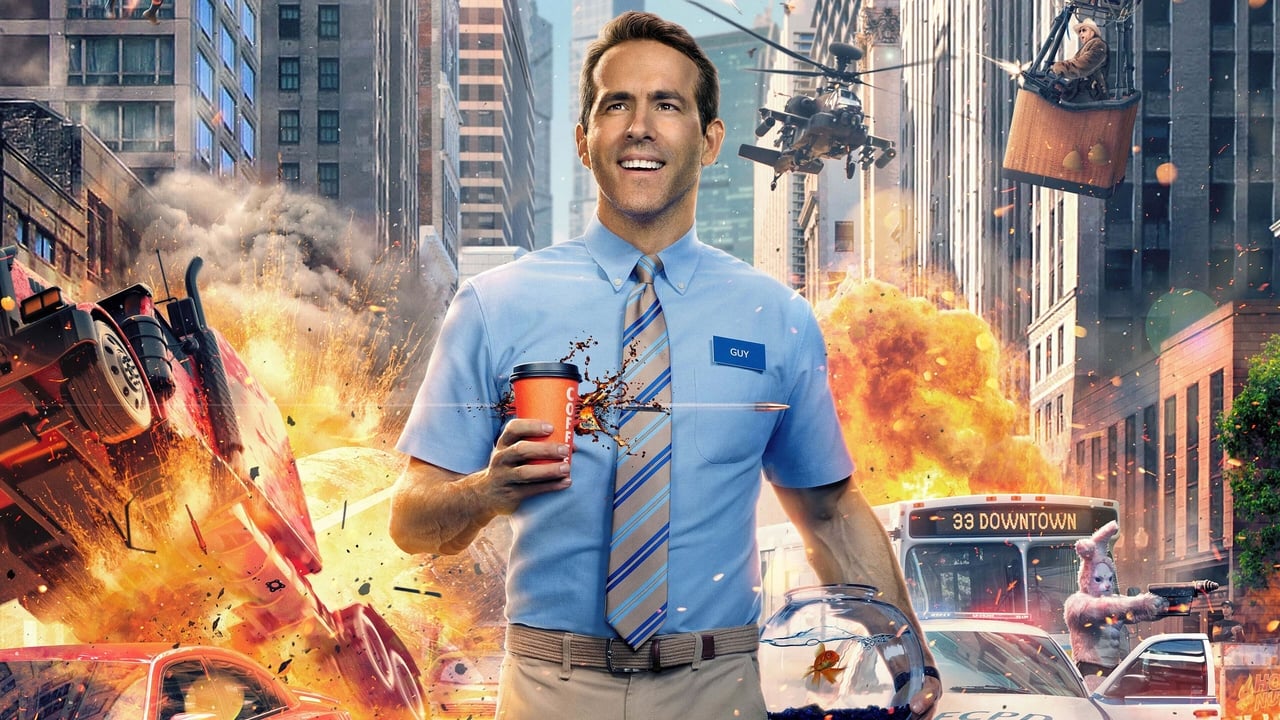
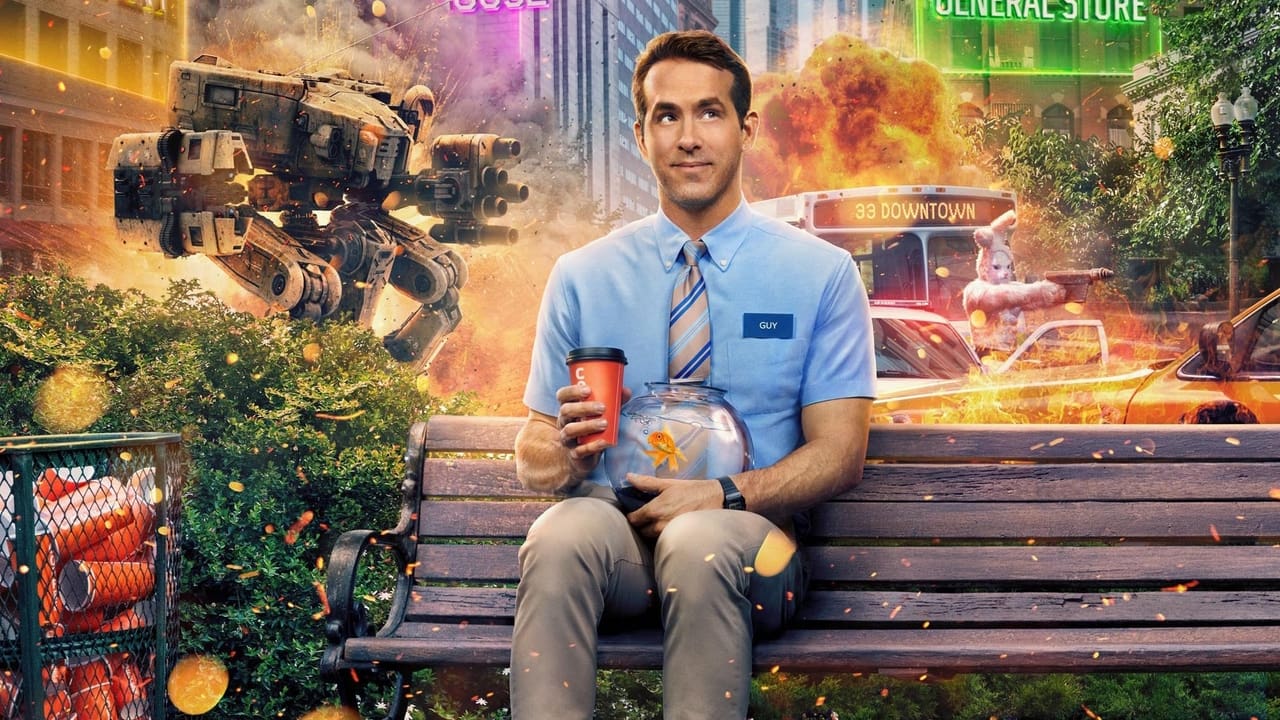
Imagine being the guy who gets punched in the face every morning at 9:02 AM precisely, just because some teenager in a basement in Ohio thinks it’s funny. That is the life of Guy. He’s a bank teller who loves medium-roast coffee (two sugars) and never questions why his city is a perpetual hellscape of helicopter crashes and drive-by rocket launchings. I watched this movie on a Tuesday afternoon while eating a bowl of cereal that had gone slightly soggy because I got distracted by a bird hitting my window, and honestly, that mundane domesticity made the neon-soaked chaos of Free Guy feel even more like a sugar rush.
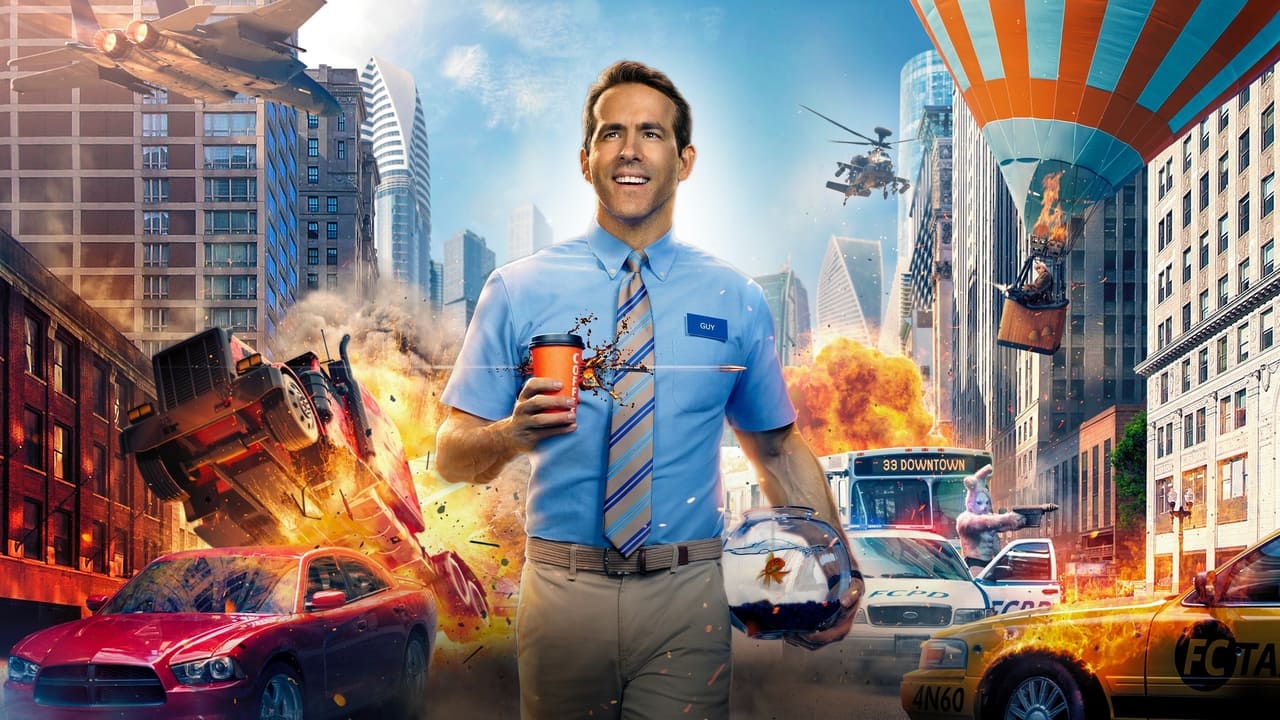
Released in 2021, a year when "going outside" still felt like a daring quest, Ryan Reynolds brought us exactly what we needed: a high-concept blockbuster that didn't require a PhD in multiverse theory to enjoy. It’s a film that sits at the intersection of our current reality—dominated by streaming giants, corporate mergers, and the looming shadow of AI—and the pure, unadulterated joy of a 90s high-concept comedy.
The Reynolds Engine and the NPC Revolution
We have reached "Peak Reynolds." At this point, Ryan Reynolds (whom you’ve seen refine this persona in Deadpool and Red Notice) is less an actor and more of a highly calibrated charisma engine. In Free Guy, he plays Guy, a Non-Player Character (NPC) in an open-world game called Free City. Guy is the ultimate optimist in a world designed for cynicism. When he encounters Jodie Comer (Molotovgirl), a real-world player looking for proof that her source code was stolen, Guy "levels up" by being the nice guy in a game built for villains.
What makes this work isn’t just the jokes; it’s the science fiction premise of emergent AI. While films like Ex Machina treat AI as a terrifying, cold calculation, Free Guy treats it as a lonely guy who just wants to choose his own breakfast. It’s "soft" sci-fi, sure, but the internal logic of the game world—how the UI appears only when Guy puts on "sunglasses" (the player's HUD)—is handled with more visual wit than most $200 million franchise sequels. I appreciated that the film didn't just use the game setting as a skin; it actually bothered to understand the mechanics of how we interact with digital spaces.
Corporate Villains and Indie Souls
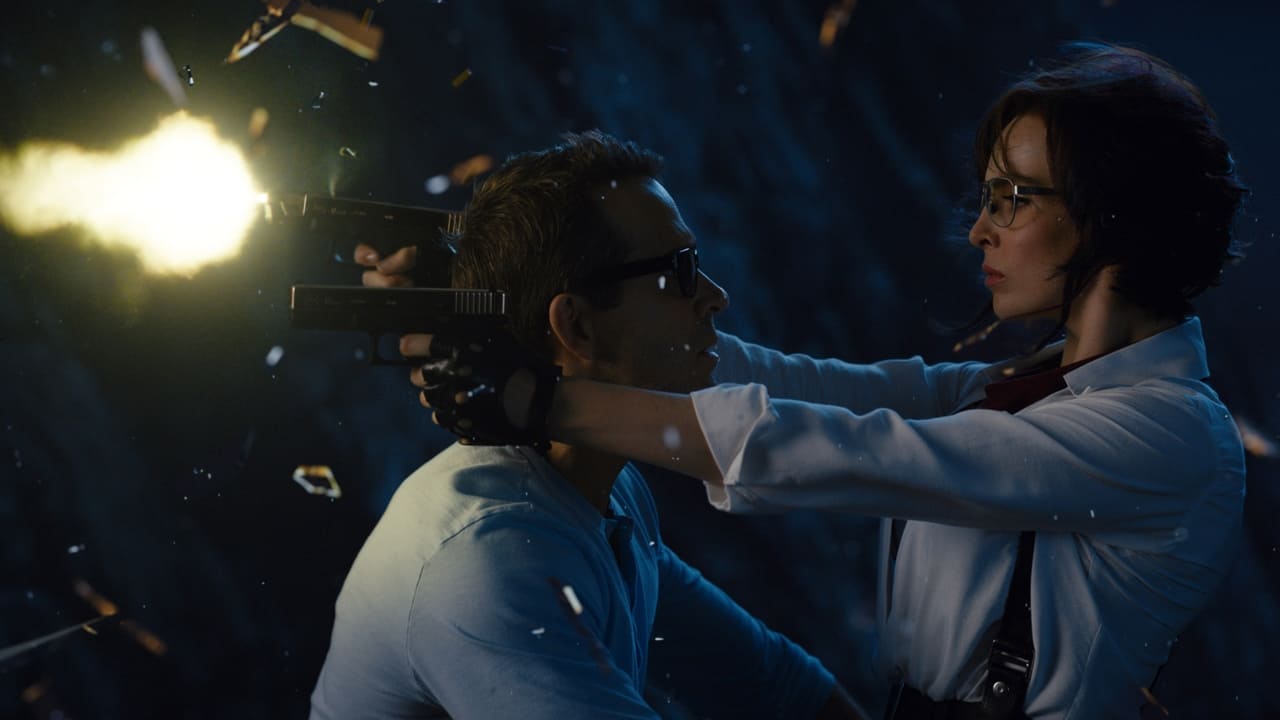
The human element is anchored by Jodie Comer and Joe Keery (Stranger Things). Comer is fantastic here, pivoting between a badass digital avatar and a brilliant, frustrated programmer in the real world. She brings a grounded weight to a movie that could have easily drifted off into CGI-heavy nonsense. On the flip side, we have Taika Waititi as Antwan, the corporate overlord of Soonami Studios. Taika Waititi’s performance is basically a human migraine in a designer tracksuit. He is playing a caricature of every tech-bro CEO who ever thought he was a genius for "disrupting" an industry, and while he’s occasionally exhausting, he serves as a perfect foil to Guy’s sincerity.
The film’s production is a fascinating artifact of the Disney-Fox merger. Because Disney bought Fox during the making of the movie, the third act suddenly becomes a playground for Intellectual Property. Seeing a generic blue-shirt guy pull out a Captain America shield or a lightsaber might feel like corporate synergy at its most blatant, but in the context of a "game" that exists in a world of licensing, it actually fits. It’s a snapshot of our current cinematic era: a world where everything belongs to one of three companies and the biggest thrill we get is seeing the logos cross-pollinate.
Stuff You Didn't Notice
One of the coolest details about the production is that despite the heavy CGI, director Shawn Levy (Stranger Things, Real Steel) insisted on filming on location in Boston to give the city a "real" texture that felt distinct from the digital effects. The budget was a cool $110 million, which is almost modest by today’s standards, but it looks more expensive because of how smartly they used the visual language of video games—glitches, "clipping" through walls, and repetitive background animations.
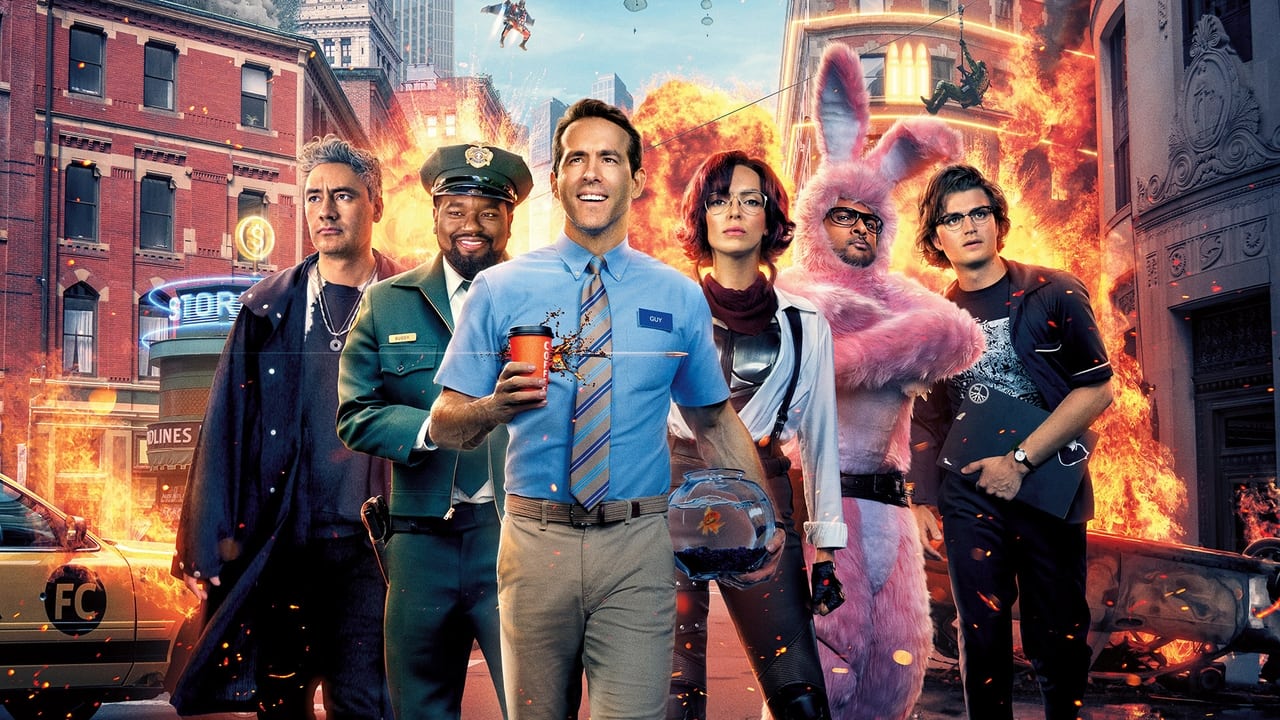
Apparently, the film was also a bit of a cameo-palooza. Beyond the high-profile Disney-owned assets, keep your ears open for Hugh Jackman, Dwayne Johnson, and Tina Fey, who all have voice-only cameos as players in the real world. And the late Alex Trebek makes a poignant appearance as himself, which hit me right in the feelings, given when this was filmed.
Free Guy succeeded in 2021 because it refused to be cynical at a time when cynicism was the default setting. It’s a big-budget blockbuster that feels surprisingly intimate, mostly because it’s a story about a guy who realizes he’s a background character and decides he’s had enough. Free Guy is essentially 'The Truman Show' for people who grew up shouting at strangers on Xbox Live. It doesn't reinvent the wheel, but it puts some very flashy rims on it and takes it for a joyride. If you can look past the occasional "how do you do, fellow kids" vibe of the gaming references, you’ll find a movie with a massive heart and a genuine sense of wonder about what it means to be alive, even if you’re just a string of ones and zeros.
Keep Exploring...
-
The Adam Project
2022
-

Deadpool & Wolverine
2024
-
Thor: Ragnarok
2017
-

Minions: The Rise of Gru
2022
-
Deadpool 2
2018
-
Ready Player One
2018
-
Kingsman: The Golden Circle
2017
-

Ghostbusters: Afterlife
2021
-
DC League of Super-Pets
2022
-
Justice League vs. Teen Titans
2016
-
Love and Monsters
2020
-
The Guardians of the Galaxy Holiday Special
2022
-

Mickey 17
2025
-

Night at the Museum
2006
-
Captain America: Civil War
2016
-
Deadpool
2016
-
Finding Dory
2016
-
Kung Fu Panda 3
2016
-
Moana
2016
-
Rogue One: A Star Wars Story
2016