Nightmare Alley
"The eyes see only what the mind creates."
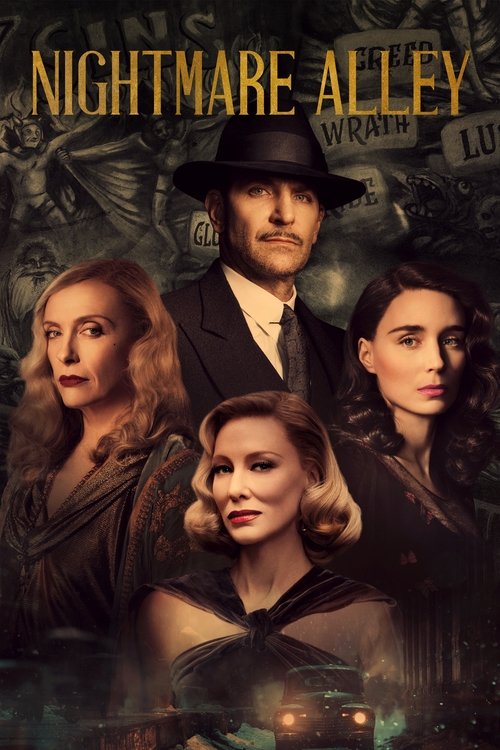
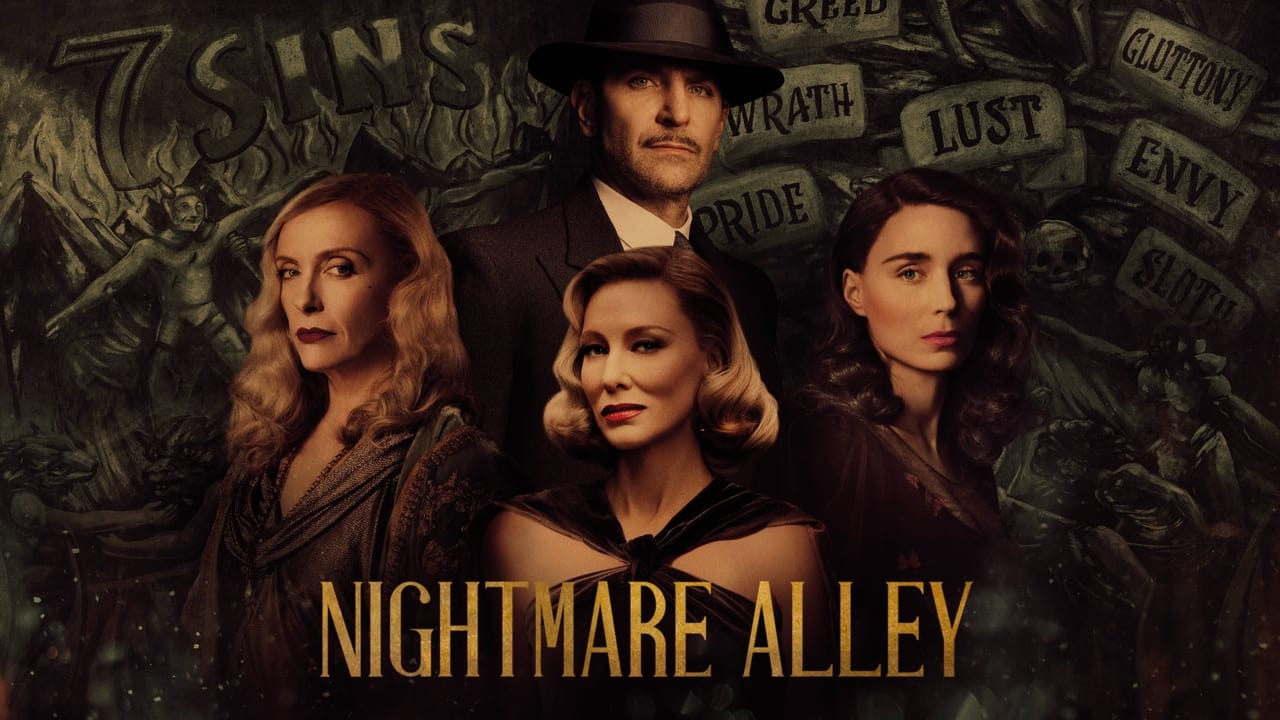
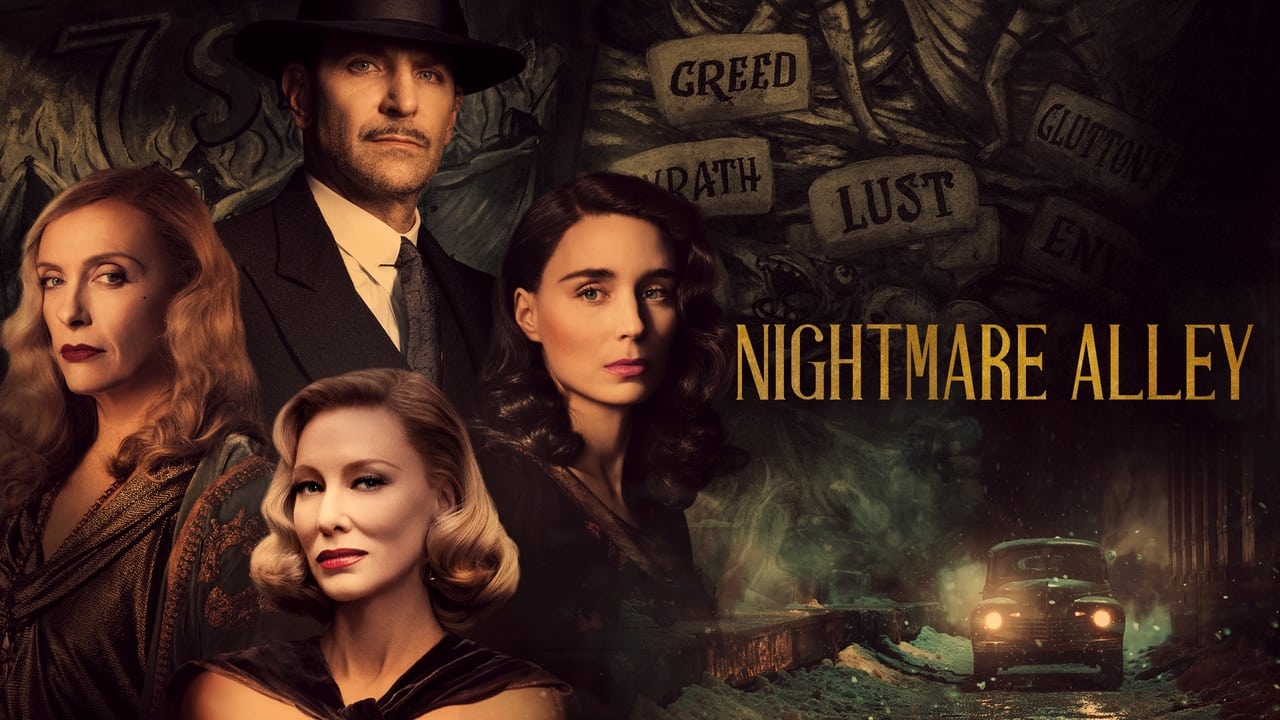
I watched Nightmare Alley in a theater where the person three rows down was wearing a Fitbit that kept lighting up every time Bradley Cooper told a lie—which, as you can imagine, meant my peripheral vision was basically a strobe light for two and a half hours. It was December 2021, and the world was collectively bracing for the Omicron wave. While everyone else was flocking to see three different Spider-Men point at each other, Guillermo del Toro decided to release a $60 million, pitch-black neo-noir about the absolute rot at the center of the American Dream. It was a bold, beautiful, and spectacularly doomed theatrical play.
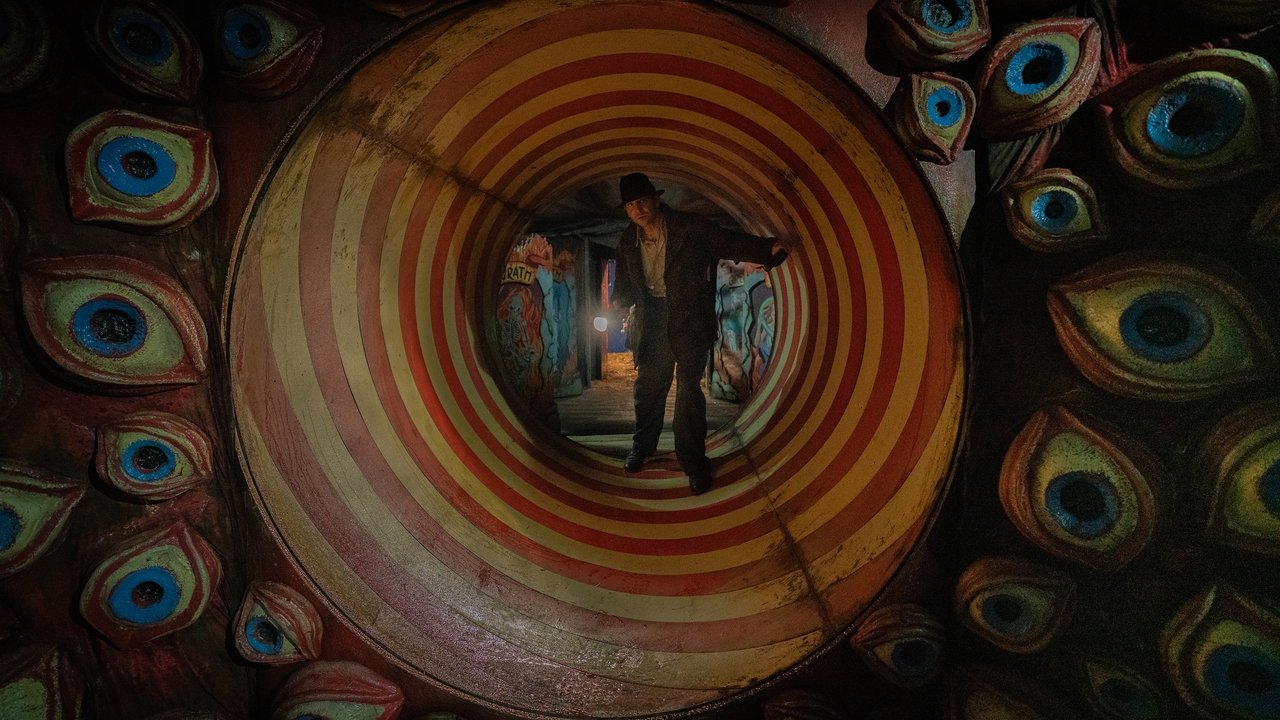
For those of us who track the "prestige flop," Nightmare Alley is a fascinating specimen. It arrived at a moment when adult-oriented dramas were already struggling to find oxygen against the MCU vacuum, and its box office reflected that struggle. Yet, watching it now—especially the "Vision in Darkness and Light" black-and-white version that hit select screens later—it feels less like a failed blockbuster and more like a future cult relic. It’s a film designed for the midnight-movie crowd of 2035, even if it’s dressed up in the expensive silks of 2021.
The Grift and the Geek
The story follows Stanton Carlisle (Bradley Cooper), a man who burns down his past in the literal first scene and wanders into a traveling carnival run by Clem Hoatley (Willem Dafoe). This first hour is where del Toro’s obsession with the "other" shines. Unlike his work in The Shape of Water or Pan’s Labyrinth, there are no fish-men or fauns here. The monsters are entirely human. Willem Dafoe is terrifyingly pragmatic as he explains the "geek" act—how to find a man so broken by life that he’ll bite the head off a chicken just for a place to sleep and a bottle of spiked "moonshine."
It’s a brutal setup for a character study. Stan learns the "cold reading" trade from Zeena (Toni Collette) and her alcoholic husband Pete (David Strathairn). Watching Bradley Cooper absorb these tricks is like watching a shark learn how to mimic a lifeguard. He’s charming, sure, but there’s a vacancy in his eyes that suggests he’s only ever thinking about the next rung on the ladder. Toni Collette gives the film its only real heartbeat, playing a woman who knows she’s selling a lie but does it with a weirdly touching sense of empathy.
A Masterclass in High-Stakes Manipulation
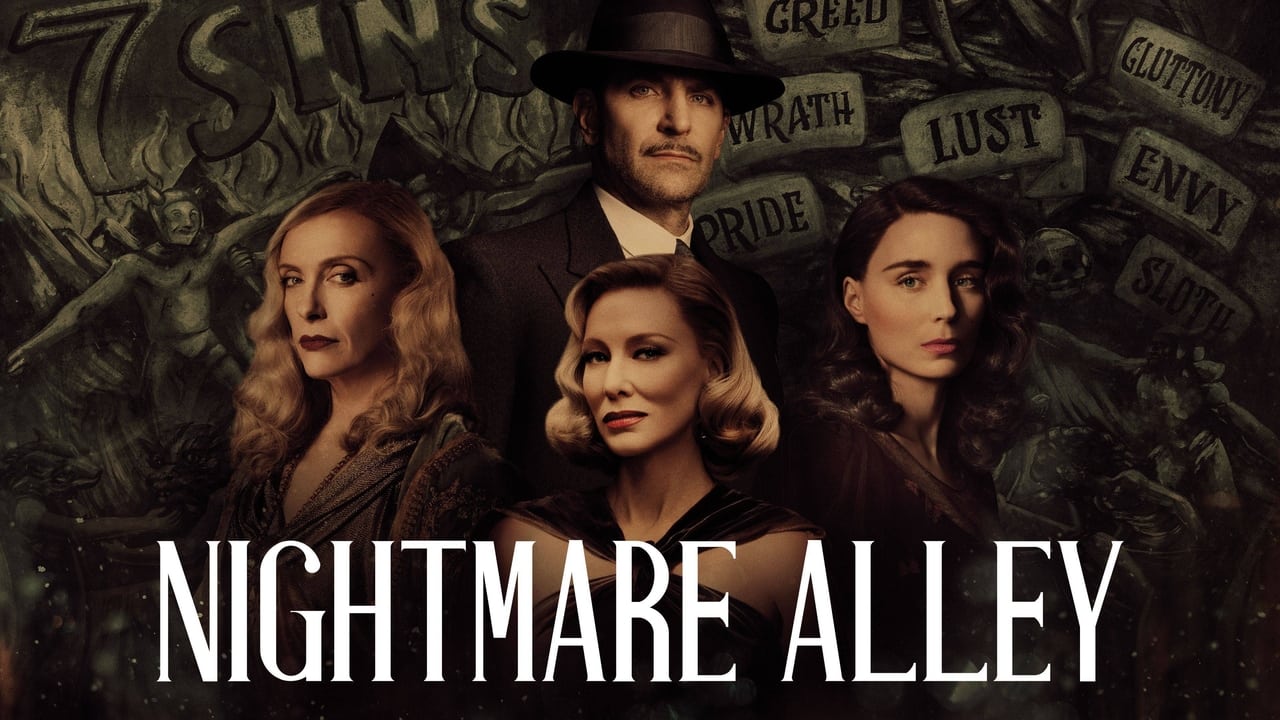
When the film shifts to the high-society ballrooms of Buffalo, New York, it transforms into a different beast entirely. This is where Stan meets his match in Dr. Lilith Ritter, played by Cate Blanchett with a level of femme fatale energy that feels like it was cryogenically frozen in 1947 and thawed out just for this role. Nightmare Alley is essentially a $60 million middle finger to the concept of a happy ending, and the scenes between Cooper and Blanchett are the proof.
They engage in a psychological chess match where the board is made of trauma and the pieces are other people’s secrets. Blanchett’s office is an Art Deco masterpiece—all polished wood and sharp angles—and the way Dan Laustsen’s cinematography catches the smoke from her cigarette makes the whole movie feel like a fever dream you’d have after eating a bad hot dog at a state fair.
We also get Richard Jenkins as Ezra Grindle, a man whose wealth is only matched by his immense, festering guilt. This is where the film's drama really gains its weight. It asks a very contemporary question: How much is a person willing to pay to be told the lie they want to hear? In an era of misinformation and digital grifting, Stan’s "spook show" act feels uncomfortably relevant. He’s not just a psychic; he’s a precursor to every modern influencer who manufactures a persona to exploit the vulnerable.
The Cursed Production and the Noir Spirit
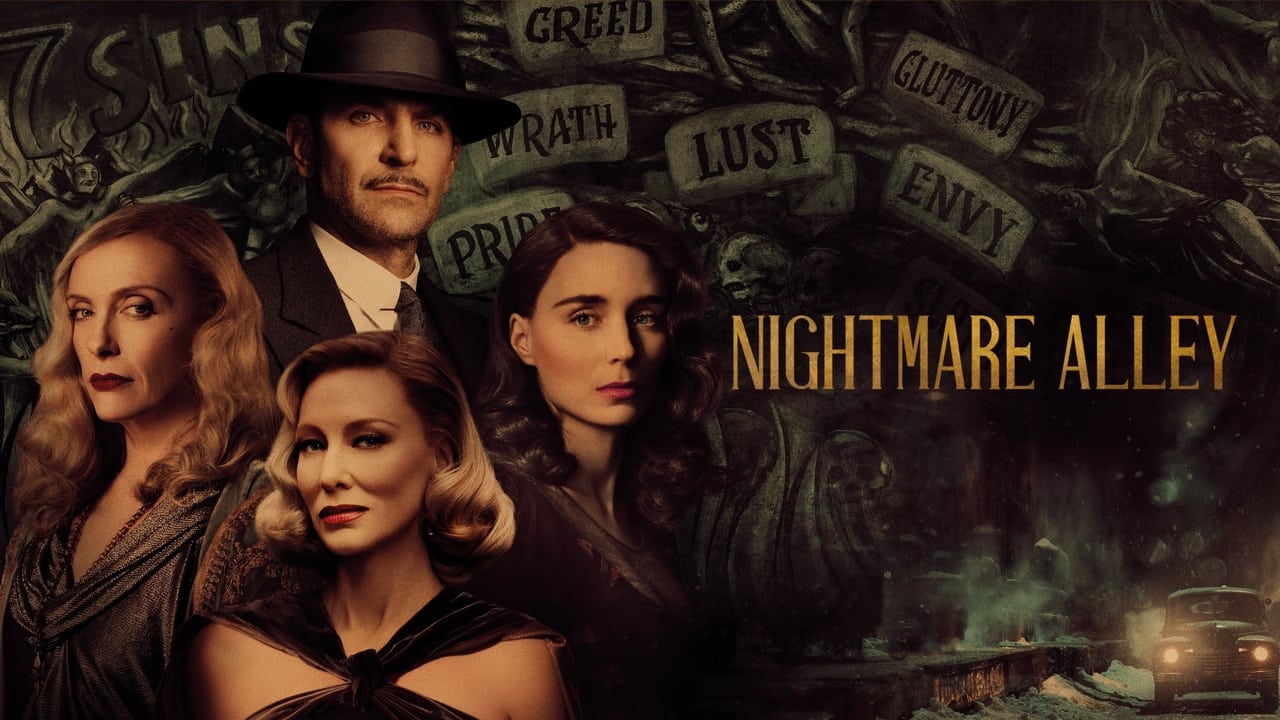
The behind-the-scenes story of Nightmare Alley is almost as dramatic as the film itself. Production was famously shut down for six months in early 2020 due to the COVID-19 pandemic. Interestingly, they had already filmed the second half of the movie (the Buffalo sequences) before the break. When they returned to film the carnival scenes, Bradley Cooper had to physically transform back into a younger, hungrier version of Stan. This forced hiatus actually worked in the film’s favor, adding a layer of lived-in exhaustion to the characters that you can’t quite fake.
Another bit of trivia that fans obsess over: Guillermo del Toro didn't want to make a remake of the 1947 film (which is itself a cult classic). He wanted a more faithful adaptation of William Lindsay Gresham’s original 1946 novel, which was far grittier than the Hays Code would allow in the 40s. He even included the full-frontal scene with Cooper in the bath, a choice that felt less like a vanity move and more like a stripping away of the character's armor.
Ultimately, the film's "failure" at the box office is its secret weapon for its legacy. It’s a movie that demands to be discovered on a rainy Tuesday night. It doesn’t offer the easy catharsis of a superhero flick or the nostalgic warmth of a legacy sequel. It offers a mirror.
Nightmare Alley is a gorgeously grim reminder that the most dangerous thing in the world isn't a ghost or a monster—it's a man who thinks he's smarter than everyone else in the room. It’s a long, slow-burn descent into a very specific kind of hell, but with del Toro as your guide, the view is spectacular. If you missed it during its blink-and-you’ll-miss-it theatrical run, do yourself a favor: turn off the lights, ignore your Fitbit, and let the grift begin.
Keep Exploring...
-
Frankenstein
2025
-
Jack Reacher: Never Go Back
2016
-
Patriots Day
2016
-

Snowden
2016
-

Shot Caller
2017
-

The Shape of Water
2017
-
Bad Times at the El Royale
2018
-
Widows
2018
-
El Camino: A Breaking Bad Movie
2019
-
The Highwaymen
2019
-

Uncut Gems
2019
-

Promising Young Woman
2020
-

The Devil All the Time
2020
-
I Care a Lot
2021
-
The Little Things
2021
-
Wrath of Man
2021
-

Ambulance
2022
-
Sherlock: The Abominable Bride
2016
-
You Were Never Really Here
2017
-
Dogman
2018