Outside the Wire
"High-tech hardware, low-budget morality."
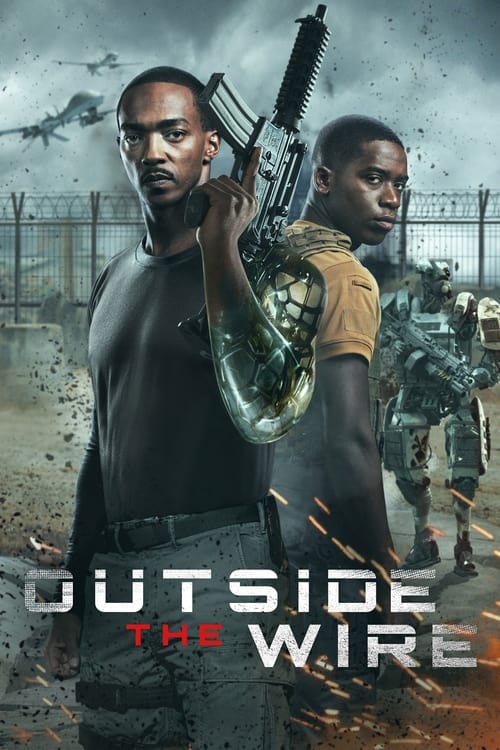
I remember watching Outside the Wire in early 2021, a time when my social life consisted mostly of negotiating with a stubborn sourdough starter and arguing with my neighbor about his 7:00 AM leaf-blowing sessions. We were all trapped in our living rooms, and Netflix was our only reliable window to the "outside." When this dropped, it felt like a massive event simply because it was a "New Movie" with "The Guy from Marvel." I watched it while eating a bowl of lukewarm cereal at 11:00 PM, and honestly, that midnight-snack energy is exactly how this film is meant to be consumed.
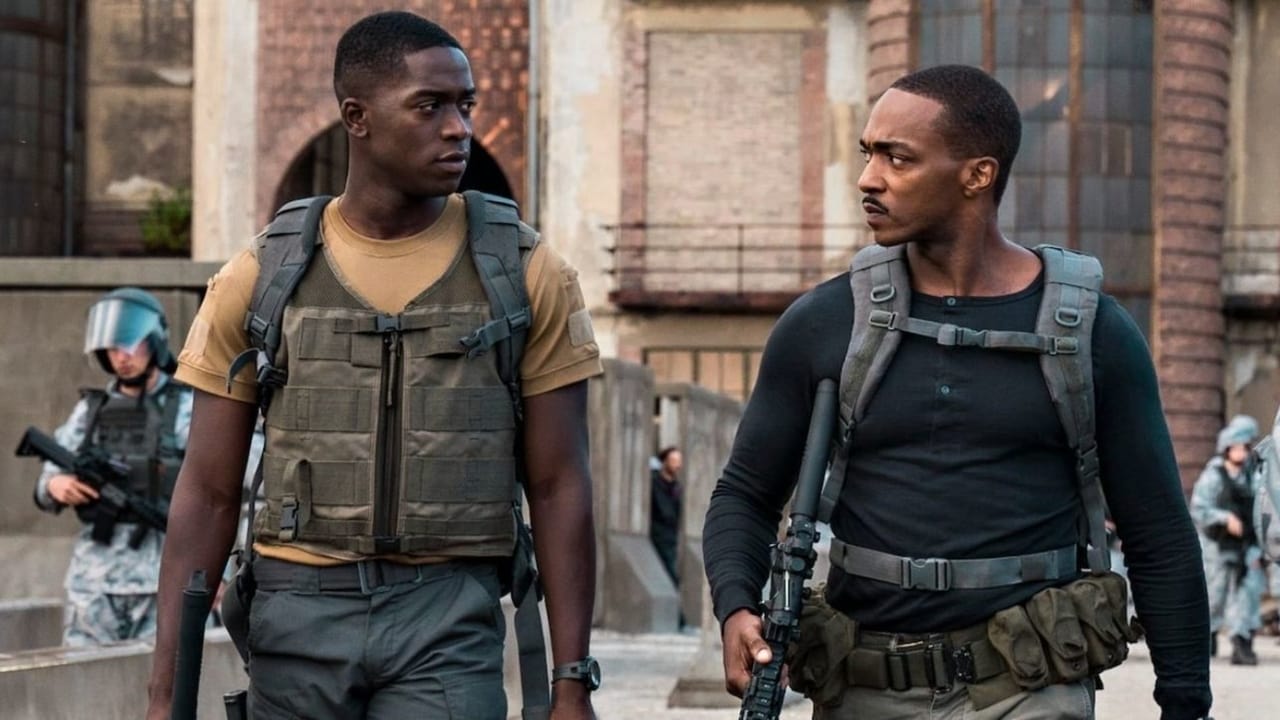
Released during the height of the pandemic’s streaming surge, Outside the Wire is a fascinating specimen of the "Straight-to-Algorithm" blockbuster. It has all the polish of a $100 million theatrical release but the distinct, lingering aftertaste of a movie that knows you might pause it to check your phone. It’s a gritty, near-future war flick that tries to smuggle a philosophical debate about AI into a story about a guy getting punched by a robot.
The Training Day of the Terminator Age
The setup is classic buddy-cop friction, but with a high-concept sci-fi twist. Damson Idris (who I first loved in Snowfall) plays Lieutenant Harp, a drone pilot who lives in the "safe" bubble of a Nevada trailer, making life-and-death decisions for people thousands of miles away. After he defies a direct order to save 38 soldiers—by intentionally blowing up two others—he’s sent to the actual front lines in Eastern Europe to see the "dirt" he’s been viewing through a screen.
Enter Anthony Mackie as Leo. Mackie is at his most charismatic here, playing a top-secret android officer who looks, talks, and bleeds like a human. He’s the charismatic mentor with a dark secret, and he takes Harp on a mission into the "wire"—the lawless DMZ—to track down a doomsday device. The chemistry works because Idris plays the "stuck-up rookie" with a believable level of shell-shock, while Mackie leans into his natural swagger, making Leo feel like a guy who’s just a little too comfortable with casual violence.
The film shines brightest when it’s exploring that gap between the remote-controlled war Harp is used to and the messy, visceral reality of the ground. When they encounter "Gumps"—autonomous robotic soldiers that look like something Boston Dynamics would build if they had a military contract and a grudge—the action feels genuinely threatening. These aren't sleek, shiny Apple-product robots; they’re clunky, industrial, and terrifyingly efficient.
Stunts, Grime, and Hungarian Backlots

Director Mikael Håfström (who gave us the underrated 1408) does a solid job of making Hungary look like a war-torn Balkan landscape. The action choreography is crunchy and surprisingly grounded for a sci-fi film. There’s a bank heist sequence midway through that is genuinely fantastic—it’s clearly staged, easy to follow, and features some of the best stunt work in the film. You can tell that Mackie, who also produced the film, wanted the action to feel physical rather than just a CGI light show.
However, the movie tries to be 'Platoon' with robots but ends up being 'I, Robot' with a hangover. While the middle act is a tight thriller, the script starts to wobble as it reaches for "Big Ideas." It wants to talk about the morality of automated warfare and the unintended consequences of American intervention, but it often stops the movie dead to have characters explain their motivations in long monologues. Emily Beecham (excellent in Little Joe) pops up as a resistance leader, but she’s mostly there to provide exposition that Harp should have probably figured out on his own.
The cinematography by Michael Bonvillain—the man who shot Cloverfield and John Wick—gives the movie a desaturated, high-contrast look that screams "Modern Warfare." It’s effective, but by the third act, the "grey-on-grey" aesthetic starts to feel a bit repetitive. The score by Lorne Balfe (Mission: Impossible – Fallout) is doing a lot of heavy lifting here, using industrial synths and pounding percussion to keep the momentum from flagging during the talky bits.
The Ghost of the Netflix Queue
What’s most interesting about Outside the Wire now, a few years removed from its release, is how quickly it evaporated from the cultural conversation. It’s a well-made, entertaining action movie that would have been a modest hit in theaters in 2004, but in the streaming era, it feels like a disposable asset. It’s part of that 2015-present trend where massive stars lead high-budget genre films that are forgotten the moment the "Next Week on Netflix" trailer plays.
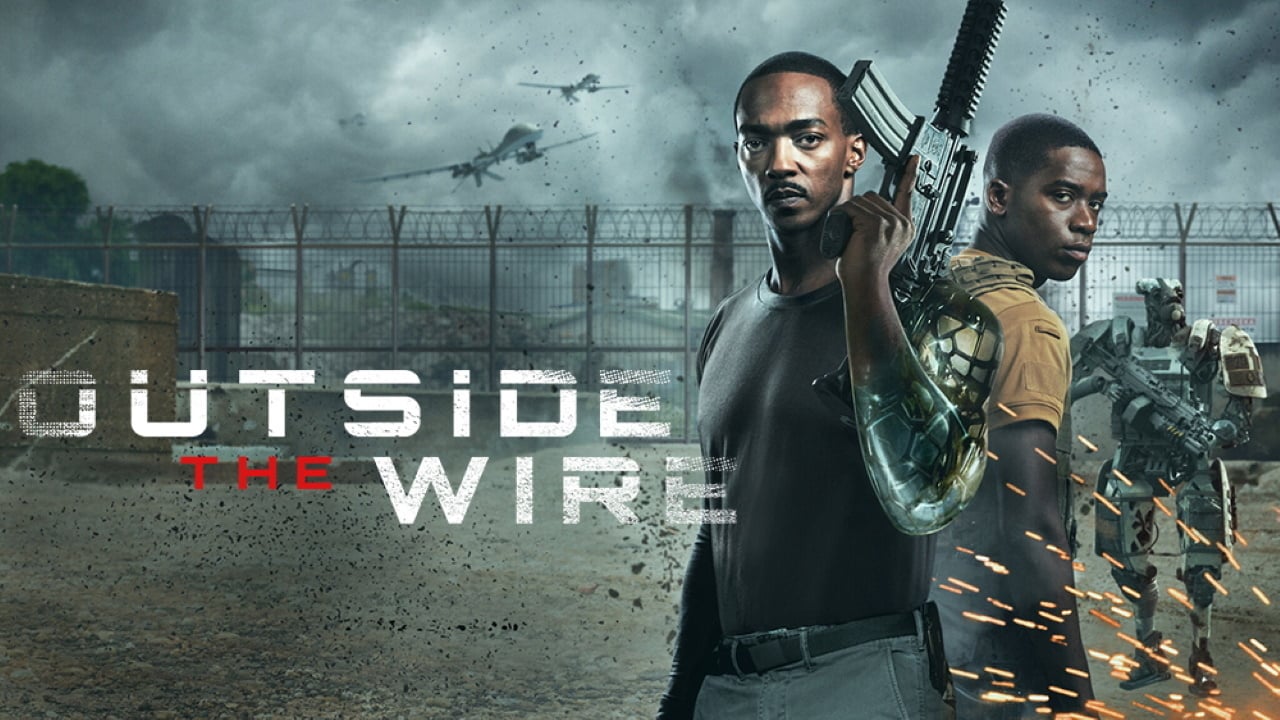
There are some cool details tucked away for the eagle-eyed. Apparently, the production used real former military personnel as extras to ensure the "feel" of the base camps was authentic. Also, this was Anthony Mackie’s first time serving as a producer on a project of this scale, and you can see his fingerprints in the way the film highlights a more diverse cast in a genre that usually defaults to a very specific type of lead.
Ultimately, the film struggles with its ending. It pivots from a grounded war story into a "save the world" trope that feels slightly at odds with the gritty realism of the first hour. It’s a "6.5 out of 10" in the best way possible—the kind of movie you find on a Tuesday night when you don't want to think too hard, but you want to see some well-executed stunts and a charismatic lead. It’s not an "instant classic," but it’s a solid reminder that Anthony Mackie can carry a movie on his back, even when that back is made of titanium and microchips.
In an era of franchise fatigue, Outside the Wire is a rare standalone sci-fi effort that at least tries to say something about our current technological anxiety. It doesn't always stick the landing, and the CGI "Gumps" occasionally look like they wandered in from a video game cutscene, but the core performances keep it grounded. It’s a decent piece of "Near-Future" pulp that deserves a second look if you missed it during the blur of 2021. Just make sure you have a snack handy—it helps with the exposition.

Keep Exploring...
-

Elevation
2024
-

Captain America: Brave New World
2025
-
Spectral
2016
-
Extinction
2018
-
Kin
2018
-

Captive State
2019
-

Boss Level
2021
-

M3GAN 2.0
2025
-
The Running Man
2025
-

Synchronic
2020
-

Hotel Artemis
2018
-

Batman vs. Robin
2015
-
The Vault
2021
-

Underworld: Blood Wars
2016
-

Geostorm
2017
-
What Happened to Monday
2017
-

Jurassic World: Fallen Kingdom
2018
-
Maze Runner: The Death Cure
2018
-
Gemini Man
2019
-
Terminator: Dark Fate
2019