Space Sweepers
"Out of this world, but down to Earth."
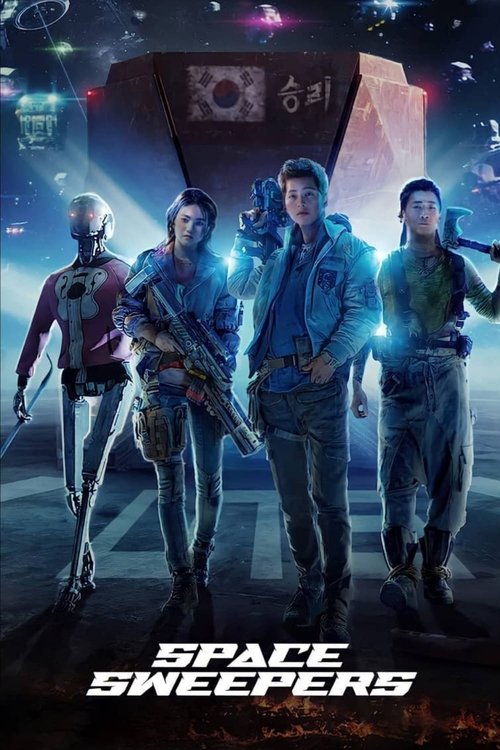
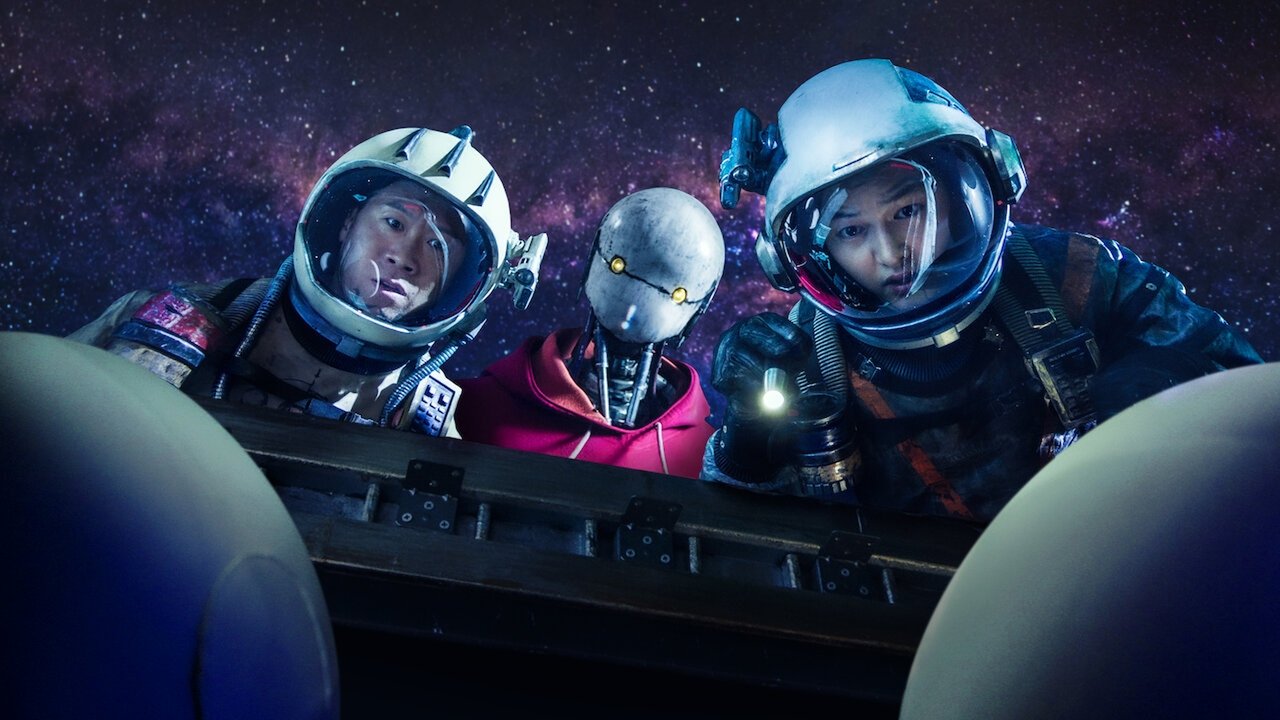
If you looked at a still frame of Space Sweepers without any context, you’d probably assume you were looking at a $200 million Disney-backed space opera. The chrome is shiny, the space-junk clouds are dense, and the dogfights have that expensive, heavy weight to them. But here is the kicker: this thing was made for about a tenth of a Marvel budget. I watched this on my laptop while my neighbor was power-washing their driveway, and the drone of the water weirdly synchronized with the Victory’s engine hum, making the whole experience feel like I was sitting right there in the cockpit of a rust-bucket spaceship.
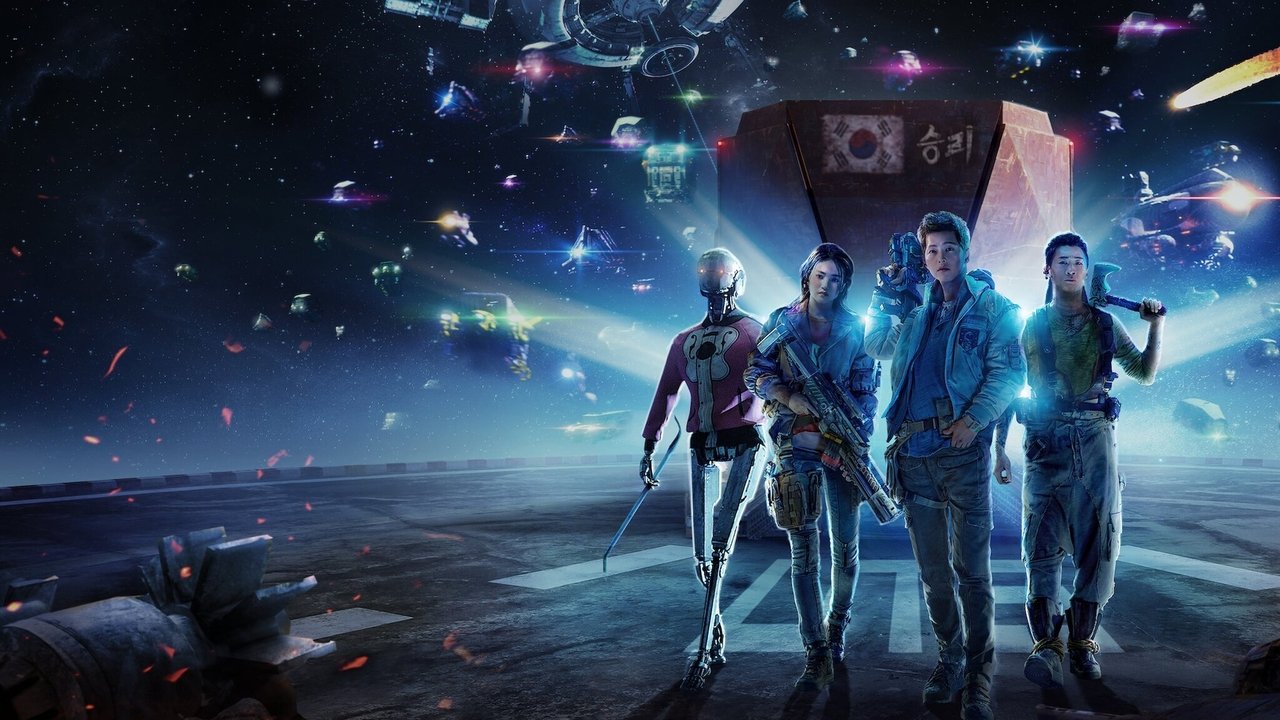
Released in early 2021, Space Sweepers was supposed to be South Korea’s big theatrical stake in the sci-fi heartland. Instead, the pandemic shuffled it onto Netflix, where it became a bit of a "lost blockbuster"—the kind of movie that everyone watched for one weekend and then seemingly stopped talking about. That’s a shame, because it’s a total blast of "used future" energy that feels more like Cowboy Bebop than the actual live-action Cowboy Bebop ever did.
A Found Family in a Garbage Can
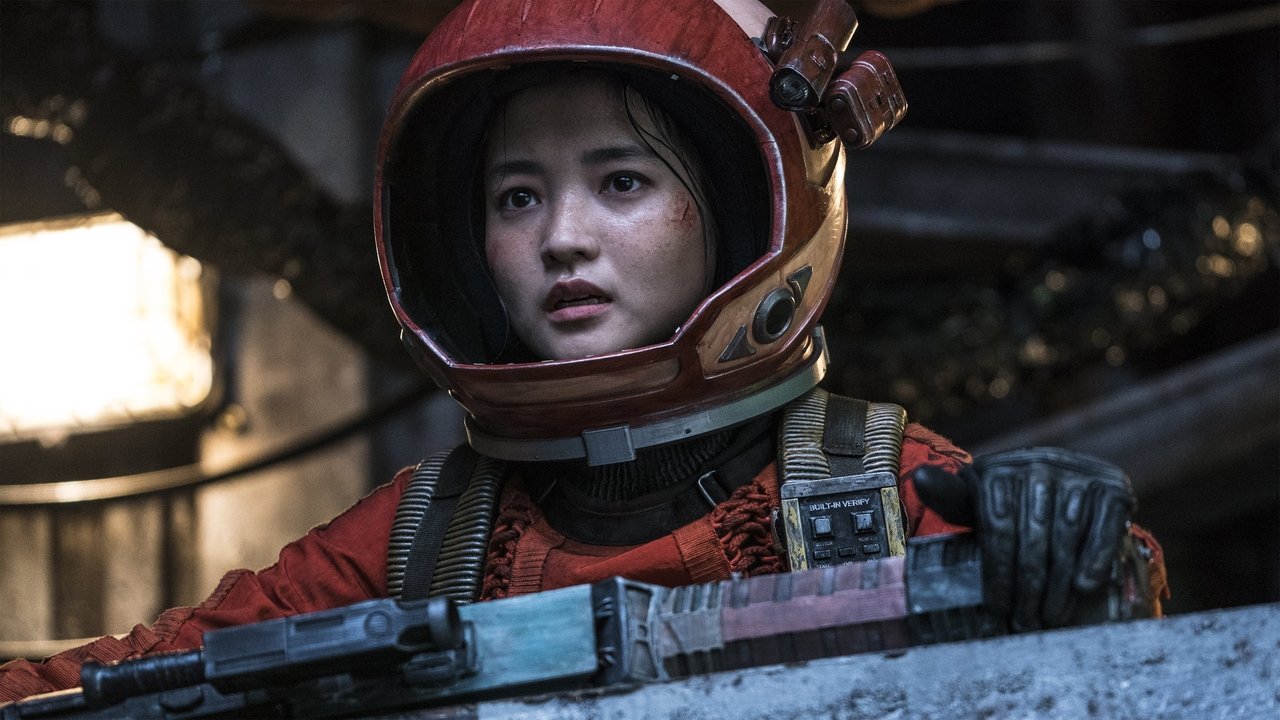
The plot is classic sci-fi pulp: in 2092, Earth is a dying dust-ball, and the wealthy have moved to an orbital utopia. The rest of the "non-citizens" scrape by as space sweepers, chasing orbital debris to sell for credits. The crew of the ship Victory is a collection of delightful losers led by Captain Jang, played by the effortlessly cool Kim Tae-ri (who you might know from Park Chan-wook’s The Handmaiden). She’s joined by Song Joong-ki as the pilot Tae-ho, a man so desperate for cash he flies in socks to save on shoe wear-and-tear.
The drama kicks in when they find a cute-as-a-button kid named Dorothy hidden in a crashed shuttle. The news says she’s a humanoid robot carrying a nuclear bomb. The crew sees a payday; the audience sees a "found family" trope coming from a light-year away. Is it predictable? Sure. But the emotional beats are played with such sincerity that I didn't mind the cliches. Song Joong-ki anchors the film’s heavier moments, bringing a weary, paternal grief to the role that reminds us this isn’t just a cartoon—it’s a story about people who have been discarded by society.
High-End Spectacle on a Budget
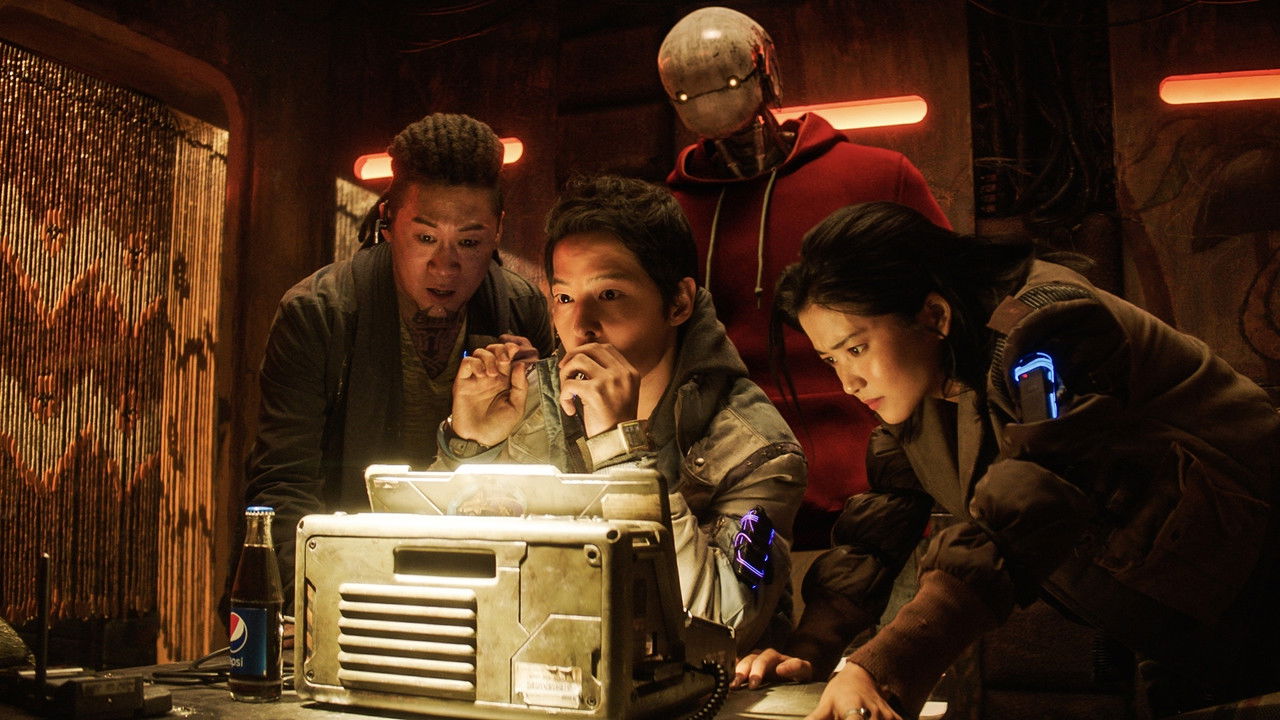
What really struck me is how this film handles the "Contemporary Cinema" problem of CGI bloat. Usually, when a movie is this heavy on digital effects, it starts to look like soup. But director Jo Sung-hee (who previously worked with Song Joong-ki on A Werewolf Boy) keeps the action remarkably legible. The Victory feels cramped, oily, and lived-in. Even Bubs—a reprogrammed military robot voiced with hilarious sass by Yoo Hai-jin—has more personality than most human sidekicks in modern franchises.
Interestingly, the film is a polyglot’s dream. In this future, everyone wears translation implants, so characters speak Korean, English, Mandarin, and Arabic simultaneously. It’s a small detail that makes the world feel massive and interconnected, unlike the "everyone speaks English in space" trope we usually get. Richard Armitage (Thorin from The Hobbit) shows up as the villainous CEO, James Sullivan. He’s basically playing a walking LinkedIn profile for a tech cult, and while his character is a bit of a mustache-twirling caricature, his presence adds a weird, global-corporate flavor to the antagonism.
The Streaming Era's Hidden Gem
There’s a specific kind of "streaming fatigue" that hit us all around 2021—that feeling that everything on Netflix was just "content" designed to be half-watched while scrolling on your phone. Space Sweepers fights against that. It wants your attention. It’s a movie that misses the big screen, but its arrival on streaming actually highlights a major shift in the industry: the democratization of the blockbuster. You don't need a Hollywood zip code to make a world-class sci-fi epic anymore.
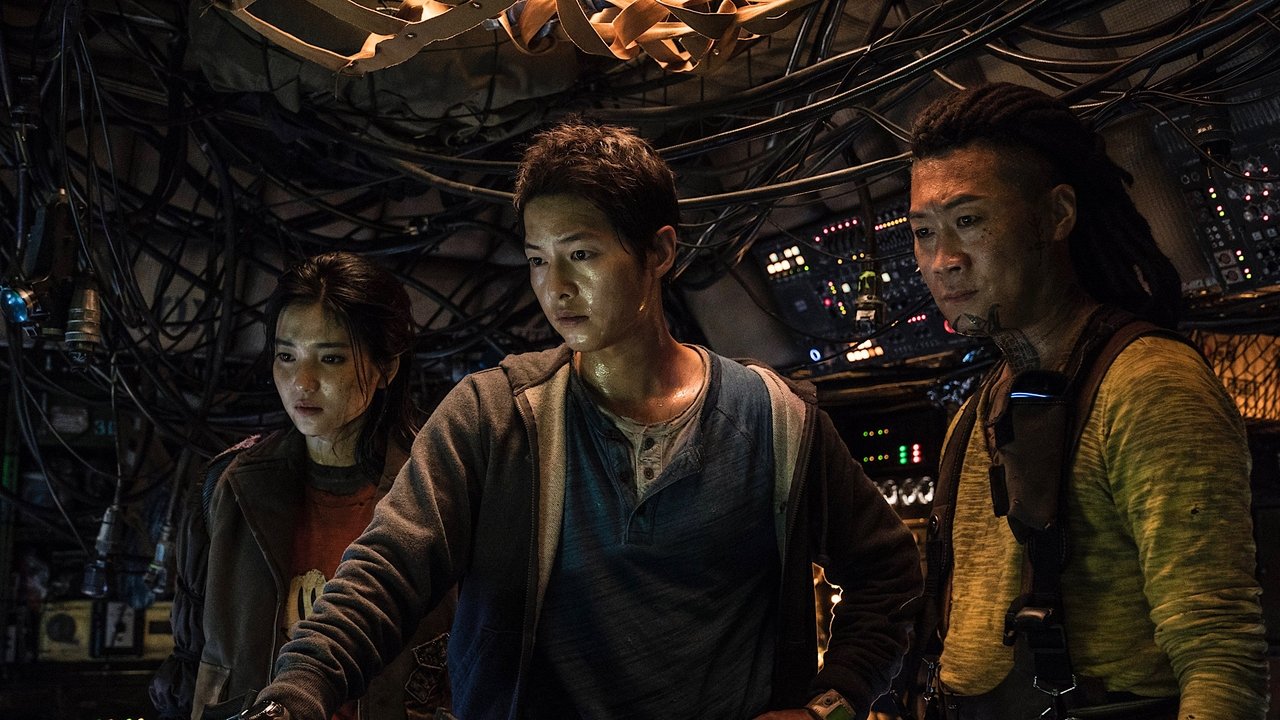
One of the coolest bits of trivia I dug up is that the robot, Bubs, was actually a pioneer for Korean cinema—the first time a character was created using full motion-capture and robot-skinning tech in the country. Yoo Hai-jin wasn't just a voice in a booth; he was on set in a mo-cap suit, which explains why the chemistry between the robot and the humans feels so snappy. It’s that extra bit of effort that keeps the movie from feeling like a disposable streaming product.
In an era of franchise dominance, it’s refreshing to see a standalone sci-fi film that actually cares about its characters’ bank accounts as much as its explosions. It’s a bit overlong at 136 minutes, and the ending leans a little too hard into the melodrama, but the heart is undeniably there. If you’re tired of the same old superheroes and want a space adventure that feels a bit more grounded in the dirt and grime of survival, give the Victory a chance. It’s the best piece of space junk you’ll find this week.
Keep Exploring...
-
Justice League vs. Teen Titans
2016
-
Batman vs. Robin
2015
-

Colossal
2017
-
Midnight Special
2016
-

Attraction
2017
-

I Kill Giants
2017
-
The Discovery
2017
-

Pinocchio
2019
-
The Wandering Earth
2019
-
Invasion
2020
-

The Craft: Legacy
2020
-

Freaks Out
2021
-

Lamb
2021
-
All of Us Strangers
2023
-
The Animal Kingdom
2023
-
Spaceman
2024
-

Along with the Gods: The Two Worlds
2017
-

Before I Wake
2016
-

Fallen
2016
-

The Red Turtle
2016