Stillwater
"The truth is lost in translation."
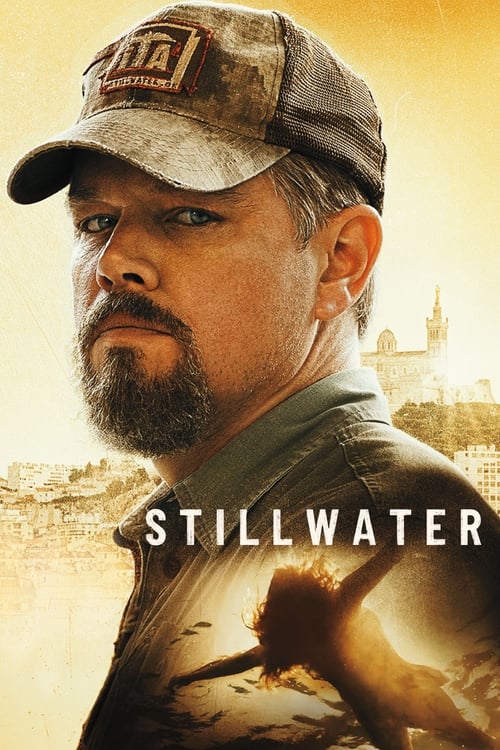
If you walked into a theater in 2021 expecting Matt Damon to pull a Liam Neeson and start throat-punching his way through the French underworld, you were likely either disappointed or pleasantly surprised. The marketing for Stillwater leaned heavily into the "American dad with a specific set of skills" trope, but director Tom McCarthy (Spotlight, The Station Agent) had something much more somber and morally murky in mind. This isn't a high-octane rescue mission; it’s a character study of a man who is as sturdy and unmoving as a slab of Oklahoma red clay, suddenly dropped into the chaotic, sun-drenched labyrinth of Marseille.

I watched this film on a Tuesday evening while my neighbor was aggressively power-washing their driveway, and the rhythmic, mindless drone of the water weirdly complemented the blue-collar stoicism of Damon’s Bill Baker. It’s a movie that demands you sit with the silence.
The Roughneck and the Actress
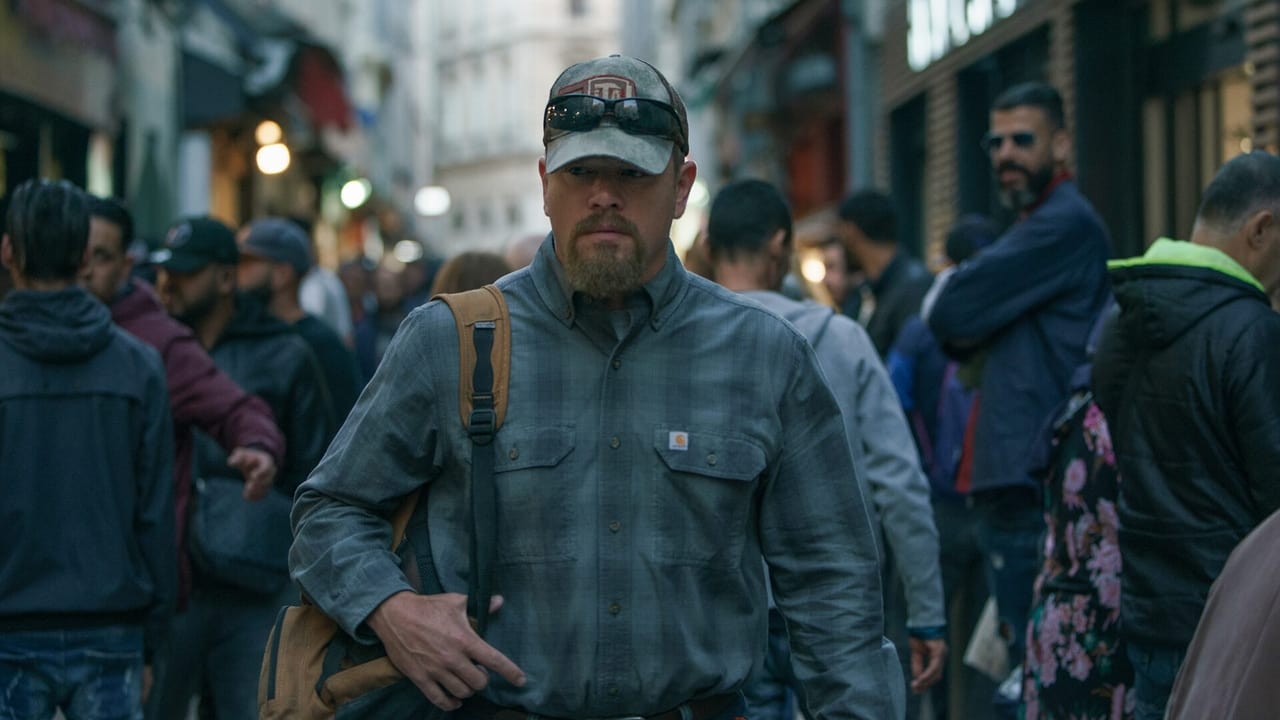
Matt Damon delivers one of the most transformative performances of his career here, and he does it mostly with his posture. As Bill Baker, an unemployed oil-rig roughneck, he wears a goatee that looks like it was precision-engineered in a wind tunnel and a pair of wrap-around Oakleys that serve as an emotional shield. He is the quintessential "Silent Majority" American—polite, prayerful, and fundamentally out of his depth. He’s in France to help his estranged daughter, Allison (Abigail Breslin, who brings a desperate, jagged edge to the role), who has spent five years in prison for the murder of her girlfriend—a crime she swear she didn’t commit.
The film truly finds its soul not in the legal thriller plot, but in the domestic interludes Bill shares with Virginie (Camille Cottin from Call My Agent!) and her young daughter Maya (Lilou Siauvaud). Stillwater is basically a 'Taken' movie for people who read The New Yorker. Instead of interrogations, we get scenes of Bill fixing a sink or learning how to cook a proper meal. The chemistry between Damon and Camille Cottin is remarkably understated; they represent two polar opposite worlds—Oklahoma oil country and Marseille theater culture—finding a temporary, fragile middle ground. Lilou Siauvaud is a total revelation here, providing the emotional tether that makes Bill’s desire for redemption feel earned rather than scripted.
A Modern Identity Crisis

Because this arrived in the post-2020 landscape, it’s impossible to ignore the political subtext. Tom McCarthy doesn't mock Bill's background, but he doesn't lionize it either. There’s a fascinating scene where Virginie’s friends ask Bill if he voted for Trump. He didn't—because his felony record prevented him from voting at all. It’s a sharp bit of writing that side-steps the easy "Red State" caricature to show a man who is simply disconnected from the systems that govern his life.
The film also carries the heavy baggage of being "inspired" by the Amanda Knox case, a connection that Knox herself publicly criticized. While the parallels are obvious—the student abroad, the sensationalized murder trial, the "angel-faced" prisoner—Stillwater deviates into a much darker, more fictionalized territory regarding the lengths a father will go to for his child. It tackles the idea of "American Exceptionalism" by showing how Bill’s blunt-force attempt to "fix" things only creates more wreckage. He treats a foreign legal system like a stubborn piece of machinery on an oil rig, assuming that if he just pulls the right lever, the truth will pop out.
The Mediterranean Noir
While the middle hour of the film is a gentle domestic drama, the third act swerves back into the "Crime" and "Thriller" tags listed on the poster. This is where the movie gets polarizing. The pacing slows to a crawl, and then suddenly accelerates into a sequence involving a basement and a kidnapping that feels like it belongs in a completely different movie. Moussa Maaskri shows up as a gritty local contact, and the film takes a hard turn into a moral gray zone that leaves you feeling a bit cold.
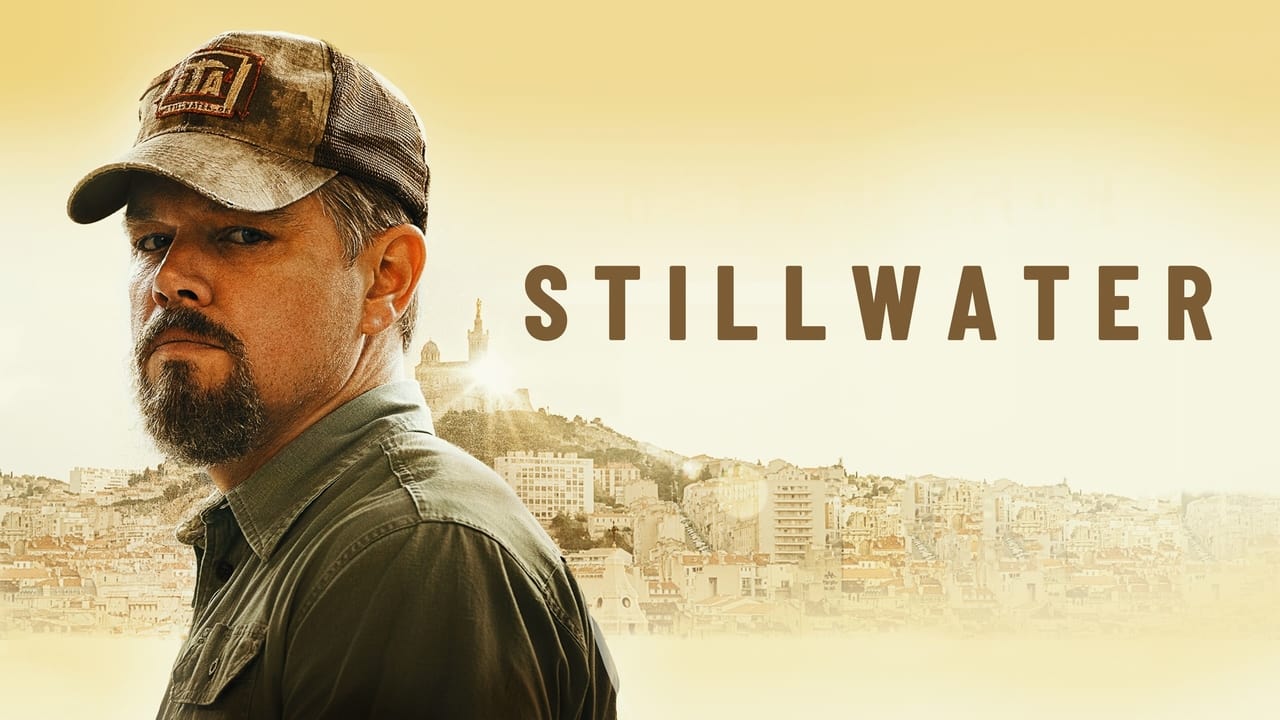
The cinematography by Masanobu Takayanagi captures Marseille with a gorgeous, dusty realism—it’s not the postcard France of Emily in Paris, but a city of concrete blocks, crowded stadiums, and hidden alleys. It feels lived-in and dangerous. However, the film’s length—clocking in at 139 minutes—is felt. There are moments where the cultural observations start to feel a bit repetitive, and you find yourself wishing Bill would just put the Oakleys back on and make a move. The movie moves at the speed of a dial-up modem in a fiber-optic world.
Despite the occasional tonal whip-lash, Stillwater is a rare breed of contemporary cinema: a mid-budget adult drama that trusts its audience to handle ambiguity. It’s about the "secrets that run deep," but it’s mostly about the realization that sometimes, when you travel halfway across the world to save someone, you realize you're the one who’s been lost the whole time.
Stillwater is a thoughtful, if occasionally overstuffed, look at the collision between American grit and European complexity. It’s anchored by a career-best performance from Matt Damon, who manages to make a "Yes, ma'am" sound like both a prayer and a defense mechanism. While it fumbles its thriller elements toward the end, the emotional core of the film remains surprisingly resonant long after the credits roll. If you have the patience for a slow-burn, this Oklahoma-filtered noir is well worth the journey.
Keep Exploring...
-
Suburbicon
2017
-
The Infiltrator
2016
-
Roman J. Israel, Esq.
2017
-
Black and Blue
2019
-
The Outfit
2022
-
Live by Night
2016
-

Miss Sloane
2016
-

I Don't Feel at Home in This World Anymore
2017
-
22 July
2018
-
The Night Clerk
2020
-

The Card Counter
2021
-
November
2022
-

Reptile
2023
-

To Catch a Killer
2023
-
Havoc
2025
-
The Guilty
2018
-

The Informer
2019
-

Lost Bullet
2020
-

Batman vs. Robin
2015
-

Dark Places
2015