The Map of Tiny Perfect Things
"Waking up is only the beginning."
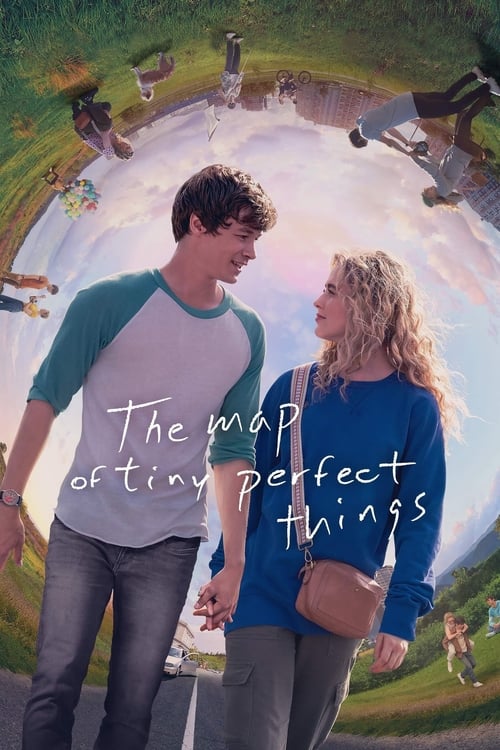
If you lived through the early months of 2021, you didn’t need a high-concept sci-fi premise to understand what it felt like to wake up in the exact same Tuesday for three hundred days straight. We were all living in a glitch. So, when The Map of Tiny Perfect Things dropped on Amazon Prime Video in February of that year, it felt less like a fantasy and more like a documentary with a better color palette. I watched it while sitting on a couch that was slowly molding to the shape of my body, drinking a lukewarm Diet Coke that I’d accidentally left in the freezer just long enough to turn into a slushie, and for 99 minutes, I actually stopped checking my phone to see if the world had ended yet.

This film belongs to a very specific, very crowded subgenre: the Gen-Z Time Loop Romance. It arrived right on the heels of Hulu’s Palm Springs, and while it lacks that film’s R-rated nihilism, it trades cynicism for a kind of earnest, scrapbooked charm. It’s a movie that knows it’s a movie, acknowledging its Groundhog Day ancestors with a wink before trying to find its own path through the temporal woods.
The Architecture of a Grounded Loop
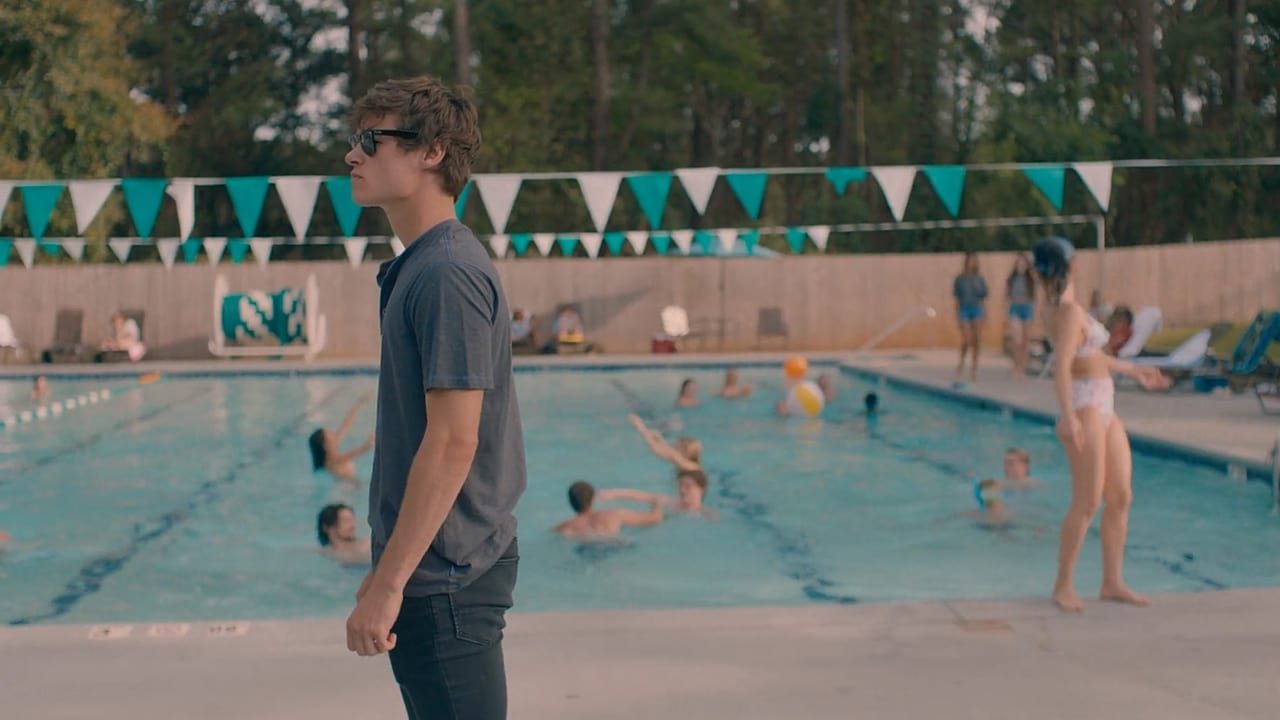
The story follows Mark, played by Kyle Allen with the kind of effortless, golden-retriever energy that makes you wonder if he’s actually made of sunlight. Mark has been stuck in the same day for a long time—long enough to have choreographed his entire morning routine down to the millisecond. He catches falling mugs, saves people from stray beach balls, and generally treats his town like a video game level he’s already beaten on "God Mode."
Then he meets Margaret. Kathryn Newton gives Margaret a prickly, guarded intelligence that acts as the perfect foil to Mark’s "gee-whiz" enthusiasm. She’s in the loop, too, but she isn't interested in playing superhero. Together, they decide to spend their infinite hours hunting for "tiny perfect things"—those split-second moments of accidental beauty that usually go unnoticed, like a janitor playing a masterful piano solo in an empty hallway or a hawk catching a fish.
What makes this work isn't the mechanics of the time loop—the script by Lev Grossman (who also wrote the short story it’s based on) wisely skips the "technobabble" explanation. Instead, it focuses on the emotional friction between two people who are moving at different speeds while standing still. It’s basically Palm Springs but with better skincare and significantly less existential dread.
Streaming Gems and the Algorithm Trap

Because this was a direct-to-streaming release during the height of the pandemic, it suffered from what I call "The Scroll-By Effect." On a platform like Amazon Prime, a movie like this can easily get buried under a mountain of $200 million action flops or endless seasons of gritty police procedurals. It’s a "quiet" movie, and the algorithm rarely rewards quiet.
However, looking at it now, the film feels like a rare win for the streaming era’s obsession with YA content. Director Ian Samuels avoids the glossy, over-saturated "TikTok aesthetic" that plagues so many modern teen dramas. Instead, the cinematography by Andrew Wehde feels tactile and warm. There’s a scene involving a literal giant map of the town laid out on a floor that feels more like a piece of indie art than a studio set-piece.
The film also benefits from a solid supporting cast. Jermaine Harris plays Mark’s best friend Henry, who is perpetually losing at a video game every time the day resets. It’s a small role, but it highlights the tragedy of the loop: while Mark and Margaret grow, everyone else is a ghost, doomed to repeat their mistakes without the benefit of memory.
The Weight of Moving Forward
For a movie that starts off feeling like a lighthearted scavenger hunt, the third act carries a surprising amount of dramatic weight. Without spoiling the turn, the film eventually reveals why Margaret is so hesitant to break the loop. It shifts from a quirky romance into a genuine exploration of grief and the fear of the future.
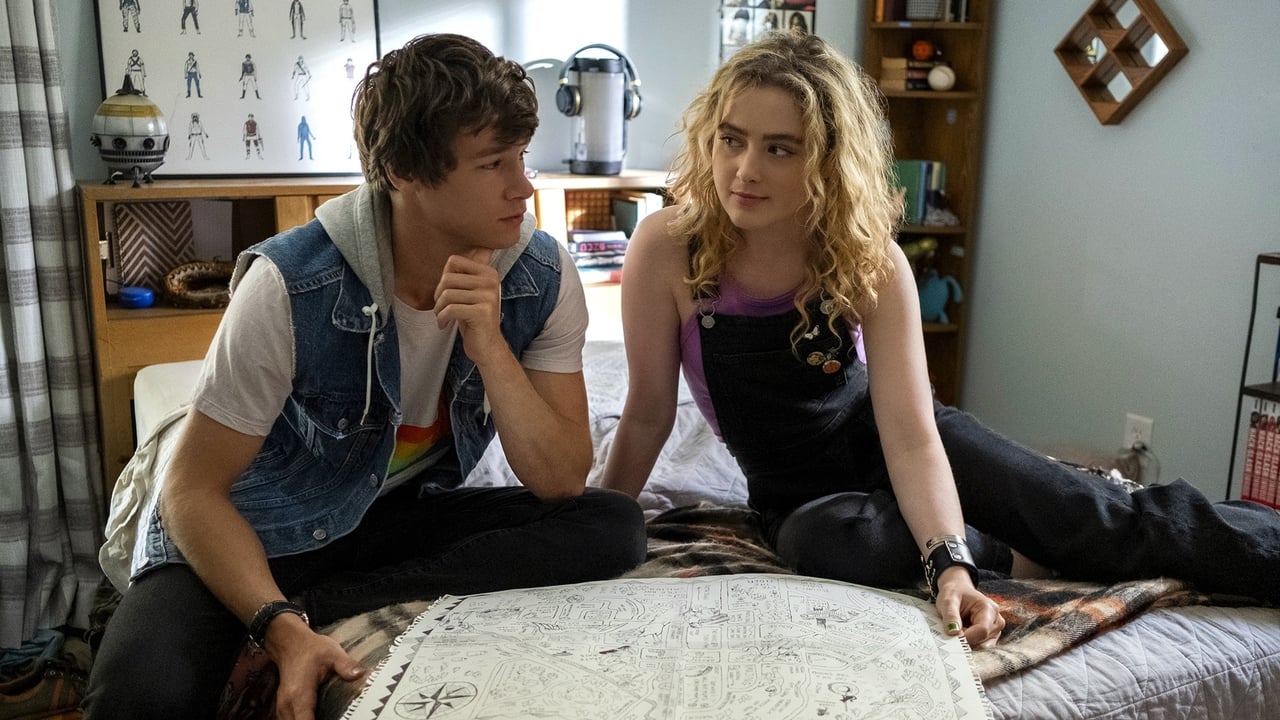
In our current era of "franchise fatigue," where every movie feels like a two-hour trailer for a sequel, there is something deeply refreshing about a film that is content to just be a small, self-contained story about growing up. It tackles the idea that "perfection" is often a trap—a way to avoid the messy, unpredictable pain of real life. Kathryn Newton carries these heavier themes with a subtlety that proves why she’s become one of the most reliable actors of her generation. She doesn't have to sob to show you she’s breaking; she just lets the light go out of her eyes for a second.
It’s not a perfect movie—some of the dialogue feels a bit too "written," and the pacing in the middle stretches can feel as repetitive as the day itself—but it has a massive heart. It’s the kind of film that reminds me why I love the "Contemporary" era of cinema despite the corporate bloat: every now and then, a small, sincere voice manages to scream loud enough to be heard over the noise of the blockbusters.
The Map of Tiny Perfect Things is a lovely, bittersweet reminder that time only matters because it ends. It’s a movie that asks you to look at the world a little more closely, even if your own world currently feels like it’s on a loop. If you missed this one when it was buried by the 2021 algorithm, it’s well worth a trip back in time to find it.
Keep Exploring...
-
All of Us Strangers
2023
-

Love at Second Sight
2019
-

Red Shoes and the Seven Dwarfs
2019
-
A Whisker Away
2020
-
Three Thousand Years of Longing
2022
-
Miraculous: Ladybug & Cat Noir, The Movie
2023
-

Tale of Tales
2015
-
Swiss Army Man
2016
-
A Ghost Story
2017
-
Beauty and the Beast
2017
-
The Shape of Water
2017
-

Every Day
2018
-
Sierra Burgess Is a Loser
2018
-
When We First Met
2018
-
Aladdin
2019
-
Isn't It Romantic
2019
-
Cinderella
2021
-
Elemental
2023
-
The Little Mermaid
2023
-

Wicked
2024