tick, tick... BOOM!
"The clock is ticking, and the art won't wait."
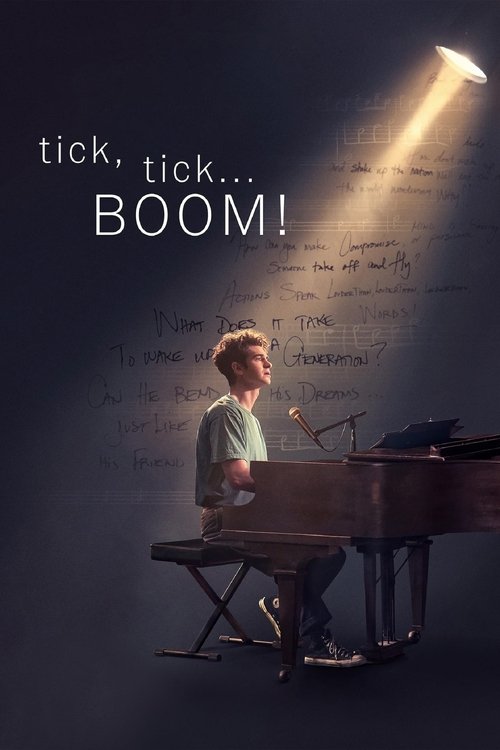
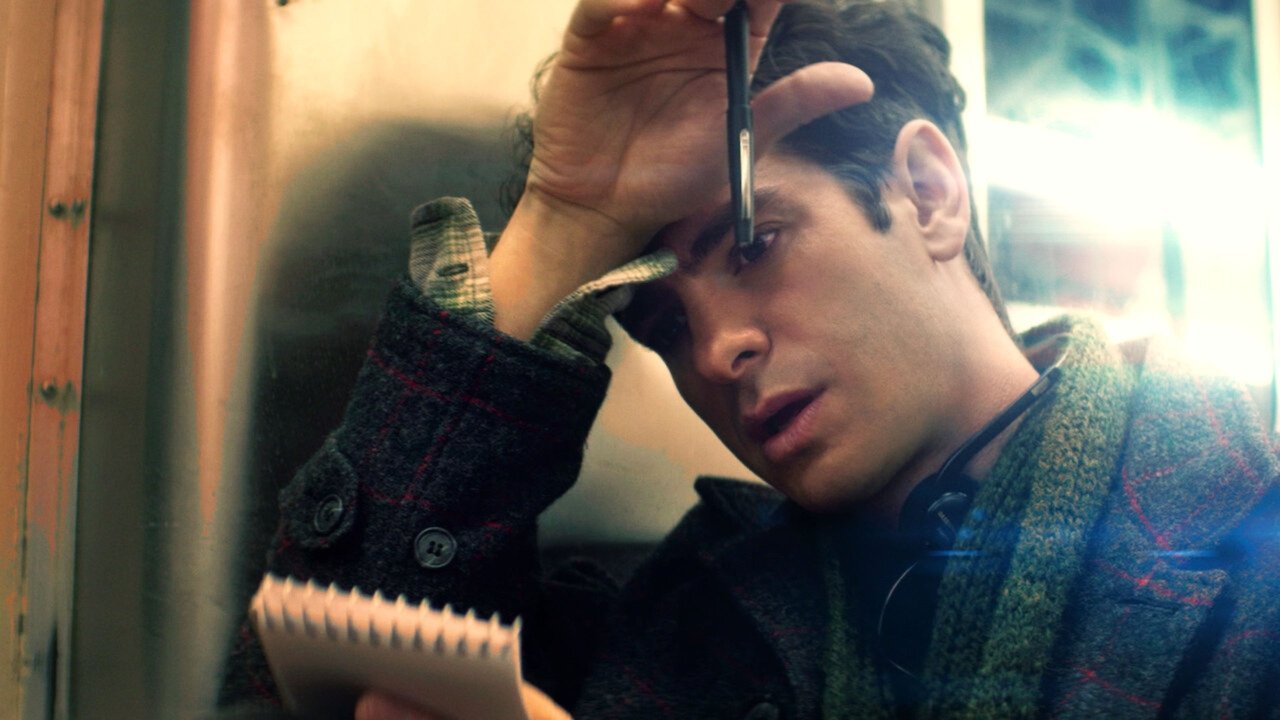
The sound of a ticking clock shouldn't be this terrifying. We’ve all felt that low-level hum of anxiety as a milestone birthday approaches, but for Jonathan Larson, the big 3-0 wasn’t just a number—it was a deadline. I watched this film while trying to assemble a particularly stubborn IKEA bookshelf, and every time the Allen wrench slipped, the "tick, tick" in my own head synced up perfectly with the frantic energy on screen. It’s a movie that understands that specific, frantic itch of feeling like the world is moving faster than your dreams.
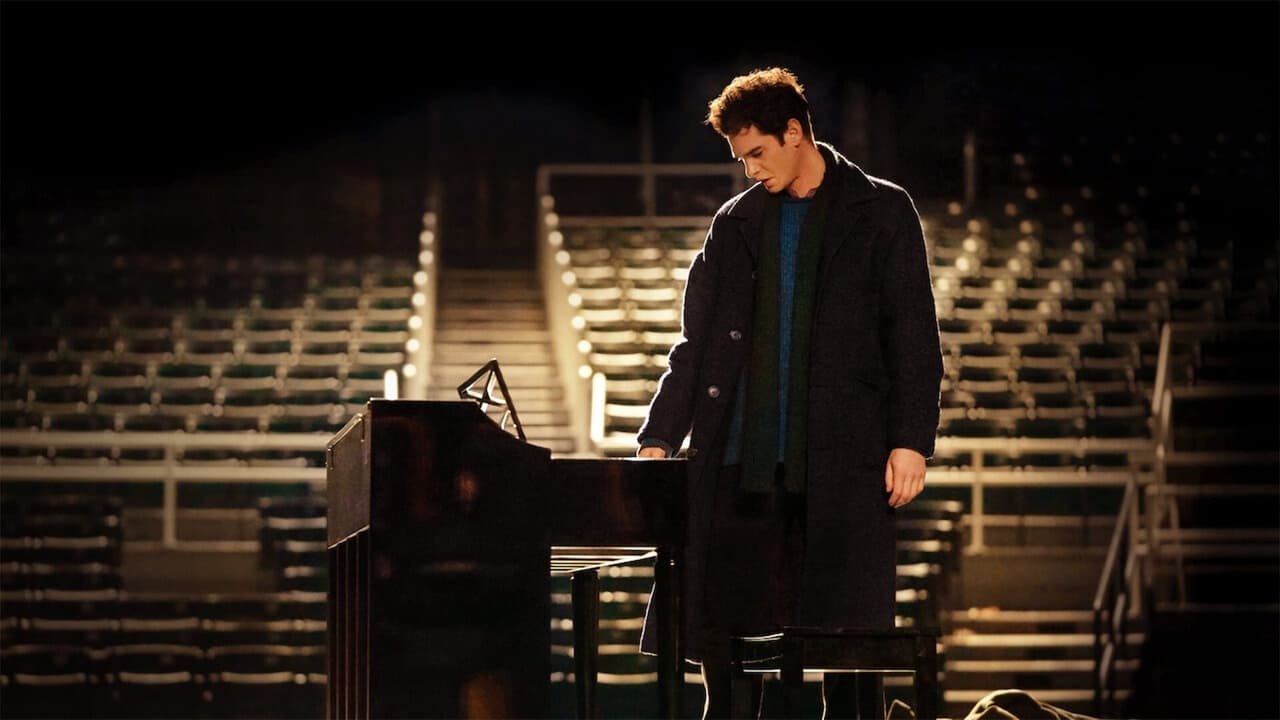
The Gospel of the Unfinished
Lin-Manuel Miranda (who, let’s be honest, has become the de facto custodian of the modern American musical) makes his directorial debut here, and it’s a match made in theater-kid heaven. He isn’t just filming a stage play; he’s translating the inside of a songwriter’s hyperactive brain. Andrew Garfield doesn't just play Jonathan Larson; he inhabits him with a vibrating, wide-eyed intensity that feels like he’s constantly being electrocuted by his own ideas.
Released in that weird 2021 window where we were all oscillating between "theaters are back" and "let’s just stay on the couch," tick, tick... BOOM! found its soul on Netflix. In an era where streaming platforms often feel like dumping grounds for mid-budget dramas, this felt like a genuine event. It’s a contemporary biopic that avoids the usual "walk hard" clichés. Biopics about songwriters usually suck because they treat inspiration like a lightning bolt; this one treats it like a plumbing problem. You see the sweat, the overdue bills, and the crushing reality that being "promising" doesn't pay the rent in the West Village.
A Love Letter Written in Caffeine
The film captures the grit of 1990 New York—a city on the edge of the AIDS crisis and a massive cultural shift—without feeling like a museum piece. Alexandra Shipp as Susan and Robin de Jesús as Michael provide the necessary emotional ballast to Jonathan’s self-absorption. Their performances remind us that while the artist is busy "creating," the people around them are busy living, hurting, and sometimes leaving. Robin de Jesús, in particular, delivers a monologue about his diagnosis that hits like a freight train precisely because it’s played with such weary, human dignity.

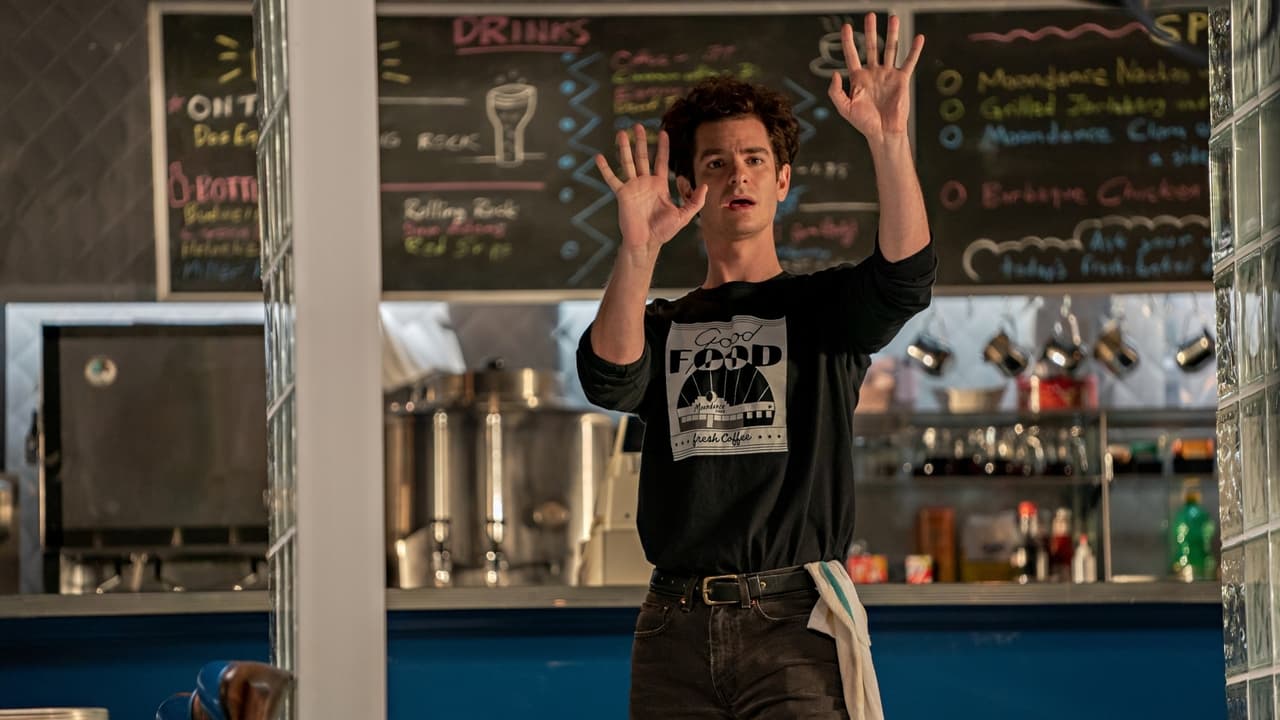
Then there’s the "Sunday" diner sequence. For musical theater nerds, this scene is basically the Avengers: Endgame of Broadway. It’s a kaleidoscopic fever dream featuring cameos from every legend imaginable—Bernadette Peters, André De Shields, Chita Rivera. It’s a moment of pure fan service that somehow doesn't derail the movie because it captures the central thesis: we are all part of a lineage. We are all building on the foundations of those who came before us, hoping we don’t run out of time to add our own floor.
The Philosophy of the Ticking Clock
What struck me most—and what I think gives this film its "cerebral" edge—is how it grapples with the concept of failure. We know Larson eventually wrote Rent. We know he changed theater forever. But the movie stops before any of that happens. It forces us to sit in the discomfort of his "failed" workshop for Superbia, a sci-fi musical he spent eight years of his life on.
It asks a question that feels incredibly relevant in our "side-hustle" obsessed culture: Is the art worth the cost if you never see the payoff? Larson’s actual life ended tragically on the night of Rent’s first off-Broadway preview. He never heard the applause. This film is a meditation on the act of creation as its own reward. It’s about the "Fear or Love" choice—the idea that you can either let anxiety paralyze you, or you can use it as fuel. Andrew Garfield’s performance captures that desperation so well that I found myself wanting to apologize to my unfinished projects sitting in my "Drafts" folder.

Cool Details
Andrew Garfield had never sung professionally before being cast. Lin-Manuel Miranda asked a mutual friend if Garfield could sing, and the friend (who didn't actually know) lied and said, "He has the voice of an angel." Garfield then spent a year in vocal training to make that lie a reality. The diner where Jonathan works, the Moondance Diner, was a real SoHo staple. It was actually moved to Wyoming in 2007, so the production had to recreate it with meticulous detail. The "boop" noises and the answering machine messages you hear in the film are the actual recordings from Jonathan Larson’s real-life tapes. Look closely at the "Sunday" scene: the waitress Jonathan bumps into is played by Phyllis Newman, a Broadway legend who was actually a mentor to Larson in real life. * The script that Bradley Whitford (playing Stephen Sondheim) critiques in the film contains actual notes that Sondheim gave to Larson during the development of his work.
This isn't just a movie for people who like musicals. It’s a movie for anyone who has ever looked at a calendar and felt a cold shiver. It’s loud, it’s messy, and it’s occasionally a little too "theater-y" for its own good, but it has a heartbeat that is impossible to ignore. It reminds me that the most important thing isn't reaching the finish line—it’s the noise you make while you're running. Even if you're just assembling a bookshelf, do it like you're writing the next great American opera.
Keep Exploring...
-
Sound of Metal
2020
-

CODA
2021
-

All the Bright Places
2020
-

Clouds
2020
-
The Ballad of Buster Scruggs
2018
-

Manchester by the Sea
2016
-
Silence
2016
-
Beautiful Boy
2018
-
Instant Family
2018
-

Roma
2018
-
The Trial of the Chicago 7
2020
-

King Richard
2021
-
A Man Called Otto
2022
-
The Fabelmans
2022
-

The Woman King
2022
-

Gran Turismo
2023
-

Past Lives
2023
-
The Holdovers
2023
-

Straight Outta Compton
2015
-
Loving Vincent
2017