Two
"Stuck together, with nowhere to run."

There is a specific brand of 3:00 AM panic that only high-concept European thrillers seem to scratch. You know the feeling: you’re scrolling through a streaming interface, your eyes are glazed over from a surfeit of choice, and suddenly a thumbnail stops you cold. It’s usually a stark image, a minimalist title, and a premise so fundamentally uncomfortable that your lizard brain demands you click "play." In 2021, that movie was Two (or Dos), a Spanish production that feels like it was grown in a lab specifically to capitalize on our collective post-pandemic claustrophobia.
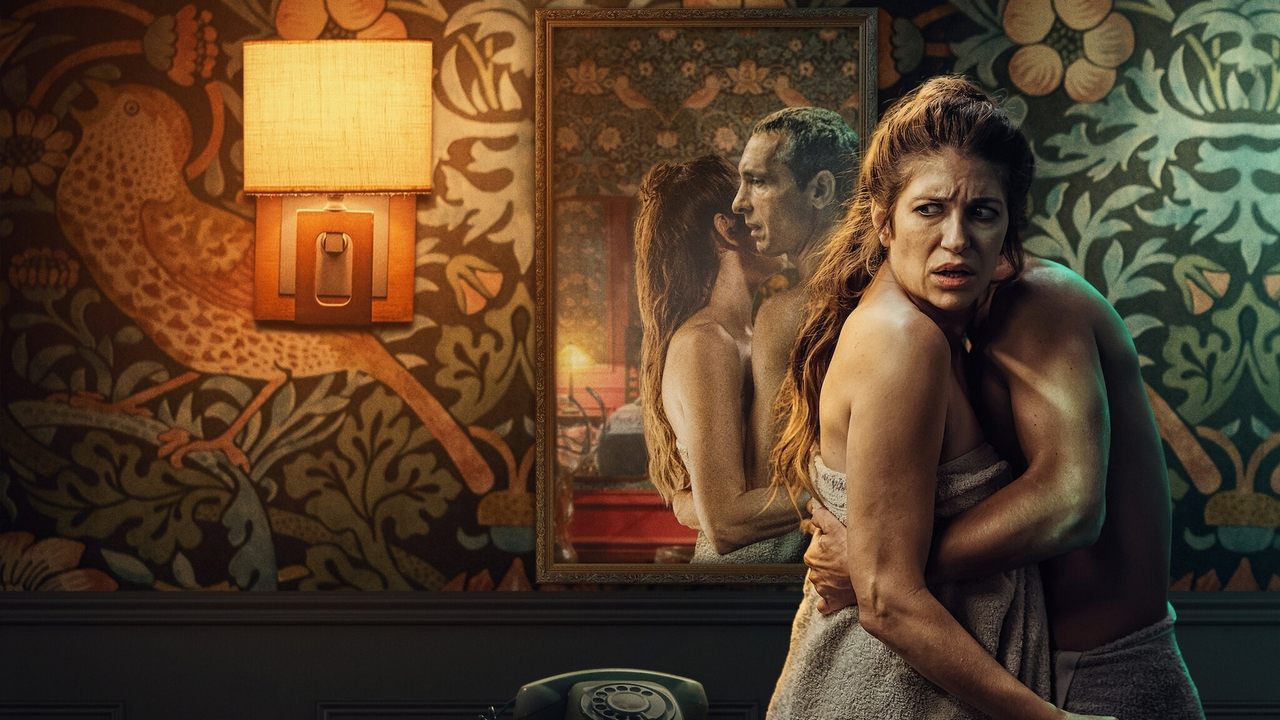
I watched this one on a Tuesday night while huddled under a weighted blanket that was, in retrospect, a terrible choice for a movie about being trapped. By the twenty-minute mark, I felt like I was the third person sewn into the plot. It’s a lean, mean 71 minutes—a runtime that respects your time even if the plot doesn't exactly respect your gag reflex.
The Ultimate "Invasive" Hook
The setup is the kind of nightmare fuel that would make David Cronenberg nod in approval while perhaps suggesting a bit more slime. A man, David (Pablo Derqui), and a woman, Sara (Marina Gatell), wake up in a sterile, dimly lit room. They are naked. They are strangers. And they have been surgically attached at the abdomen.
Director Mar Targarona—who previously produced the atmospheric masterclass The Orphanage (2007)—doesn't waste a second on pleasantries. We are thrust into the immediate, fumbling panic of two people who have lost all sense of bodily autonomy. In the era of "Netflix-and-Chills," where movies often bloat to two hours to satisfy an algorithm, the brevity here is a godsend. It’s a "bottle movie" in the truest sense, stripping away the world until only the agonizing proximity of another person remains.
What’s fascinating about Two is how it reflects our current obsession with extreme puzzles. It feels like a spiritual successor to Saw or The Platform, but with a far more intimate, biological focus. The script is essentially a two-person play written in blood and surgical thread, forcing the characters to navigate the basic mechanics of movement while trying to solve the "why" behind their predicament.
Choreographing Discomfort
The success of a film like this rests entirely on the physicality of its leads. Pablo Derqui and Marina Gatell deliver performances that are, quite literally, inseparable. They have to convey a range of emotions—terror, suspicion, shame, and eventually a grim kind of cooperation—all while maintaining the illusion of being one organism.
Apparently, the production was just as intense as the onscreen result. To prepare for the roles, Derqui and Gatell spent a significant amount of time physically bound to one another before cameras even rolled. They had to learn how to walk, sit, and roll over as a single unit. You can feel that preparation in the way they move; it’s not just two actors standing close together, but a coordinated struggle against a shared center of gravity. If you’ve ever tried to win a three-legged race with someone who has a completely different stride, you’ll find this film relatable in the worst way possible.
The cinematography by Rafa Lluch leans into the clinical coldness of the room. The lighting is harsh, highlighting every stitch and every bead of sweat. It’s not "pretty" horror, but it is technically proficient. The film manages to avoid feeling like a low-budget stage play by using the camera to probe the characters' personal space, making the viewer feel like a voyeur to an incredibly private violation.
The "Twist" Fatigue
As we’ve seen in the contemporary thriller landscape—especially with the rise of "mystery box" storytelling—the hardest part isn't the hook; it’s the landing. Two starts as a visceral exploration of survival but eventually feels the need to provide a "Big Why." This is where the movie might lose some of you. Without spoiling the reveal, I’ll say that it pivots from psychological body horror into something that feels a bit like a discarded X-Files subplot involving numerology and obsessive-compulsive themes.
The film grapples with the idea of duality—the "two" of the title—referencing everything from twins to the North and South poles. Sometimes this thematic layering feels profound; other times, it feels like a screenwriter trying to justify a fetishistic premise with a philosophy degree. It’s a common trope in modern streaming horror: the need to explain away the mystery often robs the film of its primal power.
Interestingly, the film was produced by Rodar y Rodar, a house known for elevated Spanish genre fare. You can see the pedigree in the score by Diego Navarro, which uses sharp, staccato strings to keep the tension high even when the dialogue starts to wander into the weeds. It’s a film that looks and sounds more expensive than its single-room setting would suggest, a testament to how digital technology has democratized the ability to make "small" movies feel "big."
Ultimately, Two is a fascinating artifact of our current cinematic moment. It’s a film designed to be "discovered" on a landing page, watched in a single breathless sitting, and then discussed—or argued about—on social media for exactly forty-eight hours. It’s a triumph of practical effects and physical acting, even if the narrative eventually collapses under the weight of its own coincidences.
If you’re a fan of high-concept "what would you do?" scenarios and have a stomach for some light surgical trauma, it’s worth the hour of your life. Just don’t expect a life-changing epiphany when the credits roll. It’s a quick, dirty jolt to the system that reminds us that, sometimes, the scariest thing in the world isn't a ghost or a monster—it's just being way too close to another human being.
Keep Exploring...
-

The Bar
2017
-

COVID-21: Lethal Virus
2021
-

The Wasteland
2021
-

Venus
2022
-

Bird Box Barcelona
2023
-

Killer Book Club
2023
-

Tin & Tina
2023
-

The Platform 2
2024
-

Friend Request
2016
-

Morgan
2016
-

The Belko Experiment
2016
-

The Other Side of the Door
2016
-

Cult of Chucky
2017
-

Wish Upon
2017
-

Assassination Nation
2018
-

Hell Fest
2018
-

Tau
2018
-

The Strangers: Prey at Night
2018
-

47 Meters Down: Uncaged
2019
-

Polaroid
2019
-

Secret Obsession
2019
-

The Prodigy
2019
-

The Silence
2019
-

Brahms: The Boy II
2020