Avatar: The Way of Water
"The king of the world returns to the water."

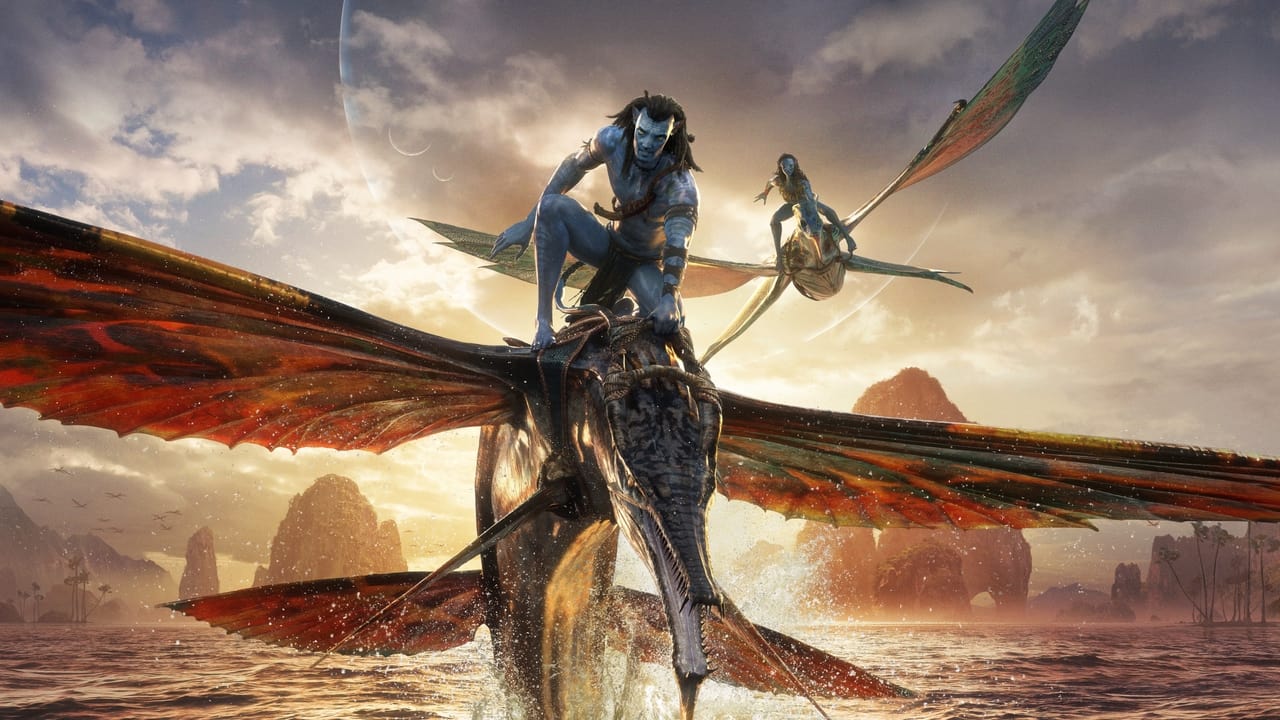
James Cameron spent thirteen years building a digital ocean just to prove he could, and honestly, the sheer arrogance of it is the most refreshing thing in modern Hollywood. While every other franchise is currently drowning in "multiverse" homework, muddy green screens, and rushed CGI that looks like a PlayStation 3 cinematic, James Cameron delivered a three-hour vacation to a planet that feels more real than my actual backyard. I watched this while sitting in a reclining theater seat that kept slowly folding me in half like a human taco whenever I shifted my weight, and I barely noticed because I was too busy staring at a digital whale.

The Most Expensive Bathtub Toys Ever Made
For a decade, the internet’s favorite hobby was claiming Avatar had "no cultural footprint." People loved to point out that nobody could name three characters from the first film, as if that somehow invalidated the fact that it made all the money in the world. With The Way of Water, Cameron essentially told those critics to hold his snorkel. He didn’t just make a sequel; he reinvented the entire pipeline of digital filmmaking.
The most striking thing isn't just the CGI—it’s the physics. Most modern blockbusters feel weightless, with digital doubles flying through the air like cardboard cutouts. Here, when a character hits the water, you feel the displacement. You see the surface tension. To achieve this, James Cameron and his team built a 900,000-gallon tank and pioneered "underwater performance capture." Kate Winslet, playing the fierce Metkayina leader Ronal, famously held her breath for seven minutes and 14 seconds, breaking Tom Cruise’s record. It’s that level of "extra" that defines the film. James Cameron is essentially a billionaire playing with the world's most advanced bathtub toys, and the results are undeniably spectacular.
I’ll admit, the High Frame Rate (48fps) is a bit of a polarizing beast. In some scenes, it looks like a high-end soap opera or a very expensive BBC nature documentary. But once you dive under the waves with the Sully family, it creates a window-like clarity that makes traditional 24fps feel like you're looking through a dusty screen door.
Dad-Core in Deep Space

If the first film was a riff on Pocahontas or Dances with Wolves, the sequel is pure "Dad-Core." Sam Worthington returns as Jake Sully, but he’s no longer the rebellious outsider; he’s a stressed-out father of four trying to keep his family from being murdered by a resurrected Colonel Miles Quaritch (a delightfully snarling Stephen Lang).
The emotional core shifts from the romance between Jake and Neytiri (Zoe Saldaña) to the struggles of their children. The standout is Kiri, played by Sigourney Weaver via the magic of de-aging and performance capture. There is something profoundly weird and wonderful about a 73-year-old acting legend playing a 14-year-old girl who feels a spiritual connection to the planet. It shouldn't work, but it does.
However, let’s be real: the plot is basically 'Dances with Wolves' meets a Discovery Channel special on steroids. The narrative is thin enough to see through, and the dialogue often sounds like it was written by a drill sergeant who just discovered a book of New Age poetry. "Sully’s stick together," is repeated so many times I started to wonder if it was a secret code to activate a sleeper cell in the audience. But in an era where movies are often over-plotted and confusing, there’s a certain charm to Cameron’s simplicity. He knows exactly which heartstrings to pull and when to let the visuals do the heavy lifting.
A Masterclass in Action Choreography

The final hour of this movie is where the $350 million budget really hits the screen. While most modern action scenes are a chaotic blur of "shaky cam" and 500 cuts per minute, the battle on the sea-dragon whaling vessel is a masterpiece of clarity. You always know where every character is, what the stakes are, and how the geography of the ship works.
The action has weight and consequence. When a Tulkun (the Pandoran version of a whale) decides to fight back, the impact feels tectonic. Cliff Curtis as Tonowari provides a grounded, stoic presence that balances the frantic energy of the Sully kids. The way Cameron weaves the environmental message into the action—making the "whaling" sequence genuinely heartbreaking—is a bold move for a blockbuster. It’s not just empty spectacle; it’s spectacle with an agenda.
The film’s box office performance, crossing $2.3 billion, proved that the "theatrical experience" isn't dead; it just needs a reason to exist. In an era where we can stream almost anything from our couches, The Way of Water demands the biggest screen possible. It’s a reminder that movies can still be events—huge, sprawling, slightly overstuffed events that make you forget your phone exists for three hours.
Ultimately, The Way of Water is a triumph of technical will over narrative conventionality. It’s a film that dares to spend forty minutes just showing you alien fish, betting that you’ll be as enchanted as the director is. While the dialogue might make you cringe and the runtime might test your bladder, the sheer scale of the imagination on display is peerless. It’s James Cameron’s world; we’re all just swimming in it.

Keep Exploring...
-

Avatar: Fire and Ash
2025
-

Avatar
2009
-
Guardians of the Galaxy Vol. 2
2017
-

Guardians of the Galaxy Vol. 3
2023
-
Jurassic World
2015
-
Spider-Man: Homecoming
2017
-

Star Wars: The Last Jedi
2017
-
Thor: Ragnarok
2017
-

Ant-Man and the Wasp
2018
-

Avengers: Infinity War
2018
-

Black Panther
2018
-

Bumblebee
2018
-

Maze Runner: The Death Cure
2018
-
Ready Player One
2018
-

Spider-Man: Into the Spider-Verse
2018
-

Alita: Battle Angel
2019
-
Avengers: Endgame
2019
-

Captain Marvel
2019
-

Spider-Man: Far From Home
2019
-
Spider-Man: No Way Home
2021