Moonfall
"Gravity is a suggeston, and the Moon is a lie."

If you ever feel like the world has become a bit too predictable, just remember that Roland Emmerich once convinced people to give him $146 million to turn the Moon into a giant, sentient Dyson sphere. In a cinematic landscape currently dominated by the meticulously planned phases of the MCU and the brooding self-seriousness of legacy sequels, Moonfall arrives like a drunken uncle at a funeral—loud, inappropriate, and undeniably more interesting than the service itself. It is a film that views the laws of physics not as rules, but as mild inconveniences to be ignored in favor of seeing a Lexus escape a "gravity wave."
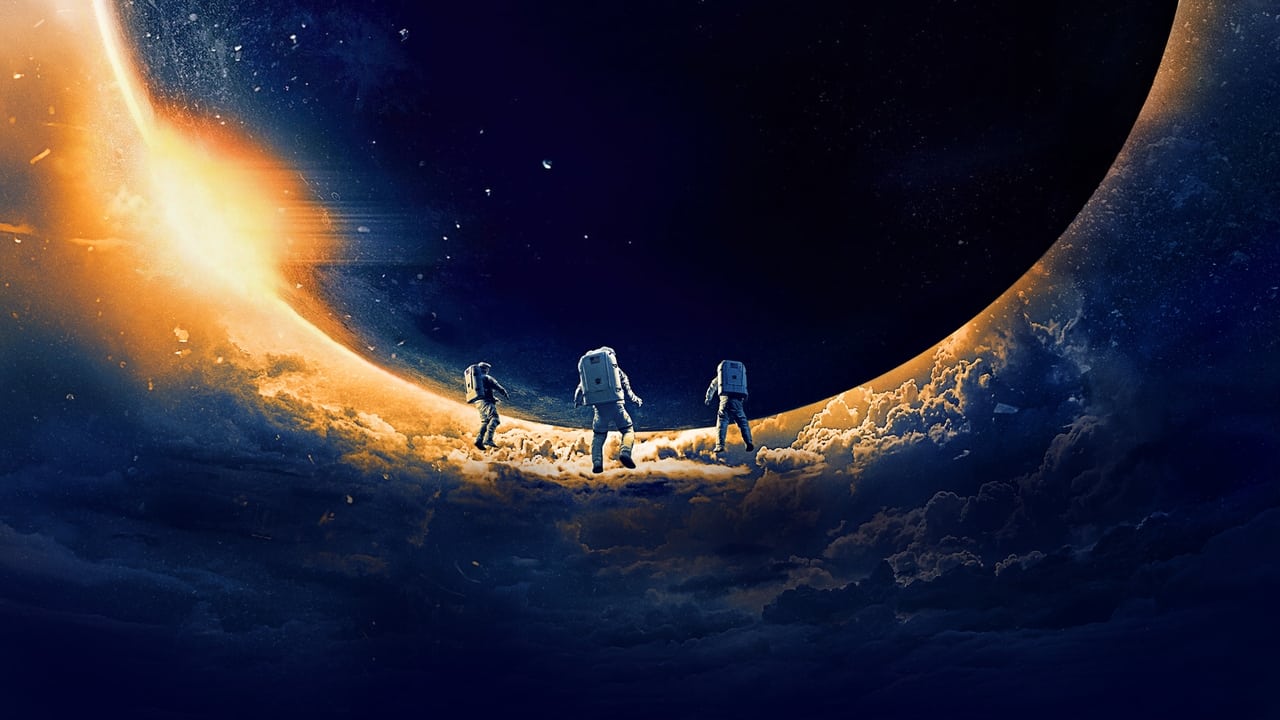
I watched this while my neighbor was loudly pressure-washing his driveway, and honestly, the rhythmic thrum of the water against the pavement provided a better percussive score for the lunar apocalypse than I could have hoped for. It’s that kind of movie; it doesn't demand your undivided attention so much as it demands your total surrender.
The Megastructurist and the Astronauts
The plot—and I use that term loosely—involves a mysterious force knocking the Moon out of orbit. While the rest of the world descends into the standard Emmerich-brand chaos of rising tides and falling skyscrapers, our trio of heroes heads into space to set things right. We have Halle Berry as Jo Fowler, a high-ranking NASA official who seems to be the only person in the government with a functioning brain, and Patrick Wilson as Brian Harper, a disgraced astronaut who looks like he’d rather be back in The Conjuring fighting ghosts than dealing with orbital mechanics.
But the real star here is John Bradley, the man who spent years as Samwell Tarly on Game of Thrones. He plays KC Houseman, a "megastructurist" (a fancy word for a conspiracy theorist with a cat) who discovers the Moon is hollow. John Bradley is the heart of the film, providing the necessary "I told you so" energy that fuels the entire second half. There is something profoundly 2022 about a movie where the guy who spends all day on fringe internet forums turns out to be more right than the entire scientific community. It’s a reflection of our era's complicated relationship with expertise, though handled with all the nuance of a sledgehammer hitting a block of tofu.
Physics? Never Heard of Her

When it comes to action, Roland Emmerich has always been the undisputed king of "disaster porn," but Moonfall pushes the boundary into something almost psychedelic. The action set pieces are a fever dream of seamless CGI and total lunacy. There’s a sequence where a space shuttle launches while a literal tidal wave looms over the launchpad, and another where characters jump their vehicle across crumbling chunks of the Earth's crust as the Moon’s gravity pulls the ground into the sky.
The choreography of these scenes is less about the "how" and more about the "wow." Moonfall is essentially a $140 million episode of Ancient Aliens directed by a man who hates the Earth's crust. The scale is staggering, but because the stakes are so detached from reality, it never feels particularly dangerous. It’s a spectacle in the purest sense—you’re just there to see what the digital effects team at Centropolis Entertainment can cook up next. Whether it’s the "swarm" of nanobots or the internal architecture of the Moon itself, the film constantly ups the ante until you’re left wondering if the screenplay was written by an AI that had been fed nothing but Discovery Channel specials and Michael Bay outtakes.
A Cult Classic in the Making
Despite its massive budget, Moonfall was a spectacular box office failure, pulling in less than half of its production costs. In the streaming era, where a film's success is often measured by how much "discourse" it generates on social media, Moonfall became a bit of a punchline. But I’d argue that’s exactly why it’s destined for cult status. It’s a weirdly sincere movie. It doesn’t have the winking, meta-commentary of a Marvel film; it truly believes in its own nonsense.
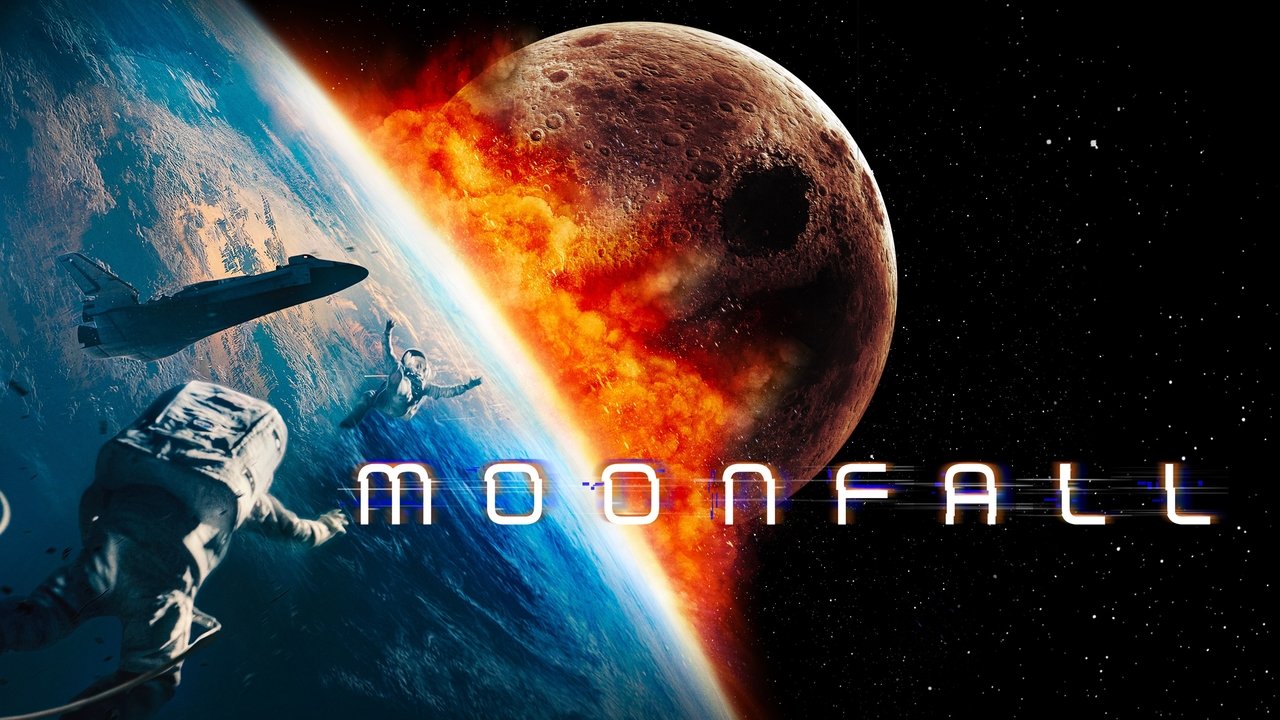
There’s a fascinating bit of trivia regarding the production: it’s actually one of the most expensive independent films ever made. Because it wasn't a major studio tentpole, Emmerich had the freedom to go as weird as he wanted. NASA even cooperated with the production, providing technical advice that I can only assume was ignored the moment someone suggested the Moon should have a "gravity hole." During the height of the pandemic, the production had to navigate strict protocols, which makes the sheer scale of the final product even more impressive. You can see where every cent of that $146 million went—mostly into making Michael Peña look concerned while standing in front of a green screen.
Ultimately, your enjoyment of Moonfall depends entirely on your tolerance for high-budget stupidity. If you’re looking for the hard sci-fi of Interstellar or the emotional weight of Arrival, you are in the wrong neighborhood. But if you want to see Patrick Wilson punch a moon-alien while Halle Berry tries to explain why we need to nuke the lunar surface, you’ve hit the jackpot. It’s a film that captures the chaotic, big-budget energy of the early 2020s—a moment where we were all a little bit unhinged and looking for any excuse to watch the world end from the safety of our couches. It’s a beautiful, expensive disaster, and I suspect we’ll be talking about it at midnight screenings for years to come.
Keep Exploring...
-
Stargate
1994
-
2012
2009
-

Justice League
2017
-
Power Rangers
2017
-
Transformers: The Last Knight
2017
-
Pacific Rim: Uprising
2018
-
Solo: A Star Wars Story
2018
-

Dark Phoenix
2019
-
Gemini Man
2019
-
Men in Black: International
2019
-
Star Wars: The Rise of Skywalker
2019
-

Terminator: Dark Fate
2019
-
Underwater
2020
-

Black Widow
2021
-
Eternals
2021
-
The Matrix Resurrections
2021
-
Black Adam
2022
-
Jurassic World Dominion
2022
-
Ant-Man and the Wasp: Quantumania
2023
-

Blue Beetle
2023