Purple Hearts
"A marriage of survival in a divided America."

I remember watching Purple Hearts on my couch while nursing a slightly-too-salty bowl of microwave popcorn, and a stray kernel got stuck in my teeth exactly when the lead characters started arguing about geopolitical ethics. It was an oddly fitting sensation—a bit of grit stuck in the middle of something otherwise designed for smooth consumption.
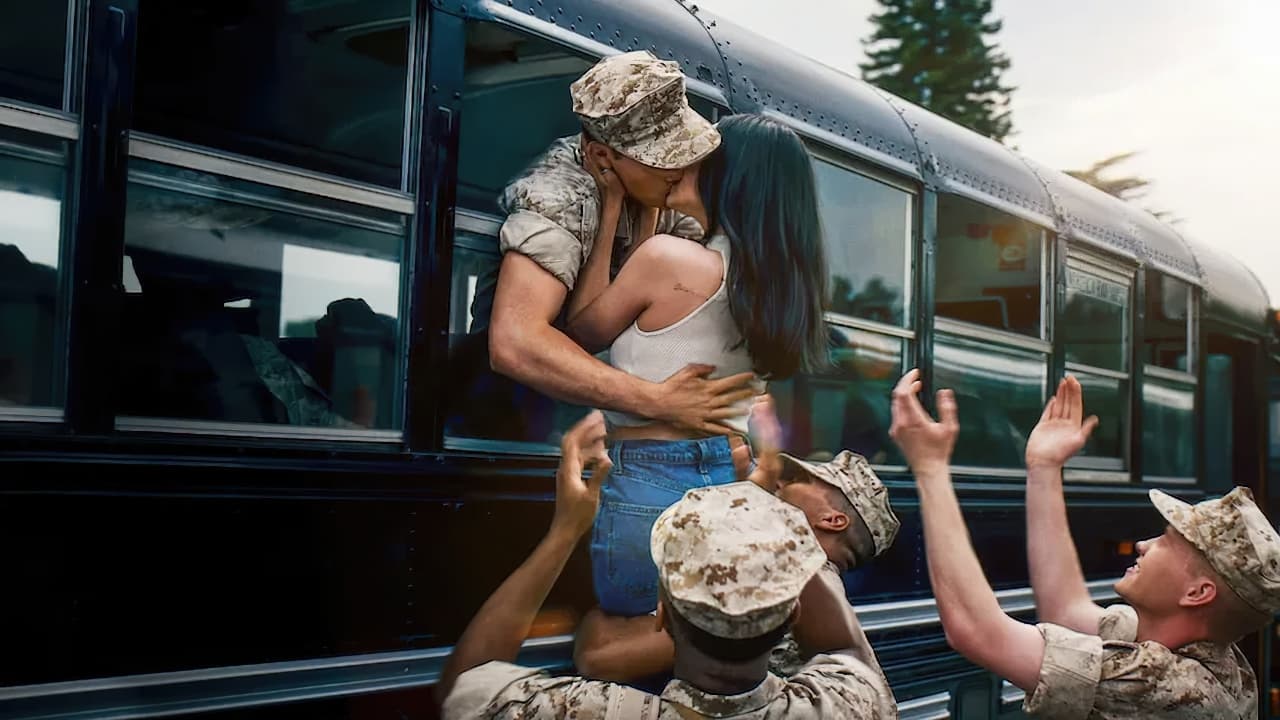
When Purple Hearts dropped on Netflix in the summer of 2022, it didn't just climb the charts; it parked there. Directed by Elizabeth Allen Rosenbaum, the film became a polarizing lightning rod, sparking heated TikTok debates and racking up hundreds of millions of viewing hours. Critics were often cold, but the "Purple Hearts" fandom became a digital fortress of support. It’s a fascinating specimen of contemporary streaming cinema: a movie that feels engineered by an algorithm yet breathes with a raw, desperate sincerity that keeps it from being just another digital disposable.
The Transactional Nature of Modern Love
At its core, the film presents a classic "marriage of convenience" trope, but it swaps the usual Regency-era inheritance drama for the grim realities of the American 2020s. Cassie Salazar, played by Sofia Carson, is a struggling singer-songwriter working multiple jobs while managing Type 1 diabetes. Luke Marrow, portrayed by Nicholas Galitzine, is a Marine with a troubled past and a debt to a former drug dealer. They don’t like each other—Cassie is a progressive firebrand; Luke is a stoic, traditionalist conservative—but they both need the military benefits that come with a wedding ring.
What I find intellectually gripping here isn’t the romance itself, but the underlying philosophical question: Is a lie still a lie if it’s told to stay alive? The film functions as a quiet indictment of a healthcare system so broken that a woman must commit federal fraud just to afford insulin. In this era of contemporary cinema, we see a shift away from "falling in love for love's sake" toward "falling in love because the alternative is bankruptcy." It’s a cynical starting point that the film tries to paint over with soft-focus lighting and pop ballads, but the transactional nature of their bond remains the most honest thing about it.
A Study in Friction
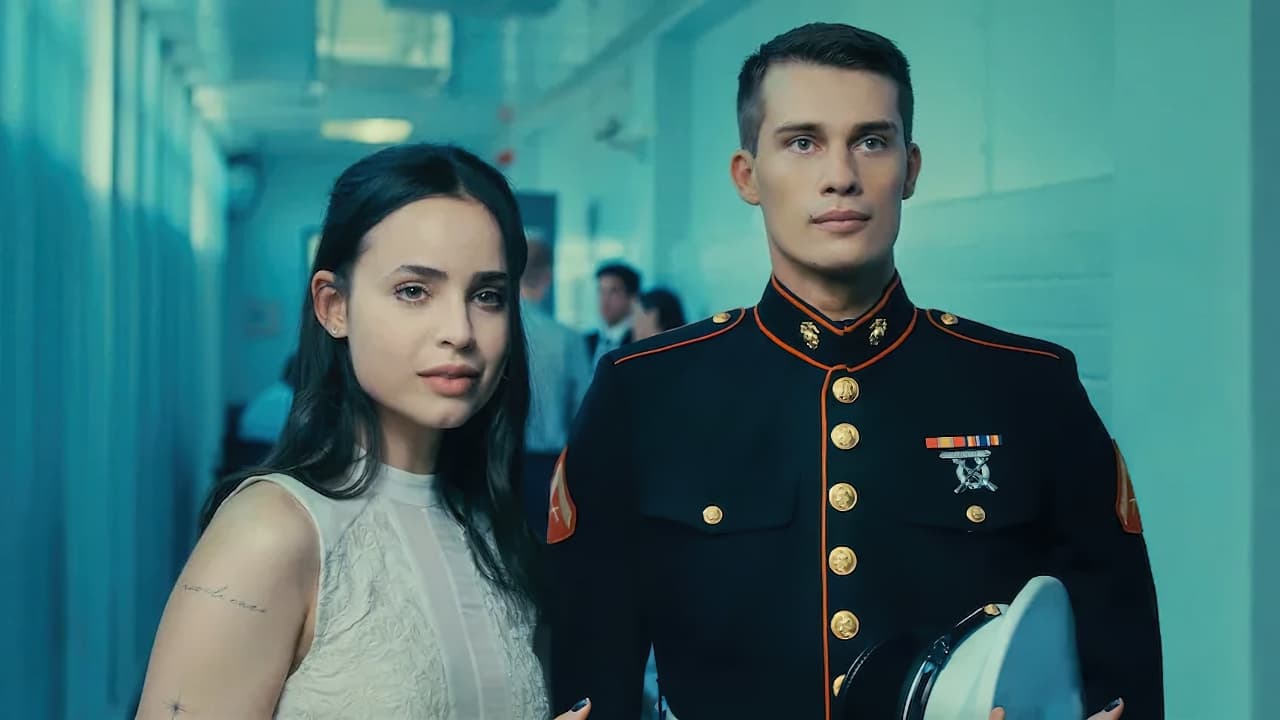
The chemistry between Sofia Carson and Nicholas Galitzine is the engine under the hood. Without them, the vehicle would stall. Carson brings a prickly, defensive energy to Cassie that feels earned; she’s a woman who has been told "no" by every institution she relies on. Galitzine, meanwhile, does a lot of heavy lifting with his eyes, conveying a man who has replaced his personality with a uniform to escape his demons.
Their ideological clashing—the "Blue" vs. "Red" divide—is where the film gets its most "now" flavor. It attempts to bridge the gap between two Americas through the lens of individual tragedy. I’ll be honest: the way the film handles these political differences is about as subtle as a drill sergeant at 5:00 AM, but there’s something fascinating about watching a movie try to find middle ground in a cultural climate that thrives on polarization. It asks if shared trauma can override shared prejudice, a theme that resonates deeply in our post-2015 social landscape.
The Cult of the Algorithm
The "cult" status of Purple Hearts is a purely modern phenomenon. It didn't find its audience in midnight screenings or dusty VHS bins; it found it through the "For You" page. Fans didn't just watch the movie; they lived in its aesthetic, fueled by Sofia Carson's original soundtrack. Songs like "Come Back Home" weren't just background noise—they were the emotional anchors that allowed the film to bypass critical scrutiny and head straight for the hearts of Gen Z.

Interestingly, the film's path to the screen was a long one. It was in development for years—originally intended for a theatrical release—before finding its home at Alloy Entertainment and eventually Netflix. This transition is a hallmark of the streaming era: stories that might have been "mid-budget theatrical dramas" a decade ago are now "streaming events" that bypass the box office to hit millions of living rooms simultaneously. The lack of a theatrical run didn't hurt its legacy; it arguably helped it, allowing the film to become a private, emotional experience for viewers who could rewatch their favorite scenes (usually the "fake" wedding night) until their internet throttled.
Cool Details
Sofia Carson wasn't just the star; she was deeply involved in the production, helping to write the songs and working closely with Elizabeth Allen Rosenbaum to shape Cassie’s character. The film’s title is a double entendre—it refers to the military medal, of course, but also the blending of "Red" (Republican) and "Blue" (Democrat) ideologies. To prepare for the role, Nicholas Galitzine underwent a mini-boot camp to ensure his posture and handling of equipment looked authentic to a Marine. Despite the heavy themes, the movie was a massive commercial success for Netflix, proving that the "adult contemporary romance" genre is still a powerhouse if you give it enough grit. * The script originally featured a much different ending, but test audience reactions (and the undeniable pull of a happy ending in the streaming age) steered it toward the conclusion we have now.
Purple Hearts is a movie that shouldn’t work as well as it does. It’s formulaic, occasionally clumsy, and leans hard on the "enemies-to-lovers" crutch. Yet, there’s an intellectual weight to its desperation that I couldn't shake. It captures a specific moment in time where survival and romance are inextricably linked, and it does so with a pair of leads who are genuinely compelling to watch. It might not be a masterpiece of cinema, but as a cultural artifact of the streaming era, it's a fascinating study of what we're willing to believe in when the world feels like it's falling apart.

Keep Exploring...
-

All the Bright Places
2020
-

Gabriel's Inferno
2020
-
Weathering with You
2019
-
The Longest Ride
2015
-

Forever My Girl
2018
-
Love, Simon
2018
-

Midnight Sun
2018
-

Five Feet Apart
2019
-

The Art of Racing in the Rain
2019
-

Clouds
2020
-
Gabriel's Inferno: Part II
2020
-
Gabriel's Inferno: Part III
2020
-

I Still Believe
2020
-
Life in a Year
2020
-

CODA
2021
-

Where the Crawdads Sing
2022
-
Past Lives
2023
-
Everything, Everything
2017
-
The Big Sick
2017
-
The Ballad of Buster Scruggs
2018