Spiderhead
"Happiness is just a dosage away."

There is a specific brand of "Netflix Original" sheen that usually signals a movie is destined to be forgotten by the time your next credit card statement arrives. It’s that glossy, high-framerate, slightly-too-clean aesthetic that feels less like a cinematic event and more like a high-end screensaver. Spiderhead (2022) arrived on the platform in a truly bizarre cultural window: it dropped just weeks after Joseph Kosinski had saved the theatrical experience with Top Gun: Maverick. Seeing the man who perfected the visceral, big-screen roar of a jet engine pivot to a claustrophobic, pharmaceutical chamber piece was jarring, to say the least. It felt like watching a star athlete follow up a Super Bowl win by playing a very intense game of Minesweeper.

I watched this while eating a bowl of cereal that had gone slightly soggy because I spent ten minutes trying to remember my Netflix password, and honestly, that limp texture perfectly matched the film's third act. It’s a movie that starts with a fascinating "what if" and ends with a "so what?"
The Algorithm’s Golden Boy
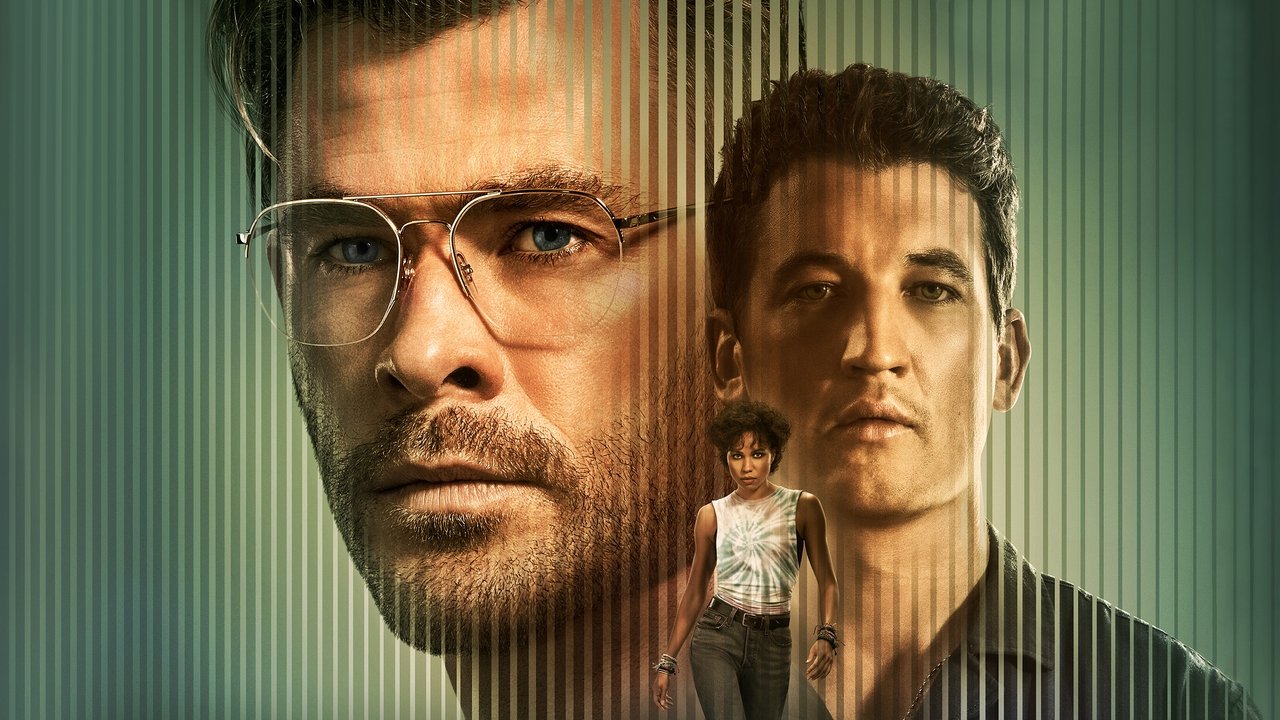
The real reason anyone clicked "play" on this was Chris Hemsworth. In the current era of franchise dominance, we’ve seen the "Chris" quartet (Evans, Pratt, Pine, and Hemsworth) desperately try to prove they exist outside of their spandex suits. In Spiderhead, Hemsworth plays Steve Abnesti, a pharmaceutical visionary who runs a luxury penitentiary where inmates trade prison bars for a "MobiPak"—a device surgically attached to their lower backs that doses them with mood-altering drugs.
Hemsworth is actually a better character actor trapped in a superhero's body. As Abnesti, he’s doing a delightful, jittery riff on the "Cool Tech Bro" archetype. He wears leisure suits, listens to yacht rock (a fantastic soundtrack choice, by the way), and treats his prisoners like "coworkers." He’s the guy who tells you the company is a "family" right before he cuts your health insurance. It’s a performance that carries the movie through its slower stretches. He’s charismatic, terrifying, and pathetic all at once—a man who uses a drug called "Luvactin" to force people into intimacy because he clearly doesn't know how to earn it himself.
A Chemical Cocktail of Vibes

The sci-fi premise is pulled from a George Saunders short story, and you can feel that literary DNA in the early scenes. The drugs have names like "Verbaluce" (which makes you talk like a poetic genius) and "Laffodil" (self-explanatory). It’s a classic sci-fi "What If": What if we could solve the "problem" of human nature with a dial?
Miles Teller plays Jeff, an inmate haunted by a tragic car accident, and Jurnee Smollett (who was so good in Lovecraft Country) plays Lizzy, his fellow experimental subject. They spend most of the movie in a Brutalist concrete bunker that looks like a billionaire’s basement, under the watchful eye of Abnesti and his assistant Mark, played by Mark Paguio. The visual realization of the world is actually quite effective. Kosinski is a master of clean lines and architectural framing (look at Oblivion or TRON: Legacy), and he makes the Spiderhead facility feel both utopian and sterile. It’s a world where the horror is hidden behind bright LED lights and mid-century modern furniture.
The problem is that the film doesn't seem to know whether it wants to be a dark psychological thriller or a quirky comedy. One minute, Jeff is being forced to watch a horrific event while under the influence of "Darkenfloxx" (the drug that induces pure misery), and the next, Hemsworth is dancing around to Hall & Oates. The tonal shifts are so violent they should have come with their own MobiPak dosage.
The Streaming Era Fatigue
In the era of "content" over "cinema," Spiderhead feels like a victim of its own delivery system. In 1995, this would have been a mid-budget thriller that found a cult following on cable. In 2022, it was buried under a mountain of true-crime documentaries and reality shows within a week. It tackles big themes—consent, the ethics of the pharmaceutical industry, and whether we are more than the sum of our chemicals—but it does so in a way that feels oddly superficial.
The screenplay, penned by Paul Wernick and Rhett Reese, brings some of that Deadpool snark to the proceedings, but it often undercuts the genuine dread that the premise suggests. By the time we get to the third act, the movie abandons its "Black Mirror" roots and devolves into a standard "escape the facility" action flick. The ending feels like it was written by an AI trying to satisfy a focus group of one. It’s a shame, because the central performances from Teller and Smollett are grounded and moving, even when the plot becomes a bit of a cartoon.
Ultimately, Spiderhead is a fascinating curiosity from a director who was simultaneously at the peak of his powers elsewhere. It’s worth a watch for Hemsworth's unhinged energy and the slick production design, but don't expect it to linger in your system once the credits roll.
It’s a sleek, well-acted sci-fi experiment that ultimately lacks the courage of its convictions. It’s perfectly fine for a Tuesday night when you’re too tired to commit to a three-hour epic, but it fails to leave a lasting mark. Spiderhead asks how far we’d go to fix human nature, but it turns out the answer is "about an hour and forty-seven minutes."


Keep Exploring...
-

2:22
2017
-
The Discovery
2017
-

Anon
2018
-

Extinction
2018
-

Kin
2018
-
Mute
2018
-
Replicas
2018
-

Tau
2018
-

Captive State
2019
-

Color Out of Space
2020
-

Synchronic
2020
-

Awake
2021
-

Outside the Wire
2021
-

Voyagers
2021
-
Hypnotic
2023
-

Elevation
2024
-

Hotel Artemis
2018
-
In the Shadow of the Moon
2019
-
Oxygen
2021
-

Crimes of the Future
2022