Turning Red
"Cringe is the new cool."

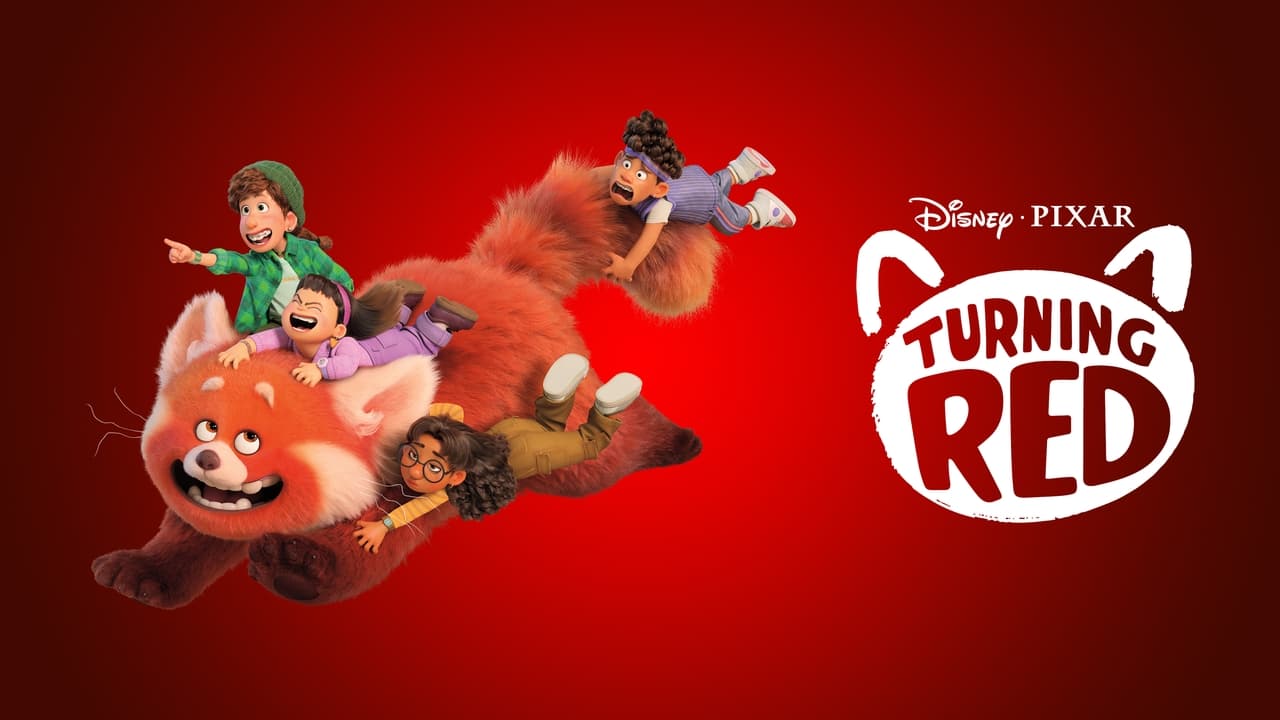
The air in 2002 Toronto smells like maple syrup, desperation, and the faint, ozone-heavy scent of a Tamagotchi that is definitely about to die. I watched Turning Red while wearing a pair of itchy wool socks that were two sizes too small, and honestly, that low-grade physical discomfort was the perfect sensory accompaniment for a movie that captures the skin-crawling awkwardness of being thirteen better than any horror film ever could. While Pixar has spent decades making us cry over toys and trash-compacting robots, director Domee Shi decided it was time for us to sweat through the sheer embarrassment of our own adolescence.
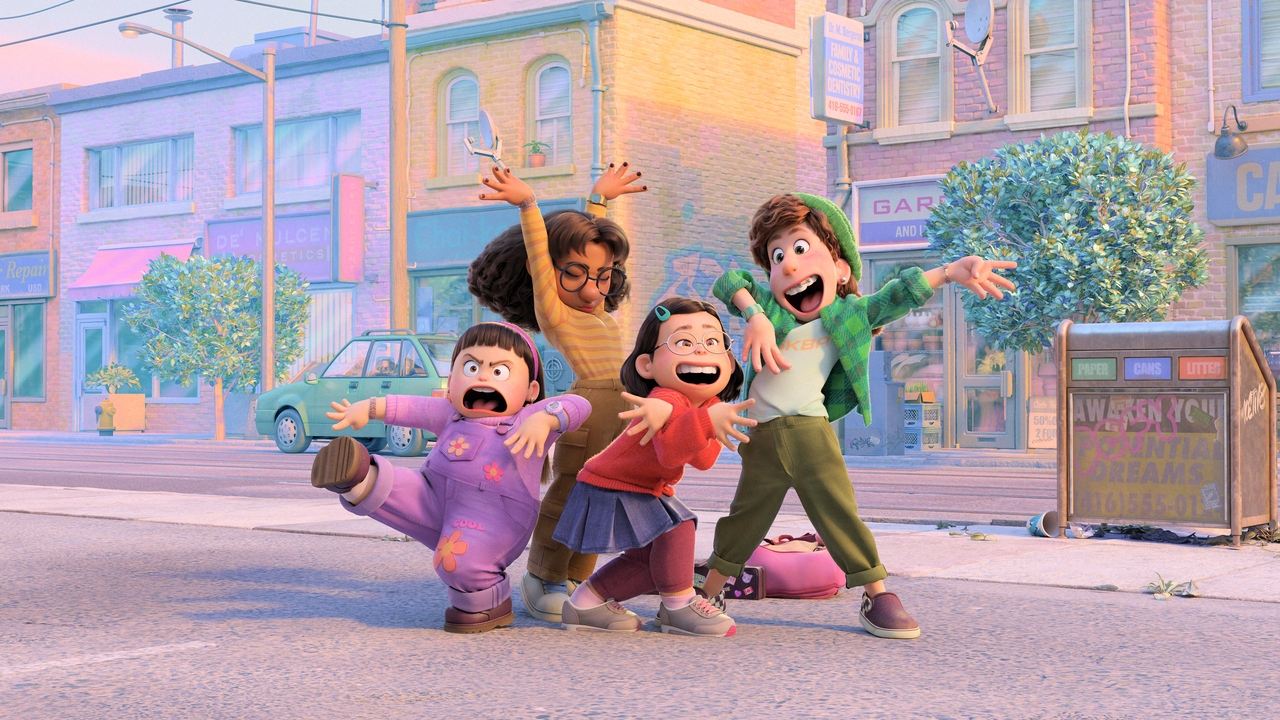
The 4*Town Fever Dream
In a decade defined by franchise dominance and "safe" storytelling, Turning Red feels like a joyful glitch in the system. Released directly to Disney+ during a tail-end pandemic pivot that arguably robbed it of a billion-dollar box office run, the film instead became a digital lightning rod. It bypassed the theater and went straight into the bloodstream of the internet, sparking a bizarrely heated discourse about "relatability." I found myself arguing with strangers online who claimed a Chinese-Canadian girl turning into a red panda was "too niche," as if we haven't all spent the last thirty years pretending we can relate to a clownfish looking for his son.
The heart of the comedy here isn't just the "poof" of the transformation; it’s the hyper-specific, rhythmic chaos of the friendship between Mei (Rosalie Chiang) and her squad. The way they obsess over the boy band 4Town—a group crafted with such precision by Billie Eilish and Finneas that 4Town is unironically better than most real-life boy bands—is a masterclass in comedic timing. The screaming, the secret notebooks, the synchronized posing; it’s a specific brand of female-adolescent mania that cinema usually mocks. Here, it’s celebrated as a superpower.
Slapstick and Sovereignty
Domee Shi brings an "anime-on-espresso" energy to the animation that breaks the standard Pixar mold. When Mei gets excited, her eyes don't just sparkle; they turn into shimmering pools of white light. When her mother, Ming (Sandra Oh), looms over the school fence like a literal kaiju of maternal anxiety, the film leans into a visual language that feels fresh and frantic. Sandra Oh’s Ming is basically a horror movie villain who just needs a hug, and her vocal performance oscillates between terrifyingly poised and heartbreakingly fragile with the flick of a switch.
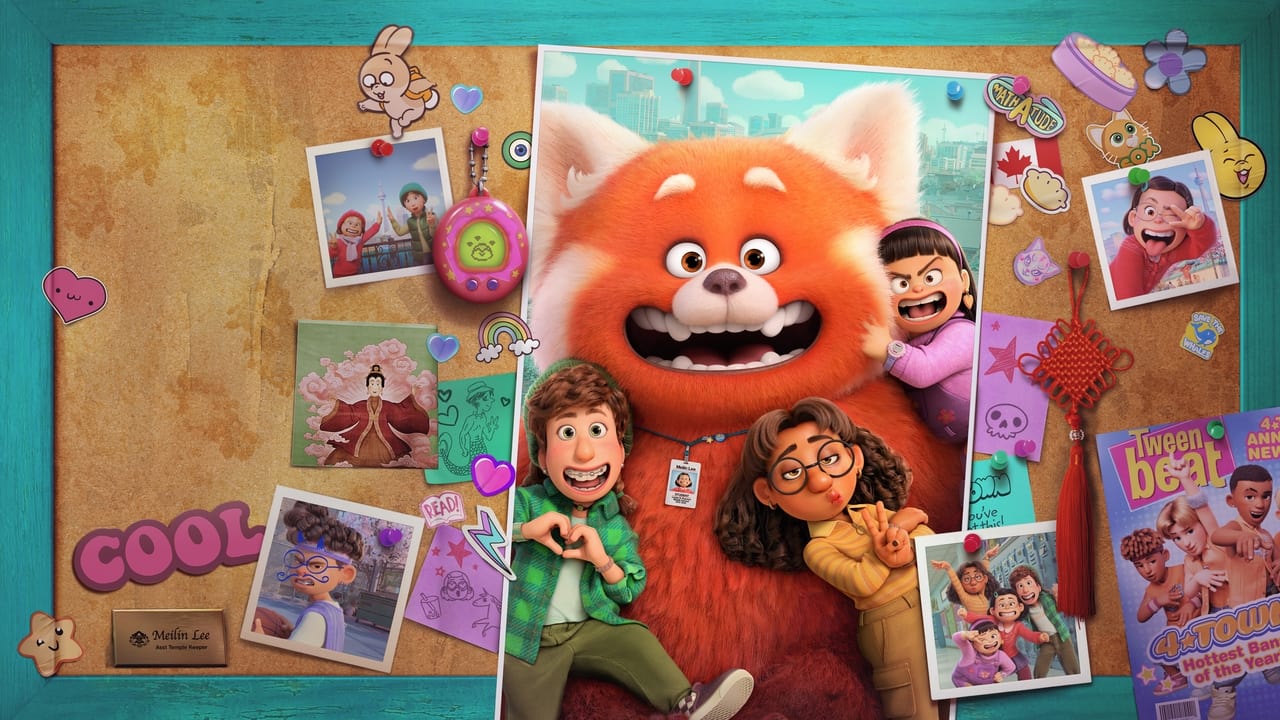
The physical comedy of the panda is where the film earns its "5-minute test" credentials. Watching a giant, fluffy, red beast try to hide under a bed or navigate a middle school hallway is inherently funny, but it’s the weight of the animation that sells it. You feel the floorboards groan. You feel the heat of Mei's shame. It’s a literalization of the "beast" inside all of us—that messy, loud, emotional part of ourselves that our parents (and society) often ask us to tuck away. "Turning Red" is the first Pixar movie that actually understands that 13-year-olds are terrifying, moist, and obsessive, and it refuses to apologize for it.
The Streaming Cult of the Red Panda
Despite its "straight-to-video" release strategy—a move that initially felt like a slight to the creators—the film has achieved a sort of instant cult status. It didn't need the box office to prove its worth; it needed the fan art, the TikTok covers of "Nobody Like U," and the passionate defense of its "period talk." Yes, the movie mentions menstruation. No, the world did not end. In fact, it’s one of the most refreshing "adult" moments in a family film because it treats a universal human experience with the same matter-of-fact humor as a slip on a banana peel.
The "cult" of Turning Red lives in the details. It’s in the background of the 2002 Toronto streets, the specific stickers on a locker, and the way the girls treat a drawing of a cute boy like a sacred relic. It’s a film that was "ahead of its time" despite being released two years ago, simply because it dared to speak specifically rather than generically. It’s a movie for anyone who has ever looked in the mirror and realized that the person they are becoming is a lot louder, hairier, and weirder than the person their parents expected.
The Panda in the Room (Cool Details)
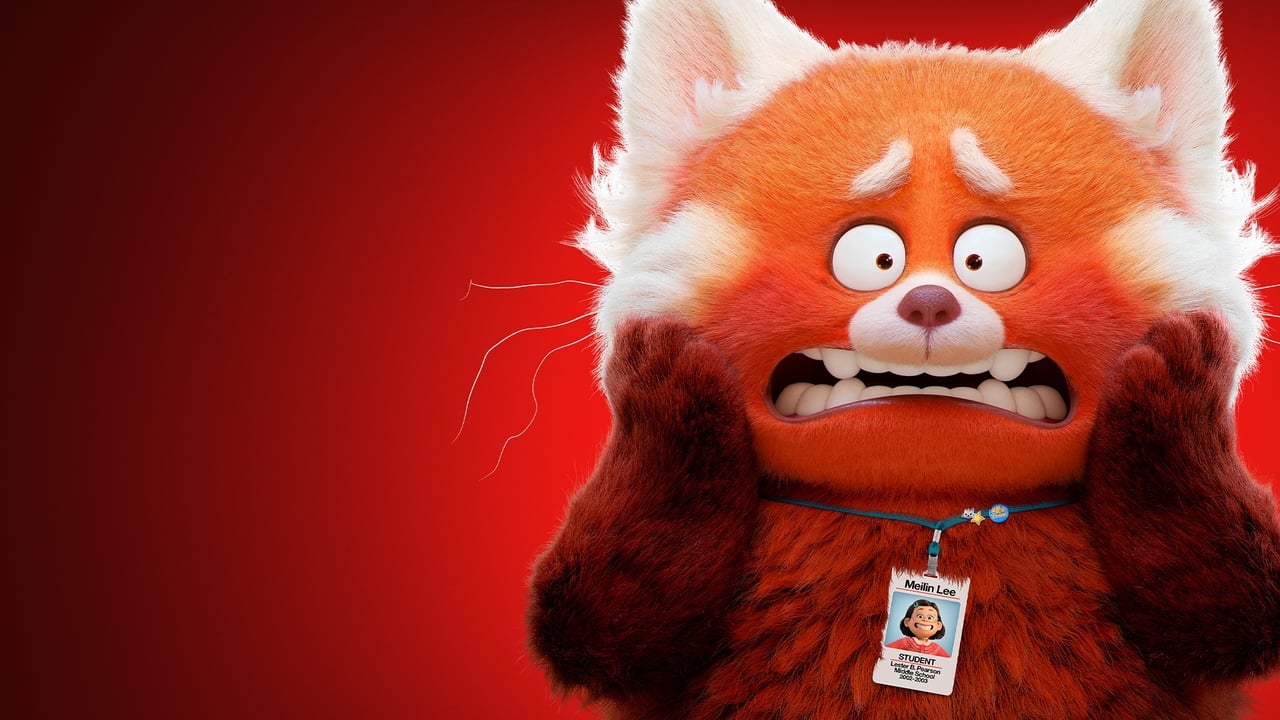
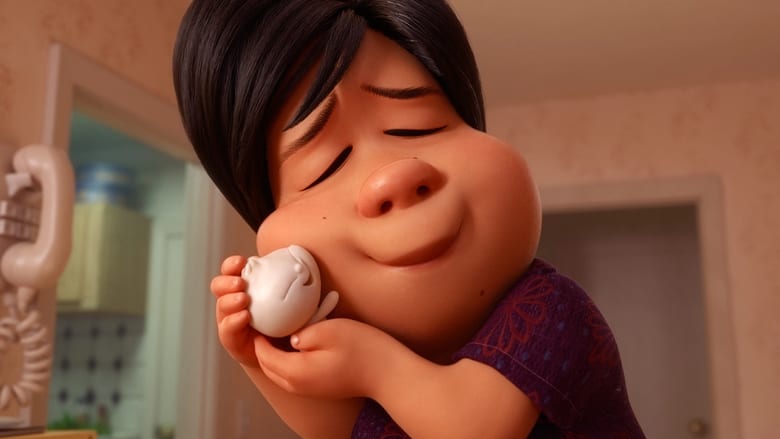
The 4Town songs were written by Billie Eilish and her brother Finneas, who also voices one of the band members. Look closely at Mei's flute case; she has a sticker of the red panda from Domee Shi's previous Oscar-winning short, Bao. The "poof" smoke clouds when Mei transforms were inspired by 90s magical girl anime like Sailor Moon. The animators actually had to "de-animate" some scenes because the movements were too smooth; they wanted a choppier, more expressive look reminiscent of hand-drawn styles. In the scene where Mei is drawing in her notebook, the sketches were actually drawn by the film's story artists to look authentically like a thirsty thirteen-year-old's doodles. * The movie is littered with 2002-specific Easter eggs, including a very recognizable blue-and-yellow video store that we all definitely miss.
Ultimately, Turning Red is a vibrant, loud, and incredibly funny celebration of the messiness of growing up. It manages to tackle the heavy lifting of generational trauma and bodily autonomy without ever losing its sense of play. Whether you’ve ever been a thirteen-year-old girl or you’ve just been a human who felt a little too big for your own skin, this panda is for you. It’s a high-energy reminder that the best parts of us are often the parts we're most afraid to show the world.
Keep Exploring...
-
Onward
2020
-
Trolls World Tour
2020
-

Encanto
2021
-

Luca
2021
-
Elemental
2023
-
Bao
2018
-

Klaus
2019
-
Home
2015
-

Trolls
2016
-
Abominable
2019
-
Frozen II
2019
-
Soul
2020
-
The Croods: A New Age
2020
-

Hotel Transylvania: Transformania
2022
-

Minions: The Rise of Gru
2022
-
Puss in Boots: The Last Wish
2022
-
Nimona
2023
-
The Super Mario Bros. Movie
2023
-

Kung Fu Panda 4
2024
-

Moana 2
2024