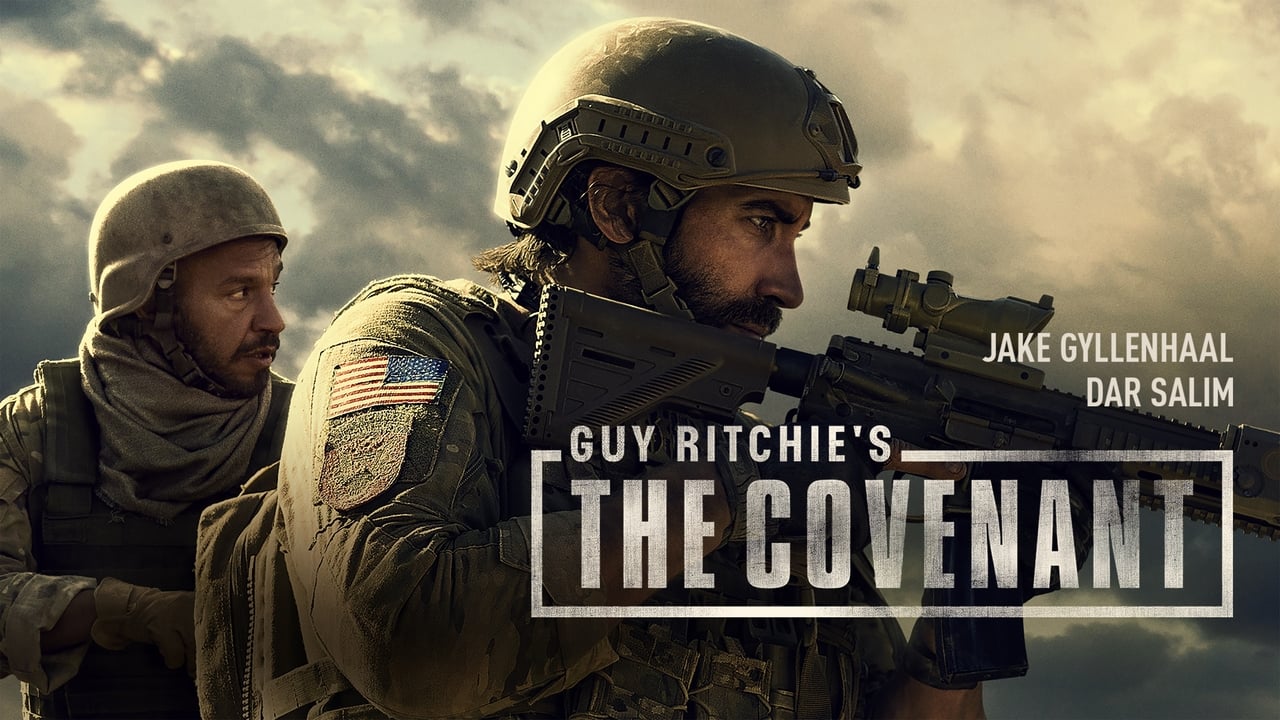
Guy Ritchie's The Covenant
"A debt paid in blood and dirt."
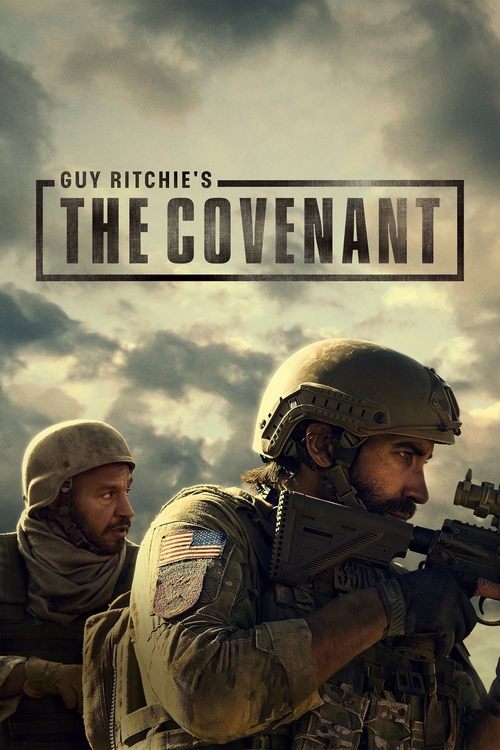
If you’d told me ten years ago that the man responsible for the hyper-caffeinated, "patter-heavy" dialogue of Snatch (2000) would eventually direct one of the most somber and restrained war dramas of the 2020s, I would’ve assumed you’d spent too much time at a Guy Ritchie-themed pub crawl. Yet, here we are. I watched this film on a Tuesday night while eating a bag of salt-and-vinegar chips that were so stale they had the structural integrity of cardboard, and honestly, the grit of the movie made me forget I was basically chewing on seasoned drywall.
A Different Kind of Ritchie
When Guy Ritchie attached his name to the title—officially Guy Ritchie’s The Covenant—it felt like a branding exercise, perhaps to distinguish it from the various horror flicks and actioners sharing the name. But the film itself is anything but a standard Ritchie romp. Gone are the freeze-frame introductions and the playful non-linear editing. In their place is a staggering amount of silence and a story that feels like a raw nerve.
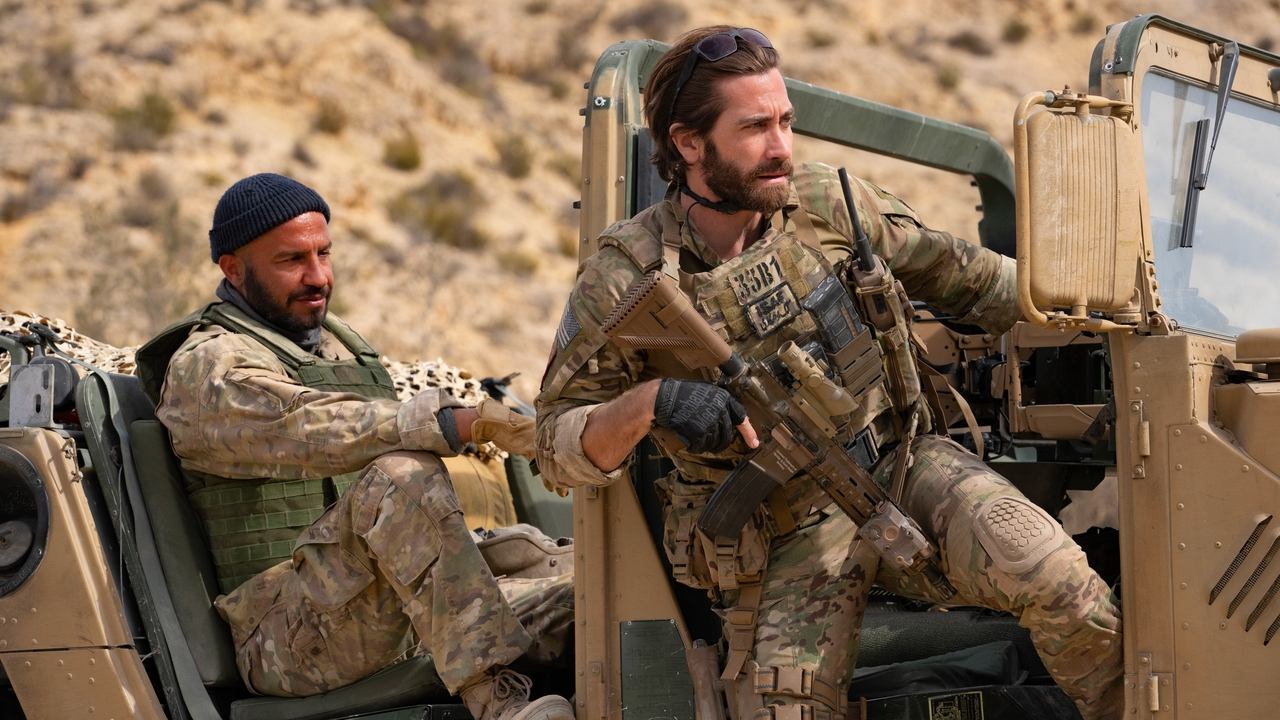
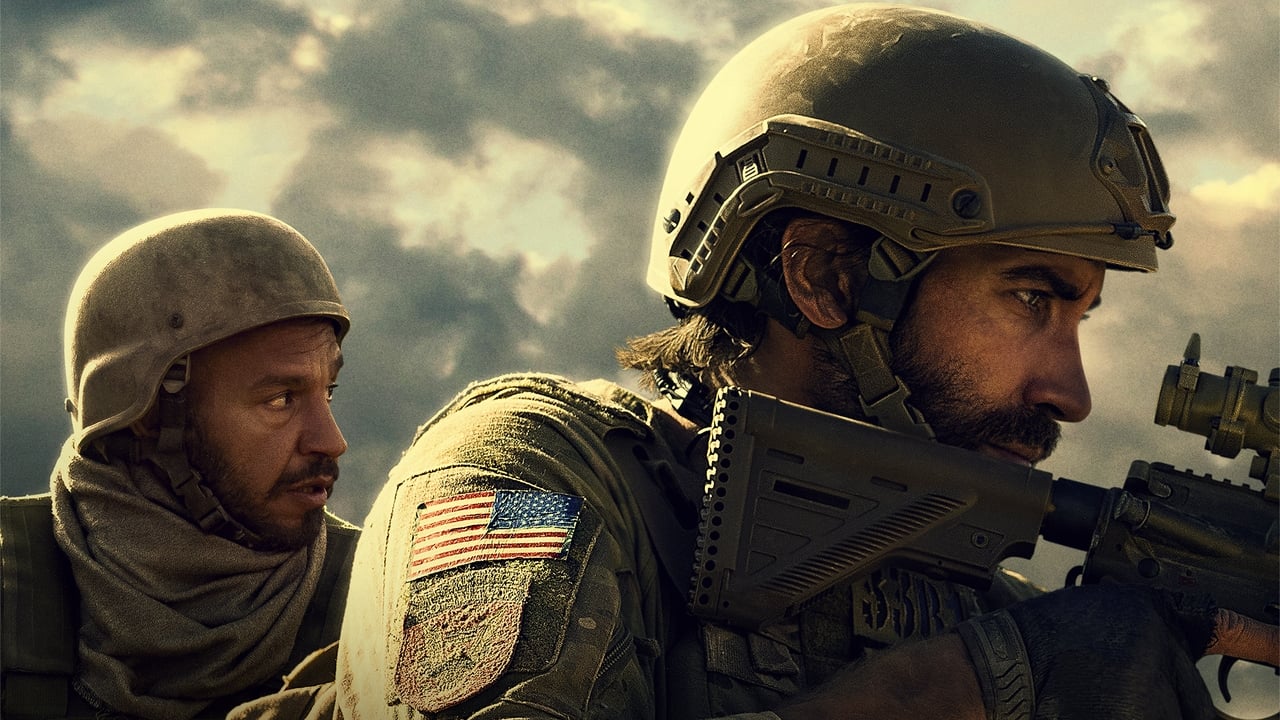
The setup is deceptively simple: Jake Gyllenhaal (fresh off his high-energy turn in Ambulance) plays Master Sergeant John Kinley, a man whose life is saved by his Afghan interpreter, Ahmed, played by the phenomenal Danish actor Dar Salim. When the US military fails to provide the visa promised to Ahmed, Kinley realizes that the "covenant" isn't a legal document—it's a moral debt that he has to settle personally.
Ritchie finally learned that silence is louder than a Cockney monologue, and the middle act of this film proves it. For nearly forty minutes, there is almost no dialogue as Ahmed hauls a wounded Kinley across the brutal terrain of Afghanistan. It is a grueling, exhausting piece of filmmaking that emphasizes the physical weight of loyalty.
The Physics of the Slog
Action movies in the streaming era often feel weightless—too much CGI blood and "The Volume" LED backgrounds that make everything look like a high-end screensaver. Guy Ritchie and his cinematographer Ed Wild (who worked on London Has Fallen) wisely avoided that trap. They filmed in the mountainous regions of Alicante, Spain, which stands in beautifully for the Hindu Kush. You can feel the heat, the dust, and the sheer agony of the trek.
The action choreography here isn't about looking "cool." It’s about survival. The shootouts are chaotic and terrifying, focusing on the claustrophobia of being ambushed in a valley. The middle forty minutes is essentially a high-stakes hiking simulator with guns, and I mean that as a high compliment. There’s a specific sequence involving a cart and a mountain pass that had me gripping my sofa cushions. It reminds us that Jake Gyllenhaal is at his best when he’s playing characters pushed to the absolute brink of sanity and physical endurance.
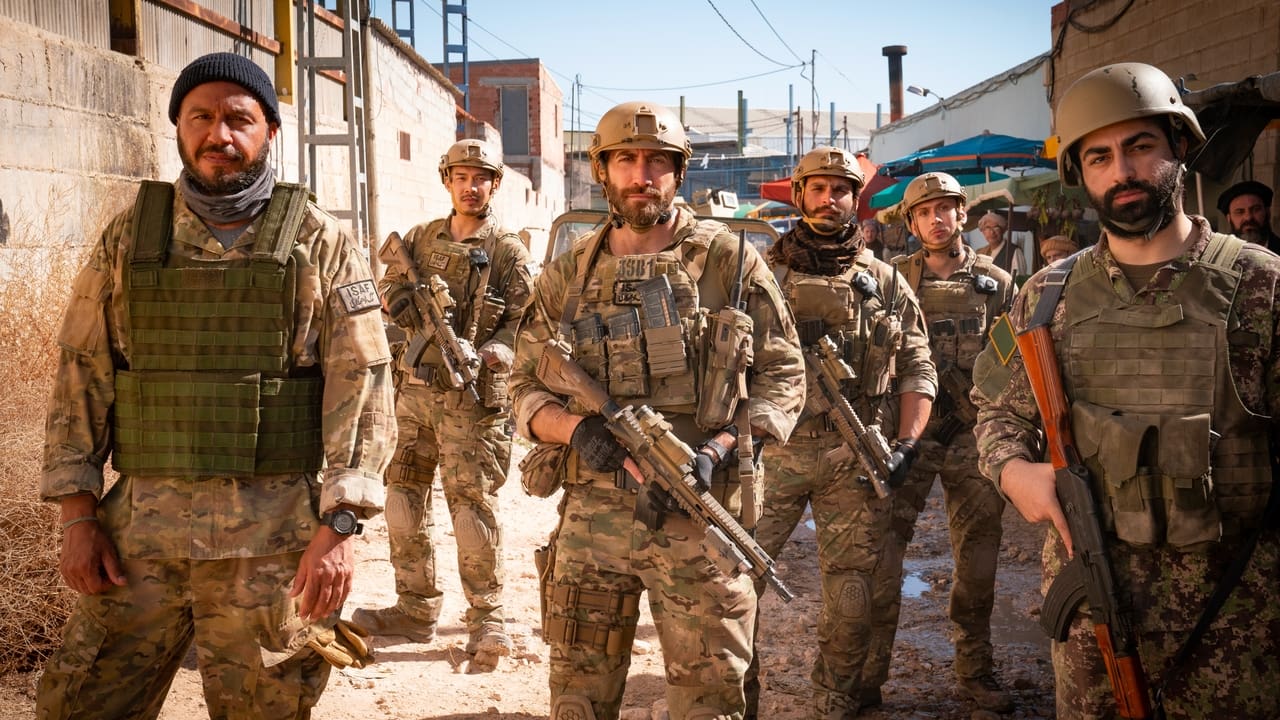
However, the real soul of the film is Dar Salim. While Sean Sagar, Jason Wong, and Rhys Yates provide solid support as Kinley’s team, the movie belongs to the quiet dignity Salim brings to Ahmed. He isn't a sidekick; he is the protagonist of his own tragic epic, operating in a world where a single mistake results in a death sentence for his entire family.
Beyond the Battlefield
What makes The Covenant resonate so deeply in our current cultural moment is the shadow of the 2021 withdrawal from Afghanistan. While the film doesn't explicitly mention the chaotic scenes at the Kabul airport, it’s impossible to watch it without thinking about the thousands of real-life interpreters left behind. It engages with the current conversation about bureaucratic failure and personal responsibility without feeling like a preachy political lecture.
Interestingly, the script by Ritchie and Marn Davies was reportedly quite thin when production began. Apparently, Jake Gyllenhaal and Guy Ritchie agreed to discover the dialogue on set through improvisation, stripping away anything that felt too "movie-ish." This explains why the film feels so much more authentic than Ritchie’s usual fare. It’s a "cult classic" in the making—a film that underperformed at the box office ($21 million against a $55 million budget) but has found a massive, appreciative audience on streaming platforms. It’s the kind of movie people "discover" on a Friday night and immediately text their friends about.
A few cool details you might have missed:
The film was originally titled The Interpreter, but changed late in the game. Dar Salim is a massive star in Denmark but was relatively unknown to US audiences before this, which adds to the feeling that Ahmed is a "real" person rather than a recognizable celebrity. The production used real veterans as extras and consultants to ensure the tactical movements looked legitimate. The score by Chris Benstead uses a jarring, droning cello that ratchets up the anxiety levels to almost unbearable heights.
This isn't just a "war movie"; it's a film about the crushing weight of a promise. It marks a fascinating evolution for a director who started his career making us laugh at criminals and has now made us weep for soldiers. If you missed this in the theater because you were tired of franchise fatigue, do yourself a favor and find it on your favorite service. It’s a heavy watch, but it’s one that will stick with you long after the credits roll and you’ve finished your stale chips.
Keep Exploring...
-
Wrath of Man
2021
-
The Ministry of Ungentlemanly Warfare
2024
-
13 Hours: The Secret Soldiers of Benghazi
2016
-
Extraction
2020
-
Tenet
2020
-

Prey
2022
-
Extraction 2
2023
-
Fast X
2023
-
Mission: Impossible - Dead Reckoning Part One
2023
-
Operation Fortune: Ruse de Guerre
2023
-
The Equalizer 3
2023
-
Road House
2024
-

Ballerina
2025
-
Mission: Impossible - The Final Reckoning
2025
-
One Battle After Another
2025
-

The Man from U.N.C.L.E.
2015
-
Land of Bad
2024
-
Midway
2019
-
Greenland
2020
-

Greyhound
2020