Infinity Pool
"Watch yourself die for a small fee."
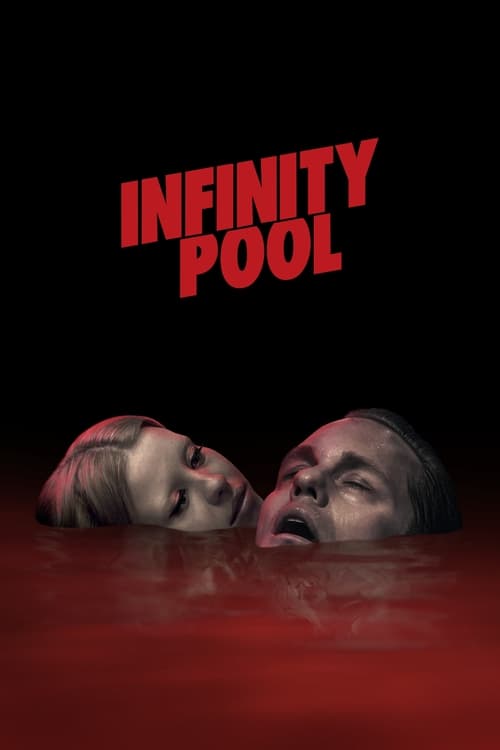
I’ve always felt that all-inclusive resorts are inherently sinister—there’s something about those plastic wristbands that feels less like a pass to a buffet and more like a tag on a morgue toe. Brandon Cronenberg’s Infinity Pool takes that nagging social anxiety and turns it into a neon-soaked, drug-fueled nightmare that makes a weekend at the Overlook Hotel look like a breezy spa retreat. I watched this on my couch while wearing a weighted blanket that was slightly too heavy, and the mounting physical claustrophobia paired with the onscreen hallucinations made me feel like I was losing my grip on reality right along with the characters.
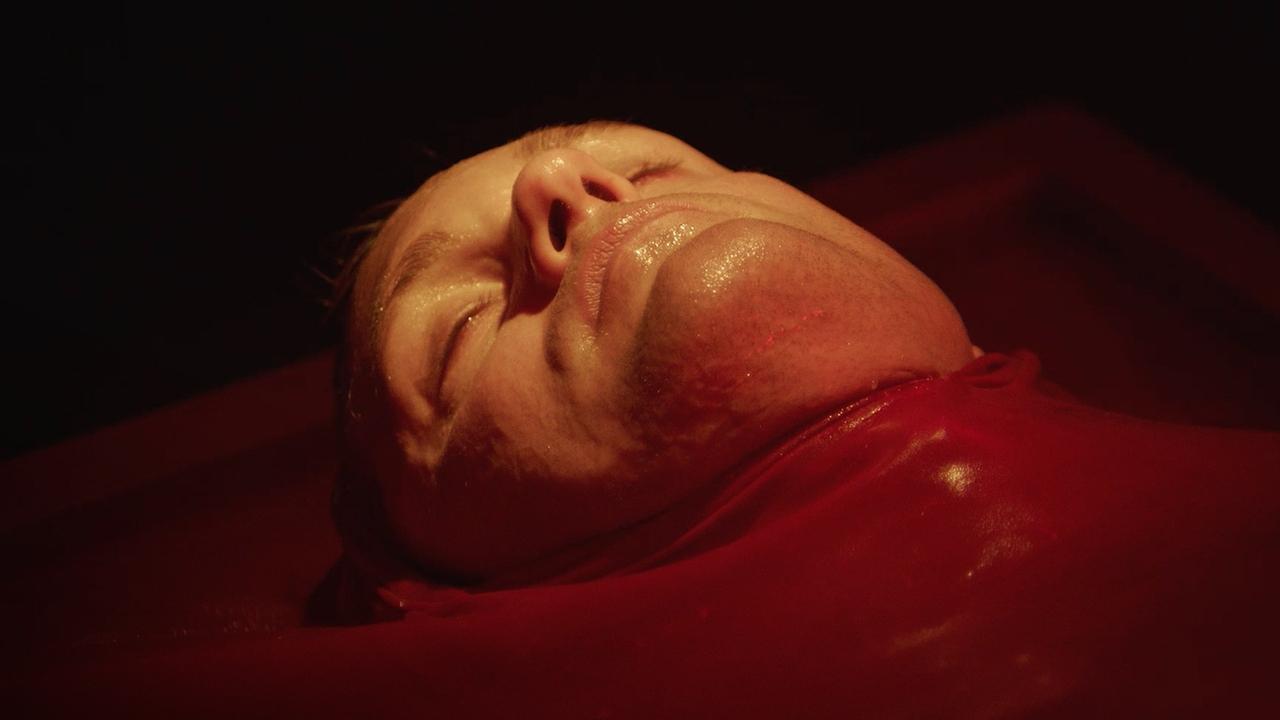
Released in early 2023, Infinity Pool landed squarely in our current "eat the rich" cinematic era. We’ve seen a lot of this lately—from The White Lotus to Triangle of Sadness—but while those projects use a scalpel to dissect the wealthy, Cronenberg uses a rusty meat cleaver. It’s a film that perfectly captures our modern obsession with consequence-free living and the terrifying disconnect of the ultra-wealthy in an increasingly polarized world.
The Goth-ification of Horror
The story follows James Foster (Alexander Skarsgård, who spent most of The Northman looking like a god and spends most of this movie looking like a damp paper towel) and his wife Em (Cleopatra Coleman, from Last Man on Earth). James is a "novelist" who hasn't written a book in six years and is essentially a glorified pet for his wealthy wife. They’re vacationing in the fictional country of Li Tolqa, a place that looks beautiful but carries a heavy "stay inside the fence" vibe.
Enter Gabi, played by Mia Goth. If you haven't been paying attention to horror lately, Goth has become the genre's reigning chaotic empress after her turns in Ti West’s X and Pearl. Here, she starts as a seductive fan of James’s forgotten book and quickly devolves into a screaming, gun-toting harpy of the highest order. Mia Goth screaming "Jaaaaaaaames" from the hood of a moving car is the new "Here's Johnny!"—it is unhinged, hilarious, and deeply unsettling.
When a tragic car accident occurs outside the resort grounds, James is introduced to the local justice system: for every capital crime, the penalty is death. However, because Li Tolqa is a tourist trap for the elite, they’ve developed "the doubling procedure." For a hefty sum, the state will create a sentient clone of you—memories and all—and you can sit in the gallery and watch "yourself" be executed. It’s a brilliant, gross-out hook that asks: once you’ve watched yourself die and realized you can get away with anything, who do you become?

Blood, Masks, and Indie Ingenuity
Despite the high-concept sci-fi premise and the hallucinatory visuals, this was actually a remarkably lean production. With a budget of just $4.5 million, Cronenberg and his cinematographer Karim Hussain (who also shot Cronenberg’s Possessor) had to be incredibly resourceful. They didn't rely on massive CGI builds; instead, they used practical in-camera effects, weird lenses, and macro photography of shifting liquids to create the film’s "tripping" sequences.
The "Li Tolqa" masks—distorted, melting human faces—are already becoming cult icons. They were designed to look like a botched version of the doubling procedure, and they add a layer of folk-horror dread to the sci-fi setting. It’s a testament to indie filmmaking: Brandon Cronenberg isn't just 'David's son' anymore; he’s the guy making his legendary father look like a cautious optimist. While David Cronenberg gave us "long live the new flesh" in Videodrome, Brandon seems more interested in how the "old flesh" rots when it has too much money.
The production actually faced a real-world hurdle that felt very "contemporary cinema": the battle for an R-rating. The initial cut was slapped with an NC-17 by the MPAA for "graphic violence and sexual content." Cronenberg had to appeal and recut the film to ensure a theatrical release, highlighting the ongoing tension between provocative independent visions and the rigid gatekeeping of traditional American distribution.

Why It Matters Right Now
In an era of franchise fatigue and safe, "elevated" horror that tries too hard to be a metaphor for grief, Infinity Pool is refreshingly mean-spirited. It doesn't want to be your friend, and it certainly doesn't want to give you a "satisfying" ending. It reflects a very specific post-pandemic nihilism—the feeling that the world is breaking, the rich are playing by a different set of physics, and the rest of us are just watching the execution from the sidelines.
The sound design by Tim Hecker deserves a shout-out too. It’s a percussive, industrial drone that makes your teeth ache. It matches the film’s descent from a prestige vacation drama into a surrealist slasher. By the time the third act rolls around and the group of "zombies" (wealthy tourists who return every year to commit crimes and watch their clones die) starts losing their minds, you realize this isn't just a movie about clones. It’s a movie about the death of the soul through sheer boredom.
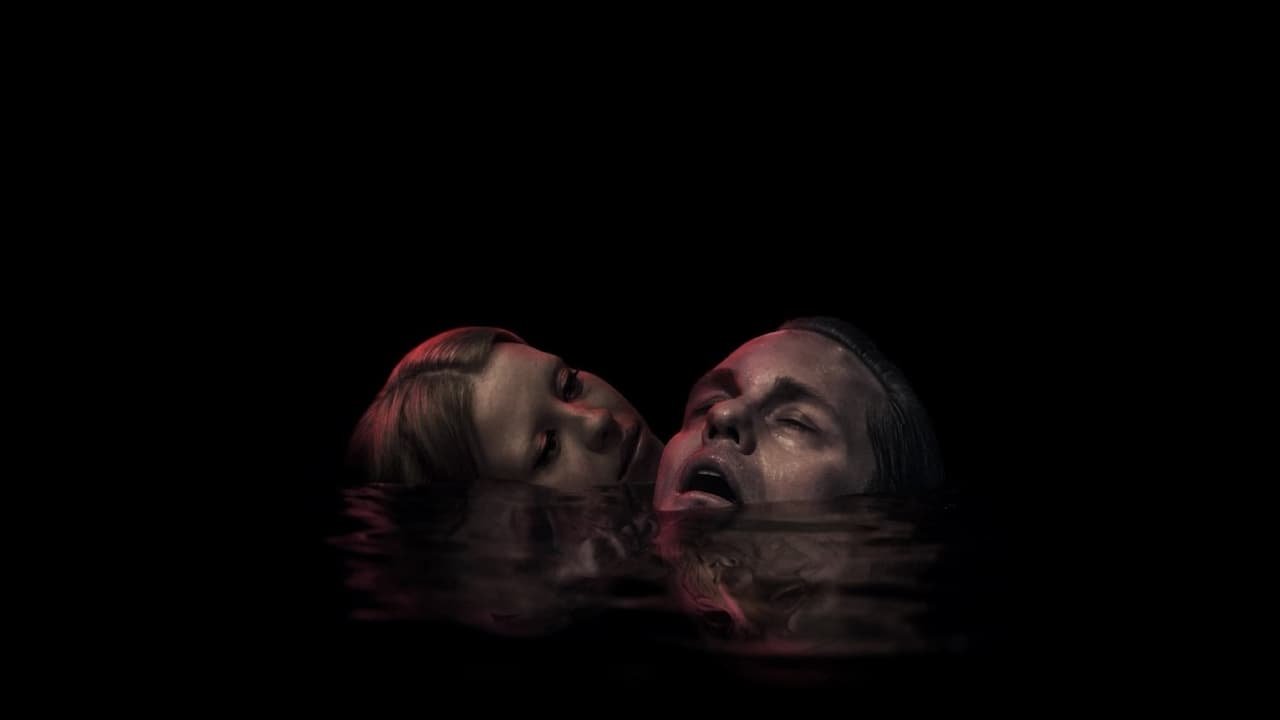
Infinity Pool is a bold, gooey, and deeply cynical trip that confirms Brandon Cronenberg as a major voice in modern horror. It’s not for the faint of heart, nor is it for people who want a clear-cut hero to root for. But if you’ve ever looked at a billionaire and wondered if they’re even the same species as you, this film provides a terrifying, blood-soaked answer. Just maybe skip the salt and vinegar chips while watching—the sound of your own crunching starts to feel a bit too much like the sound effects on screen.

Keep Exploring...
-

Possessor
2020
-
Vivarium
2019
-

Subservience
2024
-
Circle
2015
-

The Endless
2017
-

Crimes of the Future
2022
-

Freaks
2019
-
Color Out of Space
2020
-

Synchronic
2020
-
Oxygen
2021
-
A Quiet Place: Day One
2024
-
The Platform 2
2024
-

28 Years Later
2025
-
Companion
2025
-

The Long Walk
2025
-

Revenge
2018
-

Terrifier
2018
-
Unsane
2018
-
I See You
2019
-
The Platform
2019