John Wick: Chapter 4
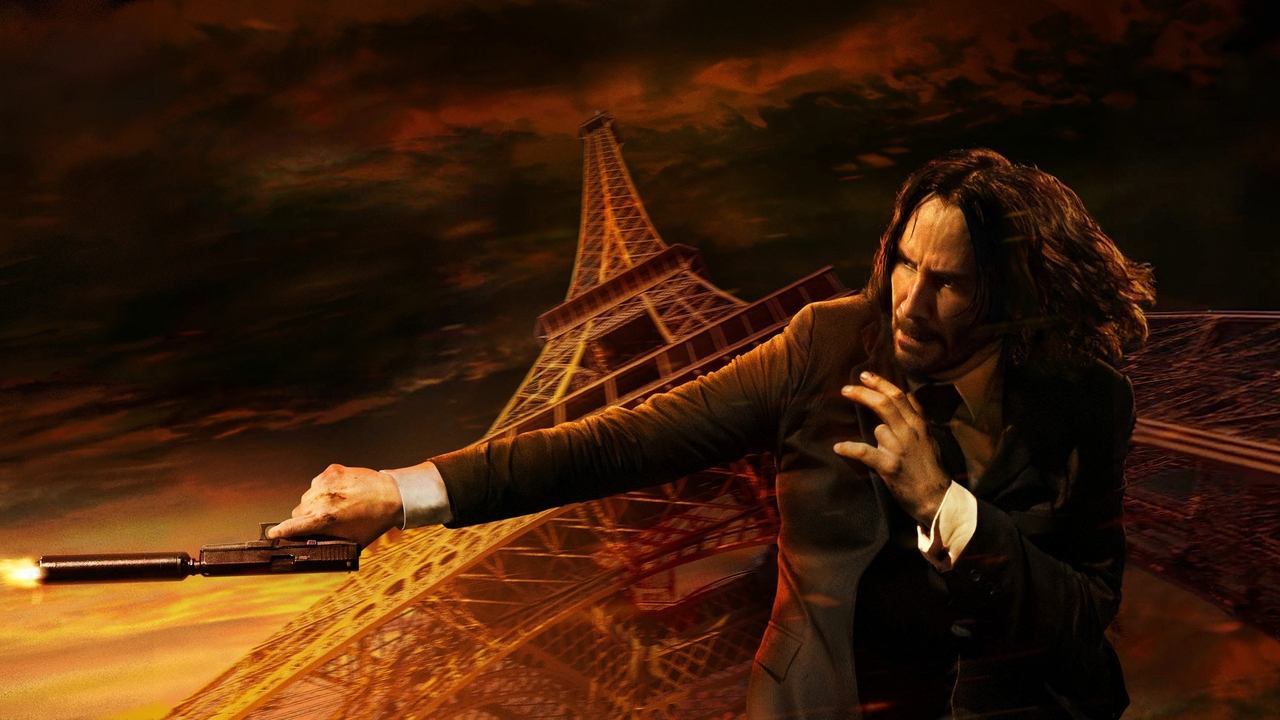
"A symphonic massacre across the Parisian skyline."
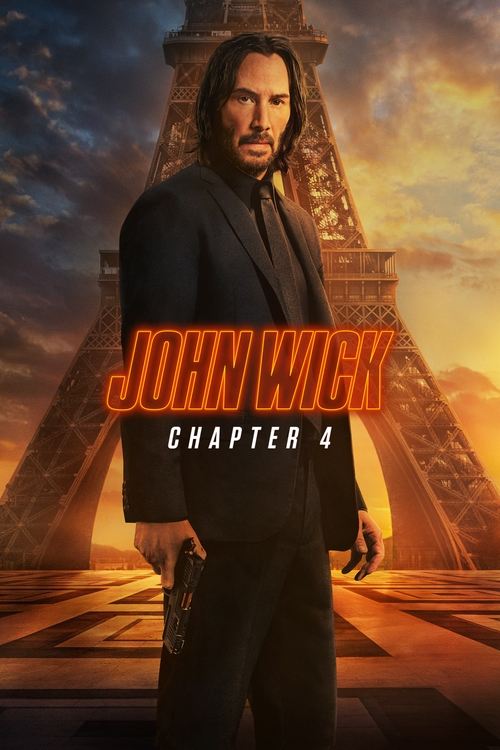
I remember the collective shrug that greeted the first John Wick back in 2014. It looked like another mid-tier VOD actioner—a retired hitman seeking vengeance for a puppy. Simple, lean, and a bit silly. Fast forward nearly a decade, and John Wick: Chapter 4 has mutated into a nearly three-hour neo-noir epic that feels less like a sequel and more like a religious experience for people who worship at the altar of the stunt performer.

I watched this in a theater where someone was clearly trying to open a very crinkly bag of sun-dried tomatoes during the silent, tension-heavy Osaka Continental scenes, and honestly, the sheer auditory assault of the film’s sound design eventually drowned them out entirely. It’s a loud, proud, and punishing piece of work that asks how much a single human body—and a single franchise—can endure before it finally breaks.
The Gospel According to Gun-Fu
In an era where most blockbusters feel like they were filmed inside a giant gray Tupperware container (thanks, LED volumes), director Chad Stahelski and cinematographer Dan Laustsen deliver a film that actually uses the full color spectrum. It is gorgeous. Every frame of the Osaka sequence is drenched in neon cherry blossoms and deep teals, making the violence feel like a high-stakes ballet rather than a messy brawl.
But the real star isn't the lighting—it's the geography. Stahelski, a former stuntman himself, understands that for action to have stakes, the audience needs to know exactly where everyone is standing. There is a sequence involving a top-down camera angle through a Parisian apartment where Keanu Reeves uses "Dragon’s Breath" shotgun rounds to turn the screen into a literal firework display. It’s choreographed with the precision of a clockmaker and the soul of a heavy metal drummer. It’s the kind of sequence that makes you realize most modern directors are just hiding bad fight training with shaky cameras and a thousand tiny cuts.
Blind Faith and Punchable Aristocrats
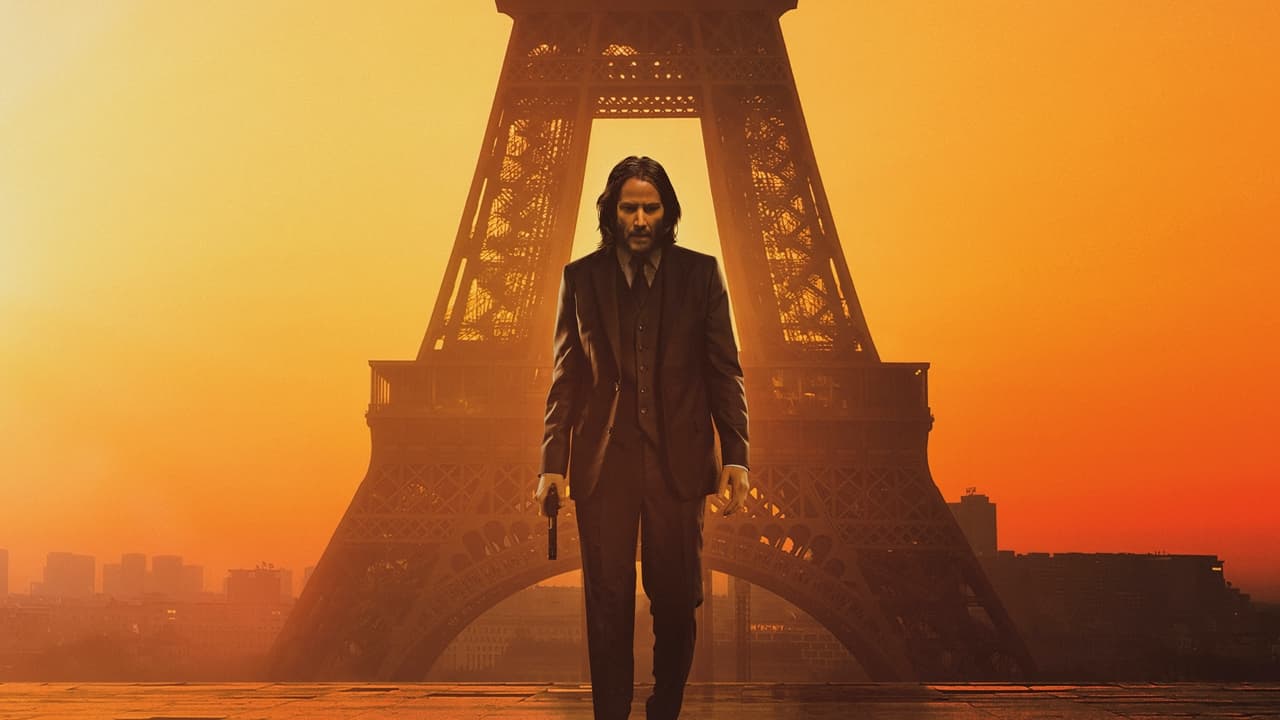
The cast here is a "Who's Who" of international action royalty, but Donnie Yen absolutely steals the movie. Playing Caine, a blind assassin forced into hunting his old friend Wick, Yen brings a grace and humor that the franchise desperately needed. His use of motion-sensor doorbells to track enemies during a shootout is the kind of creative "stunt-first" writing that sets this series apart. He makes the impossible look effortless, providing a perfect foil to Keanu Reeves’ more deliberate, "battering ram" style of fighting.
On the flip side, we have Bill Skarsgård as the Marquis de Gramont. He plays the villain as a preening, sociopathic peacock who treats the world's most dangerous assassins like pieces on a chessboard. He is a masterclass in the "Punchable Face" school of acting, and I mean that as a high compliment. He represents the bloated, bureaucratic rot of the High Table—a glorified homeowners association with better tailoring and a much higher body count.
The film also serves as a poignant farewell to the late Lance Reddick as Charon. His brief scenes with Ian McShane’s Winston carry a weight that feels far more real than the usual franchise melodrama. When the film pauses its carnage to mourn, it feels earned because we’ve spent four movies in this absurd, gold-coin-operated underworld with these characters.
The Physicality of the Frame
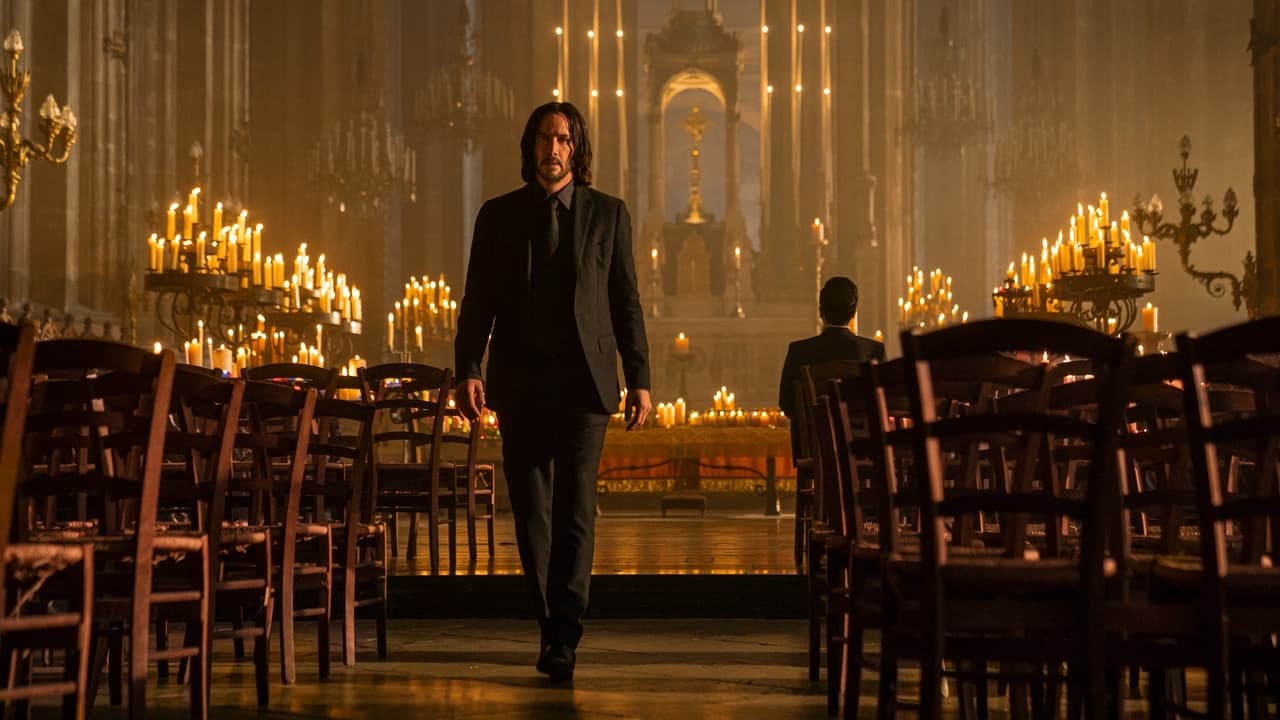
What I find most fascinating about Chapter 4 is how it engages with the current blockbuster landscape. We are currently drowning in "franchise fatigue," where audiences are increasingly weary of "content" that feels like it was generated by an algorithm to set up the next six spin-offs. John Wick succeeds because it feels dangerously physical. When Reeves falls down the 222 steps of the Rue Foyatier in Montmartre—tumbling for what feels like an eternity—you feel every thud in your own marrow.
The production didn’t just throw money at CGI; they threw $100 million at real cars drifting around the Arc de Triomphe and actual stuntmen taking life-altering falls. This is a film that respects the craft of the "second unit." It understands that a $100 million budget is wasted if you can't see the sweat on the lead actor's brow. It's a blockbuster that demands to be seen on the biggest screen possible, not because of "lore," but because of the sheer scale of its ambition.
By the time we reached the final duel at sunrise, I felt as exhausted as Wick himself. The movie is arguably too long—170 minutes is a lot of time to spend watching men in kevlar suits shoot each other in the face—but it uses every second to build a sense of operatic finality. It’s the rare "Chapter 4" that actually feels like a climax rather than a placeholder.
John Wick: Chapter 4 is the logical conclusion of the "stuntman-as-auteur" movement. It is a grim, beautiful, and relentlessly intense piece of action cinema that refuses to take the easy way out. While the mythology of the High Table is starting to get a bit convoluted, the central thrill of watching Keanu Reeves fight his way across the globe remains a singular joy. It’s a film that knows exactly what it is: a bone-crunching, neon-soaked goodbye to a character who just wanted a quiet life with his dog. If this truly is the end of the road for the Baba Yaga, he went out with the loudest bang imaginable.
Keep Exploring...
-
John Wick: Chapter 3 - Parabellum
2019
-
John Wick: Chapter 2
2017
-
John Wick
2014
-

Ballerina
2025
-
Bad Boys for Life
2020
-

The Beekeeper
2024
-
Furious 7
2015
-
Extraction 2
2023
-
The Equalizer 3
2023
-
One Battle After Another
2025
-
The Equalizer 2
2018
-

Bad Boys: Ride or Die
2024
-
Maze Runner: The Death Cure
2018
-
The Batman
2022
-
Sinners
2025
-

The Gangster, the Cop, the Devil
2019
-
The Stronghold
2021
-
The Fate of the Furious
2017
-
No Time to Die
2021
-
Batman vs. Robin
2015