Past Lives
"The ghosts of who we might have been."
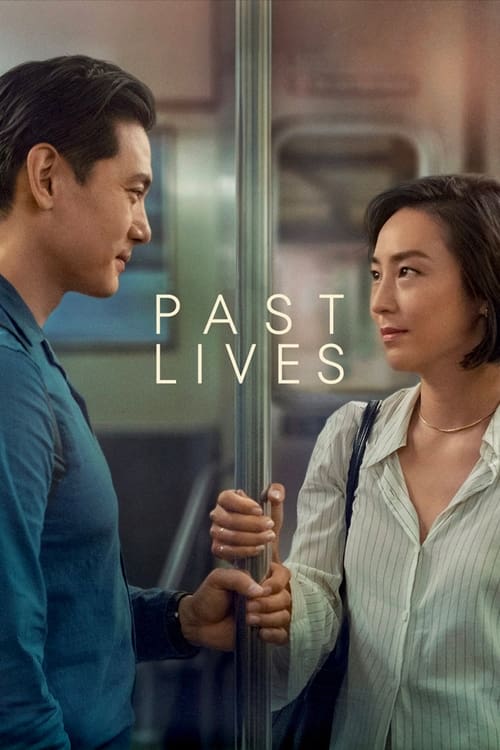
We begin as voyeurs, eavesdropping on a conversation we can’t actually hear. Across a dimly lit New York bar, three people sit in a row: a Korean woman, a Korean man, and a white man. From a distance, anonymous voices try to guess their deal. Are they tourists? Is it a love triangle? Who is the "odd one out"? It’s a brilliant, meta opening for Celine Song’s Past Lives, a movie that knows exactly what you expect from a "childhood sweethearts reunited" narrative and then proceeds to do something infinitely more honest, heartbreaking, and quiet.
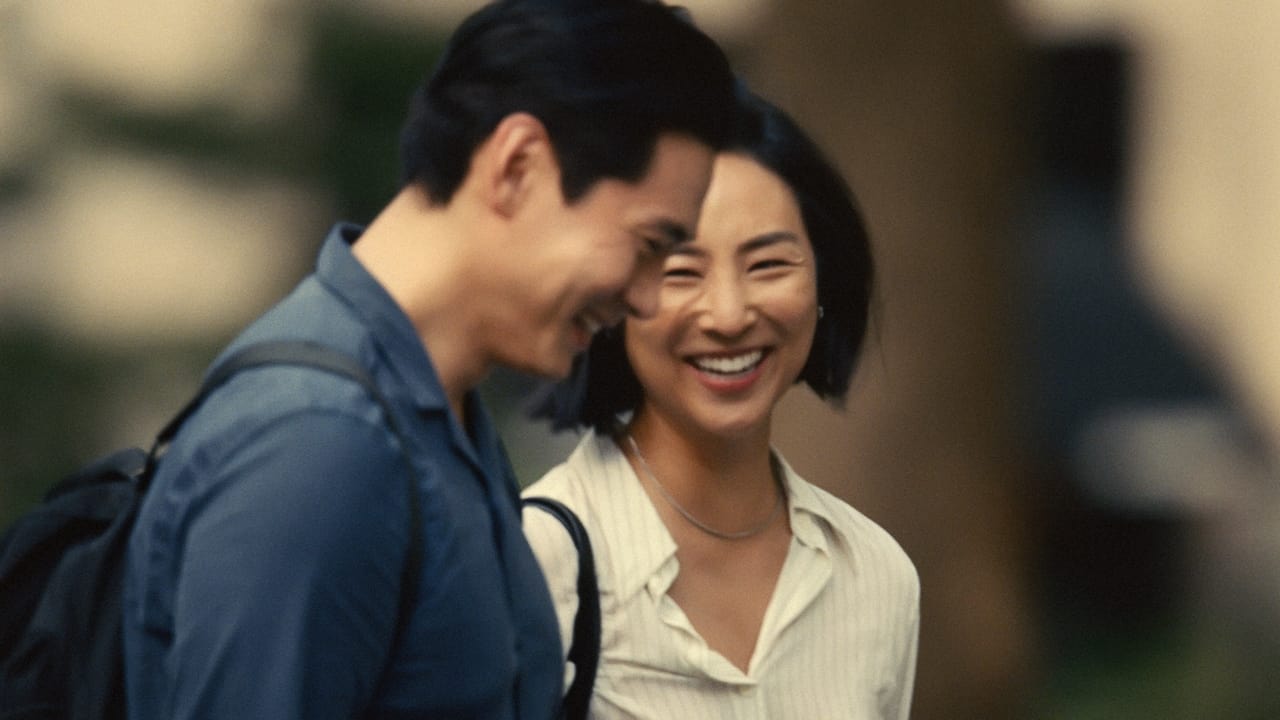
I watched this for the second time on my laptop while my radiator was clanking like a disorganized percussion ensemble, and strangely, that intrusive, metallic New York noise made the film’s silence hit even harder. This isn't a film of grand speeches or airport chases; it’s a film of glances, pauses, and the terrifying realization that choosing one life means permanently murdering a dozen other versions of yourself.
The Geography of the Soul
The story follows Nora (Greta Lee) and Hae Sung (Teo Yoo), who were "crushes" in Seoul before Nora’s family emigrated to Canada. Twelve years later, they reconnect over the glitchy, pixelated interface of early-2010s Skype. Another twelve years pass, and Hae Sung finally visits Nora in New York, where she is now married to Arthur (John Magaro).
In our current era of "everything everywhere all at once" multiverses, Past Lives offers a grounded, melancholic alternative to the sci-fi version of the road not taken. It leans into the Korean concept of In-Yun—the idea that even a brush of clothing between two strangers in the street is the result of thousands of layers of connection from previous lives. It’s a heavy philosophical lift, but Greta Lee carries it with incredible grace. She plays Nora not as a woman torn between two men, but as a woman reconciling with the ghost of the little girl she left behind in Korea. Lee’s performance is a masterclass in what isn't said; you can see her translating her own identity in real-time.
Subverting the Romantic Rival
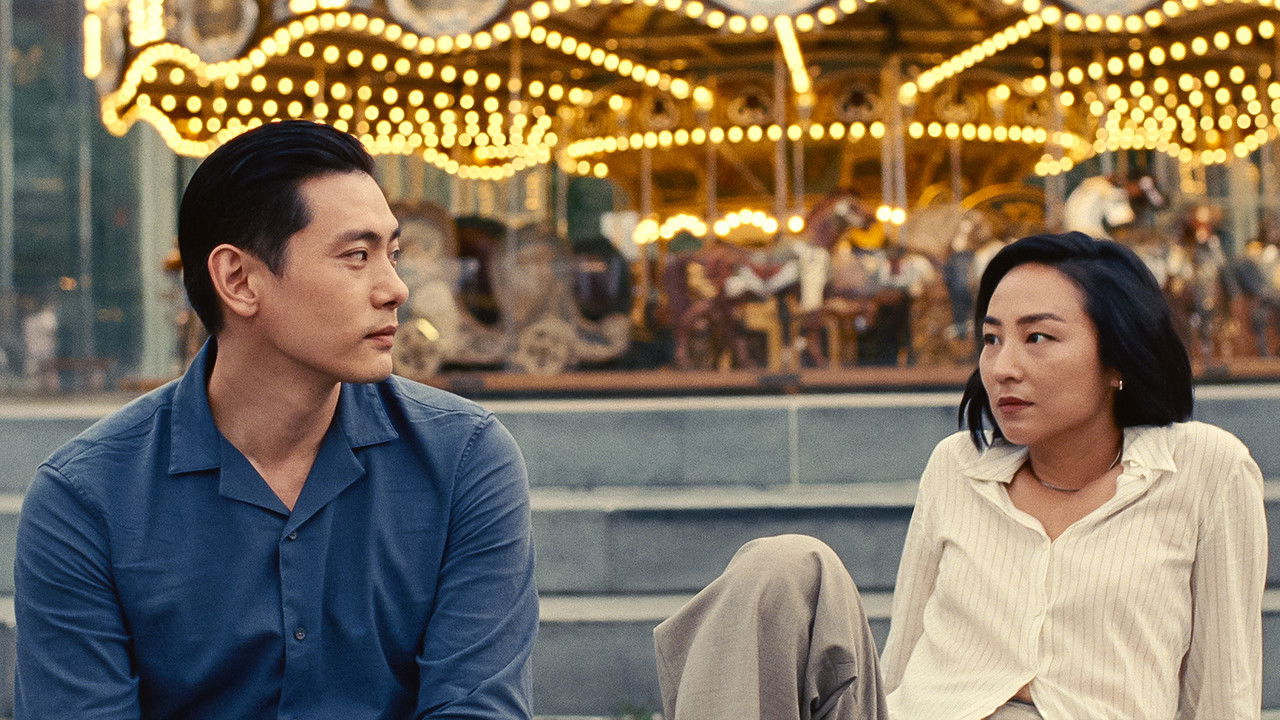
If this were a standard Hollywood rom-com, Arthur would be a jerk. He’d be the "boring" husband who doesn't understand her, making us root for the childhood soulmate to sweep her away. But John Magaro turns Arthur into something far more interesting and vulnerable. He’s a good man who knows he’s a supporting character in someone else’s epic romance. There is a scene where he lies in bed with Nora and admits that her story with Hae Sung is much more "romantic" than their own meeting at a writer’s retreat. Arthur is the most realistic portrayal of a modern husband I’ve seen in years, navigating his own insecurity with a level of maturity that feels almost radical for the genre.
The chemistry between Teo Yoo and Greta Lee is equally potent because it’s so restrained. When they finally stand face-to-face in New York after decades, the air feels thick. Director Celine Song makes the bold choice to let the camera linger. She trusts the audience to sit in the awkwardness of two people who are essentially strangers, yet who share a primal, ancient connection.
The A24 "Quiet Cult" and Modern Roots
While it's a contemporary release, Past Lives has already developed the kind of "quiet cult" following usually reserved for older indies. It’s the quintessential A24 success story—a film that bypassed the franchise machine to become a massive cultural touchstone through sheer emotional gravity.

The production itself has some wonderful "you had to be there" details that explain why the chemistry feels so electric:
The "No-Touch" Rule: During the twelve-year gap in the story, Celine Song forbade Greta Lee and Teo Yoo from touching each other in real life. Their first physical contact on camera—the hug when they meet in New York—was the first time they had touched in person. A Real-Life Gimmick: To keep the tension authentic, Teo Yoo and John Magaro were kept completely separate during rehearsals. They didn't see or speak to each other until the moment their characters met on screen, which is why that initial greeting feels so authentically stiff. The Skype Lag was Real: Instead of faking the video calls in post-production, they actually set up the actors in different rooms and used real, unstable internet connections to get the genuine frustration of a freezing screen and audio delays. Auto-Biographical Origins: The opening bar scene is a direct recreation of a night in Celine Song's own life, where she found herself translating between her husband and her childhood friend from Korea. The 35mm Choice: Despite being a digital-age story about Skype and Facebook, it was shot on 35mm film. This gives the New York and Seoul landscapes a soft, timeless texture that makes the modern setting feel as mythic as the concept of In-Yun* itself.
Past Lives is a rare bird in the 2020s: a movie that trusts its audience to handle silence. It doesn't need a villain or a twist because the "antagonist" is simply time and the choices we make. It’s a film that stays with you, making you wonder about the people you left behind and the versions of you that still live in their memories. If you’ve ever looked at an old photo and felt like you were looking at a stranger, this one is for you.

Keep Exploring...
-

CODA
2021
-

Materialists
2025
-
Portrait of a Lady on Fire
2019
-

All the Bright Places
2020
-

Weathering with You
2019
-

Love, Simon
2018
-

Five Feet Apart
2019
-
Little Women
2019
-

Licorice Pizza
2021
-

Anora
2024
-
Carol
2015
-

Clouds
2020
-

Gabriel's Inferno
2020
-
Purple Hearts
2022
-
Beautiful Boy
2018
-

Instant Family
2018
-

Roma
2018
-
The Trial of the Chicago 7
2020
-
The Fabelmans
2022
-
The Holdovers
2023