Resident Evil: Death Island
"The family reunion the undead weren't invited to."
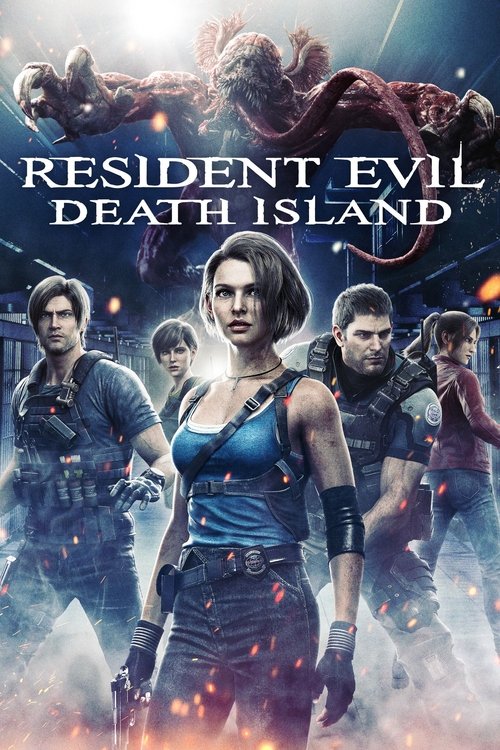
There is a specific, heavy silence that settles over a room when you realize you’re watching the cinematic equivalent of a high-school reunion where everyone brought a grenade launcher. For those of us who grew up navigating the pixelated hallways of the Spencer Mansion or the rain-slicked streets of Raccoon City, seeing the "Big Five" of the Resident Evil universe standing shoulder-to-shoulder isn't just fan service—it feels like a closing of a generational circle. Resident Evil: Death Island (2023) arrives in an era where the franchise is locked in a strange tug-of-war with itself: the live-action adaptations keep trying (and mostly failing) to reinvent the wheel, while these CGI-animated features quietly double down on the convoluted, monster-filled soap opera we actually fell in love with.

I watched this on my laptop while a neighbor’s leaf blower provided a surprisingly rhythmic industrial soundtrack to the zombie carnage, and honestly, the added mechanical drone made the Alcatraz setting feel even more oppressive.
A Legacy Weighted by Trauma
While the plot ostensibly concerns a new T-Virus strain and a kidnapping plot involving DARPA, the real meat of Death Island is its grim fixation on the psychological toll of surviving two decades of bioterrorism. We’ve spent years watching these characters become superhuman, but director Eiichiro Hasumi (who previously helmed the live-action Assassination Classroom films) chooses to ground the spectacle in a surprisingly somber reality.
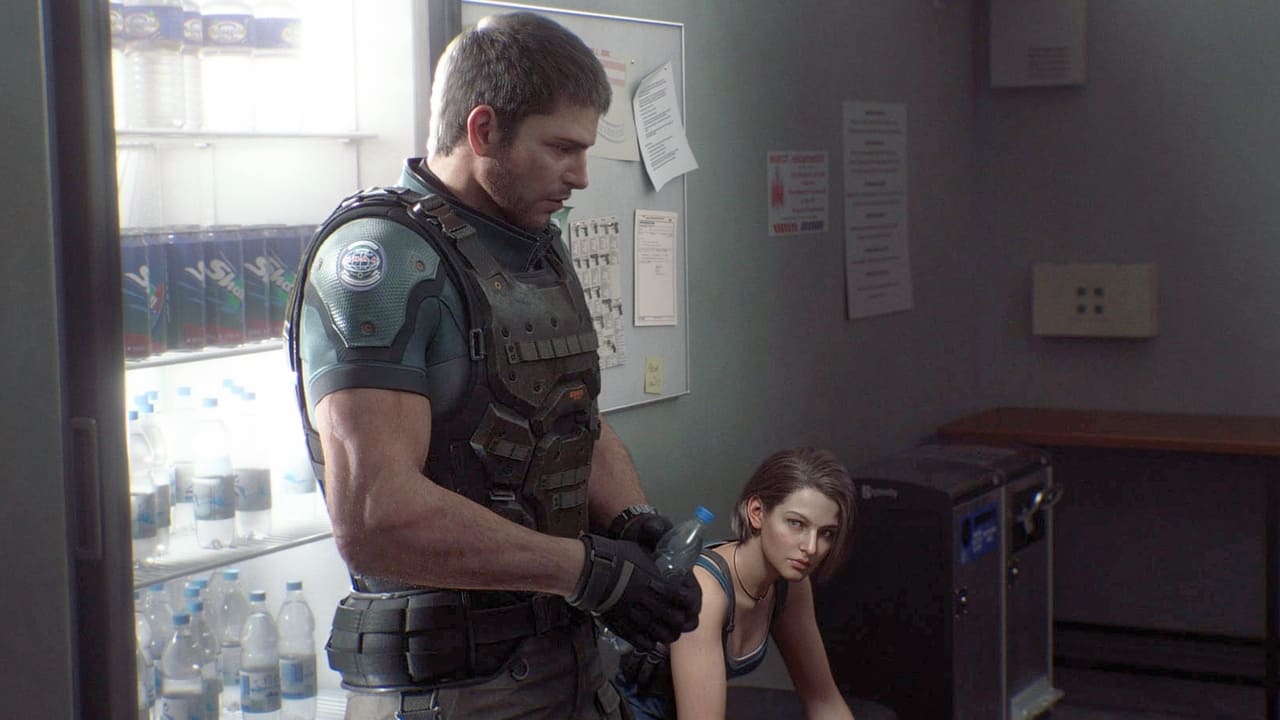
The focus on Nicole Tompkins as Jill Valentine is the film's strongest pivot. This isn't the confident, quippy Jill from the early games; she’s carrying the visible weight of her time under Albert Wesker’s mind control. There’s a lingering darkness in her interactions with Kevin Dorman’s Chris Redfield—a sense that while the world moves on to the next viral outbreak, the people on the front lines are slowly eroding. It’s a level of character continuity that the mainstream films often ignore in favor of flashy set pieces, and it gives the early acts a necessary gravitas.
The Alcatraz Grindhouse
Once the team converges on Alcatraz, the film shifts from a brooding mystery into a relentless, claustrophobic gauntlet. The decision to use the world's most famous prison as a backdrop for a zombie outbreak allows for some clever spatial storytelling. The narrow corridors and rusted iron bars create a sense of entrapment that mirrors the characters' own inability to escape their pasts.
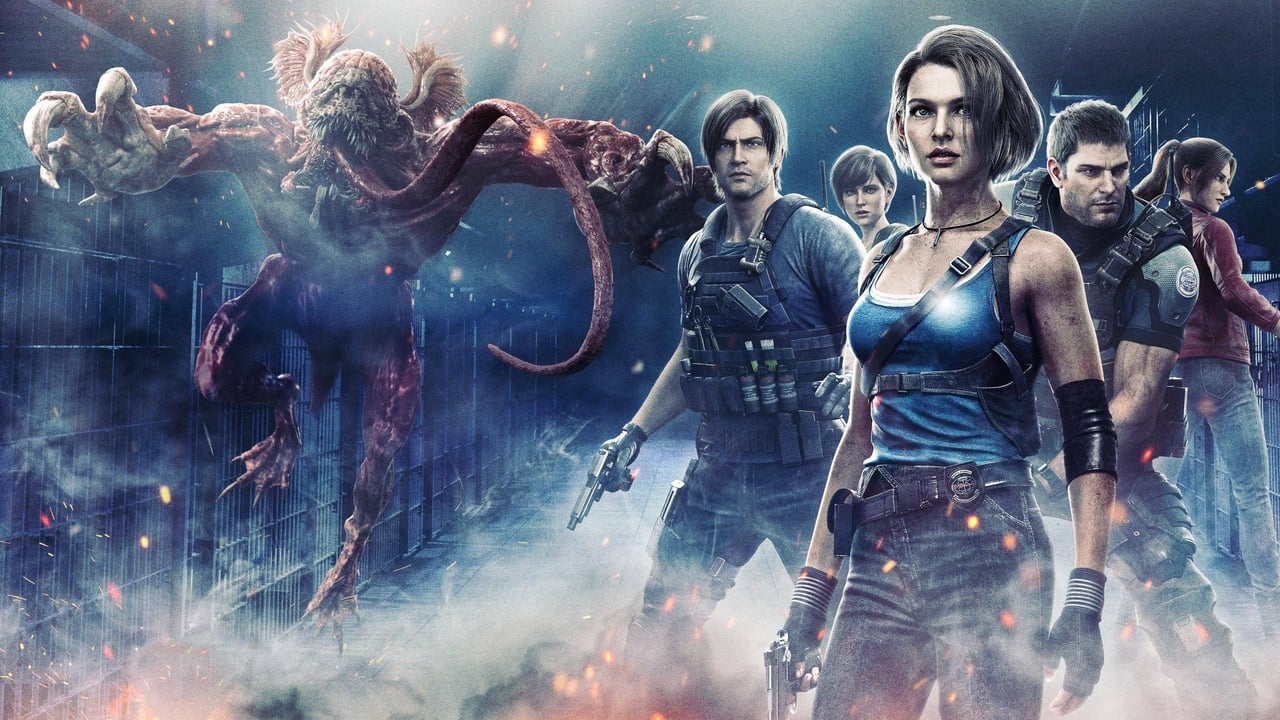
The villain, Dylan, isn't just another megalomaniac with a vial of green goo; he’s a former Raccoon City survivor who has reached a state of total nihilistic collapse. His motivation feels like a dark reflection of our own contemporary anxieties—the feeling that the world is inherently broken and that no amount of heroism can truly fix it. The plot is essentially a LinkedIn networking event gone horribly wrong, where the only takeaway is a shared understanding of how much everyone’s job sucks.
Technically, the film is a marvel of the "uncanny valley" era. The character models are hyper-detailed, capturing every bead of sweat and tactical buckle, though the facial animations still occasionally struggle to convey the deeper emotions the script is reaching for. Still, seeing Matthew Mercer’s Leon S. Kennedy perform his trademark bike stunts with 2023-level rendering is a treat for anyone who still keeps their original PlayStation discs in a place of honor.
The Obscurity of the Digital Age
Despite its heavyweight cast of characters, Death Island vanished from the cultural conversation almost the moment it arrived. Its meager $53,929 box office reflects a shift in how these "bridge" films are consumed—they are digital artifacts meant for the faithful, often bypassing the traditional theatrical machine entirely. It’s a shame, because the final act features a creature design that practically begs for a massive screen and a booming sound system.
Interestingly, this is the first time in the nearly 30-year history of the franchise that Jill and Leon have appeared together in a canonical story. Apparently, the developers at Capcom kept them apart for decades simply because they didn't know how to balance two such dominant personalities without one overshadowing the other. Seeing them finally trade banter while mowing down infected sharks feels like a small, nerdy victory against the passage of time.
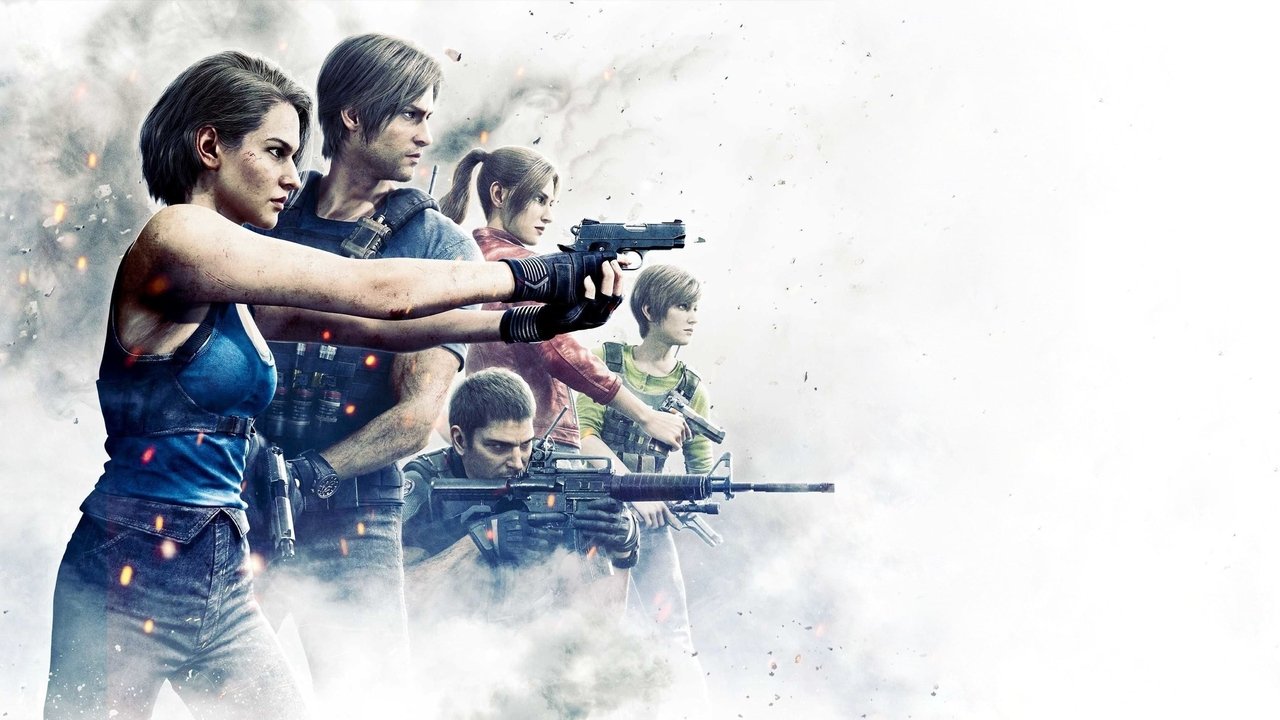
The film also serves as a fascinating look at modern CGI production under Sho Tanaka. They’ve moved away from the more experimental, almost psychedelic horror of Resident Evil: Vendetta toward something more grounded and "tactical." It feels less like a fever dream and more like a high-stakes military thriller that just happens to feature biological nightmares.
Resident Evil: Death Island doesn't aim to redefine the horror genre or provide a profound commentary on the human condition, but it succeeds in being a weighted, intense celebration of its own messy history. It’s a film for the people who know what the "T" in T-Virus stands for and who want to see their childhood heroes get one more moment in the sun before the darkness finally wins. If you can look past the occasionally stiff dialogue and the predictable structure of the finale, you’ll find a surprisingly somber action-horror flick that respects its legacy while acknowledging the exhaustion of its icons.
Leon Kennedy’s hair remains the most structurally sound object in the known universe, surviving explosions and high-speed crashes without a single strand falling out of place. That kind of consistency is why we keep coming back.
Keep Exploring...
-
Resident Evil: Vendetta
2017
-

Resident Evil: Damnation
2012
-

Resident Evil: Degeneration
2008
-

#Alive
2020
-

Predator: Killer of Killers
2025
-
Batman vs. Robin
2015
-
Shin Godzilla
2016
-
Teen Titans Go! To the Movies
2018
-
Superman: Red Son
2020
-
Teenage Mutant Ninja Turtles: Mutant Mayhem
2023
-
Dragon Ball Z: Resurrection 'F'
2015
-
Batman: Hush
2019
-

M3GAN 2.0
2025
-
Godzilla Minus One
2023
-

Justice League: Throne of Atlantis
2015
-
Batman: Bad Blood
2016
-
Justice League vs. Teen Titans
2016
-
Justice League Dark
2017
-
Evangelion: 3.0+1.0 Thrice Upon a Time
2021
-
Dragon Ball Super: Super Hero
2022