Strays
"Revenge is a real bitch."
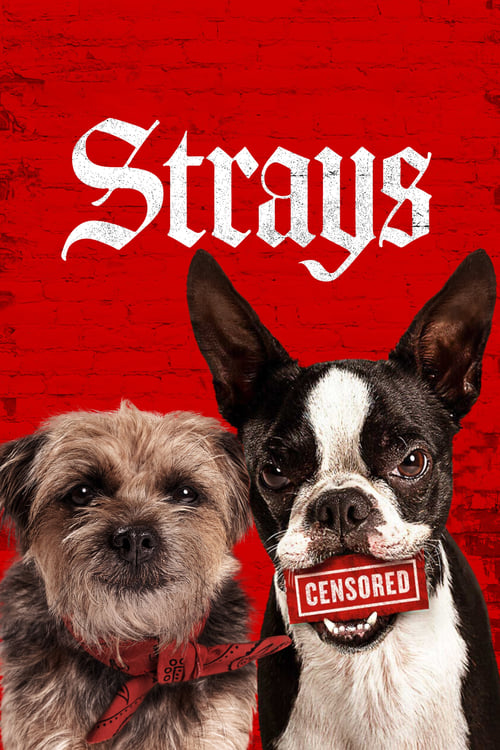
We’ve been conditioned by decades of Air Bud sequels and Disney-fied talking-animal adventures to believe that every canine protagonist has the soul of a saint and the vocabulary of a Hallmark card. The "talking dog" genre usually lives in a sugary-sweet purgatory of moral lessons and middle-school basketball championships. Then comes Strays, a movie that walks into that pristine living room and proceeds to hike its leg on the white shag carpet.
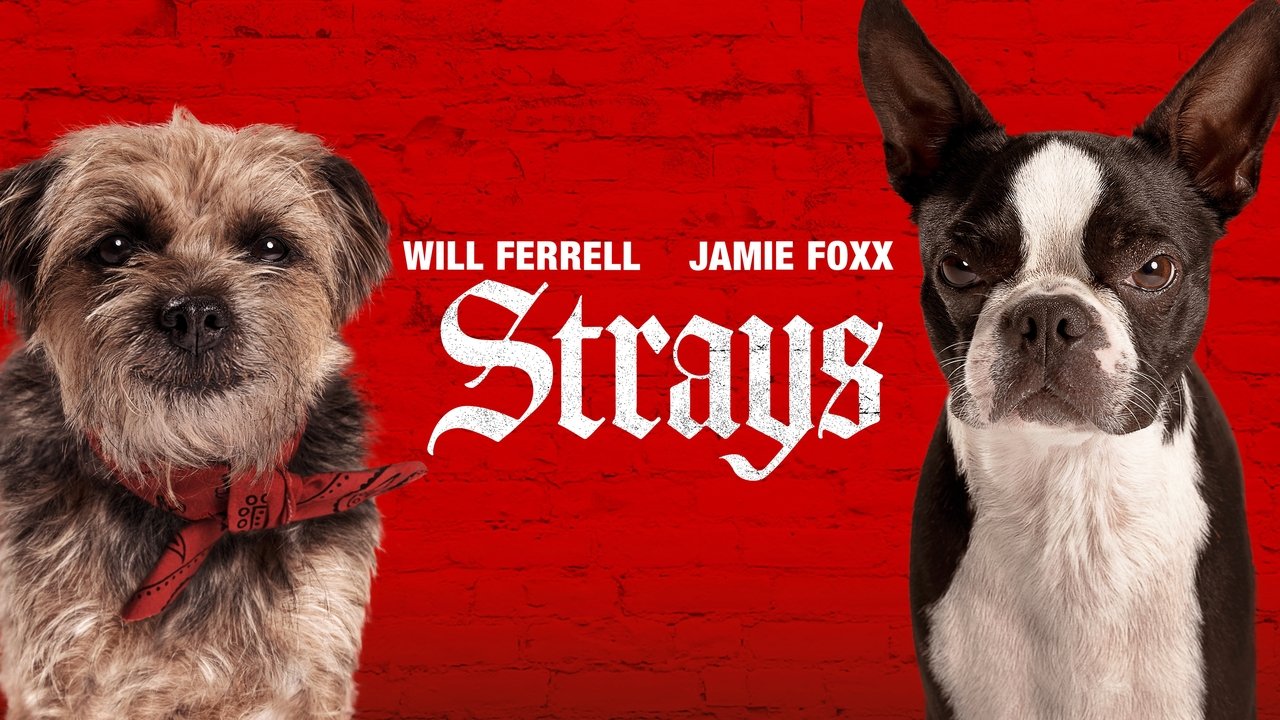
Released in the late summer of 2023, Strays was a weird casualty of the post-pandemic theatrical landscape. It arrived in theaters with a $46 million budget—a decent chunk of change for an R-rated comedy—and promptly vanished into the shadow of the Barbenheimer phenomenon. It’s a shame, really, because while the film is undeniably filthy, it’s also one of the few recent comedies that actually understands the "Adventure" assignment while successfully deconstructing the very tropes that made us roll our eyes at Homeward Bound.
The Anti-Disney Road Trip
The story follows Reggie, a Border Terrier voiced with wide-eyed, heartbreaking optimism by Will Ferrell (Step Brothers, Elf). Reggie is stuck in a cycle of abuse with Doug, a man so cosmically pathetic he’s played by Will Forte—the undisputed king of the "pathetic dirtbag" archetype. Doug tries to abandon Reggie in the city by playing a "game" of fetch-and-hide, and Reggie, bless his heart, thinks he’s just winning the hardest level of the game.
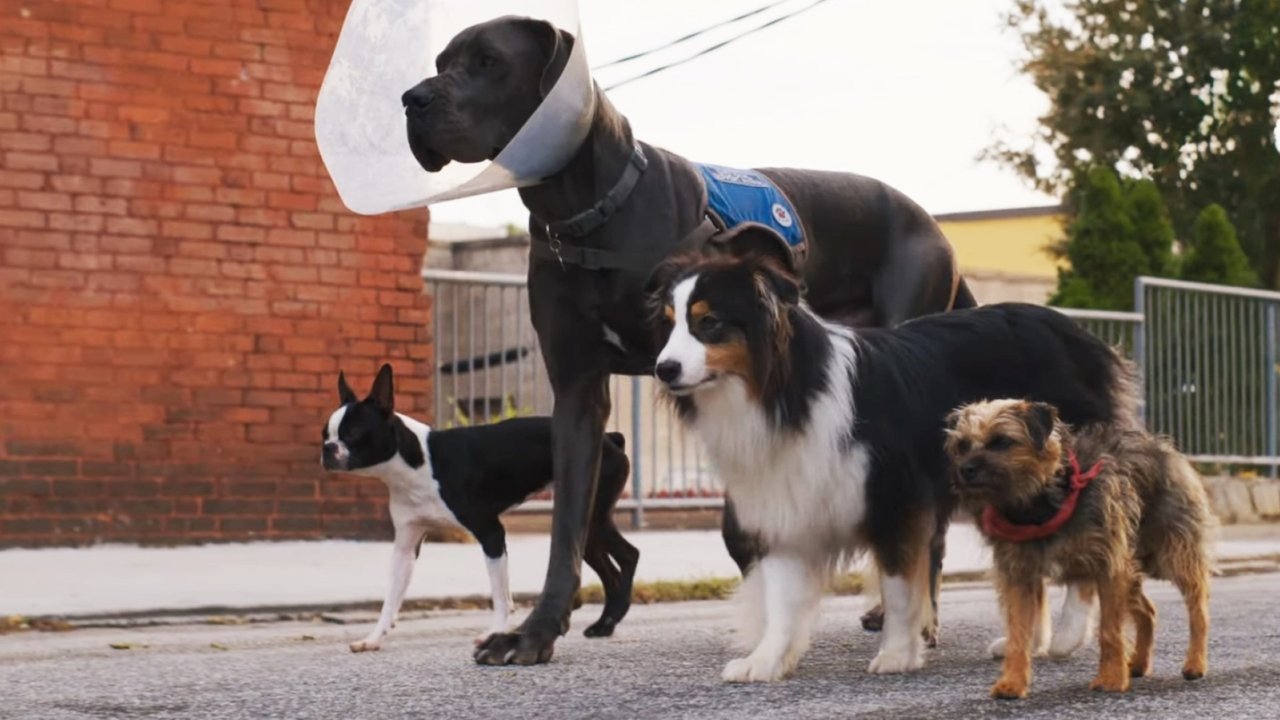
Once Reggie hits the city streets, the film shifts gears from a dark domestic comedy into a foul-mouthed odyssey. He meets Bug, a Boston Terrier voiced by Jamie Foxx (Ray, Django Unchained), who acts as the Virgil to Reggie’s Dante, showing him that being a stray isn't a death sentence—it's freedom. I watched this on my couch while my own rescue mutt, Barnaby, gave me a look that suggested he’d absolutely join Bug’s crew if I ever forgot to refill his water bowl.
The adventure isn't just a physical trek back to Doug’s house; it’s a journey toward self-actualization. The "MacGuffin" here isn't a magical artifact or a missing child; it's Doug's genitals. Reggie decides he wants to bite them off. It’s a simple quest, but one that requires a motley crew. Rounding out the pack are Maggie (Isla Fisher), an Australian Shepherd with a superior nose, and Hunter (Randall Park), a Great Dane in an Elizabethan collar who is training to be a therapy dog but mostly just suffers from massive anxiety.
A Pedigree Cast for a Mongrel Comedy
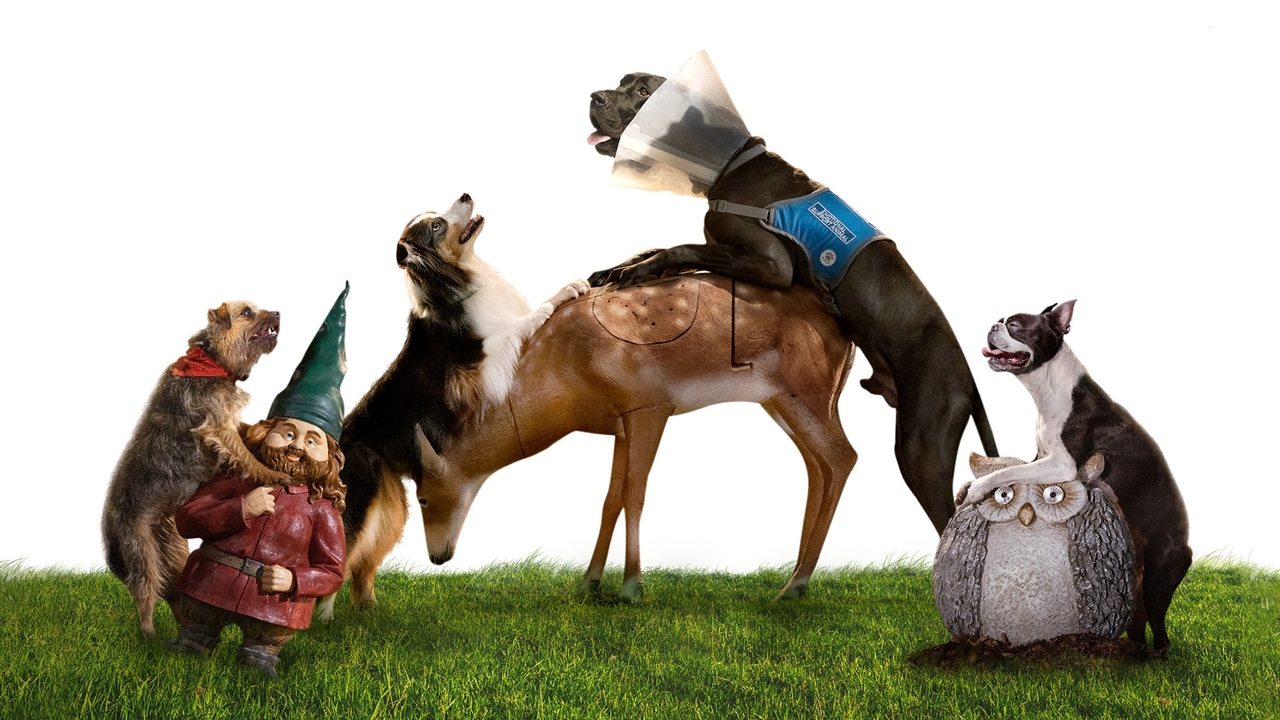
The chemistry between these four is what keeps the movie from falling into the "one-joke" trap. Will Ferrell plays Reggie with a vulnerability that makes the comedy land harder; when he finally realizes Doug never loved him, it’s essentially a 93-minute therapy session for a golden retriever who’s been gaslit by a human trash bag. Jamie Foxx brings a frantic, manic energy to Bug that balances the sentiment, and the banter feels lived-in rather than scripted.
Visually, director Josh Greenbaum (Barb and Star Go to Vista Del Mar) makes some fascinating choices. The film uses a blend of real dogs and CGI mouth-mapping that, while occasionally "uncanny valley," mostly allows for a physical comedy that feels grounded. There’s a scene involving the dogs accidentally consuming "magic" mushrooms in a forest that is a masterclass in visual absurdity. It’s the kind of sequence that justifies a theatrical budget, turning a simple woods walk into a terrifying, neon-drenched hallucination.
The film also benefits from a script by Dan Perrault, who co-created American Vandal. He brings that same talent for taking a ridiculous premise and treating it with enough internal logic that you actually start to care about the stakes. When the dogs encounter Brett Gelman as a disgruntled animal control officer, the peril feels genuine, even if it’s punctuated by jokes about humping garden gnomes.
The Tragedy of the Theatrical Comedy
In this current era, Strays represents a dying breed. We’re living through a period where mid-budget comedies are almost exclusively relegated to streaming platforms. Studios have become gun-shy about putting R-rated humor on 40-foot screens because, frankly, the numbers are terrifying. Strays grossed about $32 million domestically—not a disaster, but not the hit Universal was likely hoping for.

Its failure to find an audience in theaters says more about our changing habits than the film’s quality. On a streaming service, Strays would have been a massive hit, the kind of "did you see that?" movie that trends for three weeks. In the theater, it felt like an outlier. But the adventure tropes—the "team building" sequences, the escalating obstacles, the final confrontation—actually benefit from the scale of a theatrical release. The world feels big and dangerous to these small creatures, and the cinematography by Tim Orr does a great job of keeping the camera at a dog's-eye view, making a simple suburban backyard look like an epic battlefield.
Despite its reliance on poop jokes and anatomy humor, there’s a surprising amount of subtext about toxic masculinity and the way we project our own failures onto our pets. It’s an adventure film with teeth—literally.
Strays isn't going to redefine cinema, but it’s a fiercely funny, surprisingly emotional ride that deserves a second life on home screens. It takes the "man's best friend" trope and chews it into unrecognizable bits, offering a hilarious look at what happens when the leash finally snaps. If you’ve ever looked at your dog and wondered what they’re really thinking, this movie provides an answer that is equal parts heartwarming and horrifying. Just maybe don't watch it with your kids unless you want to explain why the Border Terrier is so interested in biting off a man's most prized possession.
Keep Exploring...
-
The Angry Birds Movie 2
2019
-
The Peanut Butter Falcon
2019
-
Beau Is Afraid
2023
-
Asterix: The Secret of the Magic Potion
2018
-
Smallfoot
2018
-

The Man Who Killed Don Quixote
2018
-
Dora and the Lost City of Gold
2019
-
Missing Link
2019
-

Red Shoes and the Seven Dwarfs
2019
-

Rose Island
2020
-

The Christmas Chronicles: Part Two
2020
-
Clifford the Big Red Dog
2021
-
The Addams Family 2
2021
-
Chip 'n Dale: Rescue Rangers
2022
-

DC League of Super-Pets
2022
-

Luck
2022
-

The School for Good and Evil
2022
-

Nimona
2023
-

The Wonderful Story of Henry Sugar
2023
-

Frozen Fever
2015