A Quiet Place: Day One
"In the loudest city on Earth, silence is survival."
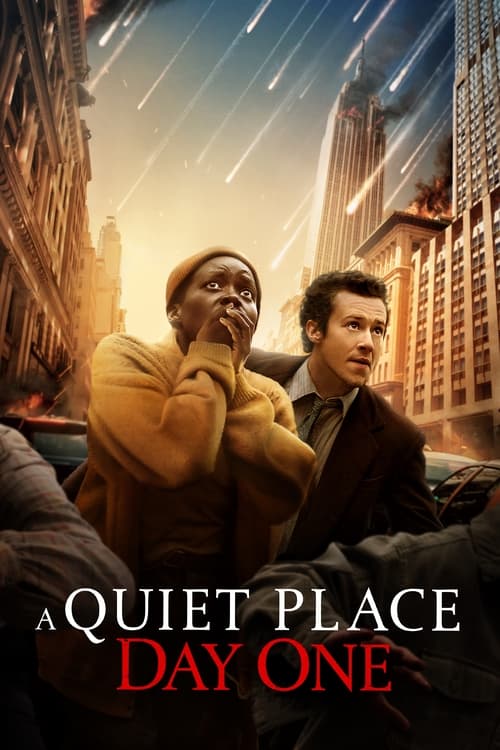
New York City is many things, but "quiet" isn't one of them. It’s a cacophony of jackhammers, sirens, and millions of people talking over each other. So, when Michael Sarnoski—the director who somehow made me cry over a stolen truffle pig in Pig (2021)—decided to drop the sound-sensitive monsters from John Krasinski’s universe into the middle of Manhattan, the stakes felt different. This isn't the rural, survivalist tension of the first two films. This is the death of a civilization that literally doesn't know how to shut up.
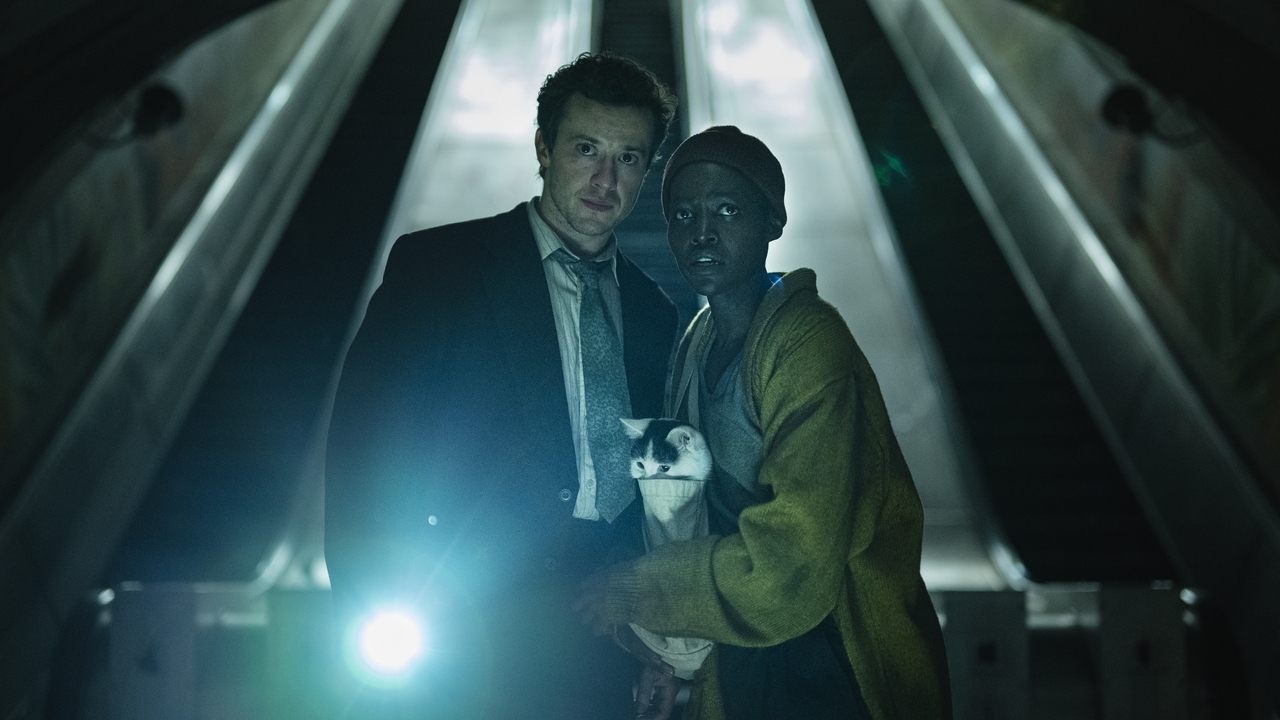
I watched this in a theater where the person behind me was struggling with a particularly crinkly bag of kale chips, and I genuinely considered turning around and shushing them with the intensity of a librarian on the edge of a breakdown. That’s the "A Quiet Place" effect; it turns the audience into participants in a high-stakes game of "Don't Make a Peep."
A Different Kind of Apocalypse
In an era of franchise dominance where every prequel feels like a Wikipedia entry brought to life, Day One takes a surprisingly soulful detour. We aren't here to find out where the monsters came from or what their home planet’s tax bracket was. Instead, we follow Samira (Lupita Nyong'o), a woman living in a hospice facility whose only goal in the face of the literal end of the world is to get a slice of pizza from Patsy’s in Harlem.
Making a prequel about a quest for pizza is the balliest move in modern franchise history. It grounds the spectacle in something human and, frankly, relatable. If the world is ending and I’m already on my way out, I’m not looking for a bunker; I’m looking for New York’s best pepperoni. Lupita Nyong'o is, as expected, a powerhouse. She does more with a single widened eye or a tremble of her jaw than most actors do with a ten-minute monologue. She carries a terminal illness as her primary character trait, which adds a layer of fatalism to the horror that we haven't seen in this series before. She isn't just running from monsters; she’s running out of time.
The Cat, The Brit, and The Chaos
Then there’s Eric, played by Joseph Quinn (of Stranger Things fame). He enters the story like a soaked, panicked stray, and his chemistry with Samira is unexpectedly tender. They don't have a romantic subplot—thankfully—but rather a shared moment of profound vulnerability. Quinn has this "human-sized puddle" energy that makes you want to protect him, which is a great foil to Samira’s hardened exterior.

And we have to talk about Frodo the cat. The cat is a better actor than most Oscar winners. Frodo (played by two cats named Schnitzel and Nico) is the real MVP. In a film where sound equals death, a silent, staring cat is the ultimate companion. Interestingly, Lupita Nyong'o actually had a massive cat phobia before filming and had to undergo "cat therapy" to get comfortable with her feline co-star. You’d never know it; their bond feels like the only warm thing in a city that’s rapidly turning into a graveyard.
Michael Sarnoski brings a specific, tactile griminess to the production. The way the dust hangs in the air after the first strike, the visual of hundreds of creatures skittering across the sides of skyscrapers like iron-clad spiders—it’s big-budget filmmaking that doesn't lose its soul. He uses the scale of New York to emphasize the isolation. When the city goes quiet, it doesn't feel peaceful; it feels wrong.
Silence in the Streaming Age
From a contemporary standpoint, A Quiet Place: Day One is a fascinating case study in how to keep a franchise alive in the 2020s. We’ve seen "franchise fatigue" hit hard recently, with audiences souring on bloated cinematic universes. This film succeeded at the box office ($261 million on a $67 million budget) because it felt like a standalone experience. You don't need to have seen the previous films to understand the terror of a giant monster eating you because you sneezed.
The sound design remains the gold standard for the genre. Alexis Grapsas’ score knows exactly when to lean in and when to vanish entirely. There’s a scene in a subway tunnel that uses the acoustics of dripping water and distant echoes to build a level of dread that made my palms genuinely sweaty. It reminds me why we still go to the theater: to sit in a room full of strangers, all holding our breath at the same time.
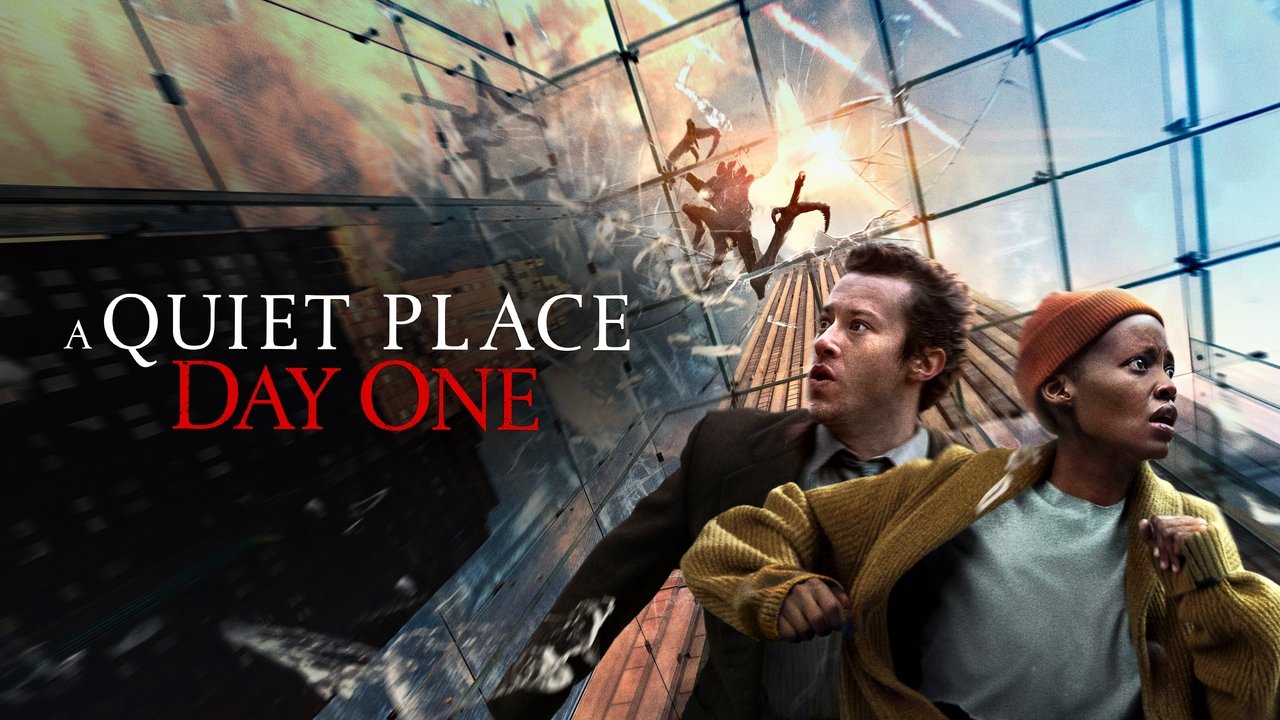
It’s also worth noting the representation here. Seeing a Black woman as the lead in a major horror-sci-fi blockbuster—not as a sidekick or a "first to die" trope, but as the emotional and narrative center—feels like a substantive creative choice rather than a corporate checklist. Samira is complex, prickly, and profoundly tired. She isn't a "Final Girl" in the traditional sense; she’s a woman reclaiming her agency in her final days.
Ultimately, A Quiet Place: Day One is a rare prequel that justifies its existence by narrowing its focus rather than expanding it. It trades the survivalist mechanics of the previous films for a more poetic, atmospheric look at what we value when everything else is stripped away. It's a loud, scary, big-budget monster movie that somehow finds the time to be a quiet meditation on dignity and New York pizza. If this is where the franchise is heading, I’m happy to keep listening.
Just, please, if you watch it at home, put the phone away and turn the lights off. This film lives in the shadows and the silences, and it deserves your full attention. And maybe skip the kale chips. Those things are louder than a subway train.

Keep Exploring...
-
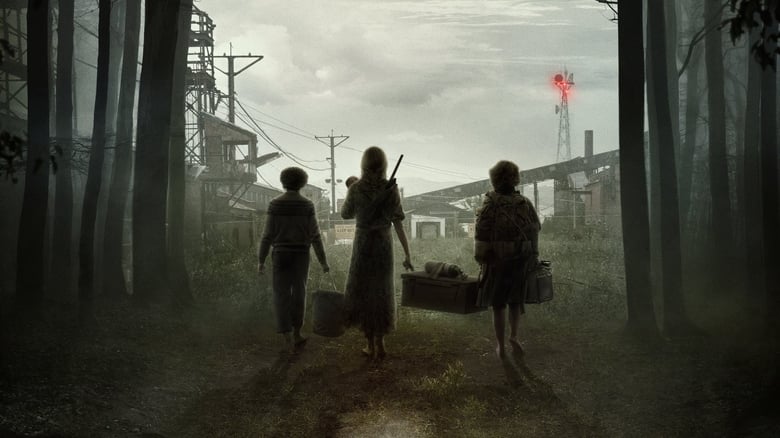
A Quiet Place Part II
2021
-
The Invisible Man
2020
-
10 Cloverfield Lane
2016
-
Color Out of Space
2020
-
Synchronic
2020
-
Pig
2021
-
Subservience
2024
-

28 Years Later
2025
-
Companion
2025
-
The Long Walk
2025
-
It Chapter Two
2019
-
Meg 2: The Trench
2023
-

Alien: Romulus
2024
-
Sinners
2025
-
Alien: Covenant
2017
-
Vivarium
2019
-
Possessor
2020
-
Oxygen
2021
-
Crimes of the Future
2022
-
Infinity Pool
2023