Alien: Romulus
"The company owns your life. They own your death."

I walked into Alien: Romulus with my defenses up. After the high-concept, philosophical wandering of the Ridley Scott prequels, I found myself craving the simple, suffocating dread of a toothy nightmare in a dark hallway. I didn't want to know where the monsters came from; I wanted to remember why I was afraid of them in the first place. Interestingly, I watched this in a theater where the air conditioning was so aggressively cold that I was actually shivering during the zero-gravity sequences—an accidental 4D experience that made the vacuum of space feel uncomfortably close.

Director Fede Álvarez, who previously proved he could make a house feel like a tomb in Don't Breathe, treats the Alien franchise like a high-stakes restoration project. He strips away the "Ancient Aliens" mythology and returns us to the industrial grime of the "used future." The film follows a group of young space colonists, led by Rain (Cailee Spaeny), who are looking for a way out of their literal and figurative black-lung existence on a sunless mining colony. Their plan? Scavenge a derelict station for cryo-pods. It’s a classic "don't go in the basement" setup, just shifted several thousand miles above the atmosphere.
The Grime of the Used Future
The first thing I noticed was the weight of the world. Galo Olivares’ cinematography doesn't just show you the ship; it makes you feel the oily residue on the walls and the recycled oxygen in your lungs. This is an era where big-budget sci-fi often feels sterile and green-screened to death, but Romulus looks lived-in and punishingly physical. Fede Álvarez and his team leaned heavily into practical effects, using an animatronic Xenomorph that actually occupied the same physical space as the actors. There is a specific, jagged reality to a monster when you know its shadow is actually hitting the wall behind Cailee Spaeny, rather than being painted on by a frustrated VFX artist six months later.
The heart of the film, however, isn't the monster—it’s the relationship between Rain and her "brother" Andy, played with an incredible, twitchy vulnerability by David Jonsson. Andy is a Weyland-Yutani synthetic, a literal piece of company property that has been reprogrammed to be Rain’s protector. Jonsson delivers the best performance in the franchise since Michael Fassbender’s David, managing to be both heartbreakingly innocent and chillingly cold once his "operating system" gets an update. The moral ambiguity of his character—whether he values Rain's life or "the company’s best interests"—provides the necessary friction in a script that sometimes leans too hard on established tropes.
Practical Nightmares and Digital Ghosts

As a product of contemporary cinema, Romulus is a textbook "legacy sequel." It’s designed to bridge the gap between the 1979 original and the 1986 action-heavy follow-up. While it succeeds in capturing the atmosphere, it occasionally trips over its own desire to please the fans. There are moments of fan-service that occasionally feel like a Wikipedia entry coming to life, including a line of dialogue recycled from Aliens that felt so forced I actually groaned. Then there is the "digital resurrection" of a certain late actor from the original film; while the intent was to tie the stories together, the execution looks like a PlayStation 3 cutscene having a mid-life crisis. It’s a strange, jarring choice in a movie that otherwise prides itself on being so tactile and real.
But when the film commits to being a horror movie, it’s relentless. The facehuggers are terrifying again, portrayed here as skittering, intelligent hunters rather than just jump-scare props. A sequence involving a room full of them and a temperature-controlled stealth mission is a masterfully tense bit of staging. The budget, a relatively modest $80 million, is used with surgical precision. It’s a reminder that you don't need $300 million to make a universe feel vast; you just need to make the small corners of it feel dangerous.
The Horror That Lingers
The third act is where Alien: Romulus will either win you over or lose you entirely. It takes a hard turn into body horror that feels like a nod to Fede Álvarez's Evil Dead roots. It is grotesque, unsettling, and—most importantly—it feels like a genuine risk in a franchise that has spent years playing it safe. It’s the kind of ending that makes you want to wash your hands afterward. The film grossed over $350 million, proving that even in an era of franchise fatigue, there is a massive appetite for R-rated horror that respects the audience's intelligence while attacking their central nervous system.
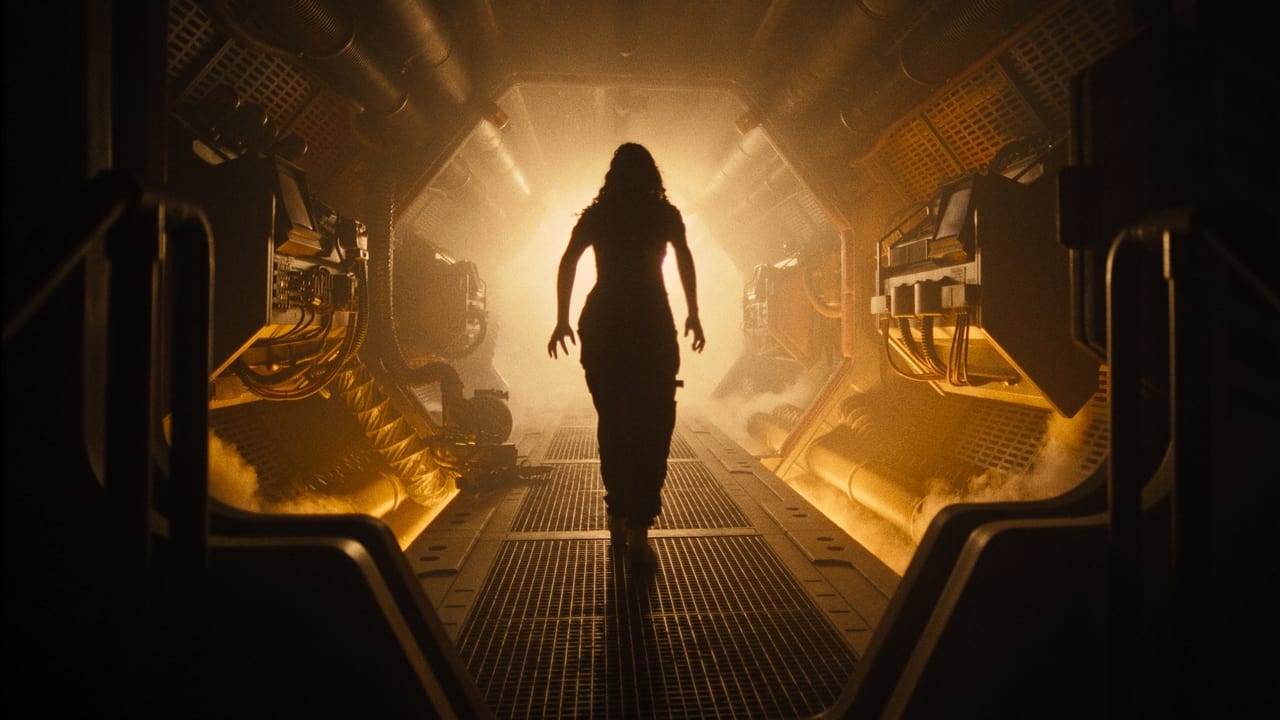
It’s not a perfect film, and it struggles to step out of the long shadow cast by Ridley Scott and James Cameron. Yet, in the landscape of 2024 blockbusters, it feels remarkably substantial. It’s a grim, beautiful, and deeply mean-spirited addition to the series that reminds us that the universe doesn't care about our hopes or our sibling bonds. It just wants to eat us.
The film earns its place on the shelf by being a bridge between the old and the new, even if that bridge occasionally creaks under the weight of its own references. By the time the credits rolled and I finally stopped shivering from the theater’s over-active AC, I felt like I’d actually been somewhere. Romulus doesn't reinvent the wheel, but it puts some very sharp spikes on it and rolls it right over you. It’s the most fun I’ve had being miserable at the movies all year.


Keep Exploring...
-

Don't Breathe
2016
-
A Quiet Place Part II
2021
-

M3GAN
2022
-

The Invisible Man
2020
-

Godzilla Minus One
2023
-

A Quiet Place
2018
-
Meg 2: The Trench
2023
-
A Quiet Place: Day One
2024
-

Companion
2025
-

Final Destination Bloodlines
2025
-

Sinners
2025
-

#Alive
2020
-

Resident Evil: Death Island
2023
-

The Substance
2024
-
The Meg
2018
-

Don't Breathe 2
2021
-
The Conjuring: The Devil Made Me Do It
2021
-

The Black Phone
2022
-
Five Nights at Freddy's
2023
-

Saw X
2023