Conclave
"The throne is empty. The wolves are gathered."
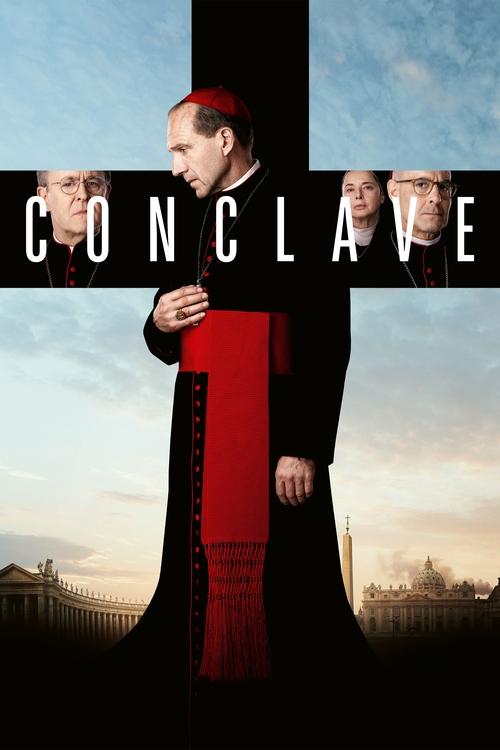
The Vatican has a way of turning silence into a weapon. In Conclave, that silence is heavy, punctuated only by the rhythmic scuff of leather loafers on marble and the terrifyingly crisp snap of wax seals. It’s a world where a whispered conversation in a rainy courtyard carries the weight of a nuclear launch code. I watched this in a theater where the person three rows behind me was wearing an aggressive amount of patchouli, and honestly, the earthy, incense-adjacent scent only helped the immersion. I felt less like a guy with a bucket of popcorn and more like a fly on the wall of the Sistine Chapel.
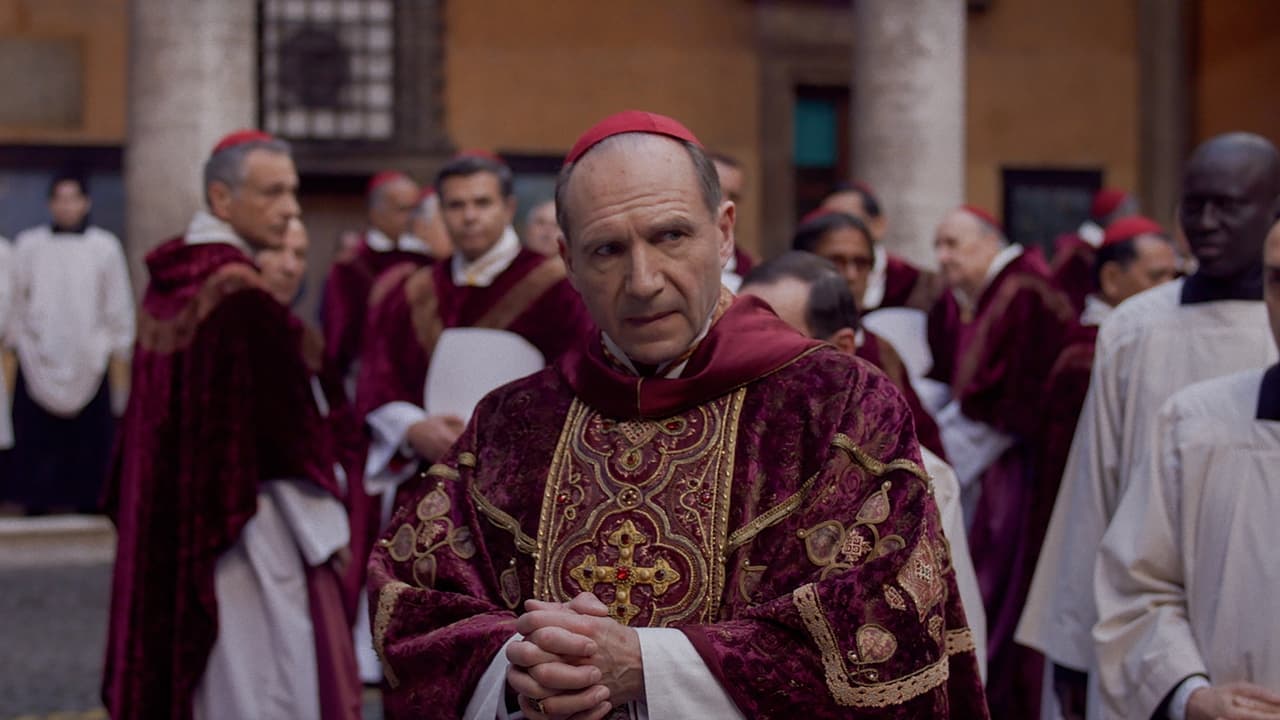
Directed by Edward Berger, fresh off the brutal success of All Quiet on the Western Front, this film is a pivot from the mud of the trenches to the velvet of the papacy. But make no mistake: this is a war movie. The weapons aren’t bayonets; they’re secrets, dossiers, and the slow, agonizing tally of a ballot paper. Ralph Fiennes anchors the whole thing as Cardinal Lawrence, the man tasked with running the election after the Pope drops dead of a heart attack. He doesn’t want the job, he’s having a crisis of faith, and he’s surrounded by men who want the throne so badly they can practically taste the communion wine.
A High-Stakes Chess Match in Red Silk
The film’s greatest trick is taking a process that is, on paper, incredibly repetitive—voting, burning ballots, eating soup, repeat—and making it feel like a ticking time bomb. It’s a contemporary thriller that understands we live in an era of institutional distrust. Whether it’s a corporate boardroom or a political primary, we’re all obsessed with what happens behind closed doors. Conclave taps into that anxiety perfectly. It’s essentially Succession, but the board members wear floor-length skirts and pray instead of tweeting.
Ralph Fiennes is a marvel here. He spends half the movie just listening, his face a landscape of mounting dread as he realizes the men he’s supposed to lead are essentially a pack of wolves in liturgical clothing. Then you have Stanley Tucci as the liberal Bellini, playing the "I don't want to be Pope" card with a smirk that suggests he’s already picked out the curtains for the papal apartment. Opposite him is John Lithgow as Tremblay, a man whose ambition is so naked it’s almost vibrating. The chemistry between these titans is electric; watching them trade barbs over lukewarm cafeteria food is more exciting than any CGI explosion I’ve seen this year.
The $20 Million Miracle

In a cinematic landscape dominated by $200 million sequels that struggle to break even, Conclave is a fascinating outlier. It was produced on a relatively lean budget of $20,000,000—peanuts for a film that looks this lush. Much of that is thanks to the production team at Cinecittà Studios in Rome, the legendary haunt of Federico Fellini. They didn't just film in Rome; they basically rebuilt the Vatican's inner sanctum. The attention to detail is staggering. Apparently, the costume department, led by Lisy Christl, had to source specific silks that would react to the light in a way that felt "ancient" rather than "theatrical."
The financial payoff was massive. Pulling in over $115 million globally, it proved that there is still a massive, hungry audience for "adult" dramas that don't involve capes or multiverses. It’s the kind of mid-budget success story that Hollywood used to live on but has largely forgotten how to make. The film also took a gamble on Carlos Diehz, a relative newcomer, to play the mysterious Cardinal Benitez from Kabul. Placing an unknown against heavyweights like Isabella Rossellini (who is chillingly effective as the observant Sister Agnes) was a bold move that pays off, adding an unpredictable element to a very established ensemble.
Modern Anxiety in Ancient Rooms
While the film feels timeless, its heartbeat is very much 2024. It deals with the clash between traditionalism and progress, the role of women in rigid structures, and the terrifying realization that the people we entrust with our souls are just as flawed as the rest of us. The cinematography by Stéphane Fontaine (who worked on A Prophet) uses a lot of overhead shots, making the Cardinals look like ants in a maze, or perhaps pieces on a board being moved by a hand we can't see.
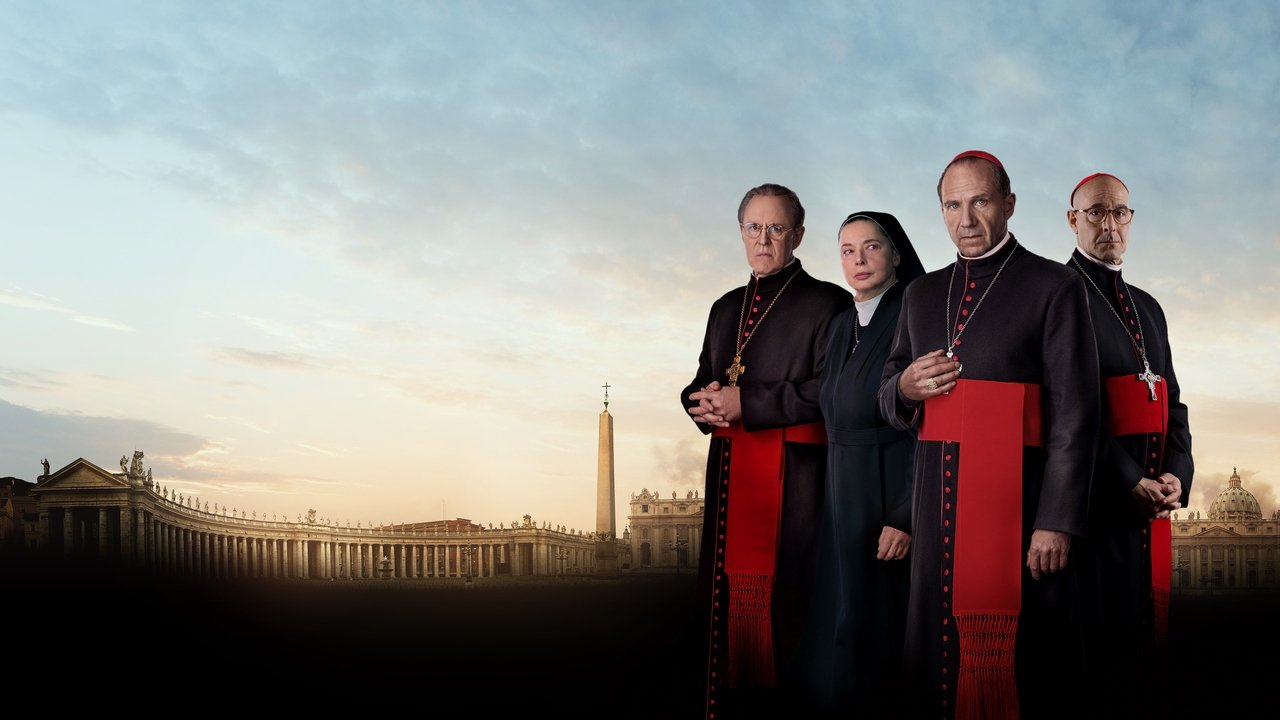
The score by Volker Bertelmann is the secret sauce. It’s not your typical choral, "holy" music. It’s jagged, percussive, and anxious. It sounds like a heart murmur. It keeps you on edge even when the characters are just walking down a hallway. By the time we get to the final act—and there is a twist that has set social media on fire—the tension is so thick you could cut it with a censer. The movie is a high-stakes chess match where the pieces are prone to existential crises and sudden cardiac arrest. It’s a reminder that the oldest institutions in the world are often held together by the thinnest of threads.
Conclave is a rare beast: a smart, gorgeous, and genuinely thrilling movie that respects its audience’s intelligence. It manages to be cynical about power while remaining deeply moved by the idea of faith. Whether you’re there for the political maneuvering or just to see Ralph Fiennes give the performance of his career, it’s a ride worth taking. It’s the best kind of cinema—the kind that makes you want to walk out of the theater and immediately find someone to argue with about the ending. Just make sure they aren't wearing too much patchouli.


Keep Exploring...
-
The Accountant
2016
-
Once Upon a Time... in Hollywood
2019
-
All Quiet on the Western Front
2022
-

Bridge of Spies
2015
-
It
2017
-
The Courier
2020
-
Along with the Gods: The Two Worlds
2017
-
Dark Waters
2019
-
Hotel Mumbai
2019
-
The Lighthouse
2019
-
Uncut Gems
2019
-

Promising Young Woman
2020
-
Wrath of Man
2021
-
The Outfit
2022
-

Missing
2023
-
Glass
2019
-
An Officer and a Spy
2019
-
El Camino: A Breaking Bad Movie
2019
-
Joker
2019
-

The Professor and the Madman
2019